Amazfit Bip 6
Apple Watch SE 3

Amazfit Bip 6 Apple Watch SE 3

Overview

When it comes to choosing between the Amazfit Bip 6 and the Apple Watch SE 3, the decision is far from straightforward. These two smartwatches take markedly different approaches to design, connectivity, and daily usability. From battery endurance to sensor variety and ecosystem compatibility, each device brings a distinct set of strengths to the table. Read on as we break down every key specification to help you decide which watch truly fits your lifestyle.

Common Features

  • Both the Amazfit Bip 6 and Apple Watch SE 3 use an OLED/AMOLED display type.
  • Both watches carry a 5 ATM water resistance rating.
  • Both devices have an IP68 ingress protection rating with a 50 m waterproof depth rating.
  • An Always-On Display is available on both the Amazfit Bip 6 and Apple Watch SE 3.
  • The watch band is replaceable on both the Amazfit Bip 6 and Apple Watch SE 3.
  • Both devices feature a touchscreen display.
  • A heart rate monitor is present on both the Amazfit Bip 6 and Apple Watch SE 3.
  • GPS is built into both the Amazfit Bip 6 and Apple Watch SE 3.
  • Both watches include an accelerometer, a compass, and a gyroscope.
  • Neither the Amazfit Bip 6 nor the Apple Watch SE 3 monitors perspiration.
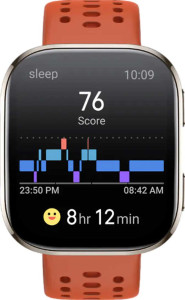
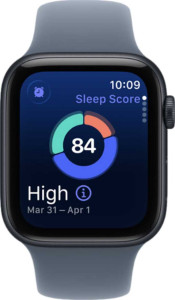
  • Both devices track sleep and provide sleep reports.
  • Both watches track distance, steps taken, pace, elevation, and include a route tracker.
  • Automatic activity detection is available on both the Amazfit Bip 6 and Apple Watch SE 3.
  • Both devices are compatible with iOS.
  • Neither watch supports ANT+, but both support Galileo.
  • Both the Amazfit Bip 6 and Apple Watch SE 3 have a rechargeable, non-removable battery with no solar power capability.
  • Resting heart rate measurement, fast/slow heart rate notifications, and irregular heart rate warnings are available on both devices.
  • Both watches can be used to answer calls, locate a phone, control calls, and display notifications.
  • A silent alarm is present on both the Amazfit Bip 6 and Apple Watch SE 3.
  • Both devices offer activity reports, inactivity alerts, calorie burn tracking, goal setting, achievements, an exercise diary, and a free ad-free app.
  • Both watches have a battery level indicator, auto pause, passcode support, and compatibility with smart scales and external heart rate monitors.
  • Neither device is compatible with Windows, has an external memory slot, or includes a 3.5 mm audio jack socket.

Main Differences

  • Screen size is 1.97″ on the Amazfit Bip 6 and 1.78″ on the Apple Watch SE 3.
  • The Amazfit Bip 6 is described as water resistant, while the Apple Watch SE 3 is classified as waterproof.
  • Pixel density is 302 ppi on the Amazfit Bip 6 and 326 ppi on the Apple Watch SE 3.
  • Resolution is 390 x 450 px on the Amazfit Bip 6 and 368 x 448 px on the Apple Watch SE 3.
  • Branded damage-resistant glass is present on the Apple Watch SE 3 but not available on the Amazfit Bip 6.
  • Thickness is 10.45 mm on the Amazfit Bip 6 and 10.7 mm on the Apple Watch SE 3.
  • Weight is 27.9 g on the Amazfit Bip 6 and 33 g on the Apple Watch SE 3.
  • Height is 46.3 mm on the Amazfit Bip 6 and 44 mm on the Apple Watch SE 3.
  • Width is 40.2 mm on the Amazfit Bip 6 and 38 mm on the Apple Watch SE 3.
  • Volume is 19.45 cm³ on the Amazfit Bip 6 and 17.89 cm³ on the Apple Watch SE 3.
  • Blood oxygenation level monitoring is available on the Amazfit Bip 6 but not on the Apple Watch SE 3.
  • A temperature sensor is present on the Apple Watch SE 3 but not on the Amazfit Bip 6.
  • A barometer is present on the Apple Watch SE 3 but not on the Amazfit Bip 6.
  • A cadence sensor is available on the Amazfit Bip 6 but not on the Apple Watch SE 3.
  • Multi-sport mode is available on the Apple Watch SE 3 but not on the Amazfit Bip 6.
  • Calorie intake tracking is available on the Amazfit Bip 6 but not on the Apple Watch SE 3.
  • A cellular module is present on the Apple Watch SE 3 but not on the Amazfit Bip 6.
  • Android compatibility is available on the Amazfit Bip 6 but not on the Apple Watch SE 3.
  • Bluetooth version is 5.2 on the Amazfit Bip 6 and 5.3 on the Apple Watch SE 3.
  • Wi-Fi support is present on the Apple Watch SE 3 but not available on the Amazfit Bip 6.
  • NFC is present on the Apple Watch SE 3 but not available on the Amazfit Bip 6.
  • Battery life is 14 days on the Amazfit Bip 6 and 0.75 days on the Apple Watch SE 3.
  • Battery life in power save mode is 624 hours on the Amazfit Bip 6 and 32 hours on the Apple Watch SE 3.
  • Wireless charging is available on the Apple Watch SE 3 but not on the Amazfit Bip 6.
  • VO2 max measurement is available on the Amazfit Bip 6 but not on the Apple Watch SE 3.
  • Readiness level tracking is available on the Amazfit Bip 6 but not on the Apple Watch SE 3.
  • Fall detection is present on the Apple Watch SE 3 but not on the Amazfit Bip 6.
  • A smart alarm is available on the Apple Watch SE 3 but not on the Amazfit Bip 6.
  • Internal storage is 0.5 GB on the Amazfit Bip 6 and 64 GB on the Apple Watch SE 3.
  • Coaching features are available in the Amazfit Bip 6 app but not in the Apple Watch SE 3 app.
  • Water intake tracking is available on the Amazfit Bip 6 but not on the Apple Watch SE 3.
  • Weight tracking is available on the Amazfit Bip 6 but not on the Apple Watch SE 3.
  • macOS compatibility is present on the Apple Watch SE 3 but not on the Amazfit Bip 6.
Specs Comparison
Amazfit Bip 6

Amazfit Bip 6

Apple Watch SE 3

Apple Watch SE 3

Design:
screen size 1.97" 1.78"
Display type OLED/AMOLED OLED/AMOLED
water resistance Water resistant Waterproof
ATM rating 5 ATM 5 ATM
Ingress Protection (IP) rating IP68 IP68
waterproof depth rating 50 m 50 m
Always-On Display
pixel density 302 ppi 326 ppi
resolution 390 x 450 px 368 x 448 px
Watch band is replaceable
has branded damage-resistant glass
thickness 10.45 mm 10.7 mm
weight 27.9 g 33 g
height 46.3 mm 44 mm
width 40.2 mm 38 mm
Has a display
has a touch screen
Has sapphire glass display
volume 19.450167 cm³ 17.8904 cm³

Both watches share the same core display technology (OLED/AMOLED), identical water resistance ratings (5 ATM, IP68, 50 m), Always-On Display, and replaceable bands — so on the fundamentals, they are evenly matched. The real design story is in the trade-offs between size, sharpness, and durability. The Amazfit Bip 6 offers a noticeably larger 1.97″ screen versus the Apple Watch SE 3's 1.78″, making it easier to read notifications and interact with content at a glance. However, the SE 3 compensates with a higher pixel density of 326 ppi compared to the Bip 6's 302 ppi, meaning its smaller canvas is actually sharper and renders text and graphics more crisply.

On the wrist, the two watches feel meaningfully different. The Bip 6 is physically larger (46.3 × 40.2 mm) but lighter at 27.9 g, while the SE 3 is more compact (44 × 38 mm) yet heavier at 33 g. In practice, the Bip 6's lower weight may make it more comfortable for extended or overnight wear, despite its larger footprint. Both are nearly identical in thickness (~10.5 mm), so neither sits dramatically higher off the wrist than the other.

A meaningful durability differentiator is that the Apple Watch SE 3 features branded damage-resistant glass, while the Bip 6 does not — giving the SE 3 a real-world edge against everyday scratches and impacts. Overall, the Bip 6 has the advantage in screen size and weight, but the SE 3 edges ahead on pixel sharpness and glass protection, making it the slightly more durable and refined package despite its smaller display.

Sensors:
Monitors blood oxygenation levels
Has a heart rate monitor
has GPS
has an accelerometer
Has a temperature sensor
has a compass
Has a barometer
has a gyroscope
Has a cadence sensor
Monitors perspiration

The sensor suites of these two watches share a solid common foundation — both include heart rate monitoring, GPS, accelerometer, compass, and gyroscope — but each pulls ahead in a distinctly different direction when it comes to the extras. The Amazfit Bip 6 includes blood oxygen (SpO2) monitoring, which the Apple Watch SE 3 lacks entirely. For users who want passive wellness tracking — particularly sleep quality assessment or altitude acclimatization awareness — this is a tangible advantage that the SE 3 simply cannot match at its tier.

Flipping the equation, the Apple Watch SE 3 counters with a barometer and a temperature sensor, neither of which appears on the Bip 6. The barometer enables accurate floor-climbing counts and real-time elevation tracking during hikes, making it meaningfully more useful for outdoor and fitness-oriented users. The temperature sensor, meanwhile, adds a layer of ambient or wrist-skin monitoring that can feed into broader health trend analysis — a capability the Bip 6 foregoes entirely. The SE 3 also lacks the Bip 6's cadence sensor, though for most users the practical impact of that omission is minor compared to the barometer gap.

Taken together, the sensor matchup reflects two different health philosophies: the Bip 6 leans into biometric wellness with SpO2, while the SE 3 prioritizes environmental and activity context with its barometer and temperature sensor. For general fitness and outdoor tracking, the SE 3's sensor package is more versatile overall, giving it the edge in this category — but users who specifically value blood oxygen monitoring will find the Bip 6 the only option between the two.

Activity tracking:
Tracks your sleep
Tracks distance
Tracks steps taken
Measures pace
Provides sleep reports
Detects activities automatically
Has a route tracker
Tracks elevation
Has multi-sport mode
Has exercise tagging
Has a stroke counter for swimming
Tracks calorie intake
Designed for diving
Designed for golf

Activity tracking is remarkably well-matched between these two watches. Both cover the full spectrum of everyday fitness essentials — sleep tracking with reports, step counting, distance, pace, elevation, route tracking, automatic activity detection, exercise tagging, and even a stroke counter for swimming. For the vast majority of users, neither watch will feel short-changed in day-to-day tracking capability.

The meaningful split comes down to two features, each exclusive to one watch. The Apple Watch SE 3 supports multi-sport mode, which allows seamless transitions between disciplines within a single workout session — critical for triathletes or mixed-training routines where manually stopping and restarting an activity would break the data flow. The Amazfit Bip 6, by contrast, lacks this but uniquely offers calorie intake tracking, shifting its focus beyond exercise output toward a more holistic diet-and-fitness picture. That distinction speaks to two different user mindsets: the SE 3 caters to structured, multi-discipline athletes, while the Bip 6 appeals to users managing their overall health and nutrition alongside activity.

For pure athletic versatility, the SE 3's multi-sport mode is the more impactful differentiator — it directly enhances workout data quality for a broader range of training styles. The Bip 6's calorie intake feature is useful but more niche. On balance, the Apple Watch SE 3 holds a narrow edge in this category for fitness-focused users, while the Bip 6 remains competitive for those whose goals extend into general wellness and diet tracking.

Connectivity:
has a cellular module
Is compatible with iOS
Is compatible with Android
Bluetooth version 5.2 5.3
supports Wi-Fi
supports ANT+
has NFC
supports Galileo

Connectivity is where the gap between these two watches widens considerably. The Apple Watch SE 3 arrives with a significantly broader feature set: cellular connectivity, Wi-Fi, and NFC — none of which appear on the Amazfit Bip 6. Cellular means the SE 3 can receive calls, messages, and data independently of a paired phone, a freedom that fundamentally changes how untethered users can be during workouts or commutes. NFC enables contactless payments directly from the wrist, a convenience the Bip 6 cannot offer at all.

The Amazfit Bip 6's connectivity story is leaner but not without merit. Its Bluetooth 5.2 handles the basics reliably, and critically, it is compatible with both iOS and Android — a significant practical advantage over the SE 3, which is locked exclusively to iOS. For Android users, the SE 3 is simply not an option, making the Bip 6 the only choice between the two. The Bluetooth version difference — 5.2 vs 5.3 — is marginal in everyday use and unlikely to be a deciding factor for most buyers.

Taken as a whole, the Apple Watch SE 3 holds a clear connectivity edge for iPhone users, with cellular, Wi-Fi, and NFC delivering a more capable and independent experience. The Bip 6's advantage is its cross-platform compatibility, which is decisive for Android users but does little to close the gap in raw connectivity breadth for those already in the Apple ecosystem.

Battery:
battery life 14 days 0.75 days
battery life in power save mode 624 hours 32 hours
has wireless charging
has a rechargeable battery
Has a solar power battery
has a removable battery

Few spec comparisons in the smartwatch world are as stark as this one. The Amazfit Bip 6 is rated for 14 days of battery life, while the Apple Watch SE 3 manages just 0.75 days — roughly 18 hours. That is not a marginal difference; it represents a fundamentally different relationship with charging. The Bip 6 can be worn through nearly two full weeks of normal use before needing a top-up, making it far more practical for travel, multi-day outdoor activities, or simply users who dislike the daily charging ritual. The SE 3, by contrast, demands nightly charging as a non-negotiable habit.

The power-save mode figures reinforce the same story: the Bip 6 extends to an extraordinary 624 hours (~26 days), versus the SE 3's 32 hours in its low-power state. For users in situations where charging is genuinely inconvenient — hiking, long-haul travel, or simply forgetting — the Bip 6's reserves offer a meaningful safety net that the SE 3 cannot approach. The SE 3's one charging advantage is wireless charging, which the Bip 6 lacks; when you do need to charge it, the SE 3 offers the convenience of a cable-free pad.

Wireless charging is a welcome quality-of-life feature, but it does nothing to offset how frequently the SE 3 needs to be charged. The Amazfit Bip 6 wins this category decisively — its battery longevity advantage is so large that it will be a primary deciding factor for any user who prioritizes independence from daily charging.

Features:
release date April 2025 September 2025
measures VO2 max
measures resting heart rate
has fast/slow heart rate notifications
shows readiness level
Can be used to answer calls
Locates your phone
Has call control
Has notifications
has irregular heart rate warnings
Has silent alarm
Has vibrating alerts
has fall detection
Has a stopwatch
Has smart alarm
has voice commands
internal storage 0.5GB 64GB
Has a built-in camera remote control function
Acquires GPS faster
number of microphones 1 1
has a front camera

The everyday feature set shared between these two watches is extensive — call answering, notifications, heart rate alerts, vibrating alarms, voice commands, phone finder, and camera remote control are all present on both. For most users' daily interactions with a smartwatch, neither will feel lacking in the basics. Where they diverge, however, reveals sharply different design priorities.

The Apple Watch SE 3 pulls ahead on two fronts that carry real weight. Its fall detection is a genuine safety net — automatically alerting emergency contacts if a hard fall is detected and the user is unresponsive — making it a materially more compelling choice for older users or those in higher-risk environments. Its smart alarm adds intelligent wake functionality, while its internal storage of 64 GB dwarfs the Bip 6's 0.5 GB, enabling onboard music storage and a much broader range of app data. The Bip 6's half-gigabyte is functional for basic watch operations but is not designed to hold media or significant third-party app content. Meanwhile, the Amazfit Bip 6 counters with VO2 max measurement and a readiness level indicator — tools aimed at fitness-conscious users who want a deeper picture of their aerobic capacity and daily recovery status, neither of which the SE 3 provides.

Weighing these exclusives, the Apple Watch SE 3 holds the broader advantage in this category. Fall detection alone is a high-impact safety feature, and the storage gap is simply enormous. The Bip 6's VO2 max and readiness tracking are meaningful for dedicated fitness users, but they serve a narrower audience than the SE 3's feature additions.

App & Software:
Provides activity reports
Has inactivity alerts
Counts how many calories you've burned
Has goal setting
Has achievements
Free app
Has exercise diary
Ad-free
Has coaching
Has temperature tracking
Has period notifications
Has music playback
Predicts ovulation
Predicts start date
Can be personalised
Has barcode scanner on app
Tracks water intake
Has weight tracking

At the app and software level, these two watches are remarkably aligned. Both offer free, ad-free companion apps with activity reports, inactivity alerts, calorie tracking, goal setting, achievements, exercise diary, music playback, temperature tracking, full menstrual cycle features including period notifications, ovulation prediction, and start date forecasting, and personalization options. For the overwhelming majority of users, the day-to-day app experience will feel largely equivalent.

The differentiators are modest but real. The Amazfit Bip 6 extends its wellness tracking into water intake and weight tracking, rounding out a more complete picture of overall health management within the app. It also includes coaching functionality, which can guide users through structured activity goals — a feature absent from the Apple Watch SE 3's companion app. These additions position the Bip 6's software as slightly more oriented toward holistic lifestyle management rather than pure fitness logging.

None of the SE 3's omissions here are damaging on their own, but cumulatively they give the Amazfit Bip 6 a narrow software edge in this category. Coaching, water intake, and weight tracking are all features that users building healthy habits are likely to use regularly, and having them integrated into the same app ecosystem adds genuine convenience. The SE 3 matches the Bip 6 on every shared feature, but falls short on breadth.
Miscellaneous:
has a battery level indicator
Has auto pause
Has passcode
Compatible with smart scales
Compatible with external heart rate monitors
Is compatible with Windows
has an external memory slot
Is compatible with Mac OS X
has a socket for a 3.5 mm audio jack

Of all the spec groups compared across these two watches, Miscellaneous is the most uniform. Battery level indicator, auto pause, passcode protection, smart scale compatibility, and external heart rate monitor support are all present on both — and neither offers an external memory slot or a 3.5 mm audio jack. For practical purposes, this category produces almost no differentiation in the day-to-day ownership experience.

The sole distinction is Mac OS X compatibility, which the Apple Watch SE 3 supports and the Amazfit Bip 6 does not. For users who manage health data, sync workouts, or configure their watch through a Mac desktop environment, this is a relevant convenience — though its real-world impact depends heavily on how deeply a user engages with desktop-side data management rather than relying solely on a smartphone app.

Given how narrow the gap is, this category is effectively a near-tie, with the SE 3 holding a very slight edge through its Mac compatibility. It is unlikely to influence a purchasing decision on its own, but for Mac-centric users it represents one less friction point in an otherwise identical miscellaneous feature set.

Comparison Summary & Verdict

After examining every specification, it is clear that both watches excel in different areas. The Amazfit Bip 6 stands out for its exceptional 14-day battery life, larger 1.97″ display, lighter 27.9 g build, and practical extras like blood oxygen monitoring, VO2 max tracking, and calorie intake logging — all at a strong value proposition for Android users. The Apple Watch SE 3, on the other hand, delivers a tighter ecosystem experience with cellular connectivity, Wi-Fi, NFC payments, 64 GB internal storage, fall detection, and a higher pixel density display backed by branded damage-resistant glass — making it the clear choice for iPhone users who want a deeply integrated, feature-rich wearable. Choose the Amazfit Bip 6 if battery longevity and Android compatibility are your priorities; opt for the Apple Watch SE 3 if you value smart connectivity and safety features within the Apple ecosystem.

Amazfit Bip 6
Buy Amazfit Bip 6 if...

Buy the Amazfit Bip 6 if you are an Android user who prioritizes exceptional battery life of up to 14 days, a larger and lighter watch, and health tracking features like blood oxygen monitoring and VO2 max without relying on Apple’s ecosystem.

Apple Watch SE 3
Buy Apple Watch SE 3 if...

Buy the Apple Watch SE 3 if you are an iPhone user who wants cellular connectivity, NFC payments, fall detection, and seamless Apple ecosystem integration with 64 GB of internal storage.