Amazfit Bip 6
Honor Watch 5 Ultra

Amazfit Bip 6 Honor Watch 5 Ultra

Overview

Welcome to our in-depth specification comparison between the Amazfit Bip 6 and the Honor Watch 5 Ultra. Both smartwatches share a strong foundation — AMOLED displays, GPS, heart rate monitoring, and broad smartphone compatibility — yet they take notably different approaches when it comes to design philosophy, advanced health sensors, and water resistance capabilities. Whether you value a lighter everyday companion or a feature-packed, rugged wearable, this comparison will help you decide which watch best fits your lifestyle.

Common Features

  • Both watches feature an OLED/AMOLED display type.
  • Both watches carry a 5 ATM water resistance rating.
  • Both watches have an IP68 ingress protection rating.
  • Always-On Display is available on both watches.
  • The watch band is replaceable on both watches.
  • Neither watch features branded damage-resistant glass.
  • Both watches share the same height of 46.3 mm.
  • Blood oxygenation level monitoring is available on both watches.
  • A heart rate monitor is present on both watches.
  • GPS is built into both watches.
  • Both watches include an accelerometer, a compass, and a gyroscope.
  • Perspiration monitoring is not available on either watch.
  • Both watches track sleep and provide sleep reports.
  • Both watches track distance, steps taken, pace, elevation, and include a route tracker.
  • Activity auto-detection is supported on both watches.
  • Neither watch includes a cellular module, Wi-Fi, ANT+, or NFC.
  • Both watches are compatible with iOS and Android, and support Bluetooth 5.2 and Galileo.
  • Both watches have a rechargeable battery with no solar charging and no removable battery.
  • HRV tracking, VO2 max measurement, resting heart rate monitoring, and fast/slow heart rate notifications are available on both watches.
  • Both watches support answering calls, call control, phone locating, and push notifications.
  • Both watches provide activity reports, inactivity alerts, calorie tracking, goal setting, achievements, an exercise diary, and a free ad-free companion app.
  • Both watches include a battery level indicator, auto pause, passcode protection, and compatibility with smart scales and external heart rate monitors.
  • Neither watch is compatible with Windows or Mac OS X, and neither has an external memory slot.

Main Differences

  • Screen size is 1.97″ on Amazfit Bip 6 and 1.5″ on Honor Watch 5 Ultra.
  • The Amazfit Bip 6 is rated as water resistant to 50 m, while the Honor Watch 5 Ultra is rated as waterproof to 1.5 m.
  • Pixel density is 302 ppi on Amazfit Bip 6 and 310 ppi on Honor Watch 5 Ultra.
  • Resolution is 390 x 450 px on Amazfit Bip 6 and 466 x 466 px on Honor Watch 5 Ultra.
  • Thickness is 10.45 mm on Amazfit Bip 6 and 11.4 mm on Honor Watch 5 Ultra.
  • Weight is 27.9 g on Amazfit Bip 6 and 51.8 g on Honor Watch 5 Ultra.
  • Width is 40.2 mm on Amazfit Bip 6 and 46.3 mm on Honor Watch 5 Ultra.
  • Sapphire glass display is present on Honor Watch 5 Ultra but not available on Amazfit Bip 6.
  • Volume is 19.450167 cm³ on Amazfit Bip 6 and 24.438066 cm³ on Honor Watch 5 Ultra.
  • Band width is 22 mm on Amazfit Bip 6 and 21.5 mm on Honor Watch 5 Ultra.
  • A barometer is present on Honor Watch 5 Ultra but not available on Amazfit Bip 6.
  • A cadence sensor is present on Amazfit Bip 6 but not available on Honor Watch 5 Ultra.
  • Diving mode is available on Honor Watch 5 Ultra but not on Amazfit Bip 6.
  • Battery life is 14 days on Amazfit Bip 6 and 15 days on Honor Watch 5 Ultra.
  • Battery capacity is 340 mAh on Amazfit Bip 6 and 480 mAh on Honor Watch 5 Ultra.
  • Readiness level tracking is available on Amazfit Bip 6 but not on Honor Watch 5 Ultra.
  • ECG technology is present on Honor Watch 5 Ultra but not available on Amazfit Bip 6.
Specs Comparison
Amazfit Bip 6

Amazfit Bip 6

Honor Watch 5 Ultra

Honor Watch 5 Ultra

Design:
screen size 1.97" 1.5"
Display type OLED/AMOLED OLED/AMOLED
water resistance Water resistant Waterproof
ATM rating 5 ATM 5 ATM
Ingress Protection (IP) rating IP68 IP68
waterproof depth rating 50 m 1.5 m
Always-On Display
pixel density 302 ppi 310 ppi
resolution 390 x 450 px 466 x 466 px
Watch band is replaceable
has branded damage-resistant glass
thickness 10.45 mm 11.4 mm
weight 27.9 g 51.8 g
height 46.3 mm 46.3 mm
width 40.2 mm 46.3 mm
Has a display
has a touch screen
Has sapphire glass display
volume 19.450167 cm³ 24.438066 cm³
is designed for kids
width of band 22 mm 21.5 mm

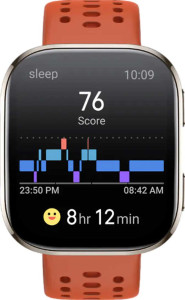
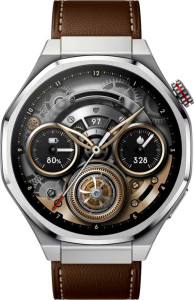
The most striking design contrast between these two watches is size and weight. The Amazfit Bip 6 packs a much larger 1.97″ screen into a slimmer (10.45 mm thick) and dramatically lighter body at 27.9 g, while the Honor Watch 5 Ultra carries a smaller 1.5″ display inside a bulkier, square 46.3 × 46.3 mm chassis that weighs 51.8 g — nearly double. In real-world terms, the Bip 6 will feel almost unnoticeable on the wrist for all-day and sleep tracking, whereas the Honor Watch 5 Ultra's heft gives it a more traditional, premium watch presence that some users prefer but others may find fatiguing over long periods.

Despite its smaller screen, the Honor Watch 5 Ultra holds its own visually, offering a slightly higher pixel density of 310 ppi versus the Bip 6's 302 ppi, and a sharper 466 × 466 px circular resolution compared to the Bip 6's 390 × 450 px. More meaningfully, the Honor Watch 5 Ultra features a sapphire glass display — a significant durability advantage the Bip 6 lacks entirely — making it far more resistant to everyday scratches. On water resistance, both share 5 ATM and IP68 ratings, but the Bip 6 claims a 50 m depth rating versus the Honor's 1.5 m, suggesting the Bip 6 is better suited to swimming or water sports despite being labeled merely ″water resistant.″

Overall, neither watch dominates across the board. The Amazfit Bip 6 has a clear edge in wearability — it is lighter, thinner, and offers a larger screen in a smaller footprint — making it the better choice for comfort-focused users. The Honor Watch 5 Ultra counters with sapphire glass protection and a higher-resolution display, appealing to users who prioritize screen durability and a premium build over svelte dimensions. Both share OLED/AMOLED technology, Always-On Display, and replaceable bands, so those features are a wash.
Sensors:
Monitors blood oxygenation levels
Has a heart rate monitor
has GPS
has an accelerometer
has a compass
Has a barometer
has a gyroscope
Has a cadence sensor
Monitors perspiration

The sensor suites of these two watches are largely aligned — both cover the essentials with heart rate monitoring, blood oxygen tracking, GPS, accelerometer, compass, and gyroscope. For the vast majority of fitness and health use cases, this shared foundation means neither watch leaves users meaningfully underserved in day-to-day tracking.

Where they diverge is telling. The Honor Watch 5 Ultra includes a barometer, which the Bip 6 lacks. In practice, a barometer enables more accurate elevation tracking during hikes or stair climbing, and can also function as a weather pressure indicator — a meaningful advantage for outdoor and altitude-focused users. The Amazfit Bip 6, on the other hand, features a cadence sensor that the Honor Watch 5 Ultra omits. Cadence measurement — tracking steps or pedal strokes per minute — is particularly useful for runners optimizing their stride efficiency and cyclists monitoring pedaling rhythm, making the Bip 6 a stronger companion for those specific disciplines.

The sensor edge ultimately depends on use case. For hikers, trail runners, or anyone who cares about elevation and atmospheric data, the Honor Watch 5 Ultra has the advantage with its barometer. For runners and cyclists focused on movement efficiency, the Amazfit Bip 6 pulls ahead with its cadence sensor. Neither watch holds a universal lead — the right choice here comes down to which missing sensor matters more to the individual user.

Activity tracking:
Tracks your sleep
Tracks distance
Tracks steps taken
Measures pace
Provides sleep reports
Detects activities automatically
Has a route tracker
Tracks elevation
Has exercise tagging
Has a stroke counter for swimming
Tracks calorie intake
Designed for diving

Activity tracking is essentially a dead heat between these two watches across almost every metric. Both cover the full spectrum of everyday fitness needs — sleep tracking with reports, step and distance counting, pace measurement, automatic activity detection, route tracking, elevation, exercise tagging, swim stroke counting, and calorie intake logging. For the overwhelming majority of users, this shared feature set means the choice between them will not hinge on activity tracking breadth at all.

The one meaningful differentiator is that the Honor Watch 5 Ultra is designed for diving, while the Amazfit Bip 6 is not. This goes beyond simple water resistance — a dive-oriented mode implies dedicated tracking capabilities suited to underwater activity, such as depth awareness and dive logging, making the Honor Watch 5 Ultra the clear choice for scuba divers or freediving enthusiasts. It is worth noting this aligns with the Honor's sapphire glass and its overall positioning as a more rugged, adventure-ready device.

For activity tracking, the Honor Watch 5 Ultra holds a narrow but specific edge purely by virtue of its diving capability. If diving is not part of your lifestyle, however, this category is functionally a tie — both watches deliver an equally comprehensive and well-rounded activity tracking package.

Connectivity:
has a cellular module
Is compatible with iOS
Is compatible with Android
Bluetooth version 5.2 5.2
supports Wi-Fi
supports ANT+
has NFC
supports Galileo

Connectivity is the rare category where these two watches are in complete lockstep — every single spec is identical. Both run Bluetooth 5.2, are compatible with iOS and Android, support Galileo satellite navigation, and share the same absences: no cellular module, no Wi-Fi, no ANT+, and no NFC.

The practical implications are worth unpacking. The lack of NFC means neither watch supports contactless payments, which may be a dealbreaker for users accustomed to paying from the wrist. No Wi-Fi means both rely entirely on a paired smartphone for data syncing and updates — neither can operate independently on a network. And without a cellular module, calls and notifications always require a phone nearby. These are shared constraints, not differentiators, but they define the connectivity ceiling for both devices.

On the plus side, Bluetooth 5.2 is a modern, capable standard offering stable pairing, low energy consumption, and reliable range for day-to-day use. Galileo support adds an extra layer of GPS accuracy in regions where it is available. Ultimately, connectivity is a complete tie — no advantage exists for either watch in this category, and users should weigh their decision entirely on other specification groups.

Battery:
battery life 14 days 15 days
battery power 340 mAh 480 mAh
has a rechargeable battery
Has a solar power battery
has a removable battery

On paper, the Honor Watch 5 Ultra holds the battery advantage with a larger 480 mAh cell compared to the Amazfit Bip 6's 340 mAh — a 41% capacity lead. Yet that substantial hardware difference translates to just a single extra day of rated battery life: 15 days versus 14 days. This tells an interesting story about efficiency — the Honor's bigger, higher-resolution display and more feature-rich hardware appear to consume proportionally more power, largely neutralizing its larger battery in real-world runtime terms.

From a user perspective, both watches comfortably clear the two-week mark, which means weekly charging is sufficient for either device. That puts them in the same practical category for the vast majority of users — neither demands the frequent top-ups associated with smartwatches that last only one to three days. Both use non-removable, rechargeable batteries with no solar charging option, so the charging experience is broadly equivalent.

The Honor Watch 5 Ultra edges ahead on rated battery life, but the margin is slim enough that it is unlikely to be a deciding factor in most purchasing decisions. The more notable takeaway is how efficiently the Amazfit Bip 6 stretches its smaller 340 mAh cell — coming within a single day of a watch packing significantly more capacity.

Features:
release date April 2025 March 2025
has HRV tracking
measures VO2 max
measures resting heart rate
has fast/slow heart rate notifications
shows readiness level
Can be used to answer calls
Locates your phone
Has call control
Has notifications
has irregular heart rate warnings
Has ECG technology
Has silent alarm
Has vibrating alerts
has fall detection
Has a stopwatch
Has smart alarm
has voice commands
Has a built-in camera remote control function
warranty period 1 years 1 years
has a front camera

Across a broad and well-stocked feature set, these two watches are remarkably similar — both offer HRV tracking, VO2 max measurement, resting heart rate, irregular heart rate warnings, call answering and control, notifications, voice commands, and a camera remote, among others. The shared foundation is strong, and for most users, either watch delivers a comparably rich smartwatch experience.

The two meaningful divergences cut in opposite directions. The Honor Watch 5 Ultra includes ECG technology, which the Amazfit Bip 6 lacks entirely. ECG — electrocardiogram — allows the watch to generate a medical-grade heart rhythm reading on demand, a genuinely significant health monitoring capability that can help flag conditions like atrial fibrillation. For health-conscious users or those with cardiac concerns, this is a serious differentiator. The Amazfit Bip 6 counters with a readiness level feature absent on the Honor, which synthesizes recovery and wellness data to tell users how prepared their body is for exertion on any given day — a useful tool for athletes managing training load.

Weighing these trade-offs, the Honor Watch 5 Ultra holds the stronger hand in this category. ECG is a clinically meaningful capability that directly expands the watch's health monitoring scope in a way that readiness scoring does not match in terms of objective impact. Users who prioritize advanced health tracking will find the Honor Watch 5 Ultra the more capable device here, while those focused on fitness optimization may find the Bip 6's readiness feature a practical daily asset.

App & Software:
Provides activity reports
Has inactivity alerts
Counts how many calories you've burned
Has goal setting
Has achievements
Free app
Has exercise diary
Ad-free
Has coaching
Has temperature tracking
Has period notifications
Supports routes
Has music playback
Displays fertile window notifications
Includes maps
Predicts ovulation
Predicts start date
Supports widgets
Can be personalised
Has barcode scanner on app
Tracks water intake
Has weight tracking
Has live tracking
Tracks BMI

App and software is the most clear-cut category in this entire comparison — every single spec is identical across both watches. From fitness essentials like activity reports, calorie tracking, goal setting, and an exercise diary, to more nuanced capabilities like temperature tracking, BMI and weight tracking, and live tracking, both companions match each other point for point.

Worth highlighting is the breadth that both apps share equally. The inclusion of women's health features — period notifications, fertile window display, ovulation and cycle start date prediction — places both firmly in the comprehensive health tracking tier. Add in maps and route support, music playback, coaching, widgets, and full personalization, and both apps are genuinely well-rounded platforms rather than bare-bones companions. Notably, both are free and ad-free, meaning there are no paywalls or interruptions to factor into the experience.

This category is an unambiguous tie. There is not a single software or app feature in the provided data that distinguishes one watch from the other. Users should treat app capability as a non-factor in their decision and direct their attention to the hardware and sensor differences covered in other categories.

Miscellaneous:
has a battery level indicator
Has auto pause
Has passcode
Compatible with smart scales
Compatible with external heart rate monitors
Is compatible with Windows
has an external memory slot
Is compatible with Mac OS X
has a socket for a 3.5 mm audio jack

Miscellaneous specs round out the comparison, and much like the App & Software category, there is simply nothing to separate these two watches here. Every attribute in this group is identical — both offer a battery level indicator, auto pause, passcode protection, compatibility with smart scales and external heart rate monitors, and both equally lack Windows and Mac OS X compatibility, an external memory slot, and a 3.5 mm audio jack.

A few of these shared traits are worth contextualizing. Compatibility with external heart rate monitors and smart scales is a meaningful ecosystem plus for users who have invested in dedicated fitness hardware — it allows both watches to integrate into a broader health tracking setup rather than operating in isolation. Auto pause is a quality-of-life feature that prevents workout data from being skewed when the user stops mid-activity, and passcode support adds a basic layer of personal data security. Neither watch, however, connects to a desktop OS, which means PC-based data management or syncing is off the table for both.

This category is a complete tie with no differentiators whatsoever. As with the app comparison, users can set this group aside entirely when making their decision — the distinction between these two watches lies elsewhere.

Comparison Summary & Verdict

After examining every specification, it becomes clear that these two watches target distinct types of users. The Amazfit Bip 6 stands out for its larger 1.97• screen, significantly lighter 27.9 g build, and cadence sensor, making it an excellent daily wearable for those who value comfort and readability. The Honor Watch 5 Ultra, on the other hand, brings a sapphire glass display, ECG technology, a barometer, and dedicated diving mode to the table, backed by a larger 480 mAh battery delivering 15 days of life. If you want a lightweight, comfortable watch for everyday fitness tracking with a big screen, the Amazfit Bip 6 is the smarter pick. If you need a more advanced health monitoring suite and greater durability for outdoor or aquatic adventures, the Honor Watch 5 Ultra is the clear choice.

Amazfit Bip 6
Buy Amazfit Bip 6 if...

Buy the Amazfit Bip 6 if you want a lightweight, comfortable smartwatch with a large screen and cadence tracking for daily fitness use.

Honor Watch 5 Ultra
Buy Honor Watch 5 Ultra if...

Buy the Honor Watch 5 Ultra if you need advanced health features like ECG, a barometer, sapphire glass protection, and diving mode for more demanding outdoor or aquatic activities.