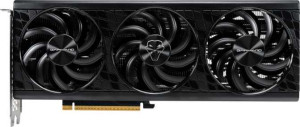
Port selection on these two cards reflects their different intended audiences. The AMD Radeon AI Pro R9700 goes all-in on DisplayPort, offering four DisplayPort outputs and nothing else — no HDMI, no USB-C. This configuration is a deliberate professional workstation choice: DisplayPort handles high-refresh, high-resolution displays natively and is the standard connector in multi-monitor productivity setups. The Gainward RTX 5070, by contrast, provides three DisplayPort outputs plus one HDMI, a more consumer-friendly layout that accommodates the wide range of TVs, monitors, and projectors that rely on HDMI as their primary input.
The practical implications are straightforward. Users connecting to a modern TV, a projector, or any display that lacks DisplayPort — common in living room or hybrid home/office setups — will plug the RTX 5070 in directly, while R9700 owners would need an adapter. Conversely, the R9700's four-port all-DisplayPort layout gives it a slight edge for users running four simultaneous displays, since every connection is native with no format conversion involved. Both cards cap out at four maximum displays regardless, so total output count is not a differentiator.
For connectivity, the Gainward RTX 5070 has a broader practical advantage for most consumer setups thanks to its HDMI port, which eliminates the need for adapters in mixed-display environments. The R9700's quad-DisplayPort layout suits dedicated professional multi-monitor rigs well, but the absence of HDMI is a genuine inconvenience for anyone outside that specific use case.