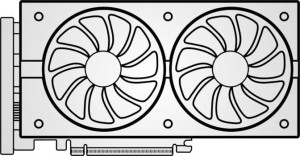
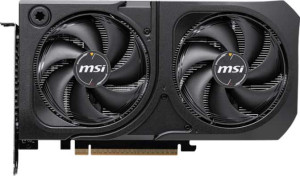
AMD Radeon RX 7400
MSI GeForce RTX 5060 Ti Shadow 2X Plus 16GB

AMD Radeon RX 7400 MSI GeForce RTX 5060 Ti Shadow 2X Plus 16GB

Common Features

  • Both products have DirectX 12 Ultimate support.
  • Both products support OpenGL version 4.6.
  • Both products support multi-display technology.
  • Both products support ray tracing.
  • Both products support 3D.
  • Neither product has XeSS (XMX) support.
  • Neither product has LHR.
  • Neither product has RGB lighting.
  • Both products have one HDMI output.
  • Both products have three DisplayPort outputs.
  • Both products have a 128-bit memory bus width.
  • Both products support ECC memory.
  • Both products have air-water cooling support.
  • Both products have an HDMI output.
  • Both products have PCIe version 4 support.
  • Both products have GDDR6 memory.
  • Both products have an HDMI 2.1 output.
  • Both products support 8GB of VRAM.

Main Differences

  • GPU clock speed is 1452 MHz on AMD Radeon RX 7400 and 2407 MHz on MSI GeForce RTX 5060 Ti Shadow 2X Plus 16GB.
  • GPU turbo is 2300 MHz on AMD Radeon RX 7400 and 2572 MHz on MSI GeForce RTX 5060 Ti Shadow 2X Plus 16GB.
  • Pixel rate is 147.2 GPixel/s on AMD Radeon RX 7400 and 123.5 GPixel/s on MSI GeForce RTX 5060 Ti Shadow 2X Plus 16GB.
  • Floating-point performance is 16.49 TFLOPS on AMD Radeon RX 7400 and 23.7 TFLOPS on MSI GeForce RTX 5060 Ti Shadow 2X Plus 16GB.
  • Texture rate is 257.6 GTexels/s on AMD Radeon RX 7400 and 370.4 GTexels/s on MSI GeForce RTX 5060 Ti Shadow 2X Plus 16GB.
  • GPU memory speed is 2250 MHz on AMD Radeon RX 7400 and 1750 MHz on MSI GeForce RTX 5060 Ti Shadow 2X Plus 16GB.
  • Shading units are 1792 on AMD Radeon RX 7400 and 4608 on MSI GeForce RTX 5060 Ti Shadow 2X Plus 16GB.
  • Texture mapping units (TMUs) are 112 on AMD Radeon RX 7400 and 144 on MSI GeForce RTX 5060 Ti Shadow 2X Plus 16GB.
  • Render output units (ROPs) are 64 on AMD Radeon RX 7400 and 48 on MSI GeForce RTX 5060 Ti Shadow 2X Plus 16GB.
  • Effective memory speed is 10800 MHz on AMD Radeon RX 7400 and 28000 MHz on MSI GeForce RTX 5060 Ti Shadow 2X Plus 16GB.
  • Maximum memory bandwidth is 173 GB/s on AMD Radeon RX 7400 and 448 GB/s on MSI GeForce RTX 5060 Ti Shadow 2X Plus 16GB.
  • VRAM is 8GB on AMD Radeon RX 7400 and 16GB on MSI GeForce RTX 5060 Ti Shadow 2X Plus 16GB.
  • GDDR version is GDDR6 on AMD Radeon RX 7400 and GDDR7 on MSI GeForce RTX 5060 Ti Shadow 2X Plus 16GB.
  • OpenCL version is 2.2 on AMD Radeon RX 7400 and 3 on MSI GeForce RTX 5060 Ti Shadow 2X Plus 16GB.
  • DLSS support is not available on AMD Radeon RX 7400 but is available on MSI GeForce RTX 5060 Ti Shadow 2X Plus 16GB.
  • AMD SAM support is available on AMD Radeon RX 7400 but Intel Resizable BAR is available on MSI GeForce RTX 5060 Ti Shadow 2X Plus 16GB.
  • HDMI version is HDMI 2.1 on AMD Radeon RX 7400 and HDMI 2.1b on MSI GeForce RTX 5060 Ti Shadow 2X Plus 16GB.
  • GPU architecture is RDNA 3.0 on AMD Radeon RX 7400 and Blackwell on MSI GeForce RTX 5060 Ti Shadow 2X Plus 16GB.
  • Thermal Design Power (TDP) is 55W on AMD Radeon RX 7400 and 180W on MSI GeForce RTX 5060 Ti Shadow 2X Plus 16GB.
  • Semiconductor size is 6 nm on AMD Radeon RX 7400 and 5 nm on MSI GeForce RTX 5060 Ti Shadow 2X Plus 16GB.
  • Number of transistors is 13300 million on AMD Radeon RX 7400 and 21900 million on MSI GeForce RTX 5060 Ti Shadow 2X Plus 16GB.
Specs Comparison
AMD Radeon RX 7400

AMD Radeon RX 7400

MSI GeForce RTX 5060 Ti Shadow 2X Plus 16GB

MSI GeForce RTX 5060 Ti Shadow 2X Plus 16GB

Performance:
GPU clock speed 1452 MHz 2407 MHz
GPU turbo 2300 MHz 2572 MHz
pixel rate 147.2 GPixel/s 123.5 GPixel/s
floating-point performance 16.49 TFLOPS 23.7 TFLOPS
texture rate 257.6 GTexels/s 370.4 GTexels/s
GPU memory speed 2250 MHz 1750 MHz
shading units 1792 4608
texture mapping units (TMUs) 112 144
render output units (ROPs) 64 48
Has Double Precision Floating Point (DPFP)

The AMD Radeon RX 7400 has a GPU clock speed of 1452 MHz, while the MSI GeForce RTX 5060 Ti Shadow 2X Plus 16GB runs at a higher GPU clock speed of 2407 MHz. In terms of GPU turbo, the Radeon RX 7400 reaches up to 2300 MHz, while the GeForce RTX 5060 Ti turbo boosts to 2572 MHz.

When it comes to pixel rate, the RX 7400 delivers 147.2 GPixel/s, while the RTX 5060 Ti offers a lower rate of 123.5 GPixel/s. The floating-point performance of the Radeon RX 7400 is 16.49 TFLOPS, whereas the GeForce RTX 5060 Ti surpasses it with a higher 23.7 TFLOPS.

For texture rate, the RX 7400 achieves 257.6 GTexels/s, while the RTX 5060 Ti takes the lead with 370.4 GTexels/s. The RX 7400 has a GPU memory speed of 2250 MHz, compared to the RTX 5060 Ti’s 1750 MHz. In terms of shading units, the RX 7400 has 1792, while the RTX 5060 Ti has significantly more with 4608. The RX 7400 has 112 texture mapping units (TMUs), while the RTX 5060 Ti has a higher count of 144 TMUs. The Radeon RX 7400 has 64 render output units (ROPs), while the RTX 5060 Ti has fewer at 48. Both products support Double Precision Floating Point (DPFP).

Memory:
effective memory speed 10800 MHz 28000 MHz
maximum memory bandwidth 173 GB/s 448 GB/s
VRAM 8GB 16GB
GDDR version GDDR6 GDDR7
memory bus width 128-bit 128-bit
Supports ECC memory

The AMD Radeon RX 7400 has an effective memory speed of 10800 MHz, while the MSI GeForce RTX 5060 Ti Shadow 2X Plus 16GB operates at a significantly higher effective memory speed of 28000 MHz. When it comes to maximum memory bandwidth, the RX 7400 provides 173 GB/s, whereas the RTX 5060 Ti offers a much higher 448 GB/s.

In terms of VRAM, the Radeon RX 7400 is equipped with 8GB, while the GeForce RTX 5060 Ti has 16GB of VRAM, which is double the amount. Both products use the same memory bus width of 128-bit. Additionally, both cards support ECC memory, so there’s no difference between them in that regard.

Both products use different generations of GDDR memory: the RX 7400 uses GDDR6, while the RTX 5060 Ti utilizes the newer GDDR7 version.

Features:
DirectX version DirectX 12 Ultimate DirectX 12 Ultimate
OpenGL version 4.6 4.6
OpenCL version 2.2 3
Supports multi-display technology
supports ray tracing
Supports 3D
supports DLSS
has XeSS (XMX)
AMD SAM / Intel Resizable BAR AMD SAM Intel Resizable BAR
has LHR
has RGB lighting

Both the AMD Radeon RX 7400 and MSI GeForce RTX 5060 Ti Shadow 2X Plus 16GB support DirectX 12 Ultimate, OpenGL version 4.6, and OpenCL version 2.2 (for the RX 7400) or 3 (for the RTX 5060 Ti). While both cards support multi-display technology, ray tracing, and 3D, there are a few differences in their additional features.

The Radeon RX 7400 does not support DLSS, while the RTX 5060 Ti does. The RX 7400 also lacks XeSS (XMX) support, while both cards share this limitation. In terms of resizable bar support, the RX 7400 supports AMD SAM, while the RTX 5060 Ti supports Intel Resizable BAR.

Neither product has RGB lighting, and both lack LHR (Low Hash Rate) restrictions, meaning neither is specifically limited for cryptocurrency mining purposes.

Ports:
has an HDMI output
HDMI ports 1 1
HDMI version HDMI 2.1 HDMI 2.1b
DisplayPort outputs 3 3
USB-C ports 0 0
DVI outputs 0 0
mini DisplayPort outputs 0 0

Both the AMD Radeon RX 7400 and MSI GeForce RTX 5060 Ti Shadow 2X Plus 16GB feature 1 HDMI port, with both supporting HDMI 2.1. The GeForce RTX 5060 Ti, however, uses HDMI 2.1b, while the Radeon RX 7400 uses standard HDMI 2.1.

Both cards have 3 DisplayPort outputs, with neither offering USB-C, DVI, or mini DisplayPort outputs.

Overall, the port configurations are quite similar, with the main difference being the slightly updated HDMI version on the RTX 5060 Ti.

General info:
GPU architecture RDNA 3.0 Blackwell
release date August 2025 April 2025
Thermal Design Power (TDP) 55W 180W
PCI Express (PCIe) version 4 5
semiconductor size 6 nm 5 nm
number of transistors 13300 million 21900 million
Has air-water cooling
width 167 mm 226 mm

The AMD Radeon RX 7400 is built on the RDNA 3.0 architecture, while the MSI GeForce RTX 5060 Ti Shadow 2X Plus 16GB uses the Blackwell architecture. The Radeon RX 7400 has a Thermal Design Power (TDP) of 55W, which is significantly lower than the 180W TDP of the GeForce RTX 5060 Ti.

In terms of PCI Express (PCIe) versions, the RX 7400 supports PCIe version 4, while the RTX 5060 Ti supports the newer PCIe version 5. The Radeon RX 7400 is fabricated using a 6 nm semiconductor process, compared to the 5 nm process used for the RTX 5060 Ti.

When it comes to the number of transistors, the RTX 5060 Ti has 21,900 million, which is higher than the 13,300 million transistors in the Radeon RX 7400. Both cards do not feature air-water cooling. The RX 7400 has a width of 167 mm, while the RTX 5060 Ti is wider at 226 mm.

Comparison Summary

This is a specification comparison between AMD Radeon RX 7400 and MSI GeForce RTX 5060 Ti Shadow 2X Plus 16GB. Both products support DirectX 12 Ultimate and ray tracing, and have one HDMI output and three DisplayPort outputs. The Radeon RX 7400 features a GPU clock speed of 1452 MHz and shading units of 1792, while the GeForce RTX 5060 Ti boasts a GPU turbo of 2572 MHz and a VRAM of 16GB. The AMD model has a memory speed of 2250 MHz, while the MSI version operates at 1750 MHz, and the RTX 5060 Ti has a TDP of 180W compared to the Radeon’s 55W.