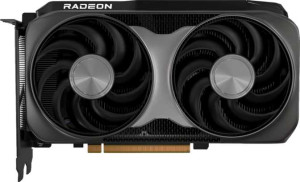
At the foundational level, these two cards share the same silicon DNA: identical RDNA 4.0 architecture, the same 4nm process node, and an equal transistor count of 29,700 million. This confirms they are cut from the same physical die — the performance differences seen in other spec groups stem from how much of that die is active, not from any architectural divergence. Both also use PCIe 5.0, ensuring neither is constrained by interface bandwidth on a modern platform.
The one meaningful differentiator in this group is power consumption. The RX 9060 XT 8GB carries a 160W TDP against the standard RX 9060's 132W — a 28W, or roughly 21%, increase. That gap has practical implications: the XT 8GB will demand more from a system's power supply, may require an additional or higher-rated PCIe power connector, and will generate more heat under sustained load, placing greater demands on case airflow and cooler performance. For small form factor builds or systems with modest PSUs, this distinction is worth factoring in.
Neither card offers an advantage in architecture, manufacturing process, or interface generation — those are all tied. The sole differentiator here favors the RX 9060 for users where power efficiency or thermal headroom is a priority. Buyers who can accommodate the higher draw will find the XT 8GB's extra wattage is the direct fuel behind its performance gains, making it a reasonable trade-off in well-ventilated systems with adequate power delivery.