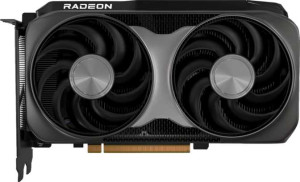
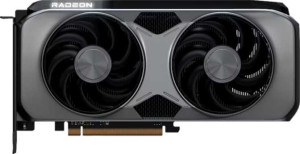
Memory is where these two cards make a fascinating trade-off, each winning on a different axis. The RX 9060 XT 16GB carries a commanding 16GB of VRAM — a full 4GB more than the 9070 GRE's 12GB. This matters more than it might seem: as modern games, AI workloads, and creative tools push texture budgets higher, having that extra headroom delays the point at which the GPU is forced to page data to system memory, which causes significant performance drops. For users targeting 4K or running memory-heavy workloads, the 9060 XT's VRAM capacity is a genuine asset.
The bandwidth story, however, runs in the opposite direction. Despite a higher effective memory speed of 20000 MHz versus 18000 MHz, the 9060 XT's 128-bit memory bus is a hard ceiling on throughput — yielding 320 GB/s of maximum bandwidth. The 9070 GRE's 192-bit bus more than compensates for its lower clock, delivering 432 GB/s — a 35% bandwidth advantage. Bandwidth governs how quickly the GPU can feed data to its shader cores, and at high resolutions and detail settings this bottleneck becomes increasingly relevant. Both cards use GDDR6 and support ECC memory, the latter being useful for compute and professional use cases where data integrity is critical.
There is no single winner here — it depends on the user's priority. The 9060 XT 16GB has the edge for workloads where VRAM capacity is the limiting factor, such as large texture packs or AI inference tasks. The 9070 GRE holds the advantage in sustained throughput scenarios where feeding a wider, faster compute engine with ample bandwidth takes precedence. Users who frequently bump into VRAM limits should weight the 9060 XT's capacity lead heavily; those focused on raw rendering throughput will benefit more from the 9070 GRE's superior bandwidth.