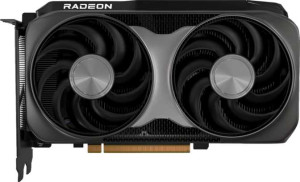
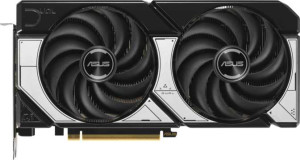
The most striking contrast between these two GPUs lies in their shader architectures. The Asus RTX 5070 fields a commanding 6,144 shading units against the RX 9060 XT's 2,048 — a 3× advantage that directly translates into raw parallel compute throughput. This gap ripples through the derived metrics: the RTX 5070 delivers 30.87 TFLOPS of floating-point performance versus 25.6 TFLOPS for the Radeon, and pulls ahead significantly in texture throughput (482.3 GTexels/s vs 400.6 GTexels/s). More shading units and TMUs mean the RTX 5070 can handle more complex geometry, shading passes, and compute workloads simultaneously, which matters most in demanding titles and GPU-accelerated applications.
The RX 9060 XT fights back with an exceptionally high boost clock of 3,130 MHz, compared to the RTX 5070's more modest 2,512 MHz turbo. In practice, however, a higher clock rate on a much smaller shader array cannot close the throughput deficit — MHz alone does not overcome a 3× unit count gap. Where the Radeon does hold a genuine edge is in memory speed: 2,518 MHz versus the RTX 5070's 1,750 MHz, which can benefit bandwidth-sensitive workloads like high-resolution texture streaming. Pixel fill rate is essentially a wash at roughly 200–201 GPixel/s for both cards, meaning neither has a meaningful advantage in raw rasterization output at the ROP level.
Overall, the RTX 5070 holds a clear performance advantage in this group. Its superior shader count, higher TFLOPS, and better texture throughput point to consistently stronger compute and rendering capability across the board. The RX 9060 XT's faster memory and higher boost clock are real assets in specific scenarios, but they do not overcome the fundamental compute gap established by the RTX 5070's much larger execution array.