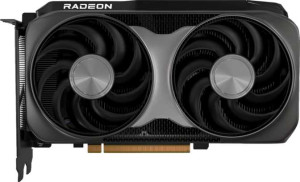
AMD Radeon RX 9060 XT 16GB
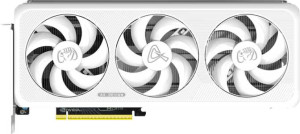
AX Gaming Rebel GeForce RTX 5060 Ti X3W 16GB

AMD Radeon RX 9060 XT 16GB AX Gaming Rebel GeForce RTX 5060 Ti X3W 16GB

Overview

Welcome to this in-depth specification face-off between the AMD Radeon RX 9060 XT 16GB and the AX Gaming Rebel GeForce RTX 5060 Ti X3W 16GB. Both cards arrive with a generous 16GB of VRAM and full DirectX 12 Ultimate support, yet they take remarkably different paths to mid-range dominance. The battlegrounds in this comparison span memory technology and bandwidth, raw computational throughput, shader counts, power efficiency, and feature sets that include ray tracing and AI-driven upscaling capabilities. Read on to see how every key specification stacks up.

Common Features

  • Both GPUs support Double Precision Floating Point (DPFP).
  • Both cards come with 16GB of VRAM.
  • Both use a 128-bit memory bus width.
  • ECC memory support is available on both products.
  • Both GPUs are compatible with DirectX 12 Ultimate.
  • Both cards support OpenGL version 4.6.
  • Multi-display technology is supported on both products.
  • Ray tracing support is available on both products.
  • 3D support is present on both products.
  • XeSS (XMX) support is not available on either product.
  • LHR is not present on either product.
  • RGB lighting is not featured on either product.
  • Both cards include one HDMI port using HDMI version 2.1b.
  • Neither card has any USB-C ports.
  • Neither card features DVI outputs.
  • Neither card has mini DisplayPort outputs.
  • Both GPUs use PCI Express version 5.
  • Air-water cooling is not available on either product.

Main Differences

  • GPU base clock speed is 1700 MHz on AMD Radeon RX 9060 XT 16GB and 2407 MHz on AX Gaming Rebel GeForce RTX 5060 Ti X3W 16GB.
  • GPU turbo clock is 3130 MHz on AMD Radeon RX 9060 XT 16GB and 2602 MHz on AX Gaming Rebel GeForce RTX 5060 Ti X3W 16GB.
  • Pixel rate is 200.3 GPixel/s on AMD Radeon RX 9060 XT 16GB and 124.9 GPixel/s on AX Gaming Rebel GeForce RTX 5060 Ti X3W 16GB.
  • Floating-point performance is 25.6 TFLOPS on AMD Radeon RX 9060 XT 16GB and 23.98 TFLOPS on AX Gaming Rebel GeForce RTX 5060 Ti X3W 16GB.
  • Texture rate is 400.6 GTexels/s on AMD Radeon RX 9060 XT 16GB and 374.7 GTexels/s on AX Gaming Rebel GeForce RTX 5060 Ti X3W 16GB.
  • GPU memory speed is 2518 MHz on AMD Radeon RX 9060 XT 16GB and 1750 MHz on AX Gaming Rebel GeForce RTX 5060 Ti X3W 16GB.
  • Shading units number 2048 on AMD Radeon RX 9060 XT 16GB and 4608 on AX Gaming Rebel GeForce RTX 5060 Ti X3W 16GB.
  • Texture mapping units (TMUs) total 128 on AMD Radeon RX 9060 XT 16GB and 144 on AX Gaming Rebel GeForce RTX 5060 Ti X3W 16GB.
  • Render output units (ROPs) count is 64 on AMD Radeon RX 9060 XT 16GB and 48 on AX Gaming Rebel GeForce RTX 5060 Ti X3W 16GB.
  • Effective memory speed is 20000 MHz on AMD Radeon RX 9060 XT 16GB and 28000 MHz on AX Gaming Rebel GeForce RTX 5060 Ti X3W 16GB.
  • Maximum memory bandwidth is 320 GB/s on AMD Radeon RX 9060 XT 16GB and 448 GB/s on AX Gaming Rebel GeForce RTX 5060 Ti X3W 16GB.
  • The GDDR version is GDDR6 on AMD Radeon RX 9060 XT 16GB and GDDR7 on AX Gaming Rebel GeForce RTX 5060 Ti X3W 16GB.
  • OpenCL version is 2.2 on AMD Radeon RX 9060 XT 16GB and 3 on AX Gaming Rebel GeForce RTX 5060 Ti X3W 16GB.
  • DLSS support is present on AX Gaming Rebel GeForce RTX 5060 Ti X3W 16GB but not available on AMD Radeon RX 9060 XT 16GB.
  • The resizable BAR implementation is AMD SAM on AMD Radeon RX 9060 XT 16GB and Intel Resizable BAR on AX Gaming Rebel GeForce RTX 5060 Ti X3W 16GB.
  • The number of supported displays is 3 on AMD Radeon RX 9060 XT 16GB and 4 on AX Gaming Rebel GeForce RTX 5060 Ti X3W 16GB.
  • DisplayPort outputs number 2 on AMD Radeon RX 9060 XT 16GB and 3 on AX Gaming Rebel GeForce RTX 5060 Ti X3W 16GB.
  • GPU architecture is RDNA 4.0 on AMD Radeon RX 9060 XT 16GB and Blackwell on AX Gaming Rebel GeForce RTX 5060 Ti X3W 16GB.
  • Thermal Design Power (TDP) is 160W on AMD Radeon RX 9060 XT 16GB and 180W on AX Gaming Rebel GeForce RTX 5060 Ti X3W 16GB.
  • Semiconductor size is 4 nm on AMD Radeon RX 9060 XT 16GB and 5 nm on AX Gaming Rebel GeForce RTX 5060 Ti X3W 16GB.
  • Transistor count is 29700 million on AMD Radeon RX 9060 XT 16GB and 21900 million on AX Gaming Rebel GeForce RTX 5060 Ti X3W 16GB.
  • Card width is 267 mm on AMD Radeon RX 9060 XT 16GB and 316 mm on AX Gaming Rebel GeForce RTX 5060 Ti X3W 16GB.
  • Card height is 111 mm on AMD Radeon RX 9060 XT 16GB and 131 mm on AX Gaming Rebel GeForce RTX 5060 Ti X3W 16GB.
Specs Comparison
AMD Radeon RX 9060 XT 16GB

AMD Radeon RX 9060 XT 16GB

AX Gaming Rebel GeForce RTX 5060 Ti X3W 16GB

AX Gaming Rebel GeForce RTX 5060 Ti X3W 16GB

Performance:
GPU clock speed 1700 MHz 2407 MHz
GPU turbo 3130 MHz 2602 MHz
pixel rate 200.3 GPixel/s 124.9 GPixel/s
floating-point performance 25.6 TFLOPS 23.98 TFLOPS
texture rate 400.6 GTexels/s 374.7 GTexels/s
GPU memory speed 2518 MHz 1750 MHz
shading units 2048 4608
texture mapping units (TMUs) 128 144
render output units (ROPs) 64 48
Has Double Precision Floating Point (DPFP)

The most striking contrast between these two GPUs lies in their clock speed philosophies. The AX Gaming Rebel RTX 5060 Ti runs a higher base clock at 2407 MHz, suggesting a more stable sustained performance floor, but its turbo headroom is relatively modest, peaking at 2602 MHz — a spread of only ~195 MHz. The AMD Radeon RX 9060 XT, by contrast, starts much lower at 1700 MHz but rockets to 3130 MHz under boost — a delta of over 1400 MHz. In practice, this means the RX 9060 XT is heavily reliant on its boost behavior for peak performance, while the RTX 5060 Ti delivers more predictable, consistent throughput across workloads.

When looking at raw throughput metrics, the RX 9060 XT holds a clear lead. Its floating-point performance of 25.6 TFLOPS edges out the RTX 5060 Ti's 23.98 TFLOPS, and the gap widens significantly in rasterization-related metrics: the RX 9060 XT's pixel rate of 200.3 GPixel/s is roughly 60% higher than the RTX 5060 Ti's 124.9 GPixel/s, directly translating to a higher ceiling for fill-rate-bound scenarios like high-resolution rendering. The texture rate tells a similar story — 400.6 GTexels/s vs. 374.7 GTexels/s — giving the RX 9060 XT a modest but real texturing advantage. Notably, the RX 9060 XT also benefits from significantly faster memory at 2518 MHz versus 1750 MHz, which reduces memory bandwidth bottlenecks. The RTX 5060 Ti counters with more than double the shading units (4608 vs. 2048), but this advantage does not translate into higher TFLOPS here, suggesting architectural differences in how each GPU utilizes its compute resources.

Overall, the RX 9060 XT 16GB holds a performance edge on paper across the most critical throughput metrics — TFLOPS, pixel fill rate, texture rate, and memory speed — all of which directly impact real-world rendering workloads. The RTX 5060 Ti's higher base clock and larger shading unit count point to a different architectural balance, but those traits don't overcome the RX 9060 XT's advantages within the data provided. Users prioritizing raw compute and rasterization throughput will find the RX 9060 XT the stronger performer by these specs.
Memory:
effective memory speed 20000 MHz 28000 MHz
maximum memory bandwidth 320 GB/s 448 GB/s
VRAM 16GB 16GB
GDDR version GDDR6 GDDR7
memory bus width 128-bit 128-bit
Supports ECC memory

Both GPUs ship with 16GB of VRAM over a 128-bit memory bus, and both support ECC memory — so capacity and bus width are a wash. The real divergence is in memory generation: the RX 9060 XT uses GDDR6, while the RTX 5060 Ti steps up to GDDR7. That generational leap has a direct and substantial impact on bandwidth.

The numbers make the gap concrete. The RTX 5060 Ti's effective memory speed of 28000 MHz versus the RX 9060 XT's 20000 MHz translates into a maximum memory bandwidth advantage of 448 GB/s vs. 320 GB/s — a 40% lead. In practice, memory bandwidth governs how quickly the GPU can feed its compute units with texture data, framebuffer reads/writes, and general workload data. At higher resolutions like 4K, or in memory-intensive scenarios like ray tracing, larger open-world games, or compute tasks, a 40% bandwidth advantage can meaningfully reduce stalls and maintain smoother throughput.

On memory, the RTX 5060 Ti holds a clear and significant advantage. Despite the identical bus width and capacity, GDDR7 gives it a decisive edge in raw bandwidth that the RX 9060 XT's GDDR6 simply cannot match within this constraint. For bandwidth-sensitive workloads, this is one of the most impactful differentiators between these two cards.

Features:
DirectX version DirectX 12 Ultimate DirectX 12 Ultimate
OpenGL version 4.6 4.6
OpenCL version 2.2 3
Supports multi-display technology
supports ray tracing
Supports 3D
supports DLSS
has XeSS (XMX)
AMD SAM / Intel Resizable BAR AMD SAM Intel Resizable BAR
has LHR
has RGB lighting
supported displays 3 4

At the foundational level, these two GPUs are well-matched: both support DirectX 12 Ultimate, OpenGL 4.6, ray tracing, 3D output, and multi-display setups. Neither carries LHR restrictions or RGB lighting. The baseline feature parity is strong, so the meaningful differences come down to a few specific capabilities that can genuinely influence a buyer's decision.

The most impactful differentiator is DLSS support on the RTX 5060 Ti, which the RX 9060 XT entirely lacks. DLSS uses AI-based upscaling to render games at a lower resolution and reconstruct a higher-quality image, often delivering significant frame rate gains with minimal visual compromise — it is one of the most practically useful features in modern PC gaming. The RX 9060 XT's absence of DLSS is a real-world limitation in the growing library of titles that support it. On the compute side, the RTX 5060 Ti also steps ahead with OpenCL 3 versus the RX 9060 XT's OpenCL 2.2, which matters for GPU-accelerated compute workloads and future software compatibility. The RTX 5060 Ti additionally supports one more display, with a maximum of 4 connected screens versus 3 on the RX 9060 XT — a minor but notable advantage for multi-monitor power users.

Taken together, the RTX 5060 Ti holds a meaningful feature advantage in this group. DLSS alone is a significant practical benefit for gaming use cases, and the newer OpenCL version and extra display output reinforce its lead. The RX 9060 XT covers all the essentials competently, but the RTX 5060 Ti's feature set is broader and more future-facing by the data provided.

Ports:
has an HDMI output
HDMI ports 1 1
HDMI version HDMI 2.1b HDMI 2.1b
DisplayPort outputs 2 3
USB-C ports 0 0
DVI outputs 0 0
mini DisplayPort outputs 0 0

Port configurations for these two cards are nearly identical: both carry a single HDMI 2.1b output and zero USB-C or DVI ports. HDMI 2.1b is the current standard capable of handling 4K at high refresh rates and 8K output, so neither card is behind on that front. The sole differentiator is the number of DisplayPort outputs — 3 on the RTX 5060 Ti versus 2 on the RX 9060 XT.

That extra DisplayPort matters specifically for users running three or more monitors simultaneously without relying on the HDMI port. The RTX 5060 Ti's total of 4 outputs (3 DisplayPort + 1 HDMI) aligns with its feature-spec advantage of supporting 4 connected displays noted in other groups, while the RX 9060 XT's 3 total outputs caps its physical multi-monitor flexibility accordingly. For single or dual-monitor users, this distinction is irrelevant — but for triple-display setups driven entirely via DisplayPort, the RTX 5060 Ti is the only option of the two.

The RTX 5060 Ti has a narrow but practical edge here, solely by virtue of that additional DisplayPort output. For the majority of users, both cards offer equivalent connectivity; the advantage only surfaces in specific multi-monitor configurations.

General info:
GPU architecture RDNA 4.0 Blackwell
release date May 2025 April 2025
Thermal Design Power (TDP) 160W 180W
PCI Express (PCIe) version 5 5
semiconductor size 4 nm 5 nm
number of transistors 29700 million 21900 million
Has air-water cooling
width 267 mm 316 mm
height 111 mm 131 mm

Fabrication process is where these two cards diverge in a telling way. The RX 9060 XT is built on a 4 nm node with 29.7 billion transistors, while the RTX 5060 Ti uses a 5 nm process and packs 21.9 billion transistors. The smaller node on the RX 9060 XT generally allows for greater transistor density and improved power efficiency at the die level — and the transistor count gap reinforces this, with AMD squeezing roughly 36% more transistors into what is likely a comparable or smaller die area. This architectural density is a meaningful indicator of how much compute logic AMD has been able to integrate into the RDNA 4.0 design.

Power consumption tells a complementary story. The RX 9060 XT's TDP of 160W versus the RTX 5060 Ti's 180W means AMD's card draws 20W less at its rated thermal envelope. Over extended gaming sessions, that difference adds up in heat output, cooling demands, and electricity draw — and it may also reflect the efficiency gains from the more advanced node. Physical footprint follows a similar pattern: at 267 × 111 mm, the RX 9060 XT is noticeably more compact than the RTX 5060 Ti's 316 × 131 mm body, which matters for smaller ITX or mATX builds where clearance is limited. Both cards share PCIe 5.0 compatibility, so neither has an edge on interface bandwidth.

For general build considerations, the RX 9060 XT holds a clear advantage — it runs cooler, draws less power, and occupies significantly less physical space, all while being built on a more advanced process node. The RTX 5060 Ti's larger footprint and higher TDP are trade-offs users will need to accommodate, particularly in constrained chassis.

Comparison Summary & Verdict

After examining the full specification sheet, both GPUs serve distinct audiences. The AMD Radeon RX 9060 XT 16GB stands out with a higher GPU turbo clock of 3130 MHz, superior pixel rate, stronger floating-point performance, a more efficient 4 nm process node, and a lower 160W TDP, making it an appealing choice for those who value power efficiency and raw rasterization throughput in a compact form factor. The AX Gaming Rebel GeForce RTX 5060 Ti X3W 16GB, on the other hand, counters with a significantly larger shader unit count of 4608, faster GDDR7 memory delivering 448 GB/s of bandwidth, and exclusive DLSS support, which gives it a meaningful edge in AI-upscaled gaming and workflows that scale well with parallelism. Multi-monitor users will also appreciate its support for up to 4 displays via three DisplayPort outputs.

AMD Radeon RX 9060 XT 16GB
Buy AMD Radeon RX 9060 XT 16GB if...

Buy the AMD Radeon RX 9060 XT 16GB if you prioritize a higher turbo clock speed, better power efficiency at 160W, and a more compact card size without sacrificing floating-point performance.

AX Gaming Rebel GeForce RTX 5060 Ti X3W 16GB
Buy AX Gaming Rebel GeForce RTX 5060 Ti X3W 16GB if...

Buy the AX Gaming Rebel GeForce RTX 5060 Ti X3W 16GB if you want faster GDDR7 memory bandwidth, a higher shader unit count, DLSS support, and the flexibility of connecting up to four displays simultaneously.