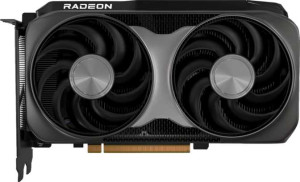
AMD Radeon RX 9060 XT 16GB
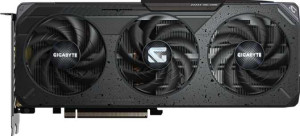
Gigabyte Radeon RX 9060 XT Gaming OC 16GB

AMD Radeon RX 9060 XT 16GB Gigabyte Radeon RX 9060 XT Gaming OC 16GB

Overview

Welcome to our detailed head-to-head comparison of the AMD Radeon RX 9060 XT 16GB and the Gigabyte Radeon RX 9060 XT Gaming OC 16GB. Both cards share the same RDNA 4.0 architecture, 16GB of GDDR6 memory, and a broad feature set including ray tracing and FSR4, but they diverge in clock speeds, raw throughput figures, physical dimensions, and aesthetics. Read on to see exactly how these two cards stack up across every major specification category.

Common Features

  • Both cards have a GPU memory speed of 2518 MHz.
  • Both cards feature 2048 shading units.
  • Both cards have 128 texture mapping units (TMUs).
  • Both cards have 64 render output units (ROPs).
  • Double Precision Floating Point (DPFP) is supported on both cards.
  • Both cards have an effective memory speed of 20000 MHz.
  • Both cards come with 16GB of VRAM.
  • Both cards use GDDR6 memory.
  • Both cards have a 128-bit memory bus width.
  • ECC memory is supported on both cards.
  • Both cards support DirectX 12 Ultimate.
  • Both cards support OpenGL version 4.6.
  • Both cards support OpenCL version 2.2.
  • Multi-display technology is supported on both cards.
  • Ray tracing is supported on both cards.
  • 3D support is available on both cards.
  • DLSS is not supported on either card.
  • FSR4 is available on both cards.
  • Both cards include one HDMI 2.1b port and two DisplayPort outputs, with no USB-C or DVI outputs.
  • Both cards are built on the RDNA 4.0 architecture with a 4 nm semiconductor size, a TDP of 160W, 29700 million transistors, and PCIe 5 support.
  • Air-water cooling is not available on either card.

Main Differences

  • GPU base clock speed is 1700 MHz on AMD Radeon RX 9060 XT 16GB and 1900 MHz on Gigabyte Radeon RX 9060 XT Gaming OC 16GB.
  • GPU turbo clock speed is 3130 MHz on AMD Radeon RX 9060 XT 16GB and 3320 MHz on Gigabyte Radeon RX 9060 XT Gaming OC 16GB.
  • Pixel rate is 200.3 GPixel/s on AMD Radeon RX 9060 XT 16GB and 212.5 GPixel/s on Gigabyte Radeon RX 9060 XT Gaming OC 16GB.
  • Floating-point performance is 25.6 TFLOPS on AMD Radeon RX 9060 XT 16GB and 27.2 TFLOPS on Gigabyte Radeon RX 9060 XT Gaming OC 16GB.
  • Texture rate is 400.6 GTexels/s on AMD Radeon RX 9060 XT 16GB and 425 GTexels/s on Gigabyte Radeon RX 9060 XT Gaming OC 16GB.
  • Maximum memory bandwidth is 320 GB/s on AMD Radeon RX 9060 XT 16GB and 322.3 GB/s on Gigabyte Radeon RX 9060 XT Gaming OC 16GB.
  • RGB lighting is present on Gigabyte Radeon RX 9060 XT Gaming OC 16GB but not available on AMD Radeon RX 9060 XT 16GB.
  • Card width is 267 mm on AMD Radeon RX 9060 XT 16GB and 281 mm on Gigabyte Radeon RX 9060 XT Gaming OC 16GB.
  • Card height is 111 mm on AMD Radeon RX 9060 XT 16GB and 118 mm on Gigabyte Radeon RX 9060 XT Gaming OC 16GB.
Specs Comparison
AMD Radeon RX 9060 XT 16GB

AMD Radeon RX 9060 XT 16GB

Gigabyte Radeon RX 9060 XT Gaming OC 16GB

Gigabyte Radeon RX 9060 XT Gaming OC 16GB

Performance:
GPU clock speed 1700 MHz 1900 MHz
GPU turbo 3130 MHz 3320 MHz
pixel rate 200.3 GPixel/s 212.5 GPixel/s
floating-point performance 25.6 TFLOPS 27.2 TFLOPS
texture rate 400.6 GTexels/s 425 GTexels/s
GPU memory speed 2518 MHz 2518 MHz
shading units 2048 2048
texture mapping units (TMUs) 128 128
render output units (ROPs) 64 64
Has Double Precision Floating Point (DPFP)

Both GPUs share identical shader silicon — 2048 shading units, 128 TMUs, and 64 ROPs — meaning any performance difference between them comes entirely from clock speeds, not architectural distinction. This is a classic reference-vs-factory-overclocked pairing built on the same die.

The Gigabyte Radeon RX 9060 XT Gaming OC runs at a base clock of 1900 MHz versus 1700 MHz on the reference RX 9060 XT, and its boost reaches 3320 MHz compared to 3130 MHz — roughly a 6% clock advantage across the board. That gap translates directly into the throughput figures: the Gaming OC delivers 27.2 TFLOPS of floating-point performance and a texture rate of 425 GTexels/s, while the reference card sits at 25.6 TFLOPS and 400.6 GTexels/s. In practical terms, a ~6% compute advantage can manifest as a few extra frames per second in GPU-bound scenarios, though real-world gains depend heavily on the game and resolution. Memory speed is identical at 2518 MHz on both, so bandwidth is not a differentiator here.

The Gigabyte Gaming OC holds a clear, measurable performance edge in this group, driven purely by its factory overclock. Both cards support Double Precision Floating Point, which matters for compute workloads but is rarely a deciding factor for gaming. If raw clock-for-clock throughput is the priority, the Gaming OC wins; if the reference card is priced noticeably lower, that 6% gap may not justify the premium for most users.

Memory:
effective memory speed 20000 MHz 20000 MHz
maximum memory bandwidth 320 GB/s 322.3 GB/s
VRAM 16GB 16GB
GDDR version GDDR6 GDDR6
memory bus width 128-bit 128-bit
Supports ECC memory

On paper, the memory configurations of these two cards are virtually indistinguishable. Both pack 16GB of GDDR6 across a 128-bit bus at an effective speed of 20000 MHz, and both support ECC memory — a feature relevant to professional and compute workloads where data integrity matters. The 16GB frame buffer is a genuine strength of this tier, offering meaningful headroom for high-resolution textures and memory-hungry workloads that would throttle a narrower 8GB card.

The only numerical gap is in maximum memory bandwidth: 322.3 GB/s for the Gigabyte Gaming OC versus 320 GB/s for the reference RX 9060 XT — a difference of roughly 0.7%. That marginal delta likely reflects the slightly higher effective clock the Gaming OC achieves through its factory overclock rather than any hardware distinction. At this scale, the gap is statistically insignificant and would never be perceptible in real-world gaming or content creation tasks.

This group is effectively a tie. The shared 128-bit bus and 16GB GDDR6 pool define the memory profile of both cards equally, and the negligible bandwidth difference carries no practical weight. Buyers should not factor memory specs into any decision between these two products.

Features:
DirectX version DirectX 12 Ultimate DirectX 12 Ultimate
OpenGL version 4.6 4.6
OpenCL version 2.2 2.2
Supports multi-display technology
supports ray tracing
Supports 3D
supports DLSS
has FSR4
has XeSS (XMX)
AMD SAM / Intel Resizable BAR AMD SAM AMD SAM
has LHR
has RGB lighting
supported displays 3 3

From a feature standpoint, these two cards are nearly identical. Both support DirectX 12 Ultimate and ray tracing, placing them fully in line with modern rendering requirements. Crucially, both include FSR4 — AMD's latest upscaling generation — which is a meaningful asset for boosting frame rates at higher resolutions with improved image quality over its predecessors. Neither card supports DLSS or XeSS, which is expected given their AMD architecture. AMD SAM (Smart Access Memory) is present on both, offering a potential performance uplift when paired with a compatible AMD CPU and motherboard.

The sole differentiator in this group is RGB lighting: the Gigabyte Gaming OC includes it, while the reference RX 9060 XT does not. This is purely an aesthetic consideration with no impact on rendering performance or feature capability. For users building a themed system where visual cohesion matters, it is a tangible distinction; for everyone else, it is irrelevant.

Functionally, this group is a tie. The shared support for ray tracing, FSR4, and DirectX 12 Ultimate defines what both cards can do, and that feature set is identical. The Gaming OC's RGB lighting gives it a minor cosmetic edge, but it should carry no weight in a performance- or feature-driven purchase decision.

Ports:
has an HDMI output
HDMI ports 1 1
HDMI version HDMI 2.1b HDMI 2.1b
DisplayPort outputs 2 2
USB-C ports 0 0
DVI outputs 0 0
mini DisplayPort outputs 0 0

Display connectivity is completely identical across both cards: one HDMI 2.1b port and two DisplayPort outputs, supporting up to three monitors simultaneously. HDMI 2.1b is the current standard, capable of handling 4K at high refresh rates and 8K output, making it well-suited for modern displays without any adapter requirements. The two DisplayPort outputs similarly cover the needs of the vast majority of multi-monitor setups.

Neither card offers USB-C, mini DisplayPort, or DVI — the absence of USB-C is worth noting for users with newer monitors that rely on it, as an adapter would be required. That said, this is a shared limitation, not a differentiator between the two products.

This group is a complete tie. The port layout is spec-for-spec identical, and no advantage exists on either side. Connectivity should play no role in choosing between these two cards.

General info:
GPU architecture RDNA 4.0 RDNA 4.0
release date May 2025 June 2025
Thermal Design Power (TDP) 160W 160W
PCI Express (PCIe) version 5 5
semiconductor size 4 nm 4 nm
number of transistors 29700 million 29700 million
Has air-water cooling
width 267 mm 281 mm
height 111 mm 118 mm

At the foundational level, these two cards are built from the same silicon. Both use the RDNA 4.0 architecture manufactured on a 4nm process with 29,700 million transistors, and both carry a 160W TDP. The shared power envelope is particularly relevant: it means neither card demands more from a PSU or case airflow than the other, and thermal management expectations are identical going in.

Where they diverge is physical size. The Gigabyte Gaming OC measures 281 × 118 mm, while the reference RX 9060 XT is more compact at 267 × 111 mm — roughly 14mm longer and 7mm taller. That difference matters in smaller form-factor cases where clearance is tight. The larger cooler on the Gaming OC is likely what enables its factory overclock to run within the same 160W budget, but users with constrained builds should verify case compatibility before purchasing.

Neither card has a meaningful general-info advantage in terms of platform capability — PCIe 5.0 support and the 4nm node are shared equally. The reference RX 9060 XT earns a practical edge here for compact builds due to its smaller footprint, while the Gaming OC's extra size is simply the cost of its higher-clocked cooler design.

Comparison Summary & Verdict

Both cards are rooted in the same RDNA 4.0 architecture and offer an identical core feature set: 16GB GDDR6 memory, a 128-bit bus, 160W TDP, ray tracing, FSR4, and DirectX 12 Ultimate support. The clearest advantage belongs to the Gigabyte Radeon RX 9060 XT Gaming OC 16GB, which delivers higher base and boost clocks, pushing floating-point performance to 27.2 TFLOPS versus 25.6 TFLOPS on the reference card, along with better pixel and texture rates. It also adds RGB lighting for aesthetics-conscious builders. On the other hand, the AMD Radeon RX 9060 XT 16GB is the more compact option at 267x111 mm versus 281x118 mm, making it the smarter pick for smaller form-factor builds. Choose the Gigabyte OC if peak performance and style matter most; go with the AMD reference card if case clearance is a priority.

AMD Radeon RX 9060 XT 16GB
Buy AMD Radeon RX 9060 XT 16GB if...

Buy the AMD Radeon RX 9060 XT 16GB if you need a more compact card for a smaller case build, while still getting the full RDNA 4.0 feature set at a potentially lower footprint.

Gigabyte Radeon RX 9060 XT Gaming OC 16GB
Buy Gigabyte Radeon RX 9060 XT Gaming OC 16GB if...

Buy the Gigabyte Radeon RX 9060 XT Gaming OC 16GB if you want higher clock speeds, greater floating-point performance, and RGB lighting straight out of the box.