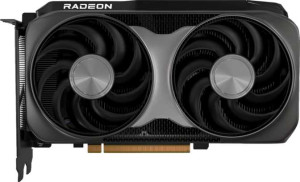
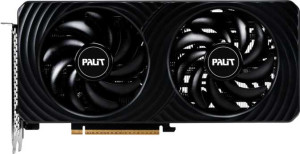
Both cards share a solid common foundation — DirectX 12 Ultimate, OpenGL 4.6, ray tracing support, and multi-display capability — so the meaningful conversation here is about what sets them apart. The single biggest differentiator is DLSS support on the RTX 5060 Ti, which the RX 9060 XT entirely lacks. DLSS uses AI-based upscaling to render frames at a lower internal resolution and reconstruct them at a higher output resolution, often recovering significant performance in demanding titles with minimal visual quality loss. For gamers targeting high frame rates or playing at 4K, this is a genuinely impactful feature, not a checkbox item.
A few smaller gaps also favor the 5060 Ti. Its OpenCL 3.0 support (versus 2.2 on the RX 9060 XT) is relevant for GPU compute applications, offering access to a broader and more modern feature set. It also supports 4 simultaneous displays compared to the RX 9060 XT's 3, which matters in niche multi-monitor productivity setups. The RX 9060 XT counters with AMD SAM (Smart Access Memory), which can improve performance when paired with a compatible AMD CPU — but this benefit is platform-specific and conditional, not universal.
Viewed as a whole, the RTX 5060 Ti holds a clear advantage in this group. DLSS alone is a substantial real-world feature for gaming use cases, and the additional OpenCL and display count leads reinforce that edge. The RX 9060 XT's feature set is competitive but lacks an equivalent to DLSS, which is the most user-facing differentiator in day-to-day gaming scenarios.