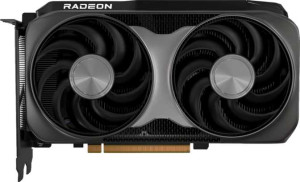
AMD Radeon RX 9060 XT 8GB
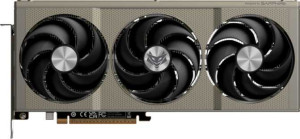
Sapphire Nitro+ Radeon RX 9060 XT 16GB

AMD Radeon RX 9060 XT 8GB Sapphire Nitro+ Radeon RX 9060 XT 16GB

Common Features

  • Both products have 2518 MHz GPU memory speed.
  • Both products have 2048 shading units.
  • Both products have 128 texture mapping units (TMUs).
  • Both products have 64 render output units (ROPs).
  • Both products support double precision floating point (DPFP).
  • Both products have DirectX version 12 Ultimate support.
  • Both products have OpenGL version 4.6 support.
  • Both products have OpenCL version 2.2 support.
  • Both products support multi-display technology.
  • Both products support ray tracing.
  • Both products support 3D.
  • Both products have FSR4 support.
  • Both products have an HDMI output.
  • Both products have one HDMI port.
  • Both products have HDMI version 2.1b.
  • Both products have two DisplayPort outputs.
  • Both products have no USB-C ports.
  • Both products have no DVI outputs.
  • Both products have no mini DisplayPort outputs.
  • Both products have RDNA 4.0 GPU architecture.

Main Differences

  • GPU clock speed is 1700 MHz on AMD Radeon RX 9060 XT 8GB and 1900 MHz on Sapphire Nitro+ Radeon RX 9060 XT 16GB.
  • GPU turbo is 3130 MHz on AMD Radeon RX 9060 XT 8GB and 3320 MHz on Sapphire Nitro+ Radeon RX 9060 XT 16GB.
  • Pixel rate is 200.3 GPixel/s on AMD Radeon RX 9060 XT 8GB and 212.5 GPixel/s on Sapphire Nitro+ Radeon RX 9060 XT 16GB.
  • Floating-point performance is 25.6 TFLOPS on AMD Radeon RX 9060 XT 8GB and 27.2 TFLOPS on Sapphire Nitro+ Radeon RX 9060 XT 16GB.
  • Texture rate is 400.6 GTexels/s on AMD Radeon RX 9060 XT 8GB and 425 GTexels/s on Sapphire Nitro+ Radeon RX 9060 XT 16GB.
  • Maximum memory bandwidth is 320 GB/s on AMD Radeon RX 9060 XT 8GB and 322.3 GB/s on Sapphire Nitro+ Radeon RX 9060 XT 16GB.
  • VRAM is 8GB on AMD Radeon RX 9060 XT 8GB and 16GB on Sapphire Nitro+ Radeon RX 9060 XT 16GB.
  • RGB lighting is not present on AMD Radeon RX 9060 XT 8GB but is available on Sapphire Nitro+ Radeon RX 9060 XT 16GB.
  • Thermal Design Power (TDP) is 160W on AMD Radeon RX 9060 XT 8GB and 182W on Sapphire Nitro+ Radeon RX 9060 XT 16GB.
  • Width is 267 mm on AMD Radeon RX 9060 XT 8GB and 300 mm on Sapphire Nitro+ Radeon RX 9060 XT 16GB.
  • Height is 111 mm on AMD Radeon RX 9060 XT 8GB and 131 mm on Sapphire Nitro+ Radeon RX 9060 XT 16GB.
Specs Comparison
AMD Radeon RX 9060 XT 8GB

AMD Radeon RX 9060 XT 8GB

Sapphire Nitro+ Radeon RX 9060 XT 16GB

Sapphire Nitro+ Radeon RX 9060 XT 16GB

Performance:
GPU clock speed 1700 MHz 1900 MHz
GPU turbo 3130 MHz 3320 MHz
pixel rate 200.3 GPixel/s 212.5 GPixel/s
floating-point performance 25.6 TFLOPS 27.2 TFLOPS
texture rate 400.6 GTexels/s 425 GTexels/s
GPU memory speed 2518 MHz 2518 MHz
shading units 2048 2048
texture mapping units (TMUs) 128 128
render output units (ROPs) 64 64
Has Double Precision Floating Point (DPFP)

The AMD Radeon RX 9060 XT 8GB and the Sapphire Nitro+ Radeon RX 9060 XT 16GB both feature similar core configurations but differ in key performance areas. For instance, the AMD Radeon RX 9060 XT has a GPU clock speed of 1700 MHz, which is slightly lower than the 1900 MHz GPU clock speed of the Sapphire Nitro+ version. Similarly, the GPU turbo frequency for the Sapphire card is higher at 3320 MHz, compared to the 3130 MHz on the AMD Radeon RX 9060 XT.

In terms of pixel rate, the Sapphire Nitro+ Radeon RX 9060 XT achieves a slightly higher 212.5 GPixel/s, while the AMD Radeon RX 9060 XT offers 200.3 GPixel/s. The texture rate also shows a difference, with the Sapphire version hitting 425 GTexels/s, a bit ahead of the AMD card’s 400.6 GTexels/s.

Both cards feature the same GPU memory speed of 2518 MHz, with 2048 shading units, 128 texture mapping units (TMUs), and 64 render output units (ROPs). Additionally, both cards support Double Precision Floating Point (DPFP), ensuring compatibility with high-precision calculations. The floating-point performance is slightly higher for the Sapphire Nitro+ model, rated at 27.2 TFLOPS compared to the 25.6 TFLOPS of the AMD Radeon RX 9060 XT.

Memory:
effective memory speed 20000 MHz 20000 MHz
maximum memory bandwidth 320 GB/s 322.3 GB/s
VRAM 8GB 16GB
GDDR version GDDR6 GDDR6
memory bus width 128-bit 128-bit
Supports ECC memory

The AMD Radeon RX 9060 XT 8GB and the Sapphire Nitro+ Radeon RX 9060 XT 16GB have similar memory configurations but with some key differences. Both cards feature an effective memory speed of 20000 MHz and use GDDR6 memory, which ensures fast data processing. However, the Sapphire Nitro+ version offers 16GB of VRAM, while the AMD Radeon RX 9060 XT has 8GB of VRAM.

In terms of memory bandwidth, the Sapphire Nitro+ card slightly outperforms the AMD Radeon RX 9060 XT, offering a maximum memory bandwidth of 322.3 GB/s compared to the 320 GB/s of the AMD card.

Both cards share a 128-bit memory bus width and support Error Correcting Code (ECC) memory, which helps improve data integrity by detecting and correcting memory errors.

Features:
DirectX version DirectX 12 Ultimate DirectX 12 Ultimate
OpenGL version 4.6 4.6
OpenCL version 2.2 2.2
Supports multi-display technology
supports ray tracing
Supports 3D
supports DLSS
has FSR4
has XeSS (XMX)
AMD SAM / Intel Resizable BAR AMD SAM AMD SAM
has LHR
has RGB lighting
supported displays 3 3

The AMD Radeon RX 9060 XT 8GB and the Sapphire Nitro+ Radeon RX 9060 XT 16GB are very similar in their feature sets, with both cards supporting DirectX 12 Ultimate, OpenGL 4.6, and OpenCL 2.2. Both also support multi-display technology, ray tracing, and 3D, making them suitable for high-end graphical tasks. They also share the same support for FSR4, but neither card supports DLSS or has XeSS (XMX) functionality.

Where the two differ is in RGB lighting: the AMD Radeon RX 9060 XT does not feature RGB lighting, while the Sapphire Nitro+ version includes it. Both cards support up to three displays and feature AMD SAM (Smart Access Memory), with no mention of Intel's Resizable BAR. Additionally, both cards do not have LHR (Lite Hash Rate) restrictions, ensuring full mining performance.

Overall, the key difference lies in the inclusion of RGB lighting on the Sapphire Nitro+ model, but otherwise, both cards offer very similar features for gaming and professional workloads.

Ports:
has an HDMI output
HDMI ports 1 1
HDMI version HDMI 2.1b HDMI 2.1b
DisplayPort outputs 2 2
USB-C ports 0 0
DVI outputs 0 0
mini DisplayPort outputs 0 0

The AMD Radeon RX 9060 XT 8GB and the Sapphire Nitro+ Radeon RX 9060 XT 16GB have identical port configurations. Both cards feature one HDMI output with HDMI 2.1b support, two DisplayPort outputs, and no USB-C, DVI, or mini DisplayPort outputs.

In terms of HDMI and DisplayPort connectivity, the two products are exactly the same, offering the same number of ports and supporting the same HDMI version. Both cards do not include USB-C or DVI outputs, and neither has mini DisplayPort outputs, making their port options virtually identical.

Thus, there is no distinction between the two cards in terms of available ports.

General info:
GPU architecture RDNA 4.0 RDNA 4.0
release date May 2025 June 2025
Thermal Design Power (TDP) 160W 182W
PCI Express (PCIe) version 5 5
semiconductor size 4 nm 4 nm
number of transistors 29700 million 29700 million
Has air-water cooling
width 267 mm 300 mm
height 111 mm 131 mm

The AMD Radeon RX 9060 XT 8GB and the Sapphire Nitro+ Radeon RX 9060 XT 16GB share the same GPU architecture (RDNA 4.0), semiconductor size (4 nm), and number of transistors (29,700 million), making their core design virtually identical. Both cards also support PCIe 5.0 for fast data transfer between the GPU and the rest of the system.

However, there are differences in thermal design power (TDP) and physical dimensions. The AMD Radeon RX 9060 XT has a TDP of 160W, whereas the Sapphire Nitro+ model has a higher TDP of 182W. This difference in power consumption reflects the increased VRAM in the Sapphire card. Additionally, the Sapphire card is physically larger, measuring 300 mm in width and 131 mm in height, compared to the 267 mm width and 111 mm height of the AMD Radeon RX 9060 XT.

Neither card includes air-water cooling, but the differences in size and TDP could influence the cooling requirements for each card in a system build.

Comparison Summary

This is a specification comparison between AMD Radeon RX 9060 XT 8GB and Sapphire Nitro+ Radeon RX 9060 XT 16GB. Both products share RDNA 4.0 GPU architecture, DirectX version 12 Ultimate support, and multi-display technology. However, key differences include the GPU clock speed of 1700 MHz on the AMD version versus 1900 MHz on the Sapphire model, as well as the VRAM capacity of 8GB on the AMD card compared to 16GB on the Sapphire card. The Thermal Design Power (TDP) is 160W on the AMD card and 182W on the Sapphire card. Additionally, RGB lighting is not available on the AMD model but is present on the Sapphire version.