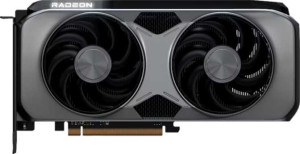
The core architectural gap between these two GPUs is substantial. The RX 9070 XT ships with 4096 shading units versus 3072 on the RX 9070 GRE — a one-third increase in raw compute throughput that cascades into every performance metric. This is not a minor silicon binning difference; it reflects a meaningfully larger GPU die, which means more parallel workloads can be processed simultaneously, benefiting everything from rasterized gaming to compute tasks.
That shading unit advantage, combined with higher clock speeds at both base (1660 MHz vs 1420 MHz) and boost (2970 MHz vs 2790 MHz), compounds into dramatic output figures. The XT delivers 48.7 TFLOPS of floating-point performance against 34.3 TFLOPS on the GRE — roughly 42% more raw compute. Its pixel fill rate of 380.2 GPixel/s vs 267.8 GPixel/s and texture rate of 760.3 GTexels/s vs 535.7 GTexels/s translate directly to higher sustainable frame rates at demanding resolutions and with complex scene geometry. The faster memory clock on the XT (2518 MHz vs 2250 MHz) also ensures the larger shader array stays better fed with data, reducing potential bandwidth bottlenecks.
Both cards support Double Precision Floating Point, which is relevant for compute and professional workloads beyond gaming, so neither holds an exclusive advantage there. Overall, the RX 9070 XT holds a clear and consistent performance edge in this group across every measurable dimension — clock speeds, compute throughput, fill rates, and memory bandwidth. The GRE is not a slow card, but the XT outclasses it by a margin large enough to matter at higher resolutions and quality settings.