AMD Radeon RX 9070 GRE
Nvidia GeForce RTX 5070 Ti

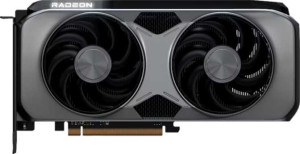
AMD Radeon RX 9070 GRE Nvidia GeForce RTX 5070 Ti

Overview

This comparison brings together two powerful mid-to-high-end GPUs from rival camps: the AMD Radeon RX 9070 GRE and the Nvidia GeForce RTX 5070 Ti. While they share a common PCIe 5 platform, ray tracing support, and identical display output configurations, the battle heats up around memory bandwidth and throughput, floating-point performance, power consumption, and ecosystem features like DLSS. Dive in to see which card wins for your workload.

Common Features

  • Both products have 96 render output units (ROPs).
  • Double Precision Floating Point support is available on both products.
  • ECC memory support is available on both products.
  • Both products support DirectX 12 Ultimate and OpenGL 4.6.
  • Multi-display technology, ray tracing, and 3D support are all available on both products.
  • XeSS (XMX) support is not available on either product.
  • Neither product has LHR, and both support up to 4 connected displays.
  • Both products include one HDMI 2.1b output and 3 DisplayPort outputs, with no USB-C, DVI, or mini DisplayPort outputs.
  • Both products connect via PCIe 5 and do not use air-water cooling.

Main Differences

  • Base GPU clock speed is 1420 MHz on AMD Radeon RX 9070 GRE and 2300 MHz on Nvidia GeForce RTX 5070 Ti.
  • GPU turbo clock speed is 2790 MHz on AMD Radeon RX 9070 GRE and 2450 MHz on Nvidia GeForce RTX 5070 Ti.
  • Pixel rate is 267.8 GPixel/s on AMD Radeon RX 9070 GRE and 235.2 GPixel/s on Nvidia GeForce RTX 5070 Ti.
  • Floating-point performance is 34.3 TFLOPS on AMD Radeon RX 9070 GRE and 43.94 TFLOPS on Nvidia GeForce RTX 5070 Ti.
  • Texture rate is 535.7 GTexels/s on AMD Radeon RX 9070 GRE and 686.6 GTexels/s on Nvidia GeForce RTX 5070 Ti.
  • Shading units number 3072 on AMD Radeon RX 9070 GRE and 8960 on Nvidia GeForce RTX 5070 Ti.
  • Texture mapping units number 192 on AMD Radeon RX 9070 GRE and 280 on Nvidia GeForce RTX 5070 Ti.
  • Effective memory speed is 18000 MHz on AMD Radeon RX 9070 GRE and 28000 MHz on Nvidia GeForce RTX 5070 Ti.
  • Maximum memory bandwidth is 432 GB/s on AMD Radeon RX 9070 GRE and 896 GB/s on Nvidia GeForce RTX 5070 Ti.
  • VRAM is 12 GB on AMD Radeon RX 9070 GRE and 16 GB on Nvidia GeForce RTX 5070 Ti.
  • Video memory type is GDDR6 on AMD Radeon RX 9070 GRE and GDDR7 on Nvidia GeForce RTX 5070 Ti.
  • Memory bus width is 192-bit on AMD Radeon RX 9070 GRE and 256-bit on Nvidia GeForce RTX 5070 Ti.
  • OpenCL version is 2.2 on AMD Radeon RX 9070 GRE and 3 on Nvidia GeForce RTX 5070 Ti.
  • DLSS support is present on Nvidia GeForce RTX 5070 Ti but not available on AMD Radeon RX 9070 GRE.
  • AMD Radeon RX 9070 GRE supports AMD SAM while Nvidia GeForce RTX 5070 Ti supports Intel Resizable BAR.
  • RGB lighting is present on AMD Radeon RX 9070 GRE but not available on Nvidia GeForce RTX 5070 Ti.
  • GPU architecture is RDNA 4.0 on AMD Radeon RX 9070 GRE and Blackwell on Nvidia GeForce RTX 5070 Ti.
  • Thermal Design Power is 220 W on AMD Radeon RX 9070 GRE and 300 W on Nvidia GeForce RTX 5070 Ti.
  • Semiconductor size is 4 nm on AMD Radeon RX 9070 GRE and 5 nm on Nvidia GeForce RTX 5070 Ti.
  • Number of transistors is 53900 million on AMD Radeon RX 9070 GRE and 45600 million on Nvidia GeForce RTX 5070 Ti.
Specs Comparison
AMD Radeon RX 9070 GRE

AMD Radeon RX 9070 GRE

Nvidia GeForce RTX 5070 Ti

Nvidia GeForce RTX 5070 Ti

Performance:
GPU clock speed 1420 MHz 2300 MHz
GPU turbo 2790 MHz 2450 MHz
pixel rate 267.8 GPixel/s 235.2 GPixel/s
floating-point performance 34.3 TFLOPS 43.94 TFLOPS
texture rate 535.7 GTexels/s 686.6 GTexels/s
GPU memory speed 2250 MHz 1750 MHz
shading units 3072 8960
texture mapping units (TMUs) 192 280
render output units (ROPs) 96 96
Has Double Precision Floating Point (DPFP)

The most striking structural difference between these two GPUs lies in their shader counts and raw compute throughput. The RTX 5070 Ti deploys 8,960 shading units against the RX 9070 GRE's 3,072 — nearly three times as many — and this gap propagates directly into floating-point performance: 43.94 TFLOPS versus 34.3 TFLOPS. Combined with 280 TMUs delivering a texture rate of 686.6 GTexels/s, the 5070 Ti holds a clear compute and texturing advantage, which in practice translates to headroom for heavier shader workloads, higher-resolution rendering, and AI-accelerated features that lean on raw throughput.

The RX 9070 GRE punches back in a couple of specific areas. Its pixel rate of 267.8 GPixel/s actually edges out the 5070 Ti's 235.2 GPixel/s, despite both sharing the same 96 ROPs — a result of the AMD card's dramatically higher GPU turbo clock of 2790 MHz compared to the Nvidia card's 2450 MHz. A higher pixel fill rate matters most at high resolutions with heavy rasterization loads, so the RX 9070 GRE can be competitive in traditional rasterized workloads where the bottleneck falls on pixel output. Its memory speed of 2250 MHz also outpaces the 5070 Ti's 1750 MHz, meaning faster data delivery to the shader cores it does have. Worth noting is the unusually wide boost range on the AMD card (base of only 1420 MHz climbing to 2790 MHz), suggesting aggressive dynamic clocking behavior.

Overall, the RTX 5070 Ti holds a clear performance edge in this group. Its shading unit advantage is too large to be overcome by the RX 9070 GRE's clock speed and pixel-rate leads in the majority of GPU-bound scenarios, especially those involving heavy compute, texturing, or AI-assisted rendering pipelines. The RX 9070 GRE's higher pixel fill rate offers a narrower, scenario-specific counter, but the 5070 Ti's compute headroom is the more broadly applicable advantage.
Memory:
effective memory speed 18000 MHz 28000 MHz
maximum memory bandwidth 432 GB/s 896 GB/s
VRAM 12GB 16GB
GDDR version GDDR6 GDDR7
memory bus width 192-bit 256-bit
Supports ECC memory

The AMD Radeon RX 9070 GRE and Nvidia GeForce RTX 5070 Ti differ significantly in their memory specifications. The RX 9070 GRE is equipped with 12GB of VRAM, while the RTX 5070 Ti has a larger 16GB of VRAM. The RX 9070 GRE uses GDDR6 memory, while the RTX 5070 Ti features the newer GDDR7 memory standard. This difference in memory type could impact performance in specific workloads that benefit from the higher bandwidth of GDDR7.

When it comes to effective memory speed, the RX 9070 GRE operates at 18000 MHz, while the RTX 5070 Ti’s memory speed is much higher at 28000 MHz, which suggests better potential data throughput for the Nvidia card. In terms of memory bandwidth, the RX 9070 GRE achieves a maximum of 432 GB/s, whereas the RTX 5070 Ti delivers a much higher bandwidth of 896 GB/s, reflecting a substantial advantage in raw memory data transfer capabilities.

Both cards support ECC memory, which ensures error correction for improved stability during heavy workloads. The RX 9070 GRE has a 192-bit memory bus width, while the RTX 5070 Ti has a wider 256-bit memory bus, which contributes to its higher memory bandwidth and data transfer efficiency.

Features:
DirectX version DirectX 12 Ultimate DirectX 12 Ultimate
OpenGL version 4.6 4.6
OpenCL version 2.2 3
Supports multi-display technology
supports ray tracing
Supports 3D
supports DLSS
has XeSS (XMX)
AMD SAM / Intel Resizable BAR AMD SAM Intel Resizable BAR
has LHR
has RGB lighting
supported displays 4 4

The AMD Radeon RX 9070 GRE and Nvidia GeForce RTX 5070 Ti offer several similar features, with some key differences. Both cards support DirectX 12 Ultimate, OpenGL 4.6, and OpenCL 2.2 or 3, with the RX 9070 GRE supporting OpenCL 2.2 and the RTX 5070 Ti supporting OpenCL 3, showing a slight version difference in the OpenCL support. Both cards also support multi-display technology, ray tracing, and 3D functionality, offering a solid range of modern graphical capabilities.

One major difference is in the support for DLSS (Deep Learning Super Sampling). The RX 9070 GRE does not support DLSS, while the RTX 5070 Ti does, which could be a significant advantage for users looking to improve performance in supported games through upscaling techniques. Both cards also do not have XeSS (XMX) support, and both lack LHR (Lite Hash Rate) for cryptocurrency mining restrictions.

The AMD Radeon RX 9070 GRE includes RGB lighting, which is absent on the RTX 5070 Ti. In terms of display support, both cards can handle up to 4 supported displays. Additionally, the RX 9070 GRE uses AMD SAM (Smart Access Memory), while the RTX 5070 Ti uses Intel Resizable BAR, each corresponding to their respective platform’s memory access optimization technology.

Ports:
has an HDMI output
HDMI ports 1 1
HDMI version HDMI 2.1b HDMI 2.1b
DisplayPort outputs 3 3
USB-C ports 0 0
DVI outputs 0 0
mini DisplayPort outputs 0 0

The AMD Radeon RX 9070 GRE and Nvidia GeForce RTX 5070 Ti have identical port configurations. Both cards feature 1 HDMI port with HDMI 2.1b support, as well as 3 DisplayPort outputs. Neither card has USB-C ports, DVI outputs, or mini DisplayPort outputs. This makes their connectivity options essentially the same in terms of video output.

Both cards offer HDMI 2.1b, ensuring support for high refresh rates and resolutions on compatible displays, as well as the capability to drive multiple monitors through the 3 DisplayPort outputs. The lack of USB-C and mini DisplayPort outputs on both cards means they share the same limitations in terms of newer, alternative display connections.

General info:
GPU architecture RDNA 4.0 Blackwell
release date April 2025 January 2025
Thermal Design Power (TDP) 220W 300W
PCI Express (PCIe) version 5 5
semiconductor size 4 nm 5 nm
number of transistors 53900 million 45600 million
Has air-water cooling

The AMD Radeon RX 9070 GRE and Nvidia GeForce RTX 5070 Ti differ in several key general specifications. The RX 9070 GRE is based on the RDNA 4.0 GPU architecture, while the RTX 5070 Ti uses the Blackwell architecture. Both cards feature PCI Express version 5, ensuring high-speed communication with compatible motherboards.

In terms of thermal design power (TDP), the RX 9070 GRE has a lower TDP of 220W compared to the RTX 5070 Ti's 300W, meaning the Nvidia card requires more power for operation. The RX 9070 GRE also uses a smaller semiconductor size of 4 nm, while the RTX 5070 Ti is built on a 5 nm process, which could impact efficiency and performance, though both are relatively advanced processes.

The RX 9070 GRE contains 53.9 billion transistors, while the RTX 5070 Ti has slightly fewer at 45.6 billion transistors. Neither card features air-water cooling, relying on standard cooling solutions for their thermal management.

Comparison Summary & Verdict

Both GPUs deliver a solid foundation with PCIe 5 support, ray tracing, DirectX 12 Ultimate, ECC memory, and identical display output setups. However, their strengths diverge clearly. The AMD Radeon RX 9070 GRE stands out with a higher GPU turbo clock of 2790 MHz, a superior pixel rate of 267.8 GPixel/s, a more efficient 4 nm die with 53900 million transistors, a lower 220 W TDP, and RGB lighting — making it a compelling choice for power-conscious buyers on the AMD ecosystem. The Nvidia GeForce RTX 5070 Ti counters with considerably higher floating-point performance at 43.94 TFLOPS, 16 GB of faster GDDR7 memory on a 256-bit bus, 896 GB/s of memory bandwidth, DLSS support, and a larger shader array — making it the stronger pick for compute-heavy tasks and AI-accelerated gaming workloads.

AMD Radeon RX 9070 GRE
Buy AMD Radeon RX 9070 GRE if...

Buy the AMD Radeon RX 9070 GRE if you want a higher GPU turbo clock, a more efficient 4 nm chip, a lower 220 W TDP, and RGB lighting at a reduced power budget within the AMD ecosystem.

Nvidia GeForce RTX 5070 Ti
Buy Nvidia GeForce RTX 5070 Ti if...

Buy the Nvidia GeForce RTX 5070 Ti if you need higher floating-point performance, 16 GB of faster GDDR7 memory with 896 GB/s bandwidth, and DLSS support for AI-accelerated gaming and demanding compute workloads.