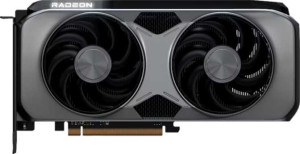
AMD Radeon RX 9070 GRE
Nvidia GeForce RTX 5090

AMD Radeon RX 9070 GRE Nvidia GeForce RTX 5090

Overview

Welcome to our in-depth specification comparison between the AMD Radeon RX 9070 GRE and the Nvidia GeForce RTX 5090. These two GPUs represent very different positions in the graphics card market, and this page breaks down exactly where they stand on key battlegrounds including raw compute performance, memory configuration, power consumption, and feature support. Read on to see how every spec stacks up side by side.

Common Features

  • Both products support Double Precision Floating Point (DPFP).
  • Both products support ECC memory.
  • Both products support DirectX 12 Ultimate.
  • Both products support OpenGL version 4.6.
  • Both products support multi-display technology.
  • Both products support ray tracing.
  • Both products support 3D.
  • Neither product has XeSS (XMX) support.
  • Neither product has LHR.
  • Both products support up to 4 displays.
  • Both products have an HDMI output with 1 HDMI port at version 2.1b.
  • Both products have 3 DisplayPort outputs.
  • Neither product has USB-C ports.
  • Neither product has DVI outputs.
  • Neither product has mini DisplayPort outputs.
  • Both products use PCI Express (PCIe) version 5.
  • Neither product uses air-water cooling.

Main Differences

  • GPU clock speed is 1420 MHz on AMD Radeon RX 9070 GRE and 2010 MHz on Nvidia GeForce RTX 5090.
  • GPU turbo speed is 2790 MHz on AMD Radeon RX 9070 GRE and 2410 MHz on Nvidia GeForce RTX 5090.
  • Pixel rate is 267.8 GPixel/s on AMD Radeon RX 9070 GRE and 424.2 GPixel/s on Nvidia GeForce RTX 5090.
  • Floating-point performance is 34.3 TFLOPS on AMD Radeon RX 9070 GRE and 104.9 TFLOPS on Nvidia GeForce RTX 5090.
  • Texture rate is 535.7 GTexels/s on AMD Radeon RX 9070 GRE and 1638.8 GTexels/s on Nvidia GeForce RTX 5090.
  • GPU memory speed is 2250 MHz on AMD Radeon RX 9070 GRE and 1750 MHz on Nvidia GeForce RTX 5090.
  • Shading units count is 3072 on AMD Radeon RX 9070 GRE and 21760 on Nvidia GeForce RTX 5090.
  • Texture mapping units (TMUs) number 192 on AMD Radeon RX 9070 GRE and 680 on Nvidia GeForce RTX 5090.
  • Render output units (ROPs) number 96 on AMD Radeon RX 9070 GRE and 176 on Nvidia GeForce RTX 5090.
  • Effective memory speed is 18000 MHz on AMD Radeon RX 9070 GRE and 28000 MHz on Nvidia GeForce RTX 5090.
  • Maximum memory bandwidth is 432 GB/s on AMD Radeon RX 9070 GRE and 1792 GB/s on Nvidia GeForce RTX 5090.
  • VRAM is 12GB on AMD Radeon RX 9070 GRE and 32GB on Nvidia GeForce RTX 5090.
  • GDDR version is GDDR6 on AMD Radeon RX 9070 GRE and GDDR7 on Nvidia GeForce RTX 5090.
  • Memory bus width is 192-bit on AMD Radeon RX 9070 GRE and 512-bit on Nvidia GeForce RTX 5090.
  • OpenCL version is 2.2 on AMD Radeon RX 9070 GRE and 3 on Nvidia GeForce RTX 5090.
  • DLSS support is available on Nvidia GeForce RTX 5090 but not on AMD Radeon RX 9070 GRE.
  • AMD Radeon RX 9070 GRE uses AMD SAM while Nvidia GeForce RTX 5090 uses Intel Resizable BAR.
  • RGB lighting is present on AMD Radeon RX 9070 GRE but not available on Nvidia GeForce RTX 5090.
  • GPU architecture is RDNA 4.0 on AMD Radeon RX 9070 GRE and Blackwell on Nvidia GeForce RTX 5090.
  • Thermal Design Power (TDP) is 220W on AMD Radeon RX 9070 GRE and 575W on Nvidia GeForce RTX 5090.
  • Semiconductor size is 4 nm on AMD Radeon RX 9070 GRE and 5 nm on Nvidia GeForce RTX 5090.
  • Number of transistors is 53900 million on AMD Radeon RX 9070 GRE and 92200 million on Nvidia GeForce RTX 5090.
Specs Comparison
AMD Radeon RX 9070 GRE

AMD Radeon RX 9070 GRE

Nvidia GeForce RTX 5090

Nvidia GeForce RTX 5090

Performance:
GPU clock speed 1420 MHz 2010 MHz
GPU turbo 2790 MHz 2410 MHz
pixel rate 267.8 GPixel/s 424.2 GPixel/s
floating-point performance 34.3 TFLOPS 104.9 TFLOPS
texture rate 535.7 GTexels/s 1638.8 GTexels/s
GPU memory speed 2250 MHz 1750 MHz
shading units 3072 21760
texture mapping units (TMUs) 192 680
render output units (ROPs) 96 176
Has Double Precision Floating Point (DPFP)

The raw compute gap between these two GPUs is enormous. The RTX 5090 delivers 104.9 TFLOPS of floating-point performance against the RX 9070 GRE's 34.3 TFLOPS — roughly a 3× advantage — driven primarily by its massive 21,760 shading units compared to the RX 9070 GRE's 3,072. In practice, this translates directly into substantially higher throughput in compute-heavy workloads like ray tracing, AI-accelerated rendering, and simulation tasks. The RTX 5090 also holds a commanding lead in texture throughput (1,638.8 GTexels/s vs. 535.7 GTexels/s) and pixel fill rate (424.2 GPixel/s vs. 267.8 GPixel/s), meaning it can push far more geometry and pixels per second — a tangible benefit at very high resolutions and in geometry-dense scenes.

Interestingly, the RX 9070 GRE punches back in clock-speed metrics. Its GPU turbo of 2,790 MHz surpasses the RTX 5090's 2,410 MHz, and its memory runs at a faster 2,250 MHz versus 1,750 MHz. Higher clock speeds can improve per-thread latency and single-tile performance, but with only a fraction of the shader and TMU count, the RX 9070 GRE cannot overcome the RTX 5090's parallelism advantage in aggregate throughput. The faster memory speed on the RX 9070 GRE is a genuine strength for bandwidth-sensitive workloads, though without knowing bus width from these specs alone, it cannot fully offset the 5090's overwhelming core advantage.

Both cards support Double Precision Floating Point (DPFP), making them each viable for professional compute tasks that require 64-bit precision. Overall, the RTX 5090 holds a decisive performance edge across virtually every throughput metric in this group. The RX 9070 GRE's higher boost clock and memory speed are noteworthy, but they represent incremental advantages that do not close the wide gap in shader count and compute power. For users prioritizing maximum raw performance, the RTX 5090 is in a different class entirely.
Memory:
effective memory speed 18000 MHz 28000 MHz
maximum memory bandwidth 432 GB/s 1792 GB/s
VRAM 12GB 32GB
GDDR version GDDR6 GDDR7
memory bus width 192-bit 512-bit
Supports ECC memory

Memory bandwidth is often the hidden bottleneck that determines real-world GPU performance, and here the gap is staggering. The RTX 5090 achieves 1,792 GB/s of maximum memory bandwidth — over four times the RX 9070 GRE's 432 GB/s. This advantage is the product of two compounding factors: a much wider 512-bit memory bus (versus a 192-bit bus on the RX 9070 GRE) and faster GDDR7 memory running at an effective 28,000 MHz, compared to the RX 9070 GRE's GDDR6 at 18,000 MHz. In bandwidth-hungry scenarios — 4K texture streaming, large-scale AI inference, or complex rasterization pipelines — the RTX 5090's memory subsystem will sustain throughput that the RX 9070 GRE simply cannot match.

The VRAM capacity difference is equally significant. With 32GB of VRAM, the RTX 5090 can comfortably handle large AI model weights, high-resolution texture packs, and multi-display workloads without spilling data to system memory. The RX 9070 GRE's 12GB is functional for mainstream gaming and moderate creative work, but it becomes a real constraint when loading very large assets or running memory-intensive generative AI workloads locally. In those use cases, hitting the VRAM ceiling causes performance to fall off sharply — a situation the RTX 5090 is far less likely to encounter.

Both cards support ECC (Error-Correcting Code) memory, which adds reliability for professional and scientific workloads by detecting and correcting single-bit memory errors. That shared feature aside, the memory comparison is decisively one-sided. The RTX 5090 holds an overwhelming advantage in every meaningful dimension — bandwidth, capacity, bus width, and memory generation — making it the clear winner for any workload where memory is the limiting factor.

Features:
DirectX version DirectX 12 Ultimate DirectX 12 Ultimate
OpenGL version 4.6 4.6
OpenCL version 2.2 3
Supports multi-display technology
supports ray tracing
Supports 3D
supports DLSS
has XeSS (XMX)
AMD SAM / Intel Resizable BAR AMD SAM Intel Resizable BAR
has LHR
has RGB lighting
supported displays 4 4

On paper, these two GPUs share a strong common foundation: both support DirectX 12 Ultimate, OpenGL 4.6, ray tracing, 3D output, and up to 4 simultaneous displays. For the vast majority of games and professional applications, these shared capabilities mean users on either card will have access to the same core rendering feature set. The RTX 5090 does edge ahead with OpenCL 3 support versus the RX 9070 GRE's OpenCL 2.2 — a meaningful distinction for developers and researchers leveraging GPU-accelerated compute libraries, as OpenCL 3 offers greater flexibility in feature adoption.

The most impactful differentiator in this group is upscaling technology. The RTX 5090 supports DLSS, Nvidia's AI-driven upscaling suite, while the RX 9070 GRE does not. In supported titles, DLSS can dramatically boost frame rates at high resolutions with minimal perceptible quality loss — and with DLSS 4's Multi Frame Generation, it can multiply output frames significantly. The RX 9070 GRE's absence of DLSS (and XeSS) support means it relies entirely on native rendering or AMD's own upscaling solutions, neither of which is listed in these specs. For gamers prioritizing frame rate headroom at 4K, this is a genuine practical disadvantage for the RX 9070 GRE.

Two minor but notable points round out the comparison. The RX 9070 GRE features AMD SAM (Smart Access Memory) while the RTX 5090 uses Intel Resizable BAR — functionally similar technologies that allow the CPU broader access to VRAM, with real but typically modest performance benefits depending on the workload. The RX 9070 GRE also includes RGB lighting, which the RTX 5090 lacks — a purely aesthetic consideration. Overall, the RTX 5090 holds a meaningful edge in this group, primarily due to DLSS support and the newer OpenCL version.

Ports:
has an HDMI output
HDMI ports 1 1
HDMI version HDMI 2.1b HDMI 2.1b
DisplayPort outputs 3 3
USB-C ports 0 0
DVI outputs 0 0
mini DisplayPort outputs 0 0

When it comes to display connectivity, these two cards are a perfect match — spec for spec. Both offer 1 HDMI 2.1b port and 3 DisplayPort outputs, supporting up to four simultaneous displays, with no USB-C, DVI, or mini DisplayPort options on either card. The shared HDMI 2.1b standard is worth noting: it supports 4K at up to 144Hz, 8K at 60Hz, and 10K output, along with features like Variable Refresh Rate (VRR) and enhanced Audio Return Channel — making both cards well-equipped for high-refresh-rate and ultra-high-resolution display setups.

The three DisplayPort outputs complement the HDMI port well for multi-monitor configurations, giving users flexible options for mixing display types or building a wide productivity or gaming array. Neither card offering a USB-C port is a minor omission for users who want to connect modern portable displays or VR headsets via a single cable, but it is equally absent on both sides, so it creates no competitive gap here.

This group is an unambiguous tie. Every port type, count, and version is identical across both GPUs. A buyer's display connectivity needs will be equally well served by either card, and port selection should play no role in the decision between them.

General info:
GPU architecture RDNA 4.0 Blackwell
release date April 2025 January 2025
Thermal Design Power (TDP) 220W 575W
PCI Express (PCIe) version 5 5
semiconductor size 4 nm 5 nm
number of transistors 53900 million 92200 million
Has air-water cooling

The architectural divide here tells an important story. The RX 9070 GRE is built on AMD's RDNA 4.0 architecture using a 4nm process node, while the RTX 5090 is based on Nvidia's Blackwell architecture manufactured at 5nm. The RX 9070 GRE's smaller node gives it a fabrication efficiency edge at the silicon level — smaller transistors generally mean better performance-per-watt at the process level. Yet the RTX 5090 compensates with sheer transistor volume: 92,200 million transistors versus the RX 9070 GRE's 53,900 million. That 71% transistor count advantage is what enables Nvidia to pack in the massive shader arrays and memory interfaces seen in the other spec groups, even if it requires a less leading-edge node to do so.

The power consumption gap is where this comparison becomes most consequential for buyers. The RTX 5090's 575W TDP is more than 2.6× the RX 9070 GRE's 220W. In practice, this means the RTX 5090 demands a high-end power supply — typically 1000W or more for a full system — along with robust case airflow and a motherboard capable of delivering stable power delivery. The RX 9070 GRE's 220W is far more accommodating of mid-range builds and existing PSUs. For users in thermally constrained environments or those conscious of long-term electricity costs, this difference is material, not marginal.

Both cards share PCIe 5.0 connectivity and rely solely on air cooling, putting them on equal footing in system integration flexibility. Overall, the RX 9070 GRE holds a clear advantage in power efficiency, while the RTX 5090's dominant transistor count reflects its positioning as a no-compromise flagship. Which card wins here depends entirely on the buyer's priorities: raw silicon scale favors the RTX 5090, but system practicality and efficiency lean firmly toward the RX 9070 GRE.

Comparison Summary & Verdict

After examining all the evidence, the two cards serve distinctly different audiences. The Nvidia GeForce RTX 5090 dominates in sheer horsepower, boasting 104.9 TFLOPS of floating-point performance, a massive 32GB of GDDR7 memory on a 512-bit bus, and exclusive DLSS support, making it the clear choice for enthusiasts who demand the absolute best in rendering, AI-accelerated workloads, and future-proofing. The AMD Radeon RX 9070 GRE, on the other hand, offers a notably more efficient profile at just 220W TDP, a finer 4nm process node, a higher GPU turbo clock of 2790 MHz, and RGB lighting, making it a compelling option for users who want capable modern performance without the extreme power demands or price premium of a flagship card.

AMD Radeon RX 9070 GRE
Buy AMD Radeon RX 9070 GRE if...

Buy the AMD Radeon RX 9070 GRE if you want a power-efficient modern GPU with a higher turbo clock speed and a finer 4nm process, without the extreme power draw of a flagship card.

Nvidia GeForce RTX 5090
Buy Nvidia GeForce RTX 5090 if...

Buy the Nvidia GeForce RTX 5090 if you need maximum graphics performance, with over 104 TFLOPS of compute power, 32GB of GDDR7 memory, and DLSS support for demanding workloads and top-tier gaming.