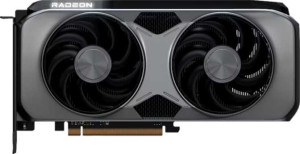
AMD Radeon RX 9070 GRE
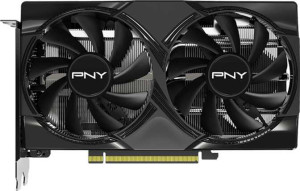
PNY GeForce RTX 5060 OC Dual Fan

AMD Radeon RX 9070 GRE PNY GeForce RTX 5060 OC Dual Fan

Common Features

  • Both products support DirectX version 12 Ultimate.
  • Both products support OpenGL version 4.6.
  • Both products support multi-display technology.
  • Both products support ray tracing.
  • Both products support 3D.
  • Both products support a maximum of 4 displays.
  • Both products have an HDMI output.
  • Both products have 1 HDMI port.
  • Both products support HDMI version 2.1b.
  • Both products have 3 DisplayPort outputs.
  • Both products have no USB-C ports.
  • Both products have no DVI outputs.
  • Both products have no mini DisplayPort outputs.
  • Both products use PCI Express (PCIe) version 5.
  • Both products do not feature air-water cooling.
  • Both products support ECC memory.
  • Both products have double precision floating point (DPFP) support.
  • Both products support the latest memory technologies.
  • Both products have shading units.
  • Both products have texture mapping units (TMUs).

Main Differences

  • GPU clock speed is 1420 MHz on AMD Radeon RX 9070 GRE and 2280 MHz on PNY GeForce RTX 5060 OC Dual Fan.
  • GPU turbo is 2790 MHz on AMD Radeon RX 9070 GRE and 2535 MHz on PNY GeForce RTX 5060 OC Dual Fan.
  • Pixel rate is 267.8 GPixel/s on AMD Radeon RX 9070 GRE and 121.7 GPixel/s on PNY GeForce RTX 5060 OC Dual Fan.
  • Floating-point performance is 34.3 TFLOPS on AMD Radeon RX 9070 GRE and 19.47 TFLOPS on PNY GeForce RTX 5060 OC Dual Fan.
  • Texture rate is 535.7 GTexels/s on AMD Radeon RX 9070 GRE and 304.2 GTexels/s on PNY GeForce RTX 5060 OC Dual Fan.
  • GPU memory speed is 2250 MHz on AMD Radeon RX 9070 GRE and 1750 MHz on PNY GeForce RTX 5060 OC Dual Fan.
  • Shading units are 3072 on AMD Radeon RX 9070 GRE and 3840 on PNY GeForce RTX 5060 OC Dual Fan.
  • Texture mapping units (TMUs) are 192 on AMD Radeon RX 9070 GRE and 120 on PNY GeForce RTX 5060 OC Dual Fan.
  • Render output units (ROPs) are 96 on AMD Radeon RX 9070 GRE and 48 on PNY GeForce RTX 5060 OC Dual Fan.
  • Effective memory speed is 18000 MHz on AMD Radeon RX 9070 GRE and 28000 MHz on PNY GeForce RTX 5060 OC Dual Fan.
  • Maximum memory bandwidth is 432 GB/s on AMD Radeon RX 9070 GRE and 448 GB/s on PNY GeForce RTX 5060 OC Dual Fan.
  • VRAM is 12GB on AMD Radeon RX 9070 GRE and 8GB on PNY GeForce RTX 5060 OC Dual Fan.
  • GDDR version is GDDR6 on AMD Radeon RX 9070 GRE and GDDR7 on PNY GeForce RTX 5060 OC Dual Fan.
  • Memory bus width is 192-bit on AMD Radeon RX 9070 GRE and 128-bit on PNY GeForce RTX 5060 OC Dual Fan.
  • OpenCL version is 2.2 on AMD Radeon RX 9070 GRE and 3 on PNY GeForce RTX 5060 OC Dual Fan.
  • PNY GeForce RTX 5060 OC Dual Fan supports DLSS, while AMD Radeon RX 9070 GRE does not.
  • AMD Radeon RX 9070 GRE uses AMD SAM, while PNY GeForce RTX 5060 OC Dual Fan uses Intel Resizable BAR.
  • AMD Radeon RX 9070 GRE has RGB lighting, while PNY GeForce RTX 5060 OC Dual Fan does not.
  • GPU architecture is RDNA 4.0 on AMD Radeon RX 9070 GRE and Blackwell on PNY GeForce RTX 5060 OC Dual Fan.
  • Thermal Design Power (TDP) is 220W on AMD Radeon RX 9070 GRE and 145W on PNY GeForce RTX 5060 OC Dual Fan.
  • Semiconductor size is 4 nm on AMD Radeon RX 9070 GRE and 5 nm on PNY GeForce RTX 5060 OC Dual Fan.
  • The number of transistors is 53900 million on AMD Radeon RX 9070 GRE and 21900 million on PNY GeForce RTX 5060 OC Dual Fan.
Specs Comparison
AMD Radeon RX 9070 GRE

AMD Radeon RX 9070 GRE

PNY GeForce RTX 5060 OC Dual Fan

PNY GeForce RTX 5060 OC Dual Fan

Performance:
GPU clock speed 1420 MHz 2280 MHz
GPU turbo 2790 MHz 2535 MHz
pixel rate 267.8 GPixel/s 121.7 GPixel/s
floating-point performance 34.3 TFLOPS 19.47 TFLOPS
texture rate 535.7 GTexels/s 304.2 GTexels/s
GPU memory speed 2250 MHz 1750 MHz
shading units 3072 3840
texture mapping units (TMUs) 192 120
render output units (ROPs) 96 48
Has Double Precision Floating Point (DPFP)

The AMD Radeon RX 9070 GRE and the PNY GeForce RTX 5060 OC Dual Fan differ significantly in several performance aspects. The GPU clock speed for the RX 9070 GRE is 1420 MHz, which is lower than the 2280 MHz of the RTX 5060. However, the RX 9070 GRE has a higher turbo speed of 2790 MHz compared to the RTX 5060's 2535 MHz.

In terms of pixel rate, the RX 9070 GRE again leads with 267.8 GPixel/s, while the RTX 5060 produces 121.7 GPixel/s. The RX 9070 GRE also has a higher floating-point performance at 34.3 TFLOPS versus the RTX 5060's 19.47 TFLOPS. For texture rate, the RX 9070 GRE is also ahead, offering 535.7 GTexels/s compared to the RTX 5060's 304.2 GTexels/s.

Looking at GPU memory speed, the RX 9070 GRE operates at 2250 MHz, which is faster than the RTX 5060's 1750 MHz. The RX 9070 GRE features 3072 shading units, 192 TMUs, and 96 ROPs, while the RTX 5060 has 3840 shading units, 120 TMUs, and 48 ROPs. Both products support Double Precision Floating Point (DPFP), but only the RX 9070 GRE lists this explicitly in its specs.

Memory:
effective memory speed 18000 MHz 28000 MHz
maximum memory bandwidth 432 GB/s 448 GB/s
VRAM 12GB 8GB
GDDR version GDDR6 GDDR7
memory bus width 192-bit 128-bit
Supports ECC memory

The AMD Radeon RX 9070 GRE and the PNY GeForce RTX 5060 OC Dual Fan have some notable differences in their memory specifications. The RX 9070 GRE features an effective memory speed of 18000 MHz, while the RTX 5060 offers a much faster 28000 MHz. In terms of memory bandwidth, the RX 9070 GRE provides a maximum of 432 GB/s, whereas the RTX 5060 has a slightly higher maximum bandwidth of 448 GB/s.

For VRAM, the RX 9070 GRE comes equipped with 12GB, whereas the RTX 5060 has only 8GB of VRAM. The RX 9070 GRE uses GDDR6 memory, while the RTX 5060 utilizes the newer GDDR7 memory type. The memory bus width of the RX 9070 GRE is 192-bit, which is wider than the 128-bit memory bus of the RTX 5060.

Both products support ECC memory, which ensures error correction for more reliable data handling, so they are aligned in this respect.

Features:
DirectX version DirectX 12 Ultimate DirectX 12 Ultimate
OpenGL version 4.6 4.6
OpenCL version 2.2 3
Supports multi-display technology
supports ray tracing
Supports 3D
supports DLSS
has XeSS (XMX)
AMD SAM / Intel Resizable BAR AMD SAM Intel Resizable BAR
has LHR
has RGB lighting
supported displays 4 4

The AMD Radeon RX 9070 GRE and the PNY GeForce RTX 5060 OC Dual Fan share some similar features but also have a few differences. Both cards support DirectX 12 Ultimate, OpenGL 4.6, and ray tracing, ensuring compatibility with modern games and technologies. The RX 9070 GRE supports OpenCL 2.2, while the RTX 5060 is slightly more advanced with OpenCL 3.0.

Both cards support multi-display technology and 3D, so you can easily set up multiple monitors or enjoy immersive 3D content. The RX 9070 GRE does not support DLSS, whereas the RTX 5060 does, offering access to NVIDIA's deep learning super sampling technology for enhanced performance. Neither card supports XeSS (XMX), which is Intel’s alternative to DLSS.

In terms of platform support, the RX 9070 GRE uses AMD SAM (Smart Access Memory), while the RTX 5060 utilizes Intel Resizable BAR, both of which optimize CPU-to-GPU data transfer for better performance. The RX 9070 GRE features RGB lighting, while the RTX 5060 does not. Both products support up to four displays, offering flexibility for multi-monitor setups.

Ports:
has an HDMI output
HDMI ports 1 1
HDMI version HDMI 2.1b HDMI 2.1b
DisplayPort outputs 3 3
USB-C ports 0 0
DVI outputs 0 0
mini DisplayPort outputs 0 0

The AMD Radeon RX 9070 GRE and the PNY GeForce RTX 5060 OC Dual Fan have identical port configurations. Both cards feature one HDMI output with HDMI 2.1b support, allowing high-quality video and audio transmission. Additionally, both cards include three DisplayPort outputs for connecting multiple monitors.

Neither card has USB-C, DVI, or mini DisplayPort outputs, so both are limited to HDMI and DisplayPort for display connections. The port setups for both cards are otherwise the same, offering standard connectivity options without any major distinctions.

General info:
GPU architecture RDNA 4.0 Blackwell
release date April 2025 May 2025
Thermal Design Power (TDP) 220W 145W
PCI Express (PCIe) version 5 5
semiconductor size 4 nm 5 nm
number of transistors 53900 million 21900 million
Has air-water cooling

The AMD Radeon RX 9070 GRE and the PNY GeForce RTX 5060 OC Dual Fan differ in several general specifications. The RX 9070 GRE is built on the RDNA 4.0 architecture, while the RTX 5060 uses the Blackwell architecture. In terms of power consumption, the RX 9070 GRE has a higher thermal design power (TDP) of 220W compared to the RTX 5060's 145W, indicating that the RX 9070 GRE requires more power for its operation.

Both cards support PCIe 5.0, ensuring fast data transfer between the GPU and the rest of the system. The RX 9070 GRE has a semiconductor size of 4 nm, while the RTX 5060 is built on a 5 nm process. The number of transistors also differs, with the RX 9070 GRE containing 53.9 billion transistors, whereas the RTX 5060 has 21.9 billion transistors.

Neither card features air-water cooling, meaning they rely on traditional air cooling solutions.

Comparison Summary

This is a specification comparison between AMD Radeon RX 9070 GRE and PNY GeForce RTX 5060 OC Dual Fan. Both products support DirectX 12 Ultimate, OpenGL version 4.6, and multi-display technology. They also feature ECC memory support and have HDMI outputs with HDMI 2.1b support. In terms of differences, the AMD Radeon RX 9070 GRE has a GPU clock speed of 1420 MHz, whereas the PNY GeForce RTX 5060 OC Dual Fan operates at 2280 MHz. The AMD card offers 12GB of VRAM, while the PNY card comes with 8GB. Additionally, the AMD Radeon RX 9070 GRE features RDNA 4.0 architecture, and the PNY card uses Blackwell architecture.