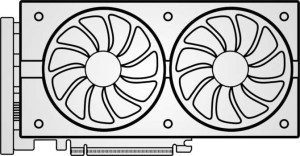
AMD Radeon RX 9070
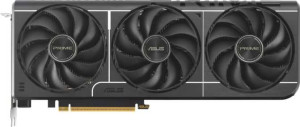
Asus Prime GeForce RTX 5060 Ti 16GB

AMD Radeon RX 9070 Asus Prime GeForce RTX 5060 Ti 16GB

Overview

Welcome to this in-depth specification face-off between the AMD Radeon RX 9070 and the Asus Prime GeForce RTX 5060 Ti 16GB — two mid-to-high-range graphics cards built on cutting-edge 5 nm processes and sharing the same 16GB VRAM capacity. Despite their surface similarities, these two GPUs take very different architectural paths, with key battlegrounds spanning raw compute throughput, memory subsystem design, power efficiency, and feature sets worth examining closely before making your decision.

Common Features

  • Both cards support Double Precision Floating Point (DPFP).
  • Both cards come with 16GB of VRAM.
  • ECC memory support is available on both products.
  • Both cards are built on a 5 nm semiconductor process.
  • Both cards use PCI Express 5.0.
  • DirectX 12 Ultimate is supported on both products.
  • Both cards support OpenGL version 4.6.
  • Multi-display technology is supported on both products.
  • Ray tracing support is available on both products.
  • 3D support is available on both products.
  • XeSS (XMX) support is not available on either product.
  • LHR is not present on either product.
  • RGB lighting is not available on either product.
  • Both cards include one HDMI output and three DisplayPort outputs.
  • Neither card has any USB-C or DVI outputs.
  • Neither card has any mini DisplayPort outputs.
  • Air-water cooling is not available on either product.

Main Differences

  • GPU base clock speed is 1330 MHz on the AMD Radeon RX 9070 and 2407 MHz on the Asus Prime GeForce RTX 5060 Ti 16GB.
  • GPU turbo clock speed is 2520 MHz on the AMD Radeon RX 9070 and 2572 MHz on the Asus Prime GeForce RTX 5060 Ti 16GB.
  • Pixel rate is 322.6 GPixel/s on the AMD Radeon RX 9070 and 123.5 GPixel/s on the Asus Prime GeForce RTX 5060 Ti 16GB.
  • Floating-point performance is 36.1 TFLOPS on the AMD Radeon RX 9070 and 23.7 TFLOPS on the Asus Prime GeForce RTX 5060 Ti 16GB.
  • Texture rate is 564.5 GTexels/s on the AMD Radeon RX 9070 and 370.4 GTexels/s on the Asus Prime GeForce RTX 5060 Ti 16GB.
  • GPU memory speed is 2518 MHz on the AMD Radeon RX 9070 and 1750 MHz on the Asus Prime GeForce RTX 5060 Ti 16GB.
  • Shading units number 3584 on the AMD Radeon RX 9070 and 4608 on the Asus Prime GeForce RTX 5060 Ti 16GB.
  • Texture mapping units (TMUs) total 224 on the AMD Radeon RX 9070 and 144 on the Asus Prime GeForce RTX 5060 Ti 16GB.
  • Render output units (ROPs) total 128 on the AMD Radeon RX 9070 and 48 on the Asus Prime GeForce RTX 5060 Ti 16GB.
  • Effective memory speed is 20000 MHz on the AMD Radeon RX 9070 and 28000 MHz on the Asus Prime GeForce RTX 5060 Ti 16GB.
  • Maximum memory bandwidth is 640 GB/s on the AMD Radeon RX 9070 and 448 GB/s on the Asus Prime GeForce RTX 5060 Ti 16GB.
  • The AMD Radeon RX 9070 uses GDDR6 memory, while the Asus Prime GeForce RTX 5060 Ti 16GB uses GDDR7.
  • Memory bus width is 256-bit on the AMD Radeon RX 9070 and 128-bit on the Asus Prime GeForce RTX 5060 Ti 16GB.
  • OpenCL version is 2.2 on the AMD Radeon RX 9070 and 3 on the Asus Prime GeForce RTX 5060 Ti 16GB.
  • The AMD Radeon RX 9070 uses AMD SAM, while the Asus Prime GeForce RTX 5060 Ti 16GB uses Intel Resizable BAR.
  • HDMI version is 2.1a on the AMD Radeon RX 9070 and 2.1b on the Asus Prime GeForce RTX 5060 Ti 16GB.
  • GPU architecture is RDNA 4.0 on the AMD Radeon RX 9070 and Blackwell on the Asus Prime GeForce RTX 5060 Ti 16GB.
  • Thermal Design Power (TDP) is 220W on the AMD Radeon RX 9070 and 180W on the Asus Prime GeForce RTX 5060 Ti 16GB.
  • Transistor count is 53900 million on the AMD Radeon RX 9070 and 21900 million on the Asus Prime GeForce RTX 5060 Ti 16GB.
  • Card dimensions are 267 mm wide and 111 mm tall on the AMD Radeon RX 9070, versus 304 mm wide and 120 mm tall on the Asus Prime GeForce RTX 5060 Ti 16GB.
Specs Comparison
AMD Radeon RX 9070

AMD Radeon RX 9070

Asus Prime GeForce RTX 5060 Ti 16GB

Asus Prime GeForce RTX 5060 Ti 16GB

Performance:
GPU clock speed 1330 MHz 2407 MHz
GPU turbo 2520 MHz 2572 MHz
pixel rate 322.6 GPixel/s 123.5 GPixel/s
floating-point performance 36.1 TFLOPS 23.7 TFLOPS
texture rate 564.5 GTexels/s 370.4 GTexels/s
GPU memory speed 2518 MHz 1750 MHz
shading units 3584 4608
texture mapping units (TMUs) 224 144
render output units (ROPs) 128 48
Has Double Precision Floating Point (DPFP)

Looking at raw throughput, the AMD Radeon RX 9070 holds a decisive advantage across most of the metrics that matter most to rendering performance. Its 36.1 TFLOPS of floating-point performance outpaces the RTX 5060 Ti's 23.7 TFLOPS by over 50%, and this gap is reinforced by a substantially higher pixel rate (322.6 GPixel/s vs. 123.5 GPixel/s) and texture rate (564.5 GTexels/s vs. 370.4 GTexels/s). In practice, pixel rate governs how quickly a GPU can fill the screen with rendered output — especially important at higher resolutions — while texture rate reflects how fast the card can apply surface detail to geometry. The RX 9070's lead in both is significant and translates directly to smoother high-resolution rendering and better performance in texture-heavy scenes.

A large part of why the RX 9070 achieves these figures is its wider back-end pipeline: it features 128 ROPs compared to just 48 ROPs on the RTX 5060 Ti — nearly a 3x advantage. ROPs (Render Output Units) are the final stage of the rendering pipeline responsible for writing pixels to the framebuffer, so fewer ROPs create a bottleneck that limits pixel throughput regardless of how powerful the rest of the GPU is. The RX 9070 also has more Texture Mapping Units (224 vs. 144 TMUs) and faster GPU memory speed (2518 MHz vs. 1750 MHz), meaning it can feed its wider pipeline more efficiently. The RTX 5060 Ti counters with a higher shading unit count (4608 vs. 3584) and a noticeably higher base clock (2407 MHz vs. 1330 MHz), but its much narrower ROP and TMU configuration means those shader processors are often left waiting, limiting real-world gains from that theoretical advantage.

Overall, the RX 9070 has a clear performance edge in this group. While the RTX 5060 Ti's higher shader count and base clock are not irrelevant, the RX 9070's superior TFLOPS, pixel fill rate, texture throughput, ROP count, and memory speed paint a consistent picture of a card designed with broader, higher-throughput rendering in mind. Users prioritizing raw rasterization performance — particularly at 1440p and above — will find the RX 9070 the stronger option based strictly on these specifications.

Memory:
effective memory speed 20000 MHz 28000 MHz
maximum memory bandwidth 640 GB/s 448 GB/s
VRAM 16GB 16GB
GDDR version GDDR6 GDDR7
memory bus width 256-bit 128-bit
Supports ECC memory

The AMD Radeon RX 9070 and Asus Prime GeForce RTX 5060 Ti 16GB feature different memory configurations. Both products have 16GB of VRAM, but they differ in memory speed, bandwidth, and architecture. The RX 9070 uses GDDR6 memory with an effective memory speed of 20000 MHz, while the RTX 5060 Ti is equipped with the newer GDDR7 memory running at a faster effective memory speed of 28000 MHz.

In terms of maximum memory bandwidth, the RX 9070 offers 640 GB/s, which is higher than the RTX 5060 Ti's 448 GB/s. This suggests that the RX 9070 may have an advantage in tasks that require higher bandwidth for memory-intensive operations. The memory bus width of the RX 9070 is 256-bit, compared to the 128-bit bus width of the RTX 5060 Ti, which further contributes to the RX 9070's higher bandwidth.

Both cards support ECC (Error-Correcting Code) memory, ensuring data integrity, but this feature is not exclusive to either product. Overall, while both cards provide 16GB of VRAM and ECC support, their memory specifications reflect different design priorities, with the RX 9070 focusing on higher bandwidth and a wider bus, while the RTX 5060 Ti prioritizes faster memory speed with GDDR7 technology.

Features:
DirectX version DirectX 12 Ultimate DirectX 12 Ultimate
OpenGL version 4.6 4.6
OpenCL version 2.2 3
Supports multi-display technology
supports ray tracing
Supports 3D
has XeSS (XMX)
AMD SAM / Intel Resizable BAR AMD SAM Intel Resizable BAR
has LHR
has RGB lighting
supported displays 4 4

The AMD Radeon RX 9070 and Asus Prime GeForce RTX 5060 Ti 16GB share several key features, but there are a few differences. Both products support DirectX 12 Ultimate, OpenGL 4.6, and ray tracing, making them capable of handling modern graphics technologies. They also both support multi-display technology and 3D, offering a similar level of flexibility for users who require immersive visual experiences.

However, there is a difference in their OpenCL versions: the RX 9070 supports OpenCL 2.2, while the RTX 5060 Ti supports the newer OpenCL 3. These small differences could impact performance in specific workloads that rely on OpenCL features. Additionally, while both cards support up to 4 displays, the RX 9070 features AMD SAM (Smart Access Memory), while the RTX 5060 Ti supports Intel Resizable BAR. This reflects a difference in platform-specific optimizations, with each card tied to different technology ecosystems.

Both cards lack XeSS (XMX) support, have no RGB lighting, and do not feature LHR (Lite Hash Rate) technology. Overall, while both GPUs share many core features, the RX 9070 and RTX 5060 Ti differ in terms of OpenCL version and memory-related optimizations (AMD SAM vs Intel Resizable BAR), which could influence performance depending on the system configuration.

Ports:
has an HDMI output
HDMI ports 1 1
HDMI version HDMI 2.1a HDMI 2.1b
DisplayPort outputs 3 3
USB-C ports 0 0
DVI outputs 0 0
mini DisplayPort outputs 0 0

Both the AMD Radeon RX 9070 and the Asus Prime GeForce RTX 5060 Ti 16GB offer a similar port configuration, with both featuring an HDMI output, a single HDMI port, and three DisplayPort outputs. The RX 9070 uses HDMI 2.1a, while the RTX 5060 Ti utilizes HDMI 2.1b. This difference in HDMI version could lead to slight variations in support for certain features, such as refresh rates or bandwidth capabilities, though both versions are quite advanced.

Neither card includes USB-C ports, DVI outputs, or mini DisplayPort outputs, so both cards share the same limitations in terms of alternative display connections.

In summary, the RX 9070 and RTX 5060 Ti have nearly identical port setups, with the only difference being the HDMI version, where the RX 9070 has HDMI 2.1a and the RTX 5060 Ti has HDMI 2.1b. Both are equipped for handling modern display standards and multi-display setups.

General info:
GPU architecture RDNA 4.0 Blackwell
release date January 2025 April 2025
Thermal Design Power (TDP) 220W 180W
PCI Express (PCIe) version 5 5
semiconductor size 5 nm 5 nm
number of transistors 53900 million 21900 million
Has air-water cooling
width 267 mm 304 mm
height 111 mm 120 mm

The AMD Radeon RX 9070 and the Asus Prime GeForce RTX 5060 Ti 16GB feature different general specifications, despite both sharing a PCI Express (PCIe) version 5 and a 5 nm semiconductor size. The RX 9070 is built on the RDNA 4.0 architecture, while the RTX 5060 Ti uses the Blackwell architecture.

In terms of power consumption, the RX 9070 has a higher Thermal Design Power (TDP) of 220W, compared to the 180W TDP of the RTX 5060 Ti. This indicates that the RX 9070 may require more power for operation. Additionally, the RX 9070 has a larger number of transistors at 53900 million, surpassing the 21900 million transistors of the RTX 5060 Ti, which may suggest a more complex design in terms of processing capabilities.

Both cards do not feature air-water cooling systems. In terms of physical dimensions, the RX 9070 is 267 mm in width and 111 mm in height, while the RTX 5060 Ti is slightly larger, with a width of 304 mm and a height of 120 mm. This makes the RTX 5060 Ti a bit bulkier in size.

Comparison Summary & Verdict

After a thorough look at the specs, both cards deliver capable rasterization and ray tracing performance, but they clearly target different priorities. The AMD Radeon RX 9070 stands out with a superior 640 GB/s memory bandwidth, a wider 256-bit bus, dramatically higher pixel and texture rates, and significantly greater floating-point throughput at 36.1 TFLOPS — making it the stronger pick for pure rendering workloads. The Asus Prime GeForce RTX 5060 Ti 16GB counters with faster GDDR7 memory at 28000 MHz effective speed, a higher shading unit count of 4608, a newer OpenCL 3 implementation, and a notably lower 180W TDP, making it the more power-efficient and compact option. Both cards share DirectX 12 Ultimate, ray tracing support, and identical port configurations, so the choice ultimately comes down to whether you prioritize raw throughput or power efficiency and memory technology.

AMD Radeon RX 9070
Buy AMD Radeon RX 9070 if...

Buy the AMD Radeon RX 9070 if you want maximum rasterization throughput, higher memory bandwidth, and superior floating-point performance for demanding rendering workloads.

Asus Prime GeForce RTX 5060 Ti 16GB
Buy Asus Prime GeForce RTX 5060 Ti 16GB if...

Buy the Asus Prime GeForce RTX 5060 Ti 16GB if you prioritize faster GDDR7 memory technology, a lower power draw of 180W, and a higher shading unit count in a more compact card.