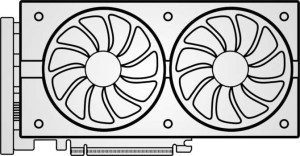
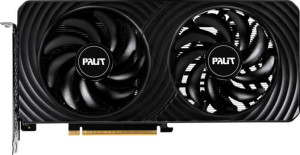
AMD Radeon RX 9070
Palit GeForce RTX 5050 Dual OC

AMD Radeon RX 9070 Palit GeForce RTX 5050 Dual OC

Overview

Welcome to our in-depth specification comparison between the AMD Radeon RX 9070 and the Palit GeForce RTX 5050 Dual OC — two GPUs built on different architectures and aimed at distinct segments of the graphics card market. In this head-to-head, we examine the key battlegrounds of raw compute performance, memory capacity and bandwidth, power efficiency, and feature sets to help you determine which card truly fits your needs.

Common Features

  • Both GPUs support Double Precision Floating Point (DPFP).
  • Both cards use GDDR6 memory with an effective memory speed of 20000 MHz.
  • Both GPUs support ECC memory.
  • Both cards support DirectX 12 Ultimate.
  • Both GPUs support OpenGL 4.6.
  • Both cards support multi-display technology.
  • Both GPUs support ray tracing.
  • Both cards support 3D rendering.
  • Neither card features XeSS (XMX) support.
  • Neither card uses LHR (Lite Hash Rate) technology.
  • Both GPUs can drive up to 4 supported displays.
  • Both cards include 1 HDMI output and 3 DisplayPort outputs.
  • Neither card has any USB-C or DVI outputs.
  • Neither card has mini DisplayPort outputs.
  • Both cards use PCIe version 5.
  • Both GPUs are built on a 5 nm semiconductor process.
  • Neither card uses air-water cooling.

Main Differences

  • GPU base clock speed is 1330 MHz on AMD Radeon RX 9070 and 2317 MHz on Palit GeForce RTX 5050 Dual OC.
  • GPU turbo clock speed is 2520 MHz on AMD Radeon RX 9070 and 2647 MHz on Palit GeForce RTX 5050 Dual OC.
  • Pixel rate is 322.6 GPixel/s on AMD Radeon RX 9070 and 84.7 GPixel/s on Palit GeForce RTX 5050 Dual OC.
  • Floating-point performance is 36.1 TFLOPS on AMD Radeon RX 9070 and 13.55 TFLOPS on Palit GeForce RTX 5050 Dual OC.
  • Texture rate is 564.5 GTexels/s on AMD Radeon RX 9070 and 211.8 GTexels/s on Palit GeForce RTX 5050 Dual OC.
  • GPU memory speed is 2518 MHz on AMD Radeon RX 9070 and 1750 MHz on Palit GeForce RTX 5050 Dual OC.
  • Shading units count is 3584 on AMD Radeon RX 9070 and 2560 on Palit GeForce RTX 5050 Dual OC.
  • Texture mapping units (TMUs) number 224 on AMD Radeon RX 9070 and 80 on Palit GeForce RTX 5050 Dual OC.
  • Render output units (ROPs) number 128 on AMD Radeon RX 9070 and 32 on Palit GeForce RTX 5050 Dual OC.
  • Maximum memory bandwidth is 640 GB/s on AMD Radeon RX 9070 and 320 GB/s on Palit GeForce RTX 5050 Dual OC.
  • VRAM capacity is 16GB on AMD Radeon RX 9070 and 8GB on Palit GeForce RTX 5050 Dual OC.
  • Memory bus width is 256-bit on AMD Radeon RX 9070 and 128-bit on Palit GeForce RTX 5050 Dual OC.
  • OpenCL version is 2.2 on AMD Radeon RX 9070 and 3 on Palit GeForce RTX 5050 Dual OC.
  • AMD Radeon RX 9070 uses AMD SAM while Palit GeForce RTX 5050 Dual OC uses Intel Resizable BAR.
  • RGB lighting is present on Palit GeForce RTX 5050 Dual OC but not available on AMD Radeon RX 9070.
  • HDMI version is 2.1a on AMD Radeon RX 9070 and 2.1b on Palit GeForce RTX 5050 Dual OC.
  • GPU architecture is RDNA 4.0 on AMD Radeon RX 9070 and Blackwell on Palit GeForce RTX 5050 Dual OC.
  • Thermal Design Power (TDP) is 220W on AMD Radeon RX 9070 and 130W on Palit GeForce RTX 5050 Dual OC.
  • Transistor count is 53900 million on AMD Radeon RX 9070 and 16900 million on Palit GeForce RTX 5050 Dual OC.
  • Card width is 267 mm on AMD Radeon RX 9070 and 262.1 mm on Palit GeForce RTX 5050 Dual OC, while height is 111 mm on AMD Radeon RX 9070 and 126.3 mm on Palit GeForce RTX 5050 Dual OC.
Specs Comparison
AMD Radeon RX 9070

AMD Radeon RX 9070

Palit GeForce RTX 5050 Dual OC

Palit GeForce RTX 5050 Dual OC

Performance:
GPU clock speed 1330 MHz 2317 MHz
GPU turbo 2520 MHz 2647 MHz
pixel rate 322.6 GPixel/s 84.7 GPixel/s
floating-point performance 36.1 TFLOPS 13.55 TFLOPS
texture rate 564.5 GTexels/s 211.8 GTexels/s
GPU memory speed 2518 MHz 1750 MHz
shading units 3584 2560
texture mapping units (TMUs) 224 80
render output units (ROPs) 128 32
Has Double Precision Floating Point (DPFP)

On raw compute throughput, the AMD Radeon RX 9070 holds a commanding lead. Its 36.1 TFLOPS of floating-point performance is nearly three times the 13.55 TFLOPS delivered by the Palit RTX 5050 Dual OC — a gap that directly translates to faster shader processing in complex rendering workloads, heavier post-processing effects, and higher sustainable frame rates at demanding resolutions. The RX 9070 also fields significantly more shading units (3584 vs. 2560), giving it greater parallelism for compute-heavy tasks.

Where the difference becomes especially stark is in rasterization output. The RX 9070′s 128 ROPs versus the RTX 5050′s 32 ROPs — a 4× advantage — explains its pixel rate lead of 322.6 GPixel/s against just 84.7 GPixel/s. ROPs are the final stage of the rendering pipeline responsible for writing completed pixels to the framebuffer; fewer ROPs create a bottleneck at higher resolutions and with anti-aliasing enabled, meaning the RTX 5050 will feel that constraint much sooner. The RX 9070 similarly leads on texture throughput (564.5 vs. 211.8 GTexels/s), which matters for texture-heavy scenes and higher-resolution texture assets.

The RTX 5050 does post a higher base and boost clock speed (2647 MHz turbo vs. 2520 MHz), but clock speed alone cannot compensate for its much narrower execution resources. Both GPUs support Double Precision Floating Point, though this is rarely relevant in gaming contexts. Overall, the RX 9070 holds a clear and substantial performance advantage across every major compute and rasterization metric in this group — the RTX 5050 is in a different performance tier entirely.

Memory:
effective memory speed 20000 MHz 20000 MHz
maximum memory bandwidth 640 GB/s 320 GB/s
VRAM 16GB 8GB
GDDR version GDDR6 GDDR6
memory bus width 256-bit 128-bit
Supports ECC memory

When comparing the memory specifications of the AMD Radeon RX 9070 and Palit GeForce RTX 5050 Dual OC, both products feature an effective memory speed of 20000 MHz and utilize GDDR6 memory. However, they differ significantly in other memory-related aspects. The RX 9070 comes with a substantial 16GB of VRAM, whereas the RTX 5050 has only 8GB of VRAM. This difference in memory size is notable, with the Radeon card providing double the VRAM of the GeForce model.

In terms of memory bandwidth, the RX 9070 also outperforms the RTX 5050 with a maximum bandwidth of 640 GB/s, compared to the 320 GB/s offered by the RTX 5050. This indicates that the RX 9070 can handle more data transfer per second, contributing to higher memory throughput.

Both cards use a 256-bit memory bus width, although the RTX 5050 is limited to a 128-bit memory bus width. This smaller bus width in the RTX 5050 further restricts its overall memory bandwidth. Additionally, both products support ECC (Error-Correcting Code) memory, ensuring data integrity, but there are no differences in this feature between the two cards.

Features:
DirectX version DirectX 12 Ultimate DirectX 12 Ultimate
OpenGL version 4.6 4.6
OpenCL version 2.2 3
Supports multi-display technology
supports ray tracing
Supports 3D
has XeSS (XMX)
AMD SAM / Intel Resizable BAR AMD SAM Intel Resizable BAR
has LHR
has RGB lighting
supported displays 4 4

The AMD Radeon RX 9070 and Palit GeForce RTX 5050 Dual OC share several features, including support for DirectX 12 Ultimate, OpenGL 4.6, OpenCL 2.2 (for the RX 9070) and 3.0 (for the RTX 5050), and multi-display technology. Both cards are also capable of ray tracing and 3D support. However, there are some differences between the two products in terms of additional features. The Radeon RX 9070 uses AMD SAM (Smart Access Memory) while the RTX 5050 uses Intel Resizable BAR, indicating a difference in platform optimization.

Another key difference is the presence of RGB lighting on the RTX 5050, which is not available on the RX 9070. Additionally, while both cards do not have XeSS (XMX) support, the RX 9070 is notably free of any LHR (Low Hash Rate) restrictions, while the RTX 5050 also lacks LHR. Both products support a maximum of 4 displays.

Overall, while both cards offer similar foundational features, the differences in memory versions, platform optimizations, and additional design elements like RGB lighting distinguish the two products.

Ports:
has an HDMI output
HDMI ports 1 1
HDMI version HDMI 2.1a HDMI 2.1b
DisplayPort outputs 3 3
USB-C ports 0 0
DVI outputs 0 0
mini DisplayPort outputs 0 0

Both the AMD Radeon RX 9070 and Palit GeForce RTX 5050 Dual OC offer similar port configurations. Each card features one HDMI output, with the RX 9070 supporting HDMI 2.1a and the RTX 5050 supporting HDMI 2.1b, indicating a minor difference in the HDMI version used. Both products also have three DisplayPort outputs, but neither supports USB-C, DVI, or mini DisplayPort outputs.

In terms of HDMI ports, the configurations are identical with both cards offering only a single HDMI port. Therefore, the major distinction lies in the HDMI version, with the RTX 5050 supporting a slightly newer HDMI 2.1b version compared to the RX 9070’s HDMI 2.1a.

Ultimately, while both cards offer a similar set of outputs, the HDMI version is the only area where the two differ, with the RTX 5050 supporting HDMI 2.1b, which could provide small advantages in certain scenarios with compatible displays.

General info:
GPU architecture RDNA 4.0 Blackwell
release date January 2025 June 2025
Thermal Design Power (TDP) 220W 130W
PCI Express (PCIe) version 5 5
semiconductor size 5 nm 5 nm
number of transistors 53900 million 16900 million
Has air-water cooling
width 267 mm 262.1 mm
height 111 mm 126.3 mm

The AMD Radeon RX 9070 and Palit GeForce RTX 5050 Dual OC both use the latest PCI Express 5.0 interface and are built on a 5 nm semiconductor process, ensuring modern performance and efficiency. However, there are significant differences in their other general specifications. The RX 9070 features the RDNA 4.0 architecture, while the RTX 5050 uses the Blackwell architecture.

In terms of power consumption, the RX 9070 has a Thermal Design Power (TDP) of 220W, which is considerably higher than the RTX 5050’s 130W TDP. This suggests that the RX 9070 requires more power for operation. The number of transistors also differs, with the RX 9070 containing 53.9 billion transistors, compared to the RTX 5050’s 16.9 billion transistors, indicating a more complex GPU design in the RX 9070.

Both products are not equipped with air-water cooling solutions, and their physical dimensions differ slightly. The RX 9070 has a width of 267 mm and a height of 111 mm, while the RTX 5050 is slightly narrower at 262.1 mm and taller at 126.3 mm.

Comparison Summary & Verdict

After examining the full specification sheet, a clear picture emerges for each card. The AMD Radeon RX 9070 is the undisputed powerhouse of this matchup, delivering significantly higher floating-point performance at 36.1 TFLOPS, double the VRAM at 16GB on a 256-bit bus, and far superior pixel and texture throughput — making it the right choice for enthusiasts tackling demanding games, high-resolution workloads, or content creation tasks. The Palit GeForce RTX 5050 Dual OC, on the other hand, operates at a much lower TDP of just 130W and brings Nvidia’s Blackwell architecture with a newer OpenCL 3 implementation and HDMI 2.1b support, making it an appealing option for users who prioritize a compact, power-efficient build over maximum throughput. Both cards share a solid common foundation of PCIe 5, ray tracing support, and DirectX 12 Ultimate compatibility, but their performance ceilings are worlds apart.

AMD Radeon RX 9070
Buy AMD Radeon RX 9070 if...

Buy the AMD Radeon RX 9070 if you need maximum GPU performance, with significantly higher floating-point throughput, 16GB of VRAM on a wide 256-bit memory bus, and over double the memory bandwidth for demanding workloads.

Palit GeForce RTX 5050 Dual OC
Buy Palit GeForce RTX 5050 Dual OC if...

Buy the Palit GeForce RTX 5050 Dual OC if you are building a compact or power-constrained system and a 130W TDP with Nvidia Blackwell architecture is a higher priority than raw computational performance.