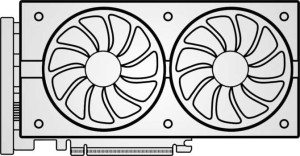
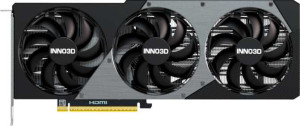
AMD Radeon RX 9070 XT
Inno3D GeForce RTX 5070 Ti X3 OC

AMD Radeon RX 9070 XT Inno3D GeForce RTX 5070 Ti X3 OC

Overview

Welcome to this in-depth specification showdown between the AMD Radeon RX 9070 XT and the Inno3D GeForce RTX 5070 Ti X3 OC. These two high-performance graphics cards approach the enthusiast segment from very different angles, pitting AMD’s cutting-edge RDNA 4.0 architecture on a 4nm node against NVIDIA’s formidable Blackwell architecture on a 5nm process. Key battlegrounds include raw compute throughput, memory subsystem performance, and shading unit counts — so read on to see how every spec stacks up.

Common Features

  • Both GPUs support Double Precision Floating Point (DPFP).
  • Both cards come with 16GB of VRAM.
  • Both use a 256-bit memory bus width.
  • Both support ECC memory.
  • Both are compatible with DirectX 12 Ultimate.
  • Both support OpenGL version 4.6.
  • Both support multi-display technology.
  • Both support ray tracing.
  • Both support 3D rendering.
  • XeSS (XMX) support is not available on either product.
  • LHR (Lite Hash Rate) is not present on either product.
  • RGB lighting is not featured on either product.
  • Both cards include one HDMI output port.
  • Both cards feature three DisplayPort outputs.
  • Neither card includes any USB-C ports.
  • Neither card includes any DVI outputs.
  • Neither card includes any mini DisplayPort outputs.
  • Both use PCI Express version 5.
  • Neither card uses air-water cooling.

Main Differences

  • GPU base clock speed is 1660 MHz on AMD Radeon RX 9070 XT and 2295 MHz on Inno3D GeForce RTX 5070 Ti X3 OC.
  • GPU turbo clock speed is 2970 MHz on AMD Radeon RX 9070 XT and 2482 MHz on Inno3D GeForce RTX 5070 Ti X3 OC.
  • Pixel rate is 380.2 GPixel/s on AMD Radeon RX 9070 XT and 238.3 GPixel/s on Inno3D GeForce RTX 5070 Ti X3 OC.
  • Floating-point performance is 48.7 TFLOPS on AMD Radeon RX 9070 XT and 44.48 TFLOPS on Inno3D GeForce RTX 5070 Ti X3 OC.
  • Texture rate is 760.3 GTexels/s on AMD Radeon RX 9070 XT and 695 GTexels/s on Inno3D GeForce RTX 5070 Ti X3 OC.
  • GPU memory speed is 2518 MHz on AMD Radeon RX 9070 XT and 1750 MHz on Inno3D GeForce RTX 5070 Ti X3 OC.
  • Shading units total 4096 on AMD Radeon RX 9070 XT and 8960 on Inno3D GeForce RTX 5070 Ti X3 OC.
  • Texture mapping units (TMUs) number 256 on AMD Radeon RX 9070 XT and 280 on Inno3D GeForce RTX 5070 Ti X3 OC.
  • Render output units (ROPs) total 128 on AMD Radeon RX 9070 XT and 96 on Inno3D GeForce RTX 5070 Ti X3 OC.
  • Effective memory speed is 20000 MHz on AMD Radeon RX 9070 XT and 28000 MHz on Inno3D GeForce RTX 5070 Ti X3 OC.
  • Maximum memory bandwidth is 640 GB/s on AMD Radeon RX 9070 XT and 896 GB/s on Inno3D GeForce RTX 5070 Ti X3 OC.
  • GDDR version is GDDR6 on AMD Radeon RX 9070 XT and GDDR7 on Inno3D GeForce RTX 5070 Ti X3 OC.
  • OpenCL version is 2.2 on AMD Radeon RX 9070 XT and 3 on Inno3D GeForce RTX 5070 Ti X3 OC.
  • Resizable BAR technology is AMD SAM on AMD Radeon RX 9070 XT and Intel Resizable BAR on Inno3D GeForce RTX 5070 Ti X3 OC.
  • HDMI version is HDMI 2.1a on AMD Radeon RX 9070 XT and HDMI 2.1b on Inno3D GeForce RTX 5070 Ti X3 OC.
  • GPU architecture is RDNA 4.0 on AMD Radeon RX 9070 XT and Blackwell on Inno3D GeForce RTX 5070 Ti X3 OC.
  • Thermal Design Power (TDP) is 304W on AMD Radeon RX 9070 XT and 300W on Inno3D GeForce RTX 5070 Ti X3 OC.
  • Semiconductor size is 4 nm on AMD Radeon RX 9070 XT and 5 nm on Inno3D GeForce RTX 5070 Ti X3 OC.
  • Number of transistors is 53900 million on AMD Radeon RX 9070 XT and 45600 million on Inno3D GeForce RTX 5070 Ti X3 OC.
  • Card width is 267 mm on AMD Radeon RX 9070 XT and 300 mm on Inno3D GeForce RTX 5070 Ti X3 OC.
  • Card height is 111 mm on AMD Radeon RX 9070 XT and 116 mm on Inno3D GeForce RTX 5070 Ti X3 OC.
Specs Comparison
AMD Radeon RX 9070 XT

AMD Radeon RX 9070 XT

Inno3D GeForce RTX 5070 Ti X3 OC

Inno3D GeForce RTX 5070 Ti X3 OC

Performance:
GPU clock speed 1660 MHz 2295 MHz
GPU turbo 2970 MHz 2482 MHz
pixel rate 380.2 GPixel/s 238.3 GPixel/s
floating-point performance 48.7 TFLOPS 44.48 TFLOPS
texture rate 760.3 GTexels/s 695 GTexels/s
GPU memory speed 2518 MHz 1750 MHz
shading units 4096 8960
texture mapping units (TMUs) 256 280
render output units (ROPs) 128 96
Has Double Precision Floating Point (DPFP)

The most striking contrast in this group is the clock speed philosophy of each card. The RTX 5070 Ti X3 OC runs a notably higher base clock at 2295 MHz, suggesting a stable, sustained performance floor, while the RX 9070 XT starts much lower at 1660 MHz but rockets to a turbo of 2970 MHz — nearly 500 MHz ahead of the 5070 Ti's 2482 MHz peak. In practice, this means the AMD card can hit significantly higher peak frequencies under burst workloads, though its wider clock range also implies more aggressive dynamic scaling.

Despite the 5070 Ti X3 OC's commanding lead in raw shading unit count — 8960 versus 4096 — the RX 9070 XT comes out ahead in every throughput metric that actually drives rendering output. It delivers 48.7 TFLOPS of floating-point performance versus 44.48 TFLOPS, a pixel rate of 380.2 GPixel/s versus just 238.3, and a texture rate of 760.3 GTexels/s versus 695. This tells an important story: the 9070 XT's architecture extracts more real-world throughput per shading unit, making raw shader counts a misleading headline figure here. Its memory subsystem is also faster at 2518 MHz versus 1750 MHz, which benefits bandwidth-sensitive workloads. The 9070 XT also has more ROPs (128 vs 96), reinforcing its pixel-fill advantage.

Based strictly on these specs, the RX 9070 XT holds a clear performance edge in this group. It leads on compute throughput, pixel fill rate, texture throughput, and memory speed — all metrics that directly translate to rendering speed and gaming output. The 5070 Ti X3 OC's higher base clock and larger shader array do not translate into superior measured performance by these numbers, making the AMD card the stronger performer on paper across nearly every key dimension here.

Memory:
effective memory speed 20000 MHz 28000 MHz
maximum memory bandwidth 640 GB/s 896 GB/s
VRAM 16GB 16GB
GDDR version GDDR6 GDDR7
memory bus width 256-bit 256-bit
Supports ECC memory

The AMD Radeon RX 9070 XT and the Inno3D GeForce RTX 5070 Ti X3 OC have similar VRAM configurations, with both cards featuring 16GB of memory. However, there are notable differences in memory speed and bandwidth. The Radeon RX 9070 XT uses GDDR6 memory with an effective memory speed of 20000 MHz and a maximum memory bandwidth of 640 GB/s. In contrast, the GeForce RTX 5070 Ti utilizes GDDR7 memory with a much higher effective memory speed of 28000 MHz, and a larger maximum memory bandwidth of 896 GB/s.

Both cards share the same 256-bit memory bus width, meaning they have the same data path width for transferring information. Additionally, both graphics cards support Error-Correcting Code (ECC) memory, ensuring reliable operation by detecting and correcting data corruption in the memory.

While both cards provide ample VRAM and similar features in memory bus width and ECC support, the GeForce RTX 5070 Ti stands out with faster memory speeds and higher bandwidth compared to the Radeon RX 9070 XT.

Features:
DirectX version DirectX 12 Ultimate DirectX 12 Ultimate
OpenGL version 4.6 4.6
OpenCL version 2.2 3
Supports multi-display technology
supports ray tracing
Supports 3D
has XeSS (XMX)
AMD SAM / Intel Resizable BAR AMD SAM Intel Resizable BAR
has LHR
has RGB lighting
supported displays 4 4

Both the AMD Radeon RX 9070 XT and the Inno3D GeForce RTX 5070 Ti X3 OC support similar core features, such as DirectX 12 Ultimate, OpenGL 4.6, OpenCL 2.2 (for the RX 9070 XT) or 3.0 (for the RTX 5070 Ti), and ray tracing. They also support multi-display technology and 3D rendering, ensuring flexibility for advanced setups. Neither card includes XeSS (XMX) support, and both do not have RGB lighting. Both also support up to 4 displays.

The primary difference between the two cards lies in their support for AMD SAM / Intel Resizable BAR. The Radeon RX 9070 XT supports AMD SAM, while the RTX 5070 Ti supports Intel Resizable BAR. Additionally, both cards lack LHR (Lite Hash Rate) support, meaning neither is specifically optimized for cryptocurrency mining restrictions.

Overall, the feature sets of these two graphics cards are quite similar, with the primary distinction being in the version of OpenCL and the platform-specific support for memory resizing technologies (AMD SAM vs. Intel Resizable BAR).

Ports:
has an HDMI output
HDMI ports 1 1
HDMI version HDMI 2.1a HDMI 2.1b
DisplayPort outputs 3 3
USB-C ports 0 0
DVI outputs 0 0
mini DisplayPort outputs 0 0

The AMD Radeon RX 9070 XT and the Inno3D GeForce RTX 5070 Ti X3 OC both offer HDMI output with one HDMI port each. The Radeon RX 9070 XT supports HDMI 2.1a, while the GeForce RTX 5070 Ti supports HDMI 2.1b. Both cards also have three DisplayPort outputs, and neither includes USB-C, DVI, or mini DisplayPort outputs.

The key difference between the two cards in this group is the version of HDMI. The RTX 5070 Ti uses HDMI 2.1b, whereas the Radeon RX 9070 XT uses HDMI 2.1a, with the latter version being slightly earlier in the HDMI specification.

Overall, both cards are similar in terms of port offerings, with the main distinction being the HDMI version, where the Inno3D card features the newer HDMI 2.1b.

General info:
GPU architecture RDNA 4.0 Blackwell
release date January 2025 February 2025
Thermal Design Power (TDP) 304W 300W
PCI Express (PCIe) version 5 5
semiconductor size 4 nm 5 nm
number of transistors 53900 million 45600 million
Has air-water cooling
width 267 mm 300 mm
height 111 mm 116 mm

The AMD Radeon RX 9070 XT and the Inno3D GeForce RTX 5070 Ti X3 OC differ in several key areas related to general specifications. The Radeon RX 9070 XT is based on the RDNA 4.0 architecture, while the GeForce RTX 5070 Ti uses the Blackwell architecture. Both cards feature PCI Express (PCIe) version 5.0 support, ensuring fast data transfer rates, but they differ in semiconductor size: the RX 9070 XT uses a 4 nm process, whereas the RTX 5070 Ti uses a slightly larger 5 nm process.

When it comes to power consumption, the Radeon RX 9070 XT has a higher Thermal Design Power (TDP) of 304W, compared to the 300W TDP of the RTX 5070 Ti. Both cards do not include air-water cooling systems. In terms of physical dimensions, the Radeon RX 9070 XT is slightly smaller, with a width of 267 mm and a height of 111 mm, while the RTX 5070 Ti is larger at 300 mm in width and 116 mm in height.

Lastly, the number of transistors also differs, with the RX 9070 XT featuring 53,900 million transistors, while the RTX 5070 Ti has 45,600 million transistors. These differences in architecture, power requirements, and physical size reflect the unique design approaches of each graphics card.

Comparison Summary & Verdict

After examining every spec, both cards occupy a compelling but distinct position. The AMD Radeon RX 9070 XT stands out with a higher GPU turbo clock of 2970 MHz, a superior pixel rate of 380.2 GPixel/s, stronger floating-point performance at 48.7 TFLOPS, and a more advanced 4nm fabrication process packing 53,900 million transistors — all in a more compact physical footprint. The Inno3D GeForce RTX 5070 Ti X3 OC, on the other hand, dominates in memory bandwidth at 896 GB/s thanks to faster GDDR7 memory, and boasts a massive 8960 shading units advantage that can pay dividends in heavily parallelized workloads. Gamers and creators who prize high clock-driven responsiveness and efficiency will lean toward the RX 9070 XT, while those who benefit most from raw memory throughput and a larger shader array will find the RTX 5070 Ti X3 OC the stronger fit.

AMD Radeon RX 9070 XT
Buy AMD Radeon RX 9070 XT if...

Buy the AMD Radeon RX 9070 XT if you want higher GPU turbo clocks, better pixel and texture rates, superior floating-point performance, and a more compact card built on a cutting-edge 4nm process.

Inno3D GeForce RTX 5070 Ti X3 OC
Buy Inno3D GeForce RTX 5070 Ti X3 OC if...

Buy the Inno3D GeForce RTX 5070 Ti X3 OC if you need significantly higher memory bandwidth, faster GDDR7 memory, and a much larger shader unit count for workloads that scale with parallelism.