AMD Radeon RX 9070 XT
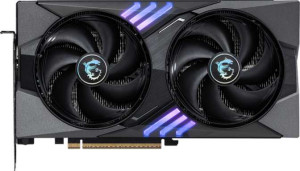
MSI GeForce RTX 5060 Ti Gaming 16GB

AMD Radeon RX 9070 XT MSI GeForce RTX 5060 Ti Gaming 16GB

Overview

Welcome to our detailed spec comparison between the AMD Radeon RX 9070 XT and the MSI GeForce RTX 5060 Ti Gaming 16GB — two competitive mid-to-high-end graphics cards targeting demanding gamers and creators. Both cards share 16GB of VRAM and support for DirectX 12 Ultimate and ray tracing, but they differ significantly across raw compute throughput, memory architecture, power consumption, and GPU generation. Read on to see how these two cards stack up across every measurable specification.

Common Features

  • Both cards support Double Precision Floating Point (DPFP).
  • Both cards come with 16GB of VRAM.
  • Both cards support ECC memory.
  • Both cards support DirectX 12 Ultimate.
  • Both cards support OpenGL version 4.6.
  • Both cards support multi-display technology.
  • Both cards support ray tracing.
  • Both cards support 3D.
  • XeSS (XMX) support is not available on either card.
  • LHR is not present on either card.
  • Both cards can drive up to 4 supported displays.
  • Both cards include 1 HDMI output and 3 DisplayPort outputs.
  • Neither card has USB-C, DVI, or mini DisplayPort outputs.
  • Both cards use PCI Express 5.
  • Neither card uses air-water cooling.

Main Differences

  • Base GPU clock speed is 1660 MHz on AMD Radeon RX 9070 XT and 2407 MHz on MSI GeForce RTX 5060 Ti Gaming 16GB.
  • GPU turbo clock speed is 2970 MHz on AMD Radeon RX 9070 XT and 2572 MHz on MSI GeForce RTX 5060 Ti Gaming 16GB.
  • Pixel rate is 380.2 GPixel/s on AMD Radeon RX 9070 XT and 123.5 GPixel/s on MSI GeForce RTX 5060 Ti Gaming 16GB.
  • Floating-point performance is 48.7 TFLOPS on AMD Radeon RX 9070 XT and 23.7 TFLOPS on MSI GeForce RTX 5060 Ti Gaming 16GB.
  • Texture rate is 760.3 GTexels/s on AMD Radeon RX 9070 XT and 370.4 GTexels/s on MSI GeForce RTX 5060 Ti Gaming 16GB.
  • GPU memory speed is 2518 MHz on AMD Radeon RX 9070 XT and 1750 MHz on MSI GeForce RTX 5060 Ti Gaming 16GB.
  • Shading units count is 4096 on AMD Radeon RX 9070 XT and 4608 on MSI GeForce RTX 5060 Ti Gaming 16GB.
  • Texture mapping units (TMUs) number 256 on AMD Radeon RX 9070 XT and 144 on MSI GeForce RTX 5060 Ti Gaming 16GB.
  • Render output units (ROPs) total 128 on AMD Radeon RX 9070 XT and 48 on MSI GeForce RTX 5060 Ti Gaming 16GB.
  • Effective memory speed is 20000 MHz on AMD Radeon RX 9070 XT and 28000 MHz on MSI GeForce RTX 5060 Ti Gaming 16GB.
  • Maximum memory bandwidth is 640 GB/s on AMD Radeon RX 9070 XT and 448 GB/s on MSI GeForce RTX 5060 Ti Gaming 16GB.
  • Memory type is GDDR6 on AMD Radeon RX 9070 XT and GDDR7 on MSI GeForce RTX 5060 Ti Gaming 16GB.
  • Memory bus width is 256-bit on AMD Radeon RX 9070 XT and 128-bit on MSI GeForce RTX 5060 Ti Gaming 16GB.
  • OpenCL version is 2.2 on AMD Radeon RX 9070 XT and 3 on MSI GeForce RTX 5060 Ti Gaming 16GB.
  • Resizable BAR implementation is AMD SAM on AMD Radeon RX 9070 XT and Intel Resizable BAR on MSI GeForce RTX 5060 Ti Gaming 16GB.
  • RGB lighting is present on MSI GeForce RTX 5060 Ti Gaming 16GB but not available on AMD Radeon RX 9070 XT.
  • HDMI version is 2.1a on AMD Radeon RX 9070 XT and 2.1b on MSI GeForce RTX 5060 Ti Gaming 16GB.
  • GPU architecture is RDNA 4.0 on AMD Radeon RX 9070 XT and Blackwell on MSI GeForce RTX 5060 Ti Gaming 16GB.
  • Thermal Design Power (TDP) is 304W on AMD Radeon RX 9070 XT and 180W on MSI GeForce RTX 5060 Ti Gaming 16GB.
  • Semiconductor size is 4 nm on AMD Radeon RX 9070 XT and 5 nm on MSI GeForce RTX 5060 Ti Gaming 16GB.
  • Transistor count is 53900 million on AMD Radeon RX 9070 XT and 21900 million on MSI GeForce RTX 5060 Ti Gaming 16GB.
  • Card width is 267 mm on AMD Radeon RX 9070 XT and 247 mm on MSI GeForce RTX 5060 Ti Gaming 16GB.
  • Card height is 111 mm on AMD Radeon RX 9070 XT and 135 mm on MSI GeForce RTX 5060 Ti Gaming 16GB.
Specs Comparison
AMD Radeon RX 9070 XT

AMD Radeon RX 9070 XT

MSI GeForce RTX 5060 Ti Gaming 16GB

MSI GeForce RTX 5060 Ti Gaming 16GB

Performance:
GPU clock speed 1660 MHz 2407 MHz
GPU turbo 2970 MHz 2572 MHz
pixel rate 380.2 GPixel/s 123.5 GPixel/s
floating-point performance 48.7 TFLOPS 23.7 TFLOPS
texture rate 760.3 GTexels/s 370.4 GTexels/s
GPU memory speed 2518 MHz 1750 MHz
shading units 4096 4608
texture mapping units (TMUs) 256 144
render output units (ROPs) 128 48
Has Double Precision Floating Point (DPFP)

On raw compute throughput, the AMD Radeon RX 9070 XT holds a commanding lead. Its 48.7 TFLOPS of floating-point performance is roughly double the RTX 5060 Ti's 23.7 TFLOPS, and that gap carries through to texture and pixel throughput as well — the 9070 XT delivers 760.3 GTexels/s and 380.2 GPixel/s versus the 5060 Ti's 370.4 GTexels/s and 123.5 GPixel/s respectively. In practical terms, higher texture throughput means the GPU can apply surface detail faster across complex scenes, while a higher pixel fill rate directly benefits rendering at high resolutions. The 9070 XT's advantage here is not marginal — it is structural.

The MSI RTX 5060 Ti does hold one numerical edge: more shading units (4608 vs. 4096). However, that advantage is effectively undermined by the 5060 Ti's dramatically fewer render output units (ROPs) — just 48 vs. 128 — and fewer texture mapping units (144 vs. 256). ROPs are the bottleneck for final pixel output to the framebuffer; with only 48, the 5060 Ti cannot convert its larger shader array into proportional real-world rendering speed, which explains the steep gap in pixel rate. The 9070 XT also pairs its performance with a notably higher memory speed of 2518 MHz vs. 1750 MHz, which helps sustain that throughput advantage under demanding workloads.

The RX 9070 XT has a clear performance edge across virtually every meaningful throughput metric in this group. The RTX 5060 Ti's higher base clock and larger shader count do not compensate for its significantly constrained back-end pipeline. Both cards support Double Precision Floating Point, but that is a tie and not a differentiator here. For users prioritizing raw graphics horsepower based solely on these specs, the 9070 XT is the stronger GPU by a wide margin.

Memory:
effective memory speed 20000 MHz 28000 MHz
maximum memory bandwidth 640 GB/s 448 GB/s
VRAM 16GB 16GB
GDDR version GDDR6 GDDR7
memory bus width 256-bit 128-bit
Supports ECC memory

The AMD Radeon RX 9070 XT features an effective memory speed of 20000 MHz, while the MSI GeForce RTX 5060 Ti Gaming 16GB has a faster effective memory speed of 28000 MHz. This shows that the RTX 5060 Ti has a higher memory clock speed. However, the RX 9070 XT offers greater maximum memory bandwidth, reaching 640 GB/s, compared to the RTX 5060 Ti’s 448 GB/s. This suggests the RX 9070 XT may have a higher data transfer rate despite the lower memory speed.

Both the RX 9070 XT and the RTX 5060 Ti come with 16GB of VRAM, meaning they are equipped with the same amount of memory. The RX 9070 XT uses GDDR6 memory, while the RTX 5060 Ti utilizes the newer GDDR7 memory, which could offer some improvements in efficiency and performance at higher speeds.

When it comes to memory bus width, the RX 9070 XT has a 256-bit bus, which is wider than the RTX 5060 Ti’s 128-bit bus. A wider bus generally allows for better overall memory performance. Both cards support ECC (Error-Correcting Code) memory, ensuring data integrity during operation.

Features:
DirectX version DirectX 12 Ultimate DirectX 12 Ultimate
OpenGL version 4.6 4.6
OpenCL version 2.2 3
Supports multi-display technology
supports ray tracing
Supports 3D
has XeSS (XMX)
AMD SAM / Intel Resizable BAR AMD SAM Intel Resizable BAR
has LHR
has RGB lighting
supported displays 4 4

Both the AMD Radeon RX 9070 XT and the MSI GeForce RTX 5060 Ti Gaming 16GB support DirectX 12 Ultimate, OpenGL 4.6, and ray tracing, making them both capable of delivering advanced graphical features. However, the RX 9070 XT supports OpenCL version 2.2, while the RTX 5060 Ti supports OpenCL version 3, providing a slight difference in OpenCL capabilities.

Both cards support multi-display technology and 3D, which means they can handle multiple monitors and provide immersive 3D visuals. The RX 9070 XT and RTX 5060 Ti also both lack XeSS (XMX) support, meaning they do not feature Intel’s proprietary scaling technology.

In terms of platform compatibility, the RX 9070 XT uses AMD SAM, while the RTX 5060 Ti uses Intel Resizable BAR, which are two different technologies for optimizing memory usage and CPU-GPU communication. The RX 9070 XT does not feature RGB lighting, while the RTX 5060 Ti includes RGB lighting. Both cards can support up to four displays. Neither card has LHR (Lite Hash Rate) restrictions, meaning both are unrestricted for cryptocurrency mining purposes.

Ports:
has an HDMI output
HDMI ports 1 1
HDMI version HDMI 2.1a HDMI 2.1b
DisplayPort outputs 3 3
USB-C ports 0 0
DVI outputs 0 0
mini DisplayPort outputs 0 0

Both the AMD Radeon RX 9070 XT and the MSI GeForce RTX 5060 Ti Gaming 16GB feature one HDMI output. The RX 9070 XT uses HDMI 2.1a, while the RTX 5060 Ti uses HDMI 2.1b, indicating a slight difference in HDMI version support between the two cards.

Both cards are equipped with three DisplayPort outputs, which allows for multi-monitor setups. Neither card has USB-C, DVI, or mini DisplayPort outputs.

General info:
GPU architecture RDNA 4.0 Blackwell
release date January 2025 April 2025
Thermal Design Power (TDP) 304W 180W
PCI Express (PCIe) version 5 5
semiconductor size 4 nm 5 nm
number of transistors 53900 million 21900 million
Has air-water cooling
width 267 mm 247 mm
height 111 mm 135 mm

The AMD Radeon RX 9070 XT features RDNA 4.0 architecture, while the MSI GeForce RTX 5060 Ti Gaming 16GB uses Blackwell architecture. The RX 9070 XT has a higher Thermal Design Power (TDP) of 304W compared to the RTX 5060 Ti’s 180W, indicating that the RX 9070 XT consumes more power during operation. Both cards use PCI Express (PCIe) version 5 for connectivity, ensuring high-speed data transfer between the GPU and the rest of the system.

In terms of semiconductor size, the RX 9070 XT uses a 4 nm process, which is more advanced than the 5 nm process used in the RTX 5060 Ti. This difference could imply more efficient use of space and power in the RX 9070 XT. The RX 9070 XT also has a significantly larger number of transistors, with 53.9 billion, compared to the RTX 5060 Ti’s 21.9 billion, reflecting a difference in complexity and potential processing power.

Both cards lack air-water cooling, meaning they rely on traditional air cooling. The RX 9070 XT is wider, with a width of 267 mm, compared to the RTX 5060 Ti’s 247 mm. The RTX 5060 Ti is also taller, measuring 135 mm compared to the RX 9070 XT’s 111 mm, indicating that the RTX 5060 Ti has a larger overall profile.

Comparison Summary & Verdict

After a thorough side-by-side analysis, it is clear that each card excels in a distinct set of priorities. The AMD Radeon RX 9070 XT holds a commanding lead in raw compute power, delivering significantly higher floating-point performance at 48.7 TFLOPS, a wider 256-bit memory bus, greater memory bandwidth at 640 GB/s, and more texture and render output units — making it the stronger choice for workloads that demand pure throughput. On the other hand, the MSI GeForce RTX 5060 Ti Gaming 16GB stands out with its much lower 180W TDP, faster GDDR7 memory with a higher effective speed of 28000 MHz, a newer Blackwell architecture, and a more compact form factor — appealing to users who value energy efficiency and modern memory technology. Both cards offer 16GB VRAM and full DirectX 12 Ultimate support, so neither compromises on feature parity for current-generation gaming.

AMD Radeon RX 9070 XT
Buy AMD Radeon RX 9070 XT if...

Buy the AMD Radeon RX 9070 XT if you want maximum raw compute performance, higher memory bandwidth, and greater texture and pixel throughput for demanding gaming or creative workloads.

MSI GeForce RTX 5060 Ti Gaming 16GB
Buy MSI GeForce RTX 5060 Ti Gaming 16GB if...

Buy the MSI GeForce RTX 5060 Ti Gaming 16GB if you prioritize lower power consumption at 180W, faster GDDR7 memory technology, and a more compact card size without sacrificing 16GB of VRAM.