AMD Radeon RX 9070 XT
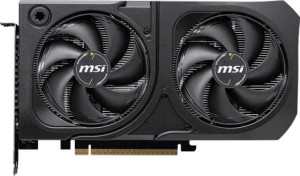
MSI GeForce RTX 5060 Ti Shadow 2X OC Plus 16GB

AMD Radeon RX 9070 XT MSI GeForce RTX 5060 Ti Shadow 2X OC Plus 16GB

Overview

Choosing between two capable high-end GPUs is rarely straightforward, and the contest between the AMD Radeon RX 9070 XT and the MSI GeForce RTX 5060 Ti Shadow 2X OC Plus 16GB is no exception. Both cards arrive with a matching 16GB of VRAM, ray tracing support, and DirectX 12 Ultimate compatibility, yet they diverge sharply in architecture, power consumption, and raw computational throughput. In this head-to-head specification comparison, we break down every key metric to help you determine which of these two GPUs is the right fit for your build and workload.

Common Features

  • Both cards support Double Precision Floating Point (DPFP).
  • Both cards come with 16GB of VRAM.
  • Both cards support ECC memory.
  • Both cards support DirectX 12 Ultimate.
  • Both cards support OpenGL version 4.6.
  • Both cards support multi-display technology.
  • Both cards support ray tracing.
  • Both cards support 3D.
  • XeSS (XMX) support is not available on either card.
  • LHR is not present on either card.
  • RGB lighting is not featured on either card.
  • Both cards include one HDMI output port.
  • Both cards include three DisplayPort outputs.
  • Neither card has USB-C ports.
  • Neither card has DVI outputs.
  • Neither card has mini DisplayPort outputs.
  • Both cards use PCI Express version 5.
  • Neither card features air-water cooling.

Main Differences

  • GPU base clock speed is 1660 MHz on AMD Radeon RX 9070 XT and 2407 MHz on MSI GeForce RTX 5060 Ti Shadow 2X OC Plus 16GB.
  • GPU turbo clock is 2970 MHz on AMD Radeon RX 9070 XT and 2602 MHz on MSI GeForce RTX 5060 Ti Shadow 2X OC Plus 16GB.
  • Pixel rate is 380.2 GPixel/s on AMD Radeon RX 9070 XT and 124.9 GPixel/s on MSI GeForce RTX 5060 Ti Shadow 2X OC Plus 16GB.
  • Floating-point performance is 48.7 TFLOPS on AMD Radeon RX 9070 XT and 23.98 TFLOPS on MSI GeForce RTX 5060 Ti Shadow 2X OC Plus 16GB.
  • Texture rate is 760.3 GTexels/s on AMD Radeon RX 9070 XT and 374.7 GTexels/s on MSI GeForce RTX 5060 Ti Shadow 2X OC Plus 16GB.
  • GPU memory speed is 2518 MHz on AMD Radeon RX 9070 XT and 1750 MHz on MSI GeForce RTX 5060 Ti Shadow 2X OC Plus 16GB.
  • Shading units number 4096 on AMD Radeon RX 9070 XT and 4608 on MSI GeForce RTX 5060 Ti Shadow 2X OC Plus 16GB.
  • Texture mapping units (TMUs) total 256 on AMD Radeon RX 9070 XT and 144 on MSI GeForce RTX 5060 Ti Shadow 2X OC Plus 16GB.
  • Render output units (ROPs) total 128 on AMD Radeon RX 9070 XT and 48 on MSI GeForce RTX 5060 Ti Shadow 2X OC Plus 16GB.
  • Effective memory speed is 20000 MHz on AMD Radeon RX 9070 XT and 28000 MHz on MSI GeForce RTX 5060 Ti Shadow 2X OC Plus 16GB.
  • Maximum memory bandwidth is 640 GB/s on AMD Radeon RX 9070 XT and 448 GB/s on MSI GeForce RTX 5060 Ti Shadow 2X OC Plus 16GB.
  • GDDR version is GDDR6 on AMD Radeon RX 9070 XT and GDDR7 on MSI GeForce RTX 5060 Ti Shadow 2X OC Plus 16GB.
  • Memory bus width is 256-bit on AMD Radeon RX 9070 XT and 128-bit on MSI GeForce RTX 5060 Ti Shadow 2X OC Plus 16GB.
  • OpenCL version is 2.2 on AMD Radeon RX 9070 XT and 3 on MSI GeForce RTX 5060 Ti Shadow 2X OC Plus 16GB.
  • Resizable BAR technology is AMD SAM on AMD Radeon RX 9070 XT and Intel Resizable BAR on MSI GeForce RTX 5060 Ti Shadow 2X OC Plus 16GB.
  • HDMI version is 2.1a on AMD Radeon RX 9070 XT and 2.1b on MSI GeForce RTX 5060 Ti Shadow 2X OC Plus 16GB.
  • GPU architecture is RDNA 4.0 on AMD Radeon RX 9070 XT and Blackwell on MSI GeForce RTX 5060 Ti Shadow 2X OC Plus 16GB.
  • Thermal Design Power (TDP) is 304W on AMD Radeon RX 9070 XT and 180W on MSI GeForce RTX 5060 Ti Shadow 2X OC Plus 16GB.
  • Semiconductor size is 4 nm on AMD Radeon RX 9070 XT and 5 nm on MSI GeForce RTX 5060 Ti Shadow 2X OC Plus 16GB.
  • Number of transistors is 53900 million on AMD Radeon RX 9070 XT and 21900 million on MSI GeForce RTX 5060 Ti Shadow 2X OC Plus 16GB.
  • Card width is 267 mm on AMD Radeon RX 9070 XT and 226 mm on MSI GeForce RTX 5060 Ti Shadow 2X OC Plus 16GB.
  • Card height is 111 mm on AMD Radeon RX 9070 XT and 126 mm on MSI GeForce RTX 5060 Ti Shadow 2X OC Plus 16GB.
Specs Comparison
AMD Radeon RX 9070 XT

AMD Radeon RX 9070 XT

MSI GeForce RTX 5060 Ti Shadow 2X OC Plus 16GB

MSI GeForce RTX 5060 Ti Shadow 2X OC Plus 16GB

Performance:
GPU clock speed 1660 MHz 2407 MHz
GPU turbo 2970 MHz 2602 MHz
pixel rate 380.2 GPixel/s 124.9 GPixel/s
floating-point performance 48.7 TFLOPS 23.98 TFLOPS
texture rate 760.3 GTexels/s 374.7 GTexels/s
GPU memory speed 2518 MHz 1750 MHz
shading units 4096 4608
texture mapping units (TMUs) 256 144
render output units (ROPs) 128 48
Has Double Precision Floating Point (DPFP)

Looking at raw compute throughput, the AMD Radeon RX 9070 XT holds a commanding lead. Its 48.7 TFLOPS of floating-point performance is more than double the RTX 5060 Ti's 23.98 TFLOPS, and its texture rate of 760.3 GTexels/s versus 374.7 GTexels/s tells a similar story. In practice, this means the RX 9070 XT can push through significantly more geometry and shading work per second — translating to headroom for higher resolutions, more complex scenes, and heavier graphical workloads without as much performance throttling.

The ROP and memory subsystem comparison reinforces this gap. The RX 9070 XT's 128 ROPs versus the 5060 Ti's 48 ROPs is a stark difference — ROPs govern how fast pixels are written to the framebuffer, so a near-3x advantage here directly benefits high-resolution rendering and anti-aliasing workloads. Combined with a faster memory clock of 2518 MHz versus 1750 MHz, the AMD card feeds its pipeline more efficiently. The 5060 Ti does have a slightly higher shading unit count (4608 vs 4096), and its base clock is notably higher, but its turbo ceiling of 2602 MHz falls well short of the RX 9070 XT's 2970 MHz peak, limiting how much that shader advantage can be leveraged under sustained load.

Based strictly on the provided performance specs, the RX 9070 XT has a clear and decisive advantage across virtually every throughput metric — compute, texturing, pixel output, and memory bandwidth potential. The MSI RTX 5060 Ti Shadow is not without merit in shader count, but the numerical gap in nearly every other category makes the RX 9070 XT the stronger performer on paper in this group.

Memory:
effective memory speed 20000 MHz 28000 MHz
maximum memory bandwidth 640 GB/s 448 GB/s
VRAM 16GB 16GB
GDDR version GDDR6 GDDR7
memory bus width 256-bit 128-bit
Supports ECC memory

The AMD Radeon RX 9070 XT and MSI GeForce RTX 5060 Ti Shadow 2X OC Plus 16GB have the same VRAM size of 16GB, but they differ in other memory specifications. The RX 9070 XT uses GDDR6 memory, while the RTX 5060 Ti features the newer GDDR7 memory. In terms of memory speed, the RX 9070 XT operates at an effective memory speed of 20000 MHz, while the RTX 5060 Ti is faster at 28000 MHz.

When it comes to memory bandwidth, the RX 9070 XT offers a significantly higher maximum bandwidth of 640 GB/s compared to the 448 GB/s on the RTX 5060 Ti. The memory bus width on the RX 9070 XT is 256-bit, while the RTX 5060 Ti has a narrower 128-bit memory bus width.

Both products support ECC (Error-Correcting Code) memory, ensuring more reliable memory performance by detecting and correcting internal data errors.

Features:
DirectX version DirectX 12 Ultimate DirectX 12 Ultimate
OpenGL version 4.6 4.6
OpenCL version 2.2 3
Supports multi-display technology
supports ray tracing
Supports 3D
has XeSS (XMX)
AMD SAM / Intel Resizable BAR AMD SAM Intel Resizable BAR
has LHR
has RGB lighting
supported displays 4 4

The AMD Radeon RX 9070 XT and MSI GeForce RTX 5060 Ti Shadow 2X OC Plus 16GB both support DirectX 12 Ultimate and OpenGL 4.6, providing a similar foundation for modern gaming and professional workloads. However, the RX 9070 XT supports OpenCL version 2.2, while the RTX 5060 Ti supports the newer version 3, indicating a more recent update on the NVIDIA side.

Both products also support multi-display technology, ray tracing, and 3D, offering a comprehensive set of features for immersive gaming and multi-monitor setups. Neither of the cards supports XeSS (XMX), a feature specific to Intel's hardware. Additionally, both GPUs do not include RGB lighting for customizable aesthetics.

In terms of system optimizations, the RX 9070 XT is compatible with AMD SAM (Smart Access Memory), while the RTX 5060 Ti uses Intel's Resizable BAR for similar functionality. Both products support up to four displays and neither has a Limited Hash Rate (LHR) feature, meaning they can handle cryptocurrency mining without any limitations on performance.

Ports:
has an HDMI output
HDMI ports 1 1
HDMI version HDMI 2.1a HDMI 2.1b
DisplayPort outputs 3 3
USB-C ports 0 0
DVI outputs 0 0
mini DisplayPort outputs 0 0

Both the AMD Radeon RX 9070 XT and MSI GeForce RTX 5060 Ti Shadow 2X OC Plus 16GB feature an HDMI output, with each card having a single HDMI port. The RX 9070 XT supports HDMI 2.1a, while the RTX 5060 Ti supports the slightly newer HDMI 2.1b, indicating a small difference in the HDMI version between the two.

Both GPUs also include three DisplayPort outputs, providing multiple options for connecting to monitors. Neither card offers USB-C, DVI, or mini DisplayPort outputs, so they rely solely on HDMI and DisplayPort for display connectivity.

In terms of display output configuration, both products are identical with respect to the number and types of available ports, with the key difference being the HDMI version supported.

General info:
GPU architecture RDNA 4.0 Blackwell
release date January 2025 April 2025
Thermal Design Power (TDP) 304W 180W
PCI Express (PCIe) version 5 5
semiconductor size 4 nm 5 nm
number of transistors 53900 million 21900 million
Has air-water cooling
width 267 mm 226 mm
height 111 mm 126 mm

The AMD Radeon RX 9070 XT and MSI GeForce RTX 5060 Ti Shadow 2X OC Plus 16GB differ significantly in several general specifications. The RX 9070 XT is built on the RDNA 4.0 architecture, while the RTX 5060 Ti uses the Blackwell architecture. The RX 9070 XT has a higher Thermal Design Power (TDP) of 304W, compared to the 180W TDP of the RTX 5060 Ti, indicating that the AMD card requires more power for its operation.

In terms of semiconductor size, the RX 9070 XT uses a 4 nm process, while the RTX 5060 Ti uses a 5 nm process, with the RX 9070 XT benefiting from a slightly smaller fabrication size. Additionally, the RX 9070 XT contains 53,900 million transistors, far more than the 21,900 million transistors in the RTX 5060 Ti, reflecting a higher transistor count in the AMD card.

Both cards use PCI Express version 5, ensuring high-speed data transfer between the GPU and the motherboard. Neither product includes air-water cooling, and they both have relatively similar physical dimensions, with the RX 9070 XT being slightly larger in width at 267 mm compared to 226 mm for the RTX 5060 Ti. However, the RTX 5060 Ti is taller at 126 mm, compared to the 111 mm height of the RX 9070 XT.

Comparison Summary & Verdict

Having examined the full specification set, both cards share a solid foundation of 16GB VRAM, ray tracing, and DirectX 12 Ultimate support, but their identities diverge considerably beyond that. The AMD Radeon RX 9070 XT asserts dominance in raw rasterization power, posting 48.7 TFLOPS of floating-point performance, a pixel rate of 380.2 GPixel/s, a wider 256-bit memory bus, and a peak bandwidth of 640 GB/s, making it the superior choice for gamers and creators who prioritize outright GPU throughput. Its trade-off is a demanding 304W TDP and a longer card footprint. The MSI GeForce RTX 5060 Ti Shadow 2X OC Plus 16GB responds with a much more modest 180W power draw, faster GDDR7 memory running at an effective 28000 MHz, and a shorter 226 mm length that suits compact or power-constrained systems. Choose the RX 9070 XT for peak performance; choose the RTX 5060 Ti if power efficiency and a smaller physical profile matter most.

AMD Radeon RX 9070 XT
Buy AMD Radeon RX 9070 XT if...

Buy the AMD Radeon RX 9070 XT if you want the highest possible rasterization throughput, greater memory bandwidth, and maximum floating-point performance, and you have a system capable of handling its 304W power requirement.

MSI GeForce RTX 5060 Ti Shadow 2X OC Plus 16GB
Buy MSI GeForce RTX 5060 Ti Shadow 2X OC Plus 16GB if...

Buy the MSI GeForce RTX 5060 Ti Shadow 2X OC Plus 16GB if you prioritize a significantly lower 180W TDP, faster GDDR7 memory speed, and a more compact card size that fits easily into tighter or power-sensitive builds.