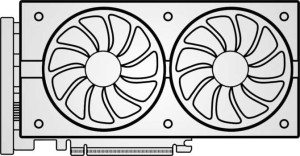
AMD Radeon RX 9070 XT
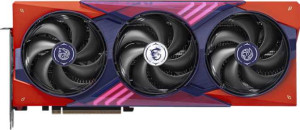
MSI GeForce RTX 5070 Ti MLG Edition OC

AMD Radeon RX 9070 XT MSI GeForce RTX 5070 Ti MLG Edition OC

Overview

Welcome to our in-depth specification comparison between the AMD Radeon RX 9070 XT and the MSI GeForce RTX 5070 Ti MLG Edition OC. Both cards share a strong foundation — 16GB VRAM, PCIe 5.0, ray tracing support, and DirectX 12 Ultimate — but they diverge sharply in architecture, memory technology, shader counts, and physical dimensions. Read on to see how these two high-performance GPUs stack up across every key specification.

Common Features

  • Both products support Double Precision Floating Point (DPFP).
  • Both products come with 16GB of VRAM.
  • Both products use a 256-bit memory bus width.
  • ECC memory support is available on both products.
  • Both products support DirectX 12 Ultimate.
  • Both products support OpenGL version 4.6.
  • Multi-display technology is supported on both products.
  • Ray tracing is supported on both products.
  • 3D support is available on both products.
  • XeSS (XMX) support is not available on either product.
  • LHR is not present on either product.
  • Both products support up to 4 displays.
  • Both products include 1 HDMI port.
  • Both products include 3 DisplayPort outputs.
  • Neither product has USB-C ports.
  • Neither product has DVI outputs.
  • Neither product has mini DisplayPort outputs.
  • Both products use PCI Express (PCIe) version 5.
  • Neither product features air-water cooling.
  • Both products have an HDMI output.

Main Differences

  • GPU base clock speed is 1660 MHz on AMD Radeon RX 9070 XT and 2295 MHz on MSI GeForce RTX 5070 Ti MLG Edition OC.
  • GPU turbo clock speed is 2970 MHz on AMD Radeon RX 9070 XT and 2572 MHz on MSI GeForce RTX 5070 Ti MLG Edition OC.
  • Pixel rate is 380.2 GPixel/s on AMD Radeon RX 9070 XT and 246.9 GPixel/s on MSI GeForce RTX 5070 Ti MLG Edition OC.
  • Floating-point performance is 48.7 TFLOPS on AMD Radeon RX 9070 XT and 46.09 TFLOPS on MSI GeForce RTX 5070 Ti MLG Edition OC.
  • Texture rate is 760.3 GTexels/s on AMD Radeon RX 9070 XT and 720.2 GTexels/s on MSI GeForce RTX 5070 Ti MLG Edition OC.
  • GPU memory speed is 2518 MHz on AMD Radeon RX 9070 XT and 1750 MHz on MSI GeForce RTX 5070 Ti MLG Edition OC.
  • Shading units number 4096 on AMD Radeon RX 9070 XT and 8960 on MSI GeForce RTX 5070 Ti MLG Edition OC.
  • Texture mapping units (TMUs) count is 256 on AMD Radeon RX 9070 XT and 280 on MSI GeForce RTX 5070 Ti MLG Edition OC.
  • Render output units (ROPs) count is 128 on AMD Radeon RX 9070 XT and 96 on MSI GeForce RTX 5070 Ti MLG Edition OC.
  • Effective memory speed is 20000 MHz on AMD Radeon RX 9070 XT and 28000 MHz on MSI GeForce RTX 5070 Ti MLG Edition OC.
  • Maximum memory bandwidth is 640 GB/s on AMD Radeon RX 9070 XT and 896 GB/s on MSI GeForce RTX 5070 Ti MLG Edition OC.
  • AMD Radeon RX 9070 XT uses GDDR6 memory while MSI GeForce RTX 5070 Ti MLG Edition OC uses GDDR7 memory.
  • OpenCL version is 2.2 on AMD Radeon RX 9070 XT and 3 on MSI GeForce RTX 5070 Ti MLG Edition OC.
  • AMD Radeon RX 9070 XT uses AMD SAM while MSI GeForce RTX 5070 Ti MLG Edition OC uses Intel Resizable BAR.
  • RGB lighting is present on MSI GeForce RTX 5070 Ti MLG Edition OC but not available on AMD Radeon RX 9070 XT.
  • HDMI version is 2.1a on AMD Radeon RX 9070 XT and 2.1b on MSI GeForce RTX 5070 Ti MLG Edition OC.
  • GPU architecture is RDNA 4.0 on AMD Radeon RX 9070 XT and Blackwell on MSI GeForce RTX 5070 Ti MLG Edition OC.
  • Thermal Design Power (TDP) is 304W on AMD Radeon RX 9070 XT and 300W on MSI GeForce RTX 5070 Ti MLG Edition OC.
  • Semiconductor size is 4 nm on AMD Radeon RX 9070 XT and 5 nm on MSI GeForce RTX 5070 Ti MLG Edition OC.
  • Transistor count is 53900 million on AMD Radeon RX 9070 XT and 45600 million on MSI GeForce RTX 5070 Ti MLG Edition OC.
  • Card width is 267 mm on AMD Radeon RX 9070 XT and 338 mm on MSI GeForce RTX 5070 Ti MLG Edition OC.
  • Card height is 111 mm on AMD Radeon RX 9070 XT and 140 mm on MSI GeForce RTX 5070 Ti MLG Edition OC.
Specs Comparison
AMD Radeon RX 9070 XT

AMD Radeon RX 9070 XT

MSI GeForce RTX 5070 Ti MLG Edition OC

MSI GeForce RTX 5070 Ti MLG Edition OC

Performance:
GPU clock speed 1660 MHz 2295 MHz
GPU turbo 2970 MHz 2572 MHz
pixel rate 380.2 GPixel/s 246.9 GPixel/s
floating-point performance 48.7 TFLOPS 46.09 TFLOPS
texture rate 760.3 GTexels/s 720.2 GTexels/s
GPU memory speed 2518 MHz 1750 MHz
shading units 4096 8960
texture mapping units (TMUs) 256 280
render output units (ROPs) 128 96
Has Double Precision Floating Point (DPFP)

At first glance, the MSI GeForce RTX 5070 Ti MLG Edition OC appears to hold a hardware advantage with 8960 shading units versus the AMD Radeon RX 9070 XT's 4096 — more than double. However, raw shader counts do not tell the full story. The RX 9070 XT compensates aggressively through clock speed: its GPU turbo of 2970 MHz dwarfs the RTX 5070 Ti's 2572 MHz peak, and this difference is what ultimately drives its higher computed throughput figures across the board.

The practical outcome of that clock advantage is visible in the derived metrics. The RX 9070 XT delivers a pixel rate of 380.2 GPixel/s — roughly 54% higher than the RTX 5070 Ti's 246.9 GPixel/s — directly tied to its larger ROP count (128 vs. 96). Higher pixel fill rate benefits rendering at high resolutions and in scenes with heavy overdraw. On floating-point compute, the RX 9070 XT also edges ahead at 48.7 TFLOPS versus 46.09 TFLOPS, a modest but consistent lead. Its memory subsystem also runs noticeably faster at 2518 MHz compared to 1750 MHz, which reduces potential bandwidth bottlenecks in memory-intensive workloads. The RTX 5070 Ti does hold a small lead in TMU count (280 vs. 256), translating to a marginal texture throughput gap, though the RX 9070 XT's higher clocks keep the two closely matched in texture rate as well.

Based strictly on the provided performance specs, the AMD Radeon RX 9070 XT holds a measurable edge: it leads in pixel fill rate, floating-point performance, and memory speed. The RTX 5070 Ti's substantially higher shader count does not translate into a raw throughput advantage at these clock speeds, giving the RX 9070 XT the stronger on-paper performance profile within this group.

Memory:
effective memory speed 20000 MHz 28000 MHz
maximum memory bandwidth 640 GB/s 896 GB/s
VRAM 16GB 16GB
GDDR version GDDR6 GDDR7
memory bus width 256-bit 256-bit
Supports ECC memory

Both the AMD Radeon RX 9070 XT and the MSI GeForce RTX 5070 Ti MLG Edition OC feature 16GB of VRAM, offering a high capacity for gaming and graphic-intensive tasks. However, they differ significantly in their memory speed and bandwidth. The Radeon RX 9070 XT has an effective memory speed of 20000 MHz and a maximum memory bandwidth of 640 GB/s, while the GeForce RTX 5070 Ti is much faster with an effective memory speed of 28000 MHz and a maximum bandwidth of 896 GB/s.

Both cards use a 256-bit memory bus width, meaning they handle data across the same bus size. Additionally, both products support ECC (Error Correcting Code) memory, ensuring data integrity during use, a feature that is present in both the Radeon RX 9070 XT and the GeForce RTX 5070 Ti.

Another key difference is in the type of GDDR memory each card uses. The Radeon RX 9070 XT utilizes GDDR6 memory, while the GeForce RTX 5070 Ti uses the newer GDDR7, which may offer improvements in efficiency and performance, though that is not directly stated in the provided specs.

Features:
DirectX version DirectX 12 Ultimate DirectX 12 Ultimate
OpenGL version 4.6 4.6
OpenCL version 2.2 3
Supports multi-display technology
supports ray tracing
Supports 3D
has XeSS (XMX)
AMD SAM / Intel Resizable BAR AMD SAM Intel Resizable BAR
has LHR
has RGB lighting
supported displays 4 4

Both the AMD Radeon RX 9070 XT and the MSI GeForce RTX 5070 Ti MLG Edition OC support DirectX 12 Ultimate, OpenGL 4.6, and ray tracing, making them capable of delivering high-quality graphics and enhanced gaming experiences. The Radeon RX 9070 XT supports OpenCL 2.2, while the GeForce RTX 5070 Ti supports OpenCL 3, offering a slight version difference between the two products.

Both products support multi-display technology and 3D, allowing for immersive gaming setups. The Radeon RX 9070 XT uses AMD SAM (Smart Access Memory), while the GeForce RTX 5070 Ti uses Intel Resizable BAR, which are different technologies for optimizing performance with supported CPUs.

A key difference is that the Radeon RX 9070 XT does not feature RGB lighting, whereas the GeForce RTX 5070 Ti includes RGB lighting, adding a customizable aesthetic. Both products support up to four displays, providing ample options for multi-monitor setups. Additionally, neither product has LHR (Lite Hash Rate) restrictions, and both support XeSS (XMX) is absent in both models.

Ports:
has an HDMI output
HDMI ports 1 1
HDMI version HDMI 2.1a HDMI 2.1b
DisplayPort outputs 3 3
USB-C ports 0 0
DVI outputs 0 0
mini DisplayPort outputs 0 0

Both the AMD Radeon RX 9070 XT and the MSI GeForce RTX 5070 Ti MLG Edition OC come with one HDMI output. However, they differ slightly in HDMI version: the Radeon RX 9070 XT supports HDMI 2.1a, while the GeForce RTX 5070 Ti supports HDMI 2.1b. Both products also include three DisplayPort outputs and neither has USB-C, DVI, or mini DisplayPort outputs.

Overall, the port configuration is nearly identical between the two cards, with the only distinction being the version of HDMI supported. Both provide essential connectivity options, suitable for a variety of display setups.

General info:
GPU architecture RDNA 4.0 Blackwell
release date January 2025 August 2025
Thermal Design Power (TDP) 304W 300W
PCI Express (PCIe) version 5 5
semiconductor size 4 nm 5 nm
number of transistors 53900 million 45600 million
Has air-water cooling
width 267 mm 338 mm
height 111 mm 140 mm

The AMD Radeon RX 9070 XT and the MSI GeForce RTX 5070 Ti MLG Edition OC both use PCI Express 5.0, ensuring compatibility with the latest motherboard technology. The Radeon RX 9070 XT features RDNA 4.0 architecture, while the GeForce RTX 5070 Ti uses Blackwell architecture. In terms of thermal design power (TDP), the Radeon card has a TDP of 304W, which is slightly higher than the GeForce RTX 5070 Ti’s 300W.

Regarding physical size, the Radeon RX 9070 XT is smaller, with a width of 267 mm and a height of 111 mm, compared to the larger GeForce RTX 5070 Ti, which measures 338 mm in width and 140 mm in height. Both products use semiconductor processes, with the Radeon RX 9070 XT using a 4 nm process, while the GeForce RTX 5070 Ti uses a 5 nm process.

Both products do not feature air-water cooling solutions, and the Radeon RX 9070 XT has 53,900 million transistors, while the GeForce RTX 5070 Ti has 45,600 million transistors, indicating a higher transistor count for the AMD card.

Comparison Summary & Verdict

After a thorough look at the data, both GPUs are compelling but serve subtly different audiences. The AMD Radeon RX 9070 XT impresses with a higher GPU turbo clock of 2970 MHz, a superior pixel rate of 380.2 GPixel/s, a more advanced 4 nm process node, and a significantly higher transistor count of 53,900 million — making it an excellent choice for rasterization-heavy workloads. The MSI GeForce RTX 5070 Ti MLG Edition OC, on the other hand, counters with a vastly larger shader count of 8960, faster GDDR7 memory delivering 896 GB/s of bandwidth, and RGB lighting for build aesthetics. Buyers who prioritize raw memory throughput and shader parallelism will lean toward the MSI card, while those who value efficient silicon design and higher pixel output at a slightly lower TDP may prefer the AMD option.

AMD Radeon RX 9070 XT
Buy AMD Radeon RX 9070 XT if...

Buy the AMD Radeon RX 9070 XT if you want a higher GPU turbo clock, superior pixel rate, a more refined 4 nm process, and greater transistor density in a more compact card.

MSI GeForce RTX 5070 Ti MLG Edition OC
Buy MSI GeForce RTX 5070 Ti MLG Edition OC if...

Buy the MSI GeForce RTX 5070 Ti MLG Edition OC if you need substantially higher memory bandwidth with GDDR7, a larger shader count, and RGB lighting for your build.