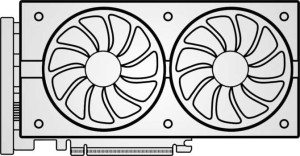
AMD Radeon RX 9070 XT
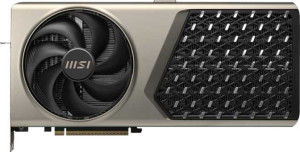
MSI GeForce RTX 5080 Expert

AMD Radeon RX 9070 XT MSI GeForce RTX 5080 Expert

Overview

Welcome to our in-depth spec comparison between the AMD Radeon RX 9070 XT and the MSI GeForce RTX 5080 Expert — two powerful graphics cards built for demanding workloads and high-performance gaming. In this head-to-head, we examine key battlegrounds including memory bandwidth and VRAM technology, raw computational throughput, pixel and texture rates, physical dimensions, and power consumption to help you determine which GPU best fits your needs.

Common Features

  • Both products support Double Precision Floating Point (DPFP).
  • Both products come with 16GB of VRAM.
  • Both products use a 256-bit memory bus width.
  • ECC memory support is available on both products.
  • Both products are compatible with DirectX 12 Ultimate.
  • Both products support OpenGL version 4.6.
  • Multi-display technology is supported on both products.
  • Ray tracing support is available on both products.
  • 3D support is available on both products.
  • XeSS (XMX) support is not available on either product.
  • LHR (Lite Hash Rate) is not present on either product.
  • RGB lighting is not featured on either product.
  • Both products include one HDMI output port.
  • Both products feature three DisplayPort outputs.
  • Neither product includes USB-C ports.
  • Neither product includes DVI outputs.
  • Neither product includes mini DisplayPort outputs.
  • Both products use PCI Express (PCIe) version 5.
  • Neither product features air-water cooling.

Main Differences

  • GPU clock speed is 1660 MHz on AMD Radeon RX 9070 XT and 2295 MHz on MSI GeForce RTX 5080 Expert.
  • GPU turbo clock is 2970 MHz on AMD Radeon RX 9070 XT and 2617 MHz on MSI GeForce RTX 5080 Expert.
  • Pixel rate is 380.2 GPixel/s on AMD Radeon RX 9070 XT and 293.1 GPixel/s on MSI GeForce RTX 5080 Expert.
  • Floating-point performance is 48.7 TFLOPS on AMD Radeon RX 9070 XT and 56.28 TFLOPS on MSI GeForce RTX 5080 Expert.
  • Texture rate is 760.3 GTexels/s on AMD Radeon RX 9070 XT and 879.3 GTexels/s on MSI GeForce RTX 5080 Expert.
  • GPU memory speed is 2518 MHz on AMD Radeon RX 9070 XT and 1875 MHz on MSI GeForce RTX 5080 Expert.
  • Shading units total 4096 on AMD Radeon RX 9070 XT and 10752 on MSI GeForce RTX 5080 Expert.
  • Texture mapping units (TMUs) number 256 on AMD Radeon RX 9070 XT and 336 on MSI GeForce RTX 5080 Expert.
  • Render output units (ROPs) are 128 on AMD Radeon RX 9070 XT and 112 on MSI GeForce RTX 5080 Expert.
  • Effective memory speed is 20000 MHz on AMD Radeon RX 9070 XT and 30000 MHz on MSI GeForce RTX 5080 Expert.
  • Maximum memory bandwidth is 640 GB/s on AMD Radeon RX 9070 XT and 960 GB/s on MSI GeForce RTX 5080 Expert.
  • AMD Radeon RX 9070 XT uses GDDR6 memory, while MSI GeForce RTX 5080 Expert uses GDDR7 memory.
  • OpenCL version is 2.2 on AMD Radeon RX 9070 XT and 3 on MSI GeForce RTX 5080 Expert.
  • AMD Radeon RX 9070 XT features AMD SAM, while MSI GeForce RTX 5080 Expert features Intel Resizable BAR.
  • HDMI version is 2.1a on AMD Radeon RX 9070 XT and 2.1b on MSI GeForce RTX 5080 Expert.
  • GPU architecture is RDNA 4.0 on AMD Radeon RX 9070 XT and Blackwell on MSI GeForce RTX 5080 Expert.
  • Thermal Design Power (TDP) is 304W on AMD Radeon RX 9070 XT and 360W on MSI GeForce RTX 5080 Expert.
  • Semiconductor size is 4 nm on AMD Radeon RX 9070 XT and 5 nm on MSI GeForce RTX 5080 Expert.
  • Number of transistors is 53900 million on AMD Radeon RX 9070 XT and 45600 million on MSI GeForce RTX 5080 Expert.
  • Card width is 267 mm on AMD Radeon RX 9070 XT and 319 mm on MSI GeForce RTX 5080 Expert.
  • Card height is 111 mm on AMD Radeon RX 9070 XT and 150 mm on MSI GeForce RTX 5080 Expert.
Specs Comparison
AMD Radeon RX 9070 XT

AMD Radeon RX 9070 XT

MSI GeForce RTX 5080 Expert

MSI GeForce RTX 5080 Expert

Performance:
GPU clock speed 1660 MHz 2295 MHz
GPU turbo 2970 MHz 2617 MHz
pixel rate 380.2 GPixel/s 293.1 GPixel/s
floating-point performance 48.7 TFLOPS 56.28 TFLOPS
texture rate 760.3 GTexels/s 879.3 GTexels/s
GPU memory speed 2518 MHz 1875 MHz
shading units 4096 10752
texture mapping units (TMUs) 256 336
render output units (ROPs) 128 112
Has Double Precision Floating Point (DPFP)

The clock speed story here is more nuanced than it first appears. The RTX 5080 runs a higher base clock at 2295 MHz, suggesting a more stable sustained performance floor, while the RX 9070 XT starts lower at 1660 MHz but rockets up to a 2970 MHz turbo — a much wider boost range. In practice, peak turbo is rarely maintained under sustained load, so the RTX 5080's tighter clock range may translate to more consistent frame pacing in long gaming sessions.

On raw compute, the RTX 5080 holds a meaningful lead. Its 56.28 TFLOPS of floating-point throughput outpaces the RX 9070 XT's 48.7 TFLOPS, and its vastly larger shader array — 10,752 shading units versus 4,096 — explains why. This gap matters most in compute-heavy workloads like ray tracing, AI-assisted rendering, and GPU compute tasks. The RTX 5080 also leads in texture throughput at 879.3 GTexels/s versus 760.3 GTexels/s, which benefits texture-heavy scenes. The RX 9070 XT fights back on pixel fill rate — 380.2 GPixel/s against just 293.1 GPixel/s, thanks to its edge in ROPs (128 vs. 112) — meaning it can push pixels to the framebuffer faster, a genuine advantage at very high resolutions in traditional rasterized rendering. Its faster memory clock of 2518 MHz versus 1875 MHz also feeds its shader units more efficiently.

Overall, the RTX 5080 holds a clear performance edge in raw compute and texture workloads due to its significantly higher shader count and TFLOPS, which are the dominant metrics for modern gaming and GPU compute. The RX 9070 XT's superior pixel fill rate and memory speed keep it competitive in purely rasterized scenarios, but the RTX 5080's broader architectural muscle gives it a decisive advantage across the wider range of workloads reflected in these specs.
Memory:
effective memory speed 20000 MHz 30000 MHz
maximum memory bandwidth 640 GB/s 960 GB/s
VRAM 16GB 16GB
GDDR version GDDR6 GDDR7
memory bus width 256-bit 256-bit
Supports ECC memory

The AMD Radeon RX 9070 XT and MSI GeForce RTX 5080 Expert share the same amount of VRAM at 16GB. However, there are key differences in their memory specifications. The Radeon RX 9070 XT features an effective memory speed of 20000 MHz, while the GeForce RTX 5080 Expert has a significantly faster memory speed of 30000 MHz. This results in a noticeable difference in memory bandwidth, with the Radeon RX 9070 XT providing a maximum of 640 GB/s, compared to the GeForce RTX 5080 Expert’s higher bandwidth of 960 GB/s.

Both cards use different versions of GDDR memory. The Radeon RX 9070 XT is equipped with GDDR6 memory, whereas the GeForce RTX 5080 Expert comes with GDDR7 memory. Despite this difference, both cards have a 256-bit memory bus width. Additionally, both products support ECC (Error-Correcting Code) memory, ensuring data integrity for more reliable performance.

While the two products have similar VRAM, the GeForce RTX 5080 Expert’s faster memory speed and higher bandwidth could provide a performance advantage in certain memory-intensive applications.

Features:
DirectX version DirectX 12 Ultimate DirectX 12 Ultimate
OpenGL version 4.6 4.6
OpenCL version 2.2 3
Supports multi-display technology
supports ray tracing
Supports 3D
has XeSS (XMX)
AMD SAM / Intel Resizable BAR AMD SAM Intel Resizable BAR
has LHR
has RGB lighting
supported displays 4 4

Both the AMD Radeon RX 9070 XT and MSI GeForce RTX 5080 Expert support DirectX 12 Ultimate, OpenGL 4.6, and ray tracing, ensuring compatibility with modern gaming and graphical technologies. They also both support multi-display technology and 3D rendering. The Radeon RX 9070 XT, however, features the AMD SAM (Smart Access Memory) technology, while the GeForce RTX 5080 Expert supports Intel Resizable BAR, indicating the respective technologies tied to their platforms.

The OpenCL version on the Radeon RX 9070 XT is 2.2, while the GeForce RTX 5080 Expert supports a slightly newer OpenCL 3. The Radeon RX 9070 XT does not include XeSS (XMX), a feature which is also absent in the GeForce RTX 5080 Expert.

Both cards do not have RGB lighting and lack LHR (Lite Hash Rate), ensuring that neither is targeted specifically for mining restrictions. Additionally, both products support up to 4 displays.

Ports:
has an HDMI output
HDMI ports 1 1
HDMI version HDMI 2.1a HDMI 2.1b
DisplayPort outputs 3 3
USB-C ports 0 0
DVI outputs 0 0
mini DisplayPort outputs 0 0

Both the AMD Radeon RX 9070 XT and MSI GeForce RTX 5080 Expert feature an HDMI output, with each card offering 1 HDMI port. The HDMI version differs slightly, with the Radeon RX 9070 XT supporting HDMI 2.1a, while the GeForce RTX 5080 Expert supports HDMI 2.1b. Both products also provide 3 DisplayPort outputs, ensuring ample connectivity for high-resolution displays. Neither card includes USB-C ports, DVI outputs, or mini DisplayPort outputs.

In summary, the main difference between the two products in this category is the HDMI version, with the Radeon RX 9070 XT having HDMI 2.1a and the GeForce RTX 5080 Expert featuring HDMI 2.1b.

General info:
GPU architecture RDNA 4.0 Blackwell
release date January 2025 August 2025
Thermal Design Power (TDP) 304W 360W
PCI Express (PCIe) version 5 5
semiconductor size 4 nm 5 nm
number of transistors 53900 million 45600 million
Has air-water cooling
width 267 mm 319 mm
height 111 mm 150 mm

The AMD Radeon RX 9070 XT and MSI GeForce RTX 5080 Expert differ in several general specifications. The Radeon RX 9070 XT is built on the RDNA 4.0 architecture, while the GeForce RTX 5080 Expert uses the Blackwell architecture. In terms of thermal design power (TDP), the Radeon RX 9070 XT has a TDP of 304W, whereas the GeForce RTX 5080 Expert has a higher TDP of 360W. Both cards support PCI Express 5.0, but the Radeon RX 9070 XT features a more advanced 4 nm semiconductor size, compared to the 5 nm semiconductor size of the GeForce RTX 5080 Expert.

When it comes to transistors, the Radeon RX 9070 XT has 53.9 billion transistors, while the GeForce RTX 5080 Expert has 45.6 billion transistors. Both cards lack air-water cooling, indicating they rely on conventional cooling solutions. Additionally, the Radeon RX 9070 XT is smaller in size, measuring 267 mm in width and 111 mm in height, compared to the GeForce RTX 5080 Expert, which is larger at 319 mm in width and 150 mm in height.

These differences highlight the contrasting design philosophies of the two cards, with the Radeon RX 9070 XT being more compact and utilizing a smaller semiconductor size, while the GeForce RTX 5080 Expert has a higher TDP and larger form factor.

Comparison Summary & Verdict

After reviewing every specification, both cards share a strong foundation: 16GB of VRAM, DirectX 12 Ultimate support, ray tracing capability, and PCIe 5 compatibility. However, their strengths diverge sharply. The AMD Radeon RX 9070 XT stands out with a higher GPU turbo clock of 2970 MHz, a superior pixel rate of 380.2 GPixel/s, a more advanced 4 nm semiconductor process, more transistors at 53,900 million, and a lower TDP of 304W — making it an excellent choice for energy-conscious builders seeking a compact, efficient card. The MSI GeForce RTX 5080 Expert counters with dramatically more shading units, faster GDDR7 memory delivering 960 GB/s of bandwidth, higher floating-point performance at 56.28 TFLOPS, and a superior texture rate — advantages that shine in compute-heavy and bandwidth-intensive workloads. Choose based on your priorities: efficiency and pixel throughput favor the RX 9070 XT, while raw compute power and memory speed favor the RTX 5080 Expert.

AMD Radeon RX 9070 XT
Buy AMD Radeon RX 9070 XT if...

Buy the AMD Radeon RX 9070 XT if you want a more power-efficient GPU with a higher turbo clock, faster pixel rate, a cutting-edge 4 nm chip, and a smaller, more compact form factor.

MSI GeForce RTX 5080 Expert
Buy MSI GeForce RTX 5080 Expert if...

Buy the MSI GeForce RTX 5080 Expert if you need maximum raw compute performance, significantly higher memory bandwidth with GDDR7, and more shading and texture processing power for demanding workloads.