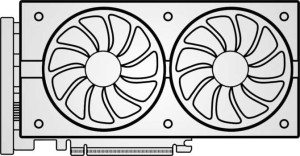
AMD Radeon RX 9070 XT
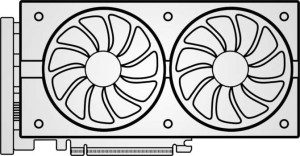
Nvidia RTX Pro 4500 Blackwell

AMD Radeon RX 9070 XT Nvidia RTX Pro 4500 Blackwell

Overview

Welcome to our in-depth spec comparison between the AMD Radeon RX 9070 XT and the Nvidia RTX Pro 4500 Blackwell — two powerful GPUs built on very different design philosophies. We put these cards head-to-head across key battlegrounds including memory capacity and bandwidth, raw compute performance, power efficiency, and display output options, to help you determine which one truly fits your workflow.

Common Features

  • Double Precision Floating Point (DPFP) is supported on both products.
  • Both products share a 256-bit memory bus width.
  • ECC memory support is available on both products.
  • Both products support OpenGL version 4.6.
  • Multi-display technology is supported on both products.
  • Ray tracing is supported on both products.
  • 3D support is available on both products.
  • XeSS (XMX) is not available on either product.
  • LHR is not present on either product.
  • RGB lighting is not featured on either product.
  • Both products support up to 4 displays.
  • Neither product has USB-C ports.
  • Neither product has DVI outputs.
  • Neither product has mini DisplayPort outputs.
  • Both products use PCI Express (PCIe) version 5.
  • Neither product uses air-water cooling.

Main Differences

  • GPU clock speed is 1660 MHz on AMD Radeon RX 9070 XT and 1590 MHz on Nvidia RTX Pro 4500 Blackwell.
  • GPU turbo speed is 2970 MHz on AMD Radeon RX 9070 XT and 2617 MHz on Nvidia RTX Pro 4500 Blackwell.
  • Pixel rate is 380.2 GPixel/s on AMD Radeon RX 9070 XT and 293.1 GPixel/s on Nvidia RTX Pro 4500 Blackwell.
  • Floating-point performance is 48.7 TFLOPS on AMD Radeon RX 9070 XT and 54.94 TFLOPS on Nvidia RTX Pro 4500 Blackwell.
  • Texture rate is 760.3 GTexels/s on AMD Radeon RX 9070 XT and 858.4 GTexels/s on Nvidia RTX Pro 4500 Blackwell.
  • GPU memory speed is 2518 MHz on AMD Radeon RX 9070 XT and 1750 MHz on Nvidia RTX Pro 4500 Blackwell.
  • Shading units total 4096 on AMD Radeon RX 9070 XT and 10496 on Nvidia RTX Pro 4500 Blackwell.
  • Texture mapping units (TMUs) number 256 on AMD Radeon RX 9070 XT and 328 on Nvidia RTX Pro 4500 Blackwell.
  • Render output units (ROPs) total 128 on AMD Radeon RX 9070 XT and 112 on Nvidia RTX Pro 4500 Blackwell.
  • Effective memory speed is 20000 MHz on AMD Radeon RX 9070 XT and 28000 MHz on Nvidia RTX Pro 4500 Blackwell.
  • Maximum memory bandwidth is 640 GB/s on AMD Radeon RX 9070 XT and 896 GB/s on Nvidia RTX Pro 4500 Blackwell.
  • VRAM is 16GB on AMD Radeon RX 9070 XT and 32GB on Nvidia RTX Pro 4500 Blackwell.
  • GDDR version is GDDR6 on AMD Radeon RX 9070 XT and GDDR7 on Nvidia RTX Pro 4500 Blackwell.
  • DirectX version is DirectX 12 Ultimate on AMD Radeon RX 9070 XT and DirectX 12 on Nvidia RTX Pro 4500 Blackwell.
  • OpenCL version is 2.2 on AMD Radeon RX 9070 XT and 3 on Nvidia RTX Pro 4500 Blackwell.
  • Resizable BAR technology is AMD SAM on AMD Radeon RX 9070 XT and Intel Resizable BAR on Nvidia RTX Pro 4500 Blackwell.
  • An HDMI output is present on AMD Radeon RX 9070 XT but not available on Nvidia RTX Pro 4500 Blackwell.
  • DisplayPort outputs number 3 on AMD Radeon RX 9070 XT and 4 on Nvidia RTX Pro 4500 Blackwell.
  • GPU architecture is RDNA 4.0 on AMD Radeon RX 9070 XT and Blackwell on Nvidia RTX Pro 4500 Blackwell.
  • Thermal Design Power (TDP) is 304W on AMD Radeon RX 9070 XT and 200W on Nvidia RTX Pro 4500 Blackwell.
  • Semiconductor size is 4 nm on AMD Radeon RX 9070 XT and 5 nm on Nvidia RTX Pro 4500 Blackwell.
  • Number of transistors is 53900 million on AMD Radeon RX 9070 XT and 45600 million on Nvidia RTX Pro 4500 Blackwell.
Specs Comparison
AMD Radeon RX 9070 XT

AMD Radeon RX 9070 XT

Nvidia RTX Pro 4500 Blackwell

Nvidia RTX Pro 4500 Blackwell

Performance:
GPU clock speed 1660 MHz 1590 MHz
GPU turbo 2970 MHz 2617 MHz
pixel rate 380.2 GPixel/s 293.1 GPixel/s
floating-point performance 48.7 TFLOPS 54.94 TFLOPS
texture rate 760.3 GTexels/s 858.4 GTexels/s
GPU memory speed 2518 MHz 1750 MHz
shading units 4096 10496
texture mapping units (TMUs) 256 328
render output units (ROPs) 128 112
Has Double Precision Floating Point (DPFP)

At first glance, the AMD Radeon RX 9070 XT holds a clear clock speed advantage, running its base and boost clocks at 1660 / 2970 MHz versus the Nvidia RTX Pro 4500 Blackwell's 1590 / 2617 MHz. This translates directly into a superior pixel fill rate of 380.2 GPixel/s against the Pro 4500's 293.1 GPixel/s — a meaningful edge in rasterization-heavy workloads like gaming or rendering dense geometry at high resolutions. The RX 9070 XT also benefits from a significantly faster memory bus speed (2518 MHz vs. 1750 MHz), which can reduce memory-bound bottlenecks in bandwidth-sensitive tasks.

However, the RTX Pro 4500 Blackwell counters with a strikingly different hardware profile. Its 10,496 shading units — more than double the RX 9070 XT's 4,096 — point to a fundamentally wider compute architecture, likely optimized for sustained parallel workloads rather than peak single-thread frequency. This muscle shows up in its higher floating-point performance of 54.94 TFLOPS (vs. 48.7 TFLOPS) and superior texture rate of 858.4 GTexels/s (vs. 760.3 GTexels/s), giving it a tangible edge in compute-intensive and texture-heavy scenarios such as 3D rendering, simulation, and AI-adjacent inference tasks. Both GPUs support Double Precision Floating Point (DPFP), which is relevant for scientific or professional computation.

In summary, these two GPUs reflect different design philosophies. The RX 9070 XT wins on raw clock speed, pixel throughput, and memory speed — characteristics that favor high-framerate gaming and latency-sensitive rendering. The RTX Pro 4500 Blackwell holds the edge in compute throughput and texture processing, making it the stronger choice for workstation-oriented, parallel-compute workloads. Neither product is universally superior: the deciding factor is the target use case.
Memory:
effective memory speed 20000 MHz 28000 MHz
maximum memory bandwidth 640 GB/s 896 GB/s
VRAM 16GB 32GB
GDDR version GDDR6 GDDR7
memory bus width 256-bit 256-bit
Supports ECC memory

The AMD Radeon RX 9070 XT features an effective memory speed of 20000 MHz, whereas the Nvidia RTX Pro 4500 Blackwell has a higher effective memory speed of 28000 MHz. The maximum memory bandwidth for the RX 9070 XT is 640 GB/s, which is lower than the RTX Pro 4500 Blackwell's 896 GB/s. In terms of VRAM, the RX 9070 XT comes with 16GB, while the RTX Pro 4500 Blackwell doubles that with 32GB of VRAM.

Both products use different generations of GDDR memory: the RX 9070 XT is equipped with GDDR6, while the RTX Pro 4500 Blackwell uses the more recent GDDR7. Both products also have a 256-bit memory bus width, so there is no difference in that aspect.

Additionally, both the RX 9070 XT and the RTX Pro 4500 Blackwell support ECC memory, ensuring error correction capabilities on both cards.

Features:
DirectX version DirectX 12 Ultimate DirectX 12
OpenGL version 4.6 4.6
OpenCL version 2.2 3
Supports multi-display technology
supports ray tracing
Supports 3D
has XeSS (XMX)
AMD SAM / Intel Resizable BAR AMD SAM Intel Resizable BAR
has LHR
has RGB lighting
supported displays 4 4

The AMD Radeon RX 9070 XT supports DirectX 12 Ultimate, while the Nvidia RTX Pro 4500 Blackwell supports the earlier DirectX 12 version. Both products support OpenGL version 4.6, but the RX 9070 XT is equipped with OpenCL version 2.2, whereas the RTX Pro 4500 Blackwell supports OpenCL version 3.

Both cards support multi-display technology, ray tracing, and 3D, with no differences in these capabilities. Neither product includes XeSS (XMX) support. In terms of memory expansion, the RX 9070 XT supports AMD SAM, while the RTX Pro 4500 Blackwell supports Intel Resizable BAR.

Neither product features LHR (Lite Hash Rate) limitations, and both lack RGB lighting. Both cards support up to four displays.

Ports:
has an HDMI output
DisplayPort outputs 3 4
USB-C ports 0 0
DVI outputs 0 0
mini DisplayPort outputs 0 0

The AMD Radeon RX 9070 XT has an HDMI output, whereas the Nvidia RTX Pro 4500 Blackwell does not have an HDMI output. The RX 9070 XT is equipped with 3 DisplayPort outputs, while the RTX Pro 4500 Blackwell offers 4 DisplayPort outputs, providing one more port than the RX 9070 XT.

Both cards have no USB-C ports, DVI outputs, or mini DisplayPort outputs, so there is no difference in these specific ports between the two products.

General info:
GPU architecture RDNA 4.0 Blackwell
release date January 2025 March 2025
Thermal Design Power (TDP) 304W 200W
PCI Express (PCIe) version 5 5
semiconductor size 4 nm 5 nm
number of transistors 53900 million 45600 million
Has air-water cooling
width 267 mm 266.7 mm
height 111 mm 111.8 mm

The AMD Radeon RX 9070 XT is built on the RDNA 4.0 architecture, while the Nvidia RTX Pro 4500 Blackwell uses the Blackwell architecture. The RX 9070 XT has a higher Thermal Design Power (TDP) of 304W compared to the RTX Pro 4500 Blackwell's 200W. Both products use PCI Express version 5, but the RX 9070 XT has a smaller semiconductor size of 4 nm, whereas the RTX Pro 4500 Blackwell uses a 5 nm process.

The RX 9070 XT has 53,900 million transistors, while the RTX Pro 4500 Blackwell has 45,600 million transistors. Both products lack air-water cooling. In terms of physical dimensions, the RX 9070 XT measures 267 mm in width and 111 mm in height, while the RTX Pro 4500 Blackwell is slightly narrower at 266.7 mm in width and marginally taller at 111.8 mm in height.

Comparison Summary & Verdict

After examining all the specifications, both GPUs have clear strengths tailored to distinct audiences. The AMD Radeon RX 9070 XT leads in GPU clock speed, pixel rate, and transistor count, while also offering DirectX 12 Ultimate support and an HDMI output — making it a compelling choice for gaming and content creation at a lower TDP than might be expected for its performance tier. The Nvidia RTX Pro 4500 Blackwell, on the other hand, pulls ahead with a massive 32GB of GDDR7 VRAM, 896 GB/s memory bandwidth, higher floating-point performance, a significantly lower 200W TDP, and a superior texture rate — advantages that make it especially suited for professional workloads such as 3D rendering, simulation, and AI-assisted tasks. If raw memory capacity and power efficiency are your priorities, the RTX Pro 4500 Blackwell stands out; if you want faster pixel throughput and broader display compatibility, the RX 9070 XT is hard to overlook.

AMD Radeon RX 9070 XT
Buy AMD Radeon RX 9070 XT if...

Buy the AMD Radeon RX 9070 XT if you want higher GPU clock speeds, DirectX 12 Ultimate support, and HDMI output for versatile display connectivity in gaming or creative workloads.

Nvidia RTX Pro 4500 Blackwell
Buy Nvidia RTX Pro 4500 Blackwell if...

Buy the Nvidia RTX Pro 4500 Blackwell if you need 32GB of GDDR7 VRAM, superior memory bandwidth, and a lower 200W TDP for demanding professional and compute-intensive applications.