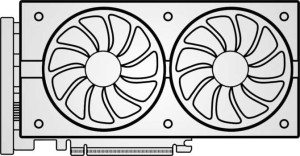
AMD Radeon RX 9070 XT
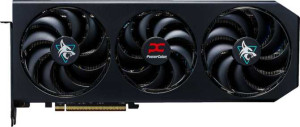
PowerColor Hellhound Radeon RX 9070 XT

AMD Radeon RX 9070 XT PowerColor Hellhound Radeon RX 9070 XT

Overview

Welcome to our in-depth specification comparison between the AMD Radeon RX 9070 XT and the PowerColor Hellhound Radeon RX 9070 XT. Both cards are built on the same RDNA 4.0 architecture and share a remarkably similar foundation, yet key differences emerge when examining their boost clock speeds, physical dimensions, and a handful of feature-level distinctions. Whether you are chasing peak compute throughput or prioritizing a specific form factor, this comparison will help you identify which card best fits your needs.

Common Features

  • Both cards share a base GPU clock speed of 1660 MHz.
  • Both cards have a GPU memory speed of 2518 MHz.
  • Both cards feature 4096 shading units.
  • Both cards include 256 texture mapping units (TMUs).
  • Both cards have 128 render output units (ROPs).
  • Double Precision Floating Point (DPFP) is supported on both cards.
  • Both cards have an effective memory speed of 20000 MHz.
  • Both cards come with 16GB of VRAM.
  • Both cards use GDDR6 memory.
  • Both cards have a 256-bit memory bus width.
  • ECC memory support is available on both cards.
  • Both cards support OpenGL version 4.6.
  • Both cards support OpenCL version 2.2.
  • Multi-display technology is supported on both cards.
  • Ray tracing is supported on both cards.
  • 3D support is available on both cards.
  • FSR4 is supported on both cards.
  • XeSS (XMX) support is not available on either card.
  • Both cards use AMD SAM (Resizable BAR).
  • Both cards have one HDMI output and three DisplayPort outputs.
  • Neither card includes USB-C or DVI outputs.
  • Both cards are built on the RDNA 4.0 GPU architecture.
  • Both cards have a Thermal Design Power (TDP) of 304W.
  • Both cards use PCIe version 5.
  • Both cards are manufactured on a 4 nm semiconductor process.
  • Both cards contain 53,900 million transistors.
  • Neither card supports air-water cooling.

Main Differences

  • GPU turbo clock speed is 2970 MHz on AMD Radeon RX 9070 XT and 3010 MHz on PowerColor Hellhound Radeon RX 9070 XT.
  • Pixel rate is 380.2 GPixel/s on AMD Radeon RX 9070 XT and 385.3 GPixel/s on PowerColor Hellhound Radeon RX 9070 XT.
  • Floating-point performance is 48.7 TFLOPS on AMD Radeon RX 9070 XT and 49.32 TFLOPS on PowerColor Hellhound Radeon RX 9070 XT.
  • Texture rate is 760.3 GTexels/s on AMD Radeon RX 9070 XT and 770.6 GTexels/s on PowerColor Hellhound Radeon RX 9070 XT.
  • Maximum memory bandwidth is 640 GB/s on AMD Radeon RX 9070 XT and 644.6 GB/s on PowerColor Hellhound Radeon RX 9070 XT.
  • DirectX version is DirectX 12 Ultimate on AMD Radeon RX 9070 XT and DirectX 12 on PowerColor Hellhound Radeon RX 9070 XT.
  • RGB lighting is present on PowerColor Hellhound Radeon RX 9070 XT but not available on AMD Radeon RX 9070 XT.
  • HDMI version is HDMI 2.1a on AMD Radeon RX 9070 XT and HDMI 2.1b on PowerColor Hellhound Radeon RX 9070 XT.
  • Card width is 267 mm on AMD Radeon RX 9070 XT and 340 mm on PowerColor Hellhound Radeon RX 9070 XT.
  • Card height is 111 mm on AMD Radeon RX 9070 XT and 142 mm on PowerColor Hellhound Radeon RX 9070 XT.
Specs Comparison
AMD Radeon RX 9070 XT

AMD Radeon RX 9070 XT

PowerColor Hellhound Radeon RX 9070 XT

PowerColor Hellhound Radeon RX 9070 XT

Performance:
GPU clock speed 1660 MHz 1660 MHz
GPU turbo 2970 MHz 3010 MHz
pixel rate 380.2 GPixel/s 385.3 GPixel/s
floating-point performance 48.7 TFLOPS 49.32 TFLOPS
texture rate 760.3 GTexels/s 770.6 GTexels/s
GPU memory speed 2518 MHz 2518 MHz
shading units 4096 4096
texture mapping units (TMUs) 256 256
render output units (ROPs) 128 128
Has Double Precision Floating Point (DPFP)

At their core, the AMD Radeon RX 9070 XT and the PowerColor Hellhound RX 9070 XT share identical silicon foundations: the same 1660 MHz base clock, 4096 shading units, 256 TMUs, 128 ROPs, and 2518 MHz memory speed. This means both cards process geometry, handle rasterization workloads, and feed memory bandwidth at the same rate under typical conditions. Their shared support for Double Precision Floating Point (DPFP) also puts them on equal footing for compute-adjacent tasks.

The meaningful separation emerges at boost frequencies. The Hellhound reaches a GPU turbo of 3010 MHz versus the reference card's 2970 MHz — a 40 MHz advantage that cascades into every derived throughput metric. This directly explains why the Hellhound leads in floating-point performance (49.32 TFLOPS vs. 48.7 TFLOPS), texture rate (770.6 GTexels/s vs. 760.3 GTexels/s), and pixel rate (385.3 GPixel/s vs. 380.2 GPixel/s). In practice, a higher sustained boost clock means the GPU spends more time at peak throughput during demanding scenes, which can translate to slightly higher average framerates and smoother performance under sustained GPU-limited workloads.

That said, the performance delta is modest — roughly 1.3% across all throughput metrics — meaning real-world differences will be difficult to perceive in most gaming scenarios and will fall within run-to-run variance in benchmarks. The Hellhound holds a narrow but measurable edge in raw performance on paper, making it the marginally faster option within this group, though the gap is unlikely to be a decisive factor for the vast majority of users.

Memory:
effective memory speed 20000 MHz 20000 MHz
maximum memory bandwidth 640 GB/s 644.6 GB/s
VRAM 16GB 16GB
GDDR version GDDR6 GDDR6
memory bus width 256-bit 256-bit
Supports ECC memory

The AMD Radeon RX 9070 XT and PowerColor Hellhound Radeon RX 9070 XT share identical memory specifications across the board. Both cards feature an effective memory speed of 20000 MHz, a VRAM capacity of 16GB, and use the GDDR6 memory standard. The memory bus width is also the same at 256-bit for both products.

When it comes to maximum memory bandwidth, there is a slight difference. The PowerColor Hellhound offers a slightly higher maximum bandwidth of 644.6 GB/s compared to the AMD Radeon’s 640 GB/s. However, both cards support Error Correcting Code (ECC) memory, ensuring data integrity during high-performance tasks.

Overall, the memory specifications for both cards are very similar, with the main difference being a marginal increase in memory bandwidth for the PowerColor Hellhound Radeon RX 9070 XT.

Features:
DirectX version DirectX 12 Ultimate DirectX 12
OpenGL version 4.6 4.6
OpenCL version 2.2 2.2
Supports multi-display technology
supports ray tracing
Supports 3D
has FSR4
has XeSS (XMX)
AMD SAM / Intel Resizable BAR AMD SAM AMD SAM
has LHR
has RGB lighting
supported displays 4 4

The AMD Radeon RX 9070 XT and PowerColor Hellhound Radeon RX 9070 XT are quite similar in terms of features, but there are a few key differences. Both cards support DirectX 12, OpenGL 4.6, OpenCL 2.2, multi-display technology, ray tracing, and 3D. Additionally, both have FSR4 support, XeSS (XMX) is not available on either, and both support up to 4 displays.

However, the AMD Radeon RX 9070 XT supports DirectX 12 Ultimate, while the PowerColor Hellhound only supports DirectX 12. This is a small difference, as DirectX 12 Ultimate offers additional features like hardware-accelerated ray tracing and enhanced graphics. Another difference is the RGB lighting: the PowerColor Hellhound has RGB lighting, while the AMD Radeon RX 9070 XT does not.

Both cards feature AMD SAM / Intel Resizable BAR, have no LHR (Lite Hash Rate), and support 3D rendering. Overall, while most features are the same, the PowerColor Hellhound adds the visual appeal of RGB lighting, and the AMD Radeon RX 9070 XT offers the latest DirectX 12 Ultimate support.

Ports:
has an HDMI output
HDMI ports 1 1
HDMI version HDMI 2.1a HDMI 2.1b
DisplayPort outputs 3 3
USB-C ports 0 0
DVI outputs 0 0
mini DisplayPort outputs 0 0

The AMD Radeon RX 9070 XT and PowerColor Hellhound Radeon RX 9070 XT have nearly identical port configurations. Both cards feature a single HDMI output with 1 HDMI port. The HDMI versions differ slightly, with the AMD Radeon RX 9070 XT supporting HDMI 2.1a, while the PowerColor Hellhound Radeon RX 9070 XT supports HDMI 2.1b, which offers minor updates in features.

Both products also include 3 DisplayPort outputs and do not have USB-C ports, DVI outputs, or mini DisplayPort outputs. The HDMI and DisplayPort setups are the same on both cards, with the only distinction being the version of HDMI supported.

Overall, the port configurations are very similar between the two products, with the primary difference being the HDMI version, with the PowerColor Hellhound using HDMI 2.1b and the AMD Radeon RX 9070 XT using HDMI 2.1a.

General info:
GPU architecture RDNA 4.0 RDNA 4.0
release date January 2025 March 2025
Thermal Design Power (TDP) 304W 304W
PCI Express (PCIe) version 5 5
semiconductor size 4 nm 4 nm
number of transistors 53900 million 53900 million
Has air-water cooling
width 267 mm 340 mm
height 111 mm 142 mm

The AMD Radeon RX 9070 XT and PowerColor Hellhound Radeon RX 9070 XT share nearly identical general specifications. Both cards feature the same GPU architecture (RDNA 4.0), thermal design power (TDP) of 304W, PCI Express version 5.0, and semiconductor size of 4 nm. Additionally, both cards have the same number of transistors, 53.9 billion.

One area of difference is the physical dimensions. The AMD Radeon RX 9070 XT is 267 mm in width and 111 mm in height, while the PowerColor Hellhound Radeon RX 9070 XT is slightly larger, measuring 340 mm in width and 142 mm in height. Despite these differences, neither card features air-water cooling.

Overall, while the core specifications are identical, the PowerColor Hellhound is physically larger than the AMD Radeon RX 9070 XT, but both cards offer the same performance-oriented design features.

Comparison Summary & Verdict

Both the AMD Radeon RX 9070 XT and the PowerColor Hellhound Radeon RX 9070 XT deliver nearly identical core hardware, sharing the same 304W TDP, 16GB GDDR6 VRAM on a 256-bit bus, and full support for ray tracing and FSR4. The key distinctions lie in the details: the PowerColor Hellhound edges ahead with a higher GPU turbo clock of 3010 MHz, slightly better floating-point performance at 49.32 TFLOPS, and a higher texture rate of 770.6 GTexels/s, alongside RGB lighting and HDMI 2.1b. The AMD reference card, however, is notably more compact at 267 x 111 mm versus 340 x 142 mm, and carries a DirectX 12 Ultimate designation. Buyers who value a smaller footprint or a tighter chassis fit will appreciate the reference model, while those seeking every last drop of factory-overclocked performance and aesthetic flair will find the Hellhound a compelling choice.

AMD Radeon RX 9070 XT
Buy AMD Radeon RX 9070 XT if...

Buy the AMD Radeon RX 9070 XT if you need a more compact card that fits smaller cases, or if you require DirectX 12 Ultimate support for your workloads.

PowerColor Hellhound Radeon RX 9070 XT
Buy PowerColor Hellhound Radeon RX 9070 XT if...

Buy the PowerColor Hellhound Radeon RX 9070 XT if you want a factory-overclocked boost with higher turbo clocks and floating-point performance, plus RGB lighting and HDMI 2.1b connectivity.