AMD Radeon RX 9070 XT
Sapphire Nitro+ Radeon RX 9070 XT

AMD Radeon RX 9070 XT Sapphire Nitro+ Radeon RX 9070 XT

Overview

Welcome to our in-depth specification comparison between the AMD Radeon RX 9070 XT and the Sapphire Nitro+ Radeon RX 9070 XT. Both cards are built on the same RDNA 4.0 architecture and share a strong foundation of features, yet they diverge in meaningful ways across performance clocks, physical dimensions, port configurations, and power consumption. Read on to discover which card best suits your needs.

Common Features

  • Both cards share a base GPU clock speed of 1660 MHz.
  • Both cards have a GPU memory speed of 2518 MHz.
  • Both cards feature 4096 shading units.
  • Both cards include 256 texture mapping units (TMUs).
  • Both cards have 128 render output units (ROPs).
  • Double Precision Floating Point (DPFP) is supported on both cards.
  • Both cards have an effective memory speed of 20000 MHz.
  • Both cards come with 16GB of VRAM.
  • Both cards use GDDR6 memory.
  • Both cards feature a 256-bit memory bus width.
  • ECC memory is supported on both cards.
  • Both cards support DirectX 12 Ultimate.
  • Both cards support OpenGL version 4.6.
  • Both cards support OpenCL version 2.2.
  • Multi-display technology is supported on both cards.
  • Ray tracing is supported on both cards.
  • 3D support is available on both cards.
  • FSR4 is available on both cards.
  • XeSS (XMX) is not available on either card.
  • Both cards include an HDMI output.
  • Neither card has USB-C ports, DVI outputs, or mini DisplayPort outputs.
  • Both cards are built on the RDNA 4.0 GPU architecture.
  • Both cards use PCIe version 5.
  • Both cards are manufactured on a 4 nm semiconductor process.
  • Both cards contain 53900 million transistors.
  • Air-water cooling is not available on either card.

Main Differences

  • GPU turbo clock speed is 2970 MHz on AMD Radeon RX 9070 XT and 3060 MHz on Sapphire Nitro+ Radeon RX 9070 XT.
  • Pixel rate is 380.2 GPixel/s on AMD Radeon RX 9070 XT and 391.7 GPixel/s on Sapphire Nitro+ Radeon RX 9070 XT.
  • Floating-point performance is 48.7 TFLOPS on AMD Radeon RX 9070 XT and 50.14 TFLOPS on Sapphire Nitro+ Radeon RX 9070 XT.
  • Texture rate is 760.3 GTexels/s on AMD Radeon RX 9070 XT and 783.4 GTexels/s on Sapphire Nitro+ Radeon RX 9070 XT.
  • Maximum memory bandwidth is 640 GB/s on AMD Radeon RX 9070 XT and 644.6 GB/s on Sapphire Nitro+ Radeon RX 9070 XT.
  • RGB lighting is not present on AMD Radeon RX 9070 XT but is available on Sapphire Nitro+ Radeon RX 9070 XT.
  • HDMI port count is 1 on AMD Radeon RX 9070 XT and 2 on Sapphire Nitro+ Radeon RX 9070 XT.
  • HDMI version is 2.1a on AMD Radeon RX 9070 XT and 2.1b on Sapphire Nitro+ Radeon RX 9070 XT.
  • DisplayPort output count is 3 on AMD Radeon RX 9070 XT and 2 on Sapphire Nitro+ Radeon RX 9070 XT.
  • Thermal Design Power (TDP) is 304W on AMD Radeon RX 9070 XT and 330W on Sapphire Nitro+ Radeon RX 9070 XT.
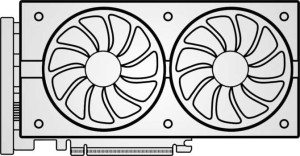
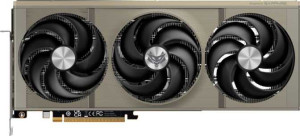
  • Card width is 267 mm on AMD Radeon RX 9070 XT and 330.8 mm on Sapphire Nitro+ Radeon RX 9070 XT.
  • Card height is 111 mm on AMD Radeon RX 9070 XT and 128.5 mm on Sapphire Nitro+ Radeon RX 9070 XT.
Specs Comparison
AMD Radeon RX 9070 XT

AMD Radeon RX 9070 XT

Sapphire Nitro+ Radeon RX 9070 XT

Sapphire Nitro+ Radeon RX 9070 XT

Performance:
GPU clock speed 1660 MHz 1660 MHz
GPU turbo 2970 MHz 3060 MHz
pixel rate 380.2 GPixel/s 391.7 GPixel/s
floating-point performance 48.7 TFLOPS 50.14 TFLOPS
texture rate 760.3 GTexels/s 783.4 GTexels/s
GPU memory speed 2518 MHz 2518 MHz
shading units 4096 4096
texture mapping units (TMUs) 256 256
render output units (ROPs) 128 128
Has Double Precision Floating Point (DPFP)

Both GPUs share the same foundational architecture: identical base clocks of 1660 MHz, the same 4096 shading units, 256 TMUs, 128 ROPs, and the same 2518 MHz memory speed. This means they are built from the same silicon with the same memory subsystem, and at stock idle or light loads, they behave identically. The real divergence only emerges at the top end of the performance envelope.

The Sapphire Nitro+ carries a higher GPU boost clock of 3060 MHz versus 2970 MHz on the reference AMD card — a roughly 3% uplift. Because pixel rate, texture rate, and compute throughput all scale directly with clock speed, this translates into the Nitro+ delivering 391.7 GPixel/s and 783.4 GTexels/s versus 380.2 GPixel/s and 760.3 GTexels/s, along with a floating-point throughput of 50.14 TFLOPS compared to 48.7 TFLOPS. In practice, a ~3% clock advantage rarely produces a perceptible frame-rate difference in isolation, but it can matter at the margin in heavily GPU-bound scenarios or when running AI/compute workloads that stress raw FLOP throughput.

The Sapphire Nitro+ RX 9070 XT holds a clear, if modest, performance edge in this group purely by virtue of its higher factory boost clock. Both cards support Double Precision Floating Point, so neither has a structural compute advantage beyond raw frequency. For users who prioritize peak performance out of the box without manual overclocking, the Nitro+ is the stronger choice; those content with the reference spec will find the gap unlikely to be noticeable in most everyday gaming workloads.
Memory:
effective memory speed 20000 MHz 20000 MHz
maximum memory bandwidth 640 GB/s 644.6 GB/s
VRAM 16GB 16GB
GDDR version GDDR6 GDDR6
memory bus width 256-bit 256-bit
Supports ECC memory

Both the AMD Radeon RX 9070 XT and the Sapphire Nitro+ Radeon RX 9070 XT feature the same effective memory speed of 20000 MHz, ensuring similar performance in terms of memory speed. The VRAM is also identical, with both cards offering 16GB of memory.

Regarding memory bandwidth, the Sapphire Nitro+ offers a slightly higher maximum memory bandwidth of 644.6 GB/s compared to the AMD's 640 GB/s, which is a small but notable difference. Both cards use the GDDR6 memory type and share a 256-bit memory bus width, ensuring similar architecture in terms of memory interface.

Additionally, both cards support ECC (Error Correction Code) memory, meaning they are both equipped with the same error-correcting capabilities for enhanced reliability.

Features:
DirectX version DirectX 12 Ultimate DirectX 12 Ultimate
OpenGL version 4.6 4.6
OpenCL version 2.2 2.2
Supports multi-display technology
supports ray tracing
Supports 3D
has FSR4
has XeSS (XMX)
AMD SAM / Intel Resizable BAR AMD SAM AMD SAM
has LHR
has RGB lighting
supported displays 4 4

The AMD Radeon RX 9070 XT and the Sapphire Nitro+ Radeon RX 9070 XT are very similar in terms of features. Both cards support DirectX 12 Ultimate, OpenGL 4.6, and OpenCL 2.2, ensuring compatibility with modern APIs. Additionally, both support multi-display technology, ray tracing, and 3D, making them capable of handling advanced graphics tasks.

Both products also feature FSR4 (FidelityFX Super Resolution 4) support and do not include XeSS (XMX) support. They both use AMD SAM (Smart Access Memory) for resizable BAR functionality, and neither card has a limiter hash rate (LHR) feature.

However, one difference is that the Sapphire Nitro+ model includes RGB lighting, whereas the AMD Radeon RX 9070 XT does not. Both cards support up to four displays, ensuring flexibility for multi-monitor setups.

Ports:
has an HDMI output
HDMI ports 1 2
HDMI version HDMI 2.1a HDMI 2.1b
DisplayPort outputs 3 2
USB-C ports 0 0
DVI outputs 0 0
mini DisplayPort outputs 0 0

Both the AMD Radeon RX 9070 XT and the Sapphire Nitro+ Radeon RX 9070 XT include an HDMI output, but they differ in the number of HDMI ports. The AMD model has one HDMI port, while the Sapphire version has two. Additionally, the HDMI versions also differ: the AMD card uses HDMI 2.1a, while the Sapphire card uses HDMI 2.1b.

For DisplayPort outputs, the AMD Radeon RX 9070 XT has three, whereas the Sapphire Nitro+ has two. Neither card includes USB-C ports, DVI outputs, or mini DisplayPort outputs.

In summary, the main differences between the two cards in terms of ports are the number of HDMI ports and the HDMI version used. Both offer solid connectivity options, but the Sapphire model provides more HDMI ports and a slightly newer HDMI version.

General info:
GPU architecture RDNA 4.0 RDNA 4.0
release date January 2025 March 2025
Thermal Design Power (TDP) 304W 330W
PCI Express (PCIe) version 5 5
semiconductor size 4 nm 4 nm
number of transistors 53900 million 53900 million
Has air-water cooling
width 267 mm 330.8 mm
height 111 mm 128.5 mm

Both the AMD Radeon RX 9070 XT and the Sapphire Nitro+ Radeon RX 9070 XT use the RDNA 4.0 GPU architecture and are built with a 4 nm semiconductor size, with identical transistor counts of 53900 million. Both cards also support PCI Express 5.0, ensuring they are compatible with the latest PCIe standards.

In terms of thermal design power (TDP), the AMD card has a TDP of 304W, while the Sapphire version is slightly higher at 330W, suggesting it may consume a bit more power during operation. Neither card features air-water cooling, both relying on more traditional cooling methods.

The dimensions of the cards differ as well; the AMD Radeon RX 9070 XT is 267 mm in width and 111 mm in height, while the Sapphire Nitro+ is larger, measuring 330.8 mm in width and 128.5 mm in height.

Comparison Summary & Verdict

Both the AMD Radeon RX 9070 XT and the Sapphire Nitro+ Radeon RX 9070 XT share the same core DNA: identical shading units, GDDR6 memory, and a robust feature set including ray tracing, FSR4, and DirectX 12 Ultimate support. However, the Sapphire Nitro+ Radeon RX 9070 XT pulls ahead with a higher GPU turbo clock of 3060 MHz, improved floating-point performance at 50.14 TFLOPS, dual HDMI 2.1b ports, and RGB lighting, all at the cost of a higher TDP of 330W and a larger physical footprint. Meanwhile, the AMD Radeon RX 9070 XT offers a more compact build, lower power draw at 304W, and an extra DisplayPort output, making it the better fit for space-conscious or efficiency-focused builds. Choose the Sapphire Nitro+ if maximum performance and aesthetics are your priority; choose the reference AMD card if you value a smaller, more power-efficient solution.

AMD Radeon RX 9070 XT
Buy AMD Radeon RX 9070 XT if...

Buy the AMD Radeon RX 9070 XT if you want a more compact, power-efficient card with a lower TDP of 304W and an extra DisplayPort output for a multi-monitor setup.

Sapphire Nitro+ Radeon RX 9070 XT
Buy Sapphire Nitro+ Radeon RX 9070 XT if...

Buy the Sapphire Nitro+ Radeon RX 9070 XT if you want higher GPU turbo clocks, greater floating-point performance, dual HDMI 2.1b ports, and RGB lighting for a more premium, performance-focused build.