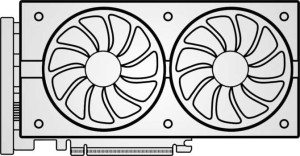
AMD Radeon RX 9070 XT
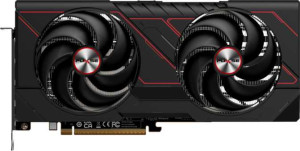
Sapphire Pulse Radeon RX 9070

AMD Radeon RX 9070 XT Sapphire Pulse Radeon RX 9070

Overview

Welcome to our in-depth spec comparison between the AMD Radeon RX 9070 XT and the Sapphire Pulse Radeon RX 9070. Both cards share the same RDNA 4.0 architecture and 16GB of GDDR6 memory, yet they diverge in meaningful ways across raw compute performance, power consumption, and display connectivity. Read on to see how these two RDNA 4 cards stack up across every key specification.

Common Features

  • Both cards have a GPU memory speed of 2518 MHz.
  • Both cards have 128 render output units (ROPs).
  • Double Precision Floating Point (DPFP) is supported on both cards.
  • Both cards have an effective memory speed of 20000 MHz.
  • Both cards are equipped with 16GB of VRAM.
  • Both cards use GDDR6 memory.
  • Both cards have a 256-bit memory bus width.
  • ECC memory is supported on both cards.
  • Both cards support DirectX 12 Ultimate.
  • Both cards support OpenGL version 4.6.
  • Both cards support OpenCL version 2.2.
  • Multi-display technology is supported on both cards.
  • Ray tracing is supported on both cards.
  • 3D support is available on both cards.
  • FSR4 is available on both cards.
  • XeSS (XMX) is not available on either card.
  • Both cards have an HDMI output.
  • Neither card has USB-C ports, DVI outputs, or mini DisplayPort outputs.
  • Both cards use the RDNA 4.0 GPU architecture.
  • Both cards use PCIe version 5.
  • Both cards feature 53,900 million transistors.
  • Air-water cooling is not available on either card.

Main Differences

  • GPU base clock speed is 1660 MHz on AMD Radeon RX 9070 XT and 1330 MHz on Sapphire Pulse Radeon RX 9070.
  • GPU turbo clock speed is 2970 MHz on AMD Radeon RX 9070 XT and 2520 MHz on Sapphire Pulse Radeon RX 9070.
  • Pixel rate is 380.2 GPixel/s on AMD Radeon RX 9070 XT and 322.6 GPixel/s on Sapphire Pulse Radeon RX 9070.
  • Floating-point performance is 48.7 TFLOPS on AMD Radeon RX 9070 XT and 36.13 TFLOPS on Sapphire Pulse Radeon RX 9070.
  • Texture rate is 760.3 GTexels/s on AMD Radeon RX 9070 XT and 564.5 GTexels/s on Sapphire Pulse Radeon RX 9070.
  • Shading units number 4096 on AMD Radeon RX 9070 XT and 3584 on Sapphire Pulse Radeon RX 9070.
  • Texture mapping units (TMUs) total 256 on AMD Radeon RX 9070 XT and 224 on Sapphire Pulse Radeon RX 9070.
  • Maximum memory bandwidth is 640 GB/s on AMD Radeon RX 9070 XT and 644.6 GB/s on Sapphire Pulse Radeon RX 9070.
  • HDMI port count is 1 on AMD Radeon RX 9070 XT and 2 on Sapphire Pulse Radeon RX 9070.
  • HDMI version is 2.1a on AMD Radeon RX 9070 XT and 2.1b on Sapphire Pulse Radeon RX 9070.
  • DisplayPort outputs number 3 on AMD Radeon RX 9070 XT and 2 on Sapphire Pulse Radeon RX 9070.
  • Thermal Design Power (TDP) is 304W on AMD Radeon RX 9070 XT and 220W on Sapphire Pulse Radeon RX 9070.
  • Semiconductor size is 4 nm on AMD Radeon RX 9070 XT and 5 nm on Sapphire Pulse Radeon RX 9070.
  • Card width is 267 mm on AMD Radeon RX 9070 XT and 280 mm on Sapphire Pulse Radeon RX 9070.
  • Card height is 111 mm on AMD Radeon RX 9070 XT and 120.3 mm on Sapphire Pulse Radeon RX 9070.
Specs Comparison
AMD Radeon RX 9070 XT

AMD Radeon RX 9070 XT

Sapphire Pulse Radeon RX 9070

Sapphire Pulse Radeon RX 9070

Performance:
GPU clock speed 1660 MHz 1330 MHz
GPU turbo 2970 MHz 2520 MHz
pixel rate 380.2 GPixel/s 322.6 GPixel/s
floating-point performance 48.7 TFLOPS 36.13 TFLOPS
texture rate 760.3 GTexels/s 564.5 GTexels/s
GPU memory speed 2518 MHz 2518 MHz
shading units 4096 3584
texture mapping units (TMUs) 256 224
render output units (ROPs) 128 128
Has Double Precision Floating Point (DPFP)

At the heart of the performance gap between these two cards lies a significant difference in raw compute power. The AMD Radeon RX 9070 XT delivers 48.7 TFLOPS of floating-point performance against the Sapphire Pulse RX 9070's 36.13 TFLOPS — a roughly 35% advantage that is not a marginal uplift but a meaningful tier separation. This is driven by both a higher shader count (4096 vs. 3584) and a substantially higher GPU turbo clock (2970 MHz vs. 2520 MHz), meaning the XT sustains faster execution across more parallel compute units simultaneously. In practice, this translates into noticeably higher frame rates at demanding settings and greater headroom for GPU-intensive workloads like ray tracing or AI-accelerated rendering.

The texture throughput delta reinforces the same story: 760.3 GTexels/s on the XT versus 564.5 GTexels/s on the Pulse RX 9070 means the XT can process complex, high-resolution texture data significantly faster — a difference that becomes especially visible in open-world titles with dense geometry and high draw distances. On the rasterization side, both cards share an identical 128 ROPs configuration, so pixel fill rate differences stem purely from the XT's higher clock, not a deeper pipeline advantage. Memory speed is also identical at 2518 MHz on both, meaning neither card gains an edge at the memory subsystem level.

The RX 9070 XT holds a clear and substantial performance advantage in this group across nearly every compute and throughput metric. The Sapphire Pulse RX 9070 is not a weak card — it matches on ROPs and memory speed — but the XT's superior shader count and dramatically higher boost clocks give it a decisive edge for users prioritizing peak gaming or compute performance. The Pulse RX 9070 makes more sense for those who do not need the top-tier headroom and may be seeking a more modest power or cost trade-off.

Memory:
effective memory speed 20000 MHz 20000 MHz
maximum memory bandwidth 640 GB/s 644.6 GB/s
VRAM 16GB 16GB
GDDR version GDDR6 GDDR6
memory bus width 256-bit 256-bit
Supports ECC memory

Both the AMD Radeon RX 9070 XT and the Sapphire Pulse Radeon RX 9070 have identical effective memory speeds of 20000 MHz, providing the same data transfer rate. When it comes to maximum memory bandwidth, the Sapphire Pulse Radeon RX 9070 slightly surpasses the AMD card with a bandwidth of 644.6 GB/s, compared to the AMD Radeon RX 9070 XT's 640 GB/s.

Each card is equipped with 16GB of VRAM, and both use the GDDR6 memory type. Additionally, both models share the same memory bus width of 256-bit, ensuring similar data paths for memory access.

In terms of memory reliability, both cards support Error-Correcting Code (ECC) memory, ensuring higher data integrity during operations.

Features:
DirectX version DirectX 12 Ultimate DirectX 12 Ultimate
OpenGL version 4.6 4.6
OpenCL version 2.2 2.2
Supports multi-display technology
supports ray tracing
Supports 3D
has FSR4
has XeSS (XMX)
AMD SAM / Intel Resizable BAR AMD SAM AMD SAM
has LHR
has RGB lighting
supported displays 4 4

The AMD Radeon RX 9070 XT and the Sapphire Pulse Radeon RX 9070 share identical features across the board. Both cards support DirectX 12 Ultimate, OpenGL 4.6, and OpenCL 2.2, providing robust compatibility with modern gaming and computing APIs. Additionally, both support multi-display technology, ray tracing, and 3D rendering, ensuring immersive visual experiences on supported setups.

Both products also feature FidelityFX Super Resolution (FSR4) support, which enhances performance and image quality, and neither has XeSS (XMX) support. Both support AMD SAM (Smart Access Memory) technology, which optimizes performance when paired with compatible AMD processors, and neither has LHR (Lite Hash Rate) limitations, making them suitable for cryptocurrency mining.

When it comes to customization, neither card includes RGB lighting. Both cards can support up to 4 displays, providing ample screen real estate for multitasking and multi-monitor setups.

Ports:
has an HDMI output
HDMI ports 1 2
HDMI version HDMI 2.1a HDMI 2.1b
DisplayPort outputs 3 2
USB-C ports 0 0
DVI outputs 0 0
mini DisplayPort outputs 0 0

The AMD Radeon RX 9070 XT and the Sapphire Pulse Radeon RX 9070 both feature HDMI outputs, but they differ in the number and version of HDMI ports. The AMD card has 1 HDMI port with HDMI 2.1a support, while the Sapphire Pulse model comes with 2 HDMI ports, supporting HDMI 2.1b. This gives the Sapphire Pulse card a slight advantage in terms of HDMI port availability and version.

In terms of DisplayPort outputs, the AMD Radeon RX 9070 XT supports 3 DisplayPort outputs, while the Sapphire Pulse Radeon RX 9070 has 2 DisplayPort outputs. Both cards lack USB-C ports, DVI outputs, and mini DisplayPort outputs.

Overall, the AMD Radeon RX 9070 XT offers more DisplayPort outputs, while the Sapphire Pulse Radeon RX 9070 provides more HDMI ports and a slightly higher HDMI version.

General info:
GPU architecture RDNA 4.0 RDNA 4.0
release date January 2025 March 2025
Thermal Design Power (TDP) 304W 220W
PCI Express (PCIe) version 5 5
semiconductor size 4 nm 5 nm
number of transistors 53900 million 53900 million
Has air-water cooling
width 267 mm 280 mm
height 111 mm 120.3 mm

Both the AMD Radeon RX 9070 XT and the Sapphire Pulse Radeon RX 9070 feature the RDNA 4.0 GPU architecture and PCI Express (PCIe) version 5, ensuring compatibility with the latest technologies. However, they differ in terms of power consumption and size. The AMD Radeon RX 9070 XT has a higher Thermal Design Power (TDP) of 304W, while the Sapphire Pulse Radeon RX 9070 has a lower TDP of 220W.

The two cards also differ in semiconductor size, with the AMD card using a 4 nm process, while the Sapphire Pulse uses a 5 nm process. Both products have the same number of transistors at 53.9 billion, ensuring similar transistor density.

In terms of physical dimensions, the AMD Radeon RX 9070 XT is 267 mm wide and 111 mm tall, while the Sapphire Pulse Radeon RX 9070 is slightly larger, measuring 280 mm in width and 120.3 mm in height. Neither card features air-water cooling.

Comparison Summary & Verdict

After examining every spec, a clear picture emerges for each card. The AMD Radeon RX 9070 XT holds a decisive edge in raw performance, offering higher shader counts, a faster turbo clock of 2970 MHz, and 48.7 TFLOPS of floating-point throughput — making it the better choice for demanding workloads and gaming at high resolutions. In contrast, the Sapphire Pulse Radeon RX 9070 impresses with its much lower 220W TDP, slightly higher memory bandwidth of 644.6 GB/s, two HDMI ports, and the newer HDMI 2.1b standard, making it a compelling pick for energy-conscious builds or multi-display home theater setups. Both cards support ray tracing, FSR4, and DirectX 12 Ultimate, so neither falls short on modern feature support.

AMD Radeon RX 9070 XT
Buy AMD Radeon RX 9070 XT if...

Buy the AMD Radeon RX 9070 XT if you want maximum GPU performance, with higher shader counts, a 2970 MHz turbo clock, and 48.7 TFLOPS — ideal for demanding games and content creation.

Sapphire Pulse Radeon RX 9070
Buy Sapphire Pulse Radeon RX 9070 if...

Buy the Sapphire Pulse Radeon RX 9070 if you prioritize lower power consumption at just 220W, dual HDMI outputs with the newer HDMI 2.1b standard, and a more compact build.