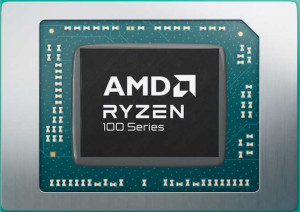
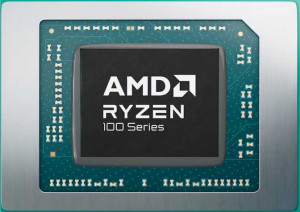
AMD Ryzen 5 150
AMD Ryzen 7 170

AMD Ryzen 5 150 AMD Ryzen 7 170

Common Features

  • Both products are designed for laptops and desktops.
  • Both products have integrated graphics.
  • Both products have a Thermal Design Power (TDP) of 45W.
  • Both products are built with a 6 nm semiconductor size.
  • Both products have a maximum CPU temperature of 95 °C.
  • Both products support PCI Express version 4.
  • Both products support 64-bit architecture.
  • Both products have 16 MB of L3 cache.
  • Both products have 512 KB of L1 cache.
  • Both products have a L2 cache of 0.5 MB per core.
  • Both products do not use big.LITTLE technology.
  • Both products support DirectX version 12.
  • Both products support OpenGL version 4.6.
  • Both products support OpenCL version 2.2.
  • Both products can support up to 4 displays.
  • Both products support DDR5 memory with a maximum speed of 4800 MHz.
  • Both products support a maximum memory bandwidth of 76.8 GB/s.
  • Both products can support up to 64 GB of memory.
  • Both products support ECC memory.
  • Both products have the same instruction sets, including MMX, F16C, FMA3, AES, AVX, AVX2, SSE 4.1, and SSE 4.2.

Main Differences

  • CPU speed is 6 x 3.3 GHz on AMD Ryzen 5 150 and 8 x 3.2 GHz on AMD Ryzen 7 170.
  • CPU threads are 12 on AMD Ryzen 5 150 and 16 on AMD Ryzen 7 170.
  • Turbo clock speed is 4.55 GHz on AMD Ryzen 5 150 and 4.75 GHz on AMD Ryzen 7 170.
  • L2 cache is 3 MB on AMD Ryzen 5 150 and 4 MB on AMD Ryzen 7 170.
  • L3 core size is 2.67 MB per core on AMD Ryzen 5 150 and 2 MB per core on AMD Ryzen 7 170.
  • Clock multiplier is 33 on AMD Ryzen 5 150 and 32 on AMD Ryzen 7 170.
  • GPU clock speed is 1500 MHz on AMD Ryzen 5 150 and 2000 MHz on AMD Ryzen 7 170.
  • GPU name is Radeon 660M on AMD Ryzen 5 150 and Radeon 680M on AMD Ryzen 7 170.
  • GPU turbo is 1900 MHz on AMD Ryzen 5 150 and 2200 MHz on AMD Ryzen 7 170.
  • Texture mapping units (TMUs) are 24 on AMD Ryzen 5 150 and 48 on AMD Ryzen 7 170.
  • Render output units (ROPs) are 16 on AMD Ryzen 5 150 and 32 on AMD Ryzen 7 170.
  • Shading units are 384 on AMD Ryzen 5 150 and 768 on AMD Ryzen 7 170.
Specs Comparison
AMD Ryzen 5 150

AMD Ryzen 5 150

AMD Ryzen 7 170

AMD Ryzen 7 170

General info:
Type Laptop, Desktop Laptop, Desktop
Has integrated graphics
release date October 2025 October 2025
Thermal Design Power (TDP) 45W 45W
semiconductor size 6 nm 6 nm
CPU temperature 95 °C 95 °C
PCI Express (PCIe) version 4 4
Supports 64-bit

Both the AMD Ryzen 5 150 and AMD Ryzen 7 170 are versatile processors that support both laptops and desktops. They both feature integrated graphics, making them suitable for a range of uses without the need for a dedicated GPU.

In terms of power efficiency, both models have the same Thermal Design Power (TDP) of 45W, which is a moderate value for balancing performance and heat management. Additionally, both processors are built using a 6 nm semiconductor size, ensuring efficient performance per watt.

Regarding compatibility and features, both processors support 64-bit architecture and PCIe version 4, allowing for faster data transfer speeds. Their maximum CPU temperature is identical at 95 °C, indicating that they have the same thermal limits for sustained performance under load.

Performance:
CPU speed 6 x 3.3 GHz 8 x 3.2 GHz
CPU threads 12 threads 16 threads
turbo clock speed 4.55GHz 4.75GHz
Has an unlocked multiplier
L2 cache 3 MB 4 MB
L3 cache 16 MB 16 MB
L1 cache 512 KB 512 KB
L2 core 0.5 MB/core 0.5 MB/core
L3 core 2.67 MB/core 2 MB/core
Uses big.LITTLE technology
clock multiplier 33 32

The AMD Ryzen 5 150 and AMD Ryzen 7 170 differ in several performance-related specifications. The Ryzen 5 150 has a CPU speed of 6 x 3.3 GHz, while the Ryzen 7 170 features 8 x 3.2 GHz, with both having 16 threads in total. This results in the Ryzen 7 170 having slightly more cores, which could be beneficial for parallel workloads.

Both processors offer turbo clock speeds, with the Ryzen 5 150 reaching up to 4.55 GHz and the Ryzen 7 170 slightly higher at 4.75 GHz. This means the Ryzen 7 170 can potentially achieve higher peak performance under load.

Both processors have 16 MB of L3 cache, but the Ryzen 5 150 has a slightly larger L2 cache at 3 MB compared to the Ryzen 7 170′s 4 MB. Their L1 cache is the same at 512 KB. Notably, neither processor supports big.LITTLE technology, and both have locked multipliers, limiting overclocking potential. The Ryzen 5 150 has a clock multiplier of 33, while the Ryzen 7 170 uses a multiplier of 32.

Integrated graphics:
GPU clock speed 1500 MHz 2000 MHz
GPU name Radeon 660M Radeon 680M
GPU turbo 1900 MHz 2200 MHz
DirectX version DirectX 12 DirectX 12
supported displays 4 4
OpenGL version 4.6 4.6
OpenCL version 2.2 2.2
texture mapping units (TMUs) 24 48
render output units (ROPs) 16 32
shading units 384 768

The AMD Ryzen 5 150 and AMD Ryzen 7 170 both feature integrated graphics, but with notable differences in performance and capabilities. The Ryzen 5 150 comes with a Radeon 660M GPU, which has a GPU clock speed of 1500 MHz and a turbo speed of 1900 MHz. In comparison, the Ryzen 7 170 uses a more powerful Radeon 680M GPU, with a base clock speed of 2000 MHz and a turbo clock speed of 2200 MHz, offering faster graphics performance overall.

Both processors support DirectX 12, OpenGL 4.6, and OpenCL 2.2, and are capable of handling up to 4 displays. However, the Radeon 680M in the Ryzen 7 170 has double the texture mapping units (TMUs), with 48 TMUs compared to the Ryzen 5 150′s 24. Similarly, the Ryzen 7 170 has 32 render output units (ROPs), while the Ryzen 5 150 has 16 ROPs.

Another significant difference is in the shading units: the Ryzen 5 150 offers 384 shading units, whereas the Ryzen 7 170 provides 768 shading units, effectively doubling the shading power. These differences suggest that the Ryzen 7 170’s integrated GPU is more capable in terms of graphical performance and multitasking potential.

Memory:
RAM speed (max) 4800 MHz 4800 MHz
maximum memory bandwidth 76.8 GB/s 76.8 GB/s
DDR memory version 5 5
memory channels 2 2
maximum memory amount 64GB 64GB
Supports ECC memory

The AMD Ryzen 5 150 and AMD Ryzen 7 170 share identical specifications when it comes to memory support. Both processors support a maximum RAM speed of 4800 MHz and offer the same maximum memory bandwidth of 76.8 GB/s, which ensures fast data transfer rates for demanding applications.

Both models use DDR5 memory and support dual memory channels, which helps optimize memory access speeds. They also support up to 64 GB of maximum memory, providing ample capacity for memory-intensive tasks.

Additionally, both processors are compatible with ECC (Error-Correcting Code) memory, ensuring greater reliability by detecting and correcting data corruption, which is particularly beneficial in critical applications that require high stability.

Features:
instruction sets MMX, F16C, FMA3, AES, AVX, AVX2, SSE 4.1, SSE 4.2 MMX, F16C, FMA3, AES, AVX, AVX2, SSE 4.1, SSE 4.2
uses multithreading
Has NX bit

The AMD Ryzen 5 150 and AMD Ryzen 7 170 share identical feature sets in terms of instruction sets and other key technologies. Both processors support the same instruction sets, including MMX, F16C, FMA3, AES, AVX, AVX2, SSE 4.1, and SSE 4.2, which ensure broad compatibility with various software applications and enhanced performance in compute-heavy tasks.

Both processors also support multithreading, allowing them to handle multiple threads simultaneously for improved multitasking and parallel processing. Additionally, both the Ryzen 5 150 and Ryzen 7 170 are equipped with an NX bit, which is a security feature designed to help prevent certain types of malware from executing in memory.

As a result, both processors offer the same advanced features and capabilities, making them equally capable in terms of supported instruction sets, multithreading, and security features.

Comparison Summary

This is a specification comparison between AMD Ryzen 5 150 and AMD Ryzen 7 170. Both products are designed for laptops and desktops and feature integrated graphics with a Thermal Design Power (TDP) of 45W. They share similar cache sizes and support 64-bit architecture. However, the AMD Ryzen 5 150 offers a CPU speed of 6 x 3.3 GHz while the AMD Ryzen 7 170 has a slightly lower speed of 8 x 3.2 GHz. The AMD Ryzen 5 150 also has fewer CPU threads at 12 threads compared to the 16 threads of the AMD Ryzen 7 170. Additionally, the GPU in the AMD Ryzen 5 150 has a 1500 MHz clock speed while the AMD Ryzen 7 170 reaches 2000 MHz.