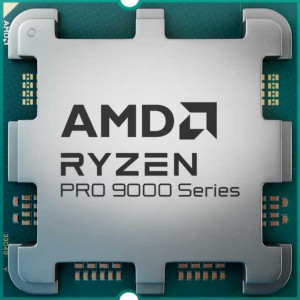
AMD Ryzen 5 9500F
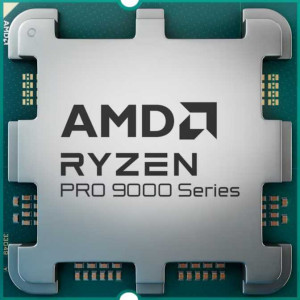
AMD Ryzen 7 9700F

AMD Ryzen 5 9500F AMD Ryzen 7 9700F

Common Features

  • Both products are desktop processors.
  • Both products use the AM5 CPU socket.
  • Both products are compatible with X670, B650, X870, B840, and B850 chipsets.
  • Both products do not have integrated graphics.
  • Both products have a thermal design power (TDP) of 65W.
  • Both products are manufactured using a 4 nm semiconductor size.
  • Both products have a maximum CPU temperature of 95 °C.
  • Both products support PCI Express version 5.
  • Both products have an unlocked multiplier.
  • Both products have 32 MB of L3 cache.
  • Both products have 1 MB of L2 cache per core.
  • Both products do not use big.LITTLE technology.
  • Both products have a clock multiplier of 38.
  • Both products have a maximum RAM speed of 5600 MHz.
  • Both products support DDR5 memory.
  • Both products support two memory channels.
  • Both products support a maximum memory amount of 192GB.
  • Both products support ECC memory.
  • Both products support a variety of instruction sets including MMX, F16C, FMA3, AES, AVX, AVX2, SSE 4.1, and SSE 4.2.
  • Both products use multithreading.

Main Differences

  • CPU speed is 6 x 3.8 GHz on AMD Ryzen 5 9500F and 8 x 3.8 GHz on AMD Ryzen 7 9700F.
  • CPU threads are 12 on AMD Ryzen 5 9500F and 16 on AMD Ryzen 7 9700F.
  • Turbo clock speed is 5GHz on AMD Ryzen 5 9500F and 5.5GHz on AMD Ryzen 7 9700F.
  • L2 cache is 6 MB on AMD Ryzen 5 9500F and 8 MB on AMD Ryzen 7 9700F.
  • L1 cache is 480 KB on AMD Ryzen 5 9500F and 640 KB on AMD Ryzen 7 9700F.
  • L3 core is 5.33 MB/core on AMD Ryzen 5 9500F and 4 MB/core on AMD Ryzen 7 9700F.
Specs Comparison
AMD Ryzen 5 9500F

AMD Ryzen 5 9500F

AMD Ryzen 7 9700F

AMD Ryzen 7 9700F

General info:
Type Desktop Desktop
CPU socket AM5 AM5
chipset X670, B650, X870, B840, B850 X670, B650, X870, B840, B850
Has integrated graphics
release date September 2025 September 2025
Thermal Design Power (TDP) 65W 65W
semiconductor size 4 nm 4 nm
CPU temperature 95 °C 95 °C
PCI Express (PCIe) version 5 5
Supports 64-bit

Both the AMD Ryzen 5 9500F and AMD Ryzen 7 9700F are desktop processors designed for the AM5 CPU socket. They share a number of key specifications, such as the chipset compatibility with X670, B650, X870, B840, and B850, as well as the lack of integrated graphics. Both processors have a Thermal Design Power (TDP) of 65W, meaning they are designed to consume a similar amount of power under standard load conditions. Additionally, both processors are built on a 4 nm semiconductor process, and their maximum CPU temperature is listed as 95°C, with both also supporting 64-bit computing and PCI Express (PCIe) version 5.0.

Since the specifications are identical for both the Ryzen 5 9500F and the Ryzen 7 9700F in terms of the CPU socket, chipset, integrated graphics, TDP, semiconductor size, CPU temperature, PCIe version, and 64-bit support, there is no distinction between these two processors in this particular group of specifications.

Therefore, based on the provided data, the general information for both processors is exactly the same, with no differences in the listed categories.

Performance:
CPU speed 6 x 3.8 GHz 8 x 3.8 GHz
CPU threads 12 threads 16 threads
turbo clock speed 5GHz 5.5GHz
Has an unlocked multiplier
L2 cache 6 MB 8 MB
L3 cache 32 MB 32 MB
L1 cache 480 KB 640 KB
L2 core 1 MB/core 1 MB/core
L3 core 5.33 MB/core 4 MB/core
Uses big.LITTLE technology
clock multiplier 38 38

The AMD Ryzen 5 9500F and AMD Ryzen 7 9700F differ in several key performance aspects. The Ryzen 5 9500F has a CPU speed of 6 cores at 3.8 GHz, while the Ryzen 7 9700F features 8 cores at the same base speed of 3.8 GHz. This means the Ryzen 7 9700F has more cores, which may provide advantages in multi-threaded tasks.

In terms of threads, the Ryzen 5 9500F has 12 threads, while the Ryzen 7 9700F offers 16 threads, allowing the Ryzen 7 processor to handle more parallel tasks simultaneously. The turbo clock speeds also differ slightly: the Ryzen 5 9500F can boost up to 5 GHz, while the Ryzen 7 9700F can reach 5.5 GHz, giving it a slight edge in high-performance scenarios.

When it comes to cache, both processors share the same L3 cache size of 32 MB, but the Ryzen 7 9700F has a larger L2 cache at 8 MB compared to the Ryzen 5 9500F’s 6 MB. For L1 cache, the Ryzen 5 9500F has 480 KB, while the Ryzen 7 9700F features 640 KB. Both processors have the same L2 core size of 1 MB/core, but the Ryzen 5 9500F offers a larger L3 core size at 5.33 MB/core compared to the Ryzen 7 9700F’s 4 MB/core. Both CPUs have an unlocked multiplier and do not use big.LITTLE technology.

Memory:
RAM speed (max) 5600 MHz 5600 MHz
DDR memory version 5 5
memory channels 2 2
maximum memory amount 192GB 192GB
Supports ECC memory

For the memory specifications, the AMD Ryzen 5 9500F and AMD Ryzen 7 9700F are identical. Both processors support a maximum RAM speed of 5600 MHz and use DDR5 memory. They are configured with two memory channels, allowing for efficient data transfer between the CPU and RAM. Additionally, both processors can handle a maximum memory amount of 192GB and support ECC (Error-Correcting Code) memory, which helps prevent data corruption in critical applications.

As such, there is no difference in the memory-related specifications between the Ryzen 5 9500F and Ryzen 7 9700F. Both processors offer the same capabilities in terms of RAM speed, memory type, maximum capacity, and ECC support.

Overall, the memory specifications are identical for both models, offering the same performance and compatibility in this area.

Features:
instruction sets MMX, F16C, FMA3, AES, AVX, AVX2, SSE 4.1, SSE 4.2 MMX, F16C, FMA3, AES, AVX, AVX2, SSE 4.1, SSE 4.2
uses multithreading
Has NX bit

The AMD Ryzen 5 9500F and AMD Ryzen 7 9700F share the same features in this category. Both processors support the same set of instruction sets: MMX, F16C, FMA3, AES, AVX, AVX2, SSE 4.1, and SSE 4.2, ensuring compatibility with a wide range of software and applications. Additionally, both processors support multithreading, allowing for better handling of parallel tasks.

Both processors also feature the NX bit, which is a security feature that helps prevent certain types of attacks, such as buffer overflows.

In summary, the feature set for the Ryzen 5 9500F and the Ryzen 7 9700F is identical, with both processors offering the same instruction sets, multithreading support, and NX bit functionality.

Comparison Summary

This is a specification comparison between AMD Ryzen 5 9500F and AMD Ryzen 7 9700F. Both products are desktop processors with an AM5 CPU socket, support for DDR5 memory, and a 65W TDP. Key differences include the number of CPU threads, with the AMD Ryzen 5 9500F having 12 and the AMD Ryzen 7 9700F having 16. The CPU speed is 6 x 3.8 GHz on the AMD Ryzen 5 9500F and 8 x 3.8 GHz on the AMD Ryzen 7 9700F, while the turbo clock speed is 5 GHz on the AMD Ryzen 5 9500F and 5.5 GHz on the AMD Ryzen 7 9700F. Additionally, the AMD Ryzen 5 9500F has 6 MB of L2 cache and 5.33 MB/core of L3 cache, while the AMD Ryzen 7 9700F features 8 MB of L2 cache and 4 MB/core of L3 cache.