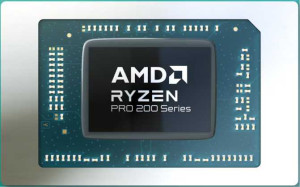
AMD Ryzen 5 Pro 230
Intel Core Ultra 5 235U

AMD Ryzen 5 Pro 230 Intel Core Ultra 5 235U

Overview

Welcome to our in-depth specification comparison between the AMD Ryzen 5 Pro 230 and the Intel Core Ultra 5 235U, two compelling mid-range processors targeting modern computing needs. In this head-to-head, we examine key battlegrounds including multi-core and single-core performance, integrated graphics capabilities, memory support, and platform flexibility — helping you determine which chip truly fits your workflow.

Common Features

  • Integrated graphics are available on both AMD Ryzen 5 Pro 230 and Intel Core Ultra 5 235U.
  • Both processors support PCI Express (PCIe) version 4.
  • Both AMD Ryzen 5 Pro 230 and Intel Core Ultra 5 235U support 64-bit computing.
  • Both processors share the same turbo clock speed of 4.9 GHz.
  • Neither AMD Ryzen 5 Pro 230 nor Intel Core Ultra 5 235U has an unlocked multiplier.
  • Both CPUs support up to 4 displays via their integrated graphics.
  • Both processors support OpenGL version 4.6.
  • Both AMD Ryzen 5 Pro 230 and Intel Core Ultra 5 235U use DDR5 memory.
  • Both processors feature a dual-channel memory configuration.
  • ECC memory is not supported on either AMD Ryzen 5 Pro 230 or Intel Core Ultra 5 235U.
  • Multithreading is supported on both AMD Ryzen 5 Pro 230 and Intel Core Ultra 5 235U.
  • The NX bit security feature is present on both AMD Ryzen 5 Pro 230 and Intel Core Ultra 5 235U.

Main Differences

  • AMD Ryzen 5 Pro 230 is designed for both Laptop and Desktop platforms, while Intel Core Ultra 5 235U is designed for Laptop only.
  • Thermal Design Power (TDP) is 28W on AMD Ryzen 5 Pro 230 and 15W on Intel Core Ultra 5 235U.
  • The semiconductor size is 4 nm on AMD Ryzen 5 Pro 230 and 3 nm on Intel Core Ultra 5 235U.
  • Maximum CPU temperature is 100 °C on AMD Ryzen 5 Pro 230 and 110 °C on Intel Core Ultra 5 235U.
  • CPU speed is 6 cores at 3.5 GHz on AMD Ryzen 5 Pro 230 and 2 cores at 2 GHz plus 8 cores at 1.6 GHz on Intel Core Ultra 5 235U.
  • CPU threads total 12 on AMD Ryzen 5 Pro 230 and 14 on Intel Core Ultra 5 235U.
  • big.LITTLE technology is present on Intel Core Ultra 5 235U but not available on AMD Ryzen 5 Pro 230.
  • The clock multiplier is 35 on AMD Ryzen 5 Pro 230 and 20 on Intel Core Ultra 5 235U.
  • The PassMark (multi-core) result is 20603 on AMD Ryzen 5 Pro 230 and 17704 on Intel Core Ultra 5 235U.
  • The PassMark single-core result is 3691 on AMD Ryzen 5 Pro 230 and 3599 on Intel Core Ultra 5 235U.
  • Integrated GPU turbo frequency is 2600 MHz on AMD Ryzen 5 Pro 230 and 2050 MHz on Intel Core Ultra 5 235U.
  • DirectX support is DirectX 12 on AMD Ryzen 5 Pro 230 and DirectX 12 Ultimate on Intel Core Ultra 5 235U.
  • OpenCL version is 2.1 on AMD Ryzen 5 Pro 230 and 3 on Intel Core Ultra 5 235U.
  • Maximum RAM speed is 7500 MHz on AMD Ryzen 5 Pro 230 and 8400 MHz on Intel Core Ultra 5 235U.
  • Maximum memory capacity is 256 GB on AMD Ryzen 5 Pro 230 and 128 GB on Intel Core Ultra 5 235U.
  • Supported instruction sets include MMX, F16C, FMA3, AES, AVX, AVX2, SSE 4.1, and SSE 4.2 on AMD Ryzen 5 Pro 230, while Intel Core Ultra 5 235U supports MMX, FMA4, FMA3, AES, AVX, AVX2, SSE 4.1, and SSE 4.2.
Specs Comparison
AMD Ryzen 5 Pro 230

AMD Ryzen 5 Pro 230

Intel Core Ultra 5 235U

Intel Core Ultra 5 235U

General info:
Type Laptop, Desktop Laptop
Has integrated graphics
release date January 2025 January 2025
Thermal Design Power (TDP) 28W 15W
semiconductor size 4 nm 3 nm
CPU temperature 100 °C 110 °C
PCI Express (PCIe) version 4 4
Supports 64-bit

At the platform level, the most immediately practical difference is Thermal Design Power: the Ryzen 5 Pro 230 is rated at 28W while the Core Ultra 5 235U operates at just 15W. That nearly halves the sustained power draw, which has direct consequences for battery life in laptops, cooling system complexity, and how thin a chassis a manufacturer can realistically design around each chip. The 235U's lower TDP makes it the more natural fit for ultra-thin, fanless, or passively cooled designs, whereas the Pro 230 will generally need more active cooling to stay within its thermal envelope.

On manufacturing process, the Core Ultra 5 235U is built on a 3 nm node versus the Pro 230's 4 nm. A smaller process node typically means better transistor density and improved power efficiency at equivalent performance levels, which further reinforces the 235U's efficiency profile. The Pro 230 does hold one unique structural advantage here: it is validated for both laptop and desktop platforms, while the 235U is a laptop-only part. This gives the AMD chip broader deployment flexibility, particularly relevant in commercial and enterprise contexts where the same silicon might ship across form factors.

Both processors share PCIe 4.0, integrated graphics, and 64-bit support, so neither holds an edge on connectivity generation or basic compatibility. The Core Ultra 5 235U's higher maximum junction temperature (110 °C vs. 100 °C) gives it a slightly wider thermal headroom before throttling, which can matter under sustained workloads. Overall, for battery-focused or compact laptop designs the Intel Core Ultra 5 235U has a clear efficiency and node advantage; the AMD Ryzen 5 Pro 230 counters with greater platform versatility and a higher TDP ceiling that could translate to more sustained performance in thermally unconstrained systems.

Performance:
CPU speed 6 x 3.5 GHz 2 x 2 & 8 x 1.6 GHz
CPU threads 12 threads 14 threads
turbo clock speed 4.9GHz 4.9GHz
Has an unlocked multiplier
Uses big.LITTLE technology
clock multiplier 35 20

The AMD Ryzen 5 Pro 230 features a CPU speed of 6 cores running at 3.5 GHz, while the Intel Core Ultra 5 235U has a more complex setup with 2 cores at 2 GHz and 8 cores at 1.6 GHz. This means the Ryzen processor has a higher base frequency across its cores, which may provide a consistent performance boost in tasks that utilize multiple threads. The Intel chip, on the other hand, uses a heterogeneous architecture with a mix of high-performance and efficiency cores, which is a key feature of big.LITTLE technology.

Both processors have a turbo clock speed of 4.9 GHz, allowing for temporary performance boosts during intensive tasks. However, the key difference is that the Ryzen 5 Pro 230 has a fixed clock multiplier of 35, meaning its clock speeds are set by this multiplier, while the Intel Core Ultra 5 235U has a clock multiplier of 20, suggesting different underlying architectures for handling clock adjustments.

In terms of CPU threads, the AMD Ryzen 5 Pro 230 supports 12 threads, while the Intel Core Ultra 5 235U supports 14 threads. This slight difference may indicate that the Intel processor is better suited for parallel processing workloads, as it can handle more simultaneous tasks. Both processors have an unlocked multiplier, but with no ability for manual adjustments, which might limit overclocking options.

Benchmarks:
PassMark result 20603 17704
PassMark result (single) 3691 3599

The AMD Ryzen 5 Pro 230 scores a PassMark result of 20603, which is higher than the Intel Core Ultra 5 235U's score of 17704. This indicates that, overall, the Ryzen processor performs better in PassMark's benchmarking tests, which assess overall processing power. However, when looking at single-threaded performance, the difference is smaller, with the Ryzen 5 Pro 230 achieving a single-thread score of 3691 and the Intel Core Ultra 5 235U scoring 3599. This shows that both processors offer similar single-core performance, with the Ryzen having a slight edge.

Despite the difference in total PassMark results, both processors are closely matched in single-thread performance, suggesting that for workloads that are dependent on a single thread, the AMD and Intel processors will provide almost identical performance.

Integrated graphics:
GPU turbo 2600 MHz 2050 MHz
DirectX version DirectX 12 DirectX 12 Ultimate
supported displays 4 4
OpenGL version 4.6 4.6
OpenCL version 2.1 3

The integrated graphics of the AMD Ryzen 5 Pro 230 have a turbo speed of 2600 MHz, while the Intel Core Ultra 5 235U has a lower turbo speed of 2050 MHz. Both processors support DirectX 12, but the Intel processor supports the more advanced DirectX 12 Ultimate version, which offers additional features like ray tracing and enhanced visual effects compared to the standard DirectX 12 on the Ryzen 5 Pro 230.

Both products support up to 4 displays, ensuring versatility for multi-monitor setups. In terms of OpenGL and OpenCL, both processors offer similar support, with both supporting OpenGL 4.6 and OpenCL 2.1 for the Ryzen 5 Pro 230, and OpenCL 3 for the Intel Core Ultra 5 235U. The Intel chip has the advantage with its support for the newer OpenCL version, which could result in enhanced performance in applications that rely on OpenCL for computing tasks.

Memory:
RAM speed (max) 7500 MHz 8400 MHz
DDR memory version 5 5
memory channels 2 2
maximum memory amount 256GB 128GB
Supports ECC memory

The AMD Ryzen 5 Pro 230 supports a maximum RAM speed of 7500 MHz, while the Intel Core Ultra 5 235U offers a slightly higher maximum RAM speed of 8400 MHz. Both processors support DDR5 memory, and each supports two memory channels, which helps in achieving improved memory bandwidth. However, the AMD Ryzen 5 Pro 230 can handle up to 256GB of RAM, whereas the Intel Core Ultra 5 235U is limited to 128GB of maximum memory.

Neither processor supports ECC (Error Correcting Code) memory, which means they are not designed for environments where data integrity is critical, such as in some server or workstation settings. Despite these differences, both products are well-suited for high-performance tasks with ample memory capacity and fast speeds.

Features:
instruction sets MMX, F16C, FMA3, AES, AVX, AVX2, SSE 4.1, SSE 4.2 MMX, FMA4, FMA3, AES, AVX, AVX2, SSE 4.1, SSE 4.2
uses multithreading
Has NX bit

Both the AMD Ryzen 5 Pro 230 and Intel Core Ultra 5 235U support multithreading, allowing them to handle multiple tasks simultaneously, which is beneficial for multitasking and parallel processing. They also both feature the NX bit, a security feature that helps protect against certain types of malware by preventing the execution of code in non-executable memory regions.

In terms of instruction sets, the AMD Ryzen 5 Pro 230 supports MMX, F16C, FMA3, AES, AVX, AVX2, SSE 4.1, and SSE 4.2. The Intel Core Ultra 5 235U, however, is slightly different, supporting MMX, FMA4, FMA3, AES, AVX, AVX2, SSE 4.1, and SSE 4.2. The key difference here is that the Ryzen processor includes support for F16C, while the Intel processor supports FMA4. These instruction sets affect the types of tasks each processor can accelerate or optimize, especially in areas like multimedia processing and scientific computing.

Overall, while both processors share many features, the slight difference in supported instruction sets could lead to varying performance in certain specialized applications, depending on whether they benefit more from F16C or FMA4.

Comparison Summary & Verdict

After a thorough review of the specifications, both processors prove capable, but each shines in different scenarios. The AMD Ryzen 5 Pro 230 holds a clear lead in raw benchmark performance, with higher PassMark multi-core and single-core scores, a faster integrated GPU turbo frequency of 2600 MHz, and support for a much larger maximum memory capacity of 256 GB — making it the stronger choice for memory-intensive or graphics-demanding workloads. It also offers Desktop platform compatibility, broadening its deployment options. The Intel Core Ultra 5 235U, on the other hand, counters with a more refined 3 nm process node, a lower 15W TDP suited for thin-and-light laptops, support for faster RAM speeds of 8400 MHz, and more advanced graphics features including DirectX 12 Ultimate and OpenCL 3 — making it the preferred pick for users prioritizing power efficiency and modern graphics API support in an ultraportable form factor.

AMD Ryzen 5 Pro 230
Buy AMD Ryzen 5 Pro 230 if...

Choose the AMD Ryzen 5 Pro 230 if you need stronger multi-core performance, higher integrated GPU clock speeds, and support for up to 256 GB of RAM — especially if desktop platform compatibility matters to you.

Intel Core Ultra 5 235U
Buy Intel Core Ultra 5 235U if...

Choose the Intel Core Ultra 5 235U if you prioritize power efficiency with its 15W TDP, a more advanced 3 nm process, faster maximum RAM speeds, and cutting-edge graphics support with DirectX 12 Ultimate and OpenCL 3 in a laptop form factor.