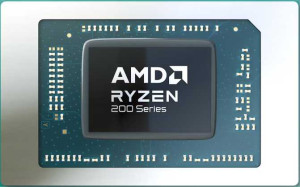
AMD Ryzen 7 260
Intel 300

AMD Ryzen 7 260 Intel 300

Overview

Welcome to our in-depth spec comparison between the AMD Ryzen 7 260 and the Intel 300. These two processors take very different approaches to everyday and demanding computing tasks, making the choice between them far from straightforward. In this breakdown, we examine the key battlegrounds: raw multi-core performance, integrated graphics capability, memory support, and cache architecture — giving you everything you need to make a confident, informed decision.

Common Features

  • Both the AMD Ryzen 7 260 and Intel 300 have integrated graphics.
  • Both CPUs have a maximum temperature of 100 °C.
  • Both the AMD Ryzen 7 260 and Intel 300 support 64-bit processing.
  • Neither the AMD Ryzen 7 260 nor the Intel 300 has an unlocked multiplier.
  • Neither the AMD Ryzen 7 260 nor the Intel 300 uses big.LITTLE technology.
  • Both CPUs use DDR5 memory.
  • Both the AMD Ryzen 7 260 and Intel 300 support dual memory channels.
  • ECC memory is not supported on either the AMD Ryzen 7 260 or the Intel 300.
  • Both CPUs support DirectX 12 through their integrated graphics.
  • Both the AMD Ryzen 7 260 and Intel 300 support up to 4 displays via integrated graphics.
  • Both CPUs share the same instruction sets: MMX, F16C, FMA3, AES, AVX, AVX2, SSE 4.1, and SSE 4.2.
  • Multithreading is supported on both the AMD Ryzen 7 260 and Intel 300.
  • The NX bit security feature is present on both the AMD Ryzen 7 260 and Intel 300.

Main Differences

  • The AMD Ryzen 7 260 is available for both laptop and desktop platforms, while the Intel 300 is desktop only.
  • Thermal Design Power (TDP) is 45W on the AMD Ryzen 7 260 and 46W on the Intel 300.
  • The semiconductor size is 4 nm on the AMD Ryzen 7 260 and 10 nm on the Intel 300.
  • The PCI Express version is PCIe 4 on the AMD Ryzen 7 260 and PCIe 5 on the Intel 300.
  • CPU speed is 8 x 3.8 GHz on the AMD Ryzen 7 260 and 2 x 1 GHz on the Intel 300.
  • The AMD Ryzen 7 260 has 16 threads, while the Intel 300 has 4 threads.
  • Turbo clock speed is 5.1 GHz on the AMD Ryzen 7 260 and 3.9 GHz on the Intel 300.
  • L1 cache is 512 KB on the AMD Ryzen 7 260 and 160 KB on the Intel 300.
  • L2 cache is 8 MB on the AMD Ryzen 7 260 and 2.5 MB on the Intel 300.
  • L3 cache is 16 MB on the AMD Ryzen 7 260 and 6 MB on the Intel 300.
  • L2 cache per core is 1 MB/core on the AMD Ryzen 7 260 and 1.25 MB/core on the Intel 300.
  • L3 cache per core is 2 MB/core on the AMD Ryzen 7 260 and 3 MB/core on the Intel 300.
  • The PassMark multi-core result is 29915 on the AMD Ryzen 7 260 and 7276 on the Intel 300.
  • The PassMark single-core result is 3826 on the AMD Ryzen 7 260 and 3217 on the Intel 300.
  • The integrated GPU is the Radeon 780M on the AMD Ryzen 7 260 and the UHD Graphics 710 on the Intel 300.
  • GPU base clock speed is 800 MHz on the AMD Ryzen 7 260 and 300 MHz on the Intel 300.
  • GPU turbo clock speed is 2700 MHz on the AMD Ryzen 7 260 and 1450 MHz on the Intel 300.
  • Shading units number 768 on the AMD Ryzen 7 260 and 128 on the Intel 300.
  • Texture mapping units (TMUs) total 48 on the AMD Ryzen 7 260 and 8 on the Intel 300.
  • Render output units (ROPs) total 32 on the AMD Ryzen 7 260 and 8 on the Intel 300.
  • OpenGL version is 4.6 on the AMD Ryzen 7 260 and 4.5 on the Intel 300.
  • OpenCL version is 2.1 on the AMD Ryzen 7 260 and 3 on the Intel 300.
  • Maximum supported RAM speed is 7500 MHz on the AMD Ryzen 7 260 and 4800 MHz on the Intel 300.
  • Maximum memory capacity is 256 GB on the AMD Ryzen 7 260 and 192 GB on the Intel 300.
Specs Comparison
AMD Ryzen 7 260

AMD Ryzen 7 260

Intel 300

Intel 300

General info:
Type Laptop, Desktop Desktop
Has integrated graphics
release date January 2025 January 2025
Thermal Design Power (TDP) 45W 46W
semiconductor size 4 nm 10 nm
CPU temperature 100 °C 100 °C
PCI Express (PCIe) version 4 5
Supports 64-bit

At a foundational level, the most striking difference between these two processors is their manufacturing process. The AMD Ryzen 7 260 is built on a 4 nm node, while the Intel 300 uses a comparatively older 10 nm process. In practical terms, a smaller node typically means the transistors are more densely packed, which tends to translate into better power efficiency and thermal performance per unit of compute. Both chips share an identical 100 °C maximum CPU temperature and nearly identical TDPs — 45W versus 46W — but the Ryzen 7 260's finer process gives it a structural efficiency advantage at that same thermal envelope.

On connectivity, the Intel 300 counters with support for PCIe 5.0, one full generation ahead of the Ryzen 7 260's PCIe 4.0. This matters most if you plan to pair the chip with a next-generation NVMe SSD or a high-bandwidth discrete GPU that can saturate PCIe 5.0 lanes — doubling the theoretical bandwidth of its predecessor. For most current peripherals, PCIe 4.0 remains fully capable, but the Intel 300 is more future-proof in this specific regard.

A notable platform consideration is deployment flexibility: the Ryzen 7 260 is rated for both laptop and desktop use cases, whereas the Intel 300 targets desktop only. Both integrate graphics and support 64-bit computing. Overall, the Ryzen 7 260 holds a clear edge in manufacturing efficiency, while the Intel 300 leads on PCIe generation — making the better fit dependent on whether bandwidth headroom or process-node modernity matters more to your build.

Performance:
CPU speed 8 x 3.8 GHz 2 x 1 GHz
CPU threads 16 threads 4 threads
turbo clock speed 5.1GHz 3.9GHz
Has an unlocked multiplier
L2 cache 8 MB 2.5 MB
L3 cache 16 MB 6 MB
L1 cache 512 KB 160 KB
L2 core 1 MB/core 1.25 MB/core
L3 core 2 MB/core 3 MB/core
Uses big.LITTLE technology
clock multiplier 38 39

The AMD Ryzen 7 260 operates with a CPU speed of 8 x 3.8 GHz and has 16 threads, while the Intel 300 has a significantly lower CPU speed of 2 x 1 GHz and only 4 threads. The Ryzen 7 260 also offers a higher turbo clock speed of 5.1 GHz compared to the Intel 300's 3.9 GHz. Neither processor has an unlocked multiplier, meaning both have limited overclocking potential. The clock multiplier for the Ryzen 7 260 is 38, while the Intel 300 has a multiplier of 39, indicating a slightly higher base multiplier in the Intel processor.

In terms of cache, the Ryzen 7 260 has much larger caches across all levels, with 8 MB of L2 cache, 16 MB of L3 cache, and 512 KB of L1 cache. In comparison, the Intel 300 features 2.5 MB of L2 cache, 6 MB of L3 cache, and 160 KB of L1 cache. Both processors have a similar L2 cache size per core, with the Ryzen 7 260 offering 1 MB/core and the Intel 300 offering 1.25 MB/core, while the Ryzen 7 260 has a larger L3 cache per core at 2 MB/core, compared to 3 MB/core for the Intel 300.

Neither processor uses big.LITTLE technology, so they both rely on traditional core architectures for processing. Overall, the Ryzen 7 260's higher CPU speed, thread count, and cache sizes are designed for more demanding tasks, while the Intel 300's lower specifications indicate a more basic configuration.

Benchmarks:
PassMark result 29915 7276
PassMark result (single) 3826 3217

The AMD Ryzen 7 260 has a significantly higher PassMark result of 29,915 compared to the Intel 300's 7,276. This suggests that the Ryzen 7 260 is much more powerful in overall processing performance. In terms of single-threaded performance, the Ryzen 7 260 again leads with a score of 3,826, while the Intel 300 scores 3,217, indicating a noticeable difference in single-core performance as well.

Both processors are likely to handle general tasks well, but the Ryzen 7 260's much higher PassMark results across both overall and single-threaded benchmarks point to a stronger performance capability in more demanding applications and multitasking scenarios.

Integrated graphics:
GPU clock speed 800 MHz 300 MHz
GPU name Radeon 780M UHD Graphics 710
GPU turbo 2700 MHz 1450 MHz
DirectX version DirectX 12 DirectX 12
supported displays 4 4
OpenGL version 4.6 4.5
OpenCL version 2.1 3
texture mapping units (TMUs) 48 8
render output units (ROPs) 32 8
shading units 768 128

The AMD Ryzen 7 260 features a Radeon 780M integrated GPU, with a GPU clock speed of 800 MHz and a turbo boost of 2700 MHz. In comparison, the Intel 300 comes with UHD Graphics 710, which has a lower GPU clock speed of 300 MHz and a turbo boost of 1450 MHz. Both processors support DirectX 12 and have 4 supported displays, although the Ryzen 7 260 offers a higher OpenGL version at 4.6, compared to the Intel 300's 4.5. The Ryzen 7 260 also supports OpenCL version 2.1, while the Intel 300 supports OpenCL version 3.

In terms of hardware specs, the Ryzen 7 260 has a much more powerful GPU, featuring 48 texture mapping units (TMUs), 32 render output units (ROPs), and 768 shading units. In comparison, the Intel 300 has only 8 TMUs, 8 ROPs, and 128 shading units, indicating a much less capable integrated GPU overall.

Overall, the AMD Ryzen 7 260's integrated graphics are significantly stronger in terms of GPU clock speed, number of TMUs, ROPs, shading units, and other graphical capabilities compared to the Intel 300's UHD Graphics 710.

Memory:
RAM speed (max) 7500 MHz 4800 MHz
DDR memory version 5 5
memory channels 2 2
maximum memory amount 256GB 192GB
Supports ECC memory

The AMD Ryzen 7 260 supports a higher maximum RAM speed of 7500 MHz, compared to the Intel 300's 4800 MHz. Both processors support DDR5 memory and have 2 memory channels, ensuring similar overall memory configuration. However, the Ryzen 7 260 can handle a larger maximum memory amount of 256 GB, while the Intel 300 is limited to 192 GB.

Neither processor supports ECC (Error-Correcting Code) memory, so both are suited for non-critical, consumer-level applications where error correction is not necessary.

Overall, the Ryzen 7 260 offers superior RAM speed and a higher maximum memory capacity, making it a better option for tasks requiring more memory bandwidth or larger memory configurations.

Features:
instruction sets MMX, F16C, FMA3, AES, AVX, AVX2, SSE 4.1, SSE 4.2 MMX, F16C, FMA3, AES, AVX, AVX2, SSE 4.1, SSE 4.2
uses multithreading
Has NX bit

Both the AMD Ryzen 7 260 and the Intel 300 share identical instruction set support, including MMX, F16C, FMA3, AES, AVX, AVX2, SSE 4.1, and SSE 4.2, ensuring compatibility with a wide range of modern software and tasks. Both processors also support multithreading, enabling them to handle multiple threads simultaneously for better performance in parallel computing tasks.

Additionally, both processors include the NX bit, which helps prevent certain types of attacks by marking memory pages as non-executable, adding an extra layer of security.

In summary, the features available on the Ryzen 7 260 and the Intel 300 are nearly identical, offering the same instruction sets, multithreading capabilities, and security features.

Comparison Summary & Verdict

After reviewing all available specifications, the two processors clearly target different audiences. The AMD Ryzen 7 260 stands out with its 8-core, 16-thread configuration, a significantly higher PassMark score of 29,915, a much more powerful Radeon 780M integrated GPU with 768 shading units, support for up to 7500 MHz DDR5 RAM, and a compact 4 nm manufacturing process — making it the stronger choice for users who need serious multi-threaded performance and capable graphics without a discrete GPU. The Intel 300, on the other hand, offers PCIe 5.0 support and slightly higher L2 and L3 cache per core, which may appeal to users building a future-ready desktop platform around fast storage or GPUs. Ultimately, choose the AMD Ryzen 7 260 for performance-first builds — especially in laptop or desktop form — and consider the Intel 300 only if PCIe 5.0 connectivity is a priority for your specific desktop setup.

AMD Ryzen 7 260
Buy AMD Ryzen 7 260 if...

Buy the AMD Ryzen 7 260 if you need strong multi-core performance, powerful integrated graphics, and broad platform flexibility across both laptop and desktop builds.

Intel 300
Buy Intel 300 if...

Buy the Intel 300 if you are building a desktop system where PCIe 5.0 support is a priority and your workload is light enough for a dual-core processor.