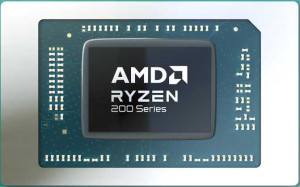
AMD Ryzen 7 H 260
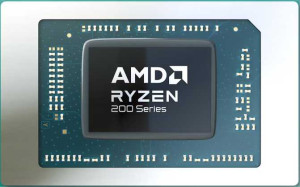
AMD Ryzen 9 H 270

AMD Ryzen 7 H 260 AMD Ryzen 9 H 270

Common Features

  • Both products have integrated graphics.
  • Both products have a thermal design power of 45W.
  • Both products use a 4 nm semiconductor size.
  • Both products have a maximum CPU temperature of 100 °C.
  • Both products support PCI Express version 4.
  • Both products support 64-bit architecture.
  • Both products have 16 CPU threads.
  • Both products do not have an unlocked multiplier.
  • Both products have 8 MB of L2 cache.
  • Both products have 16 MB of L3 cache.
  • Both products have 1 MB of L2 cache per core.
  • Both products have 2 MB of L3 cache per core.
  • Both products do not use big.LITTLE technology.
  • Both products have a maximum GPU clock speed of 800 MHz.
  • Both products have Radeon 780M as the GPU name.
  • Both products support DirectX 12.
  • Both products support OpenGL version 4.6.
  • Both products support OpenCL version 2.1.
  • Both products have 48 texture mapping units.
  • Both products have 32 render output units.

Main Differences

  • AMD Ryzen 7 H 260 is available for both laptop and desktop, while AMD Ryzen 9 H 270 is available for desktop and laptop.
  • CPU speed is 8 x 3.8 GHz on AMD Ryzen 7 H 260 and 8 x 4 GHz on AMD Ryzen 9 H 270.
  • Turbo clock speed is 5.1 GHz on AMD Ryzen 7 H 260 and 5.2 GHz on AMD Ryzen 9 H 270.
  • Clock multiplier is 38 on AMD Ryzen 7 H 260 and 40 on AMD Ryzen 9 H 270.
  • GPU turbo is 2700 MHz on AMD Ryzen 7 H 260 and 2800 MHz on AMD Ryzen 9 H 270.
Specs Comparison
AMD Ryzen 7 H 260

AMD Ryzen 7 H 260

AMD Ryzen 9 H 270

AMD Ryzen 9 H 270

General info:
Type Laptop, Desktop Desktop, Laptop
Has integrated graphics
release date August 2025 August 2025
Thermal Design Power (TDP) 45W 45W
semiconductor size 4 nm 4 nm
CPU temperature 100 °C 100 °C
PCI Express (PCIe) version 4 4
Supports 64-bit

Both the AMD Ryzen 7 H 260 and AMD Ryzen 9 H 270 are versatile processors designed for use in both laptops and desktops. They both feature integrated graphics, making them capable of handling basic graphical tasks without the need for a dedicated GPU. Additionally, both processors support 64-bit computing, ensuring compatibility with modern software and operating systems.

In terms of thermal design power (TDP), both processors share the same 45W rating, meaning they are designed to consume similar amounts of power under maximum load. The CPUs also use the same 4 nm semiconductor size, which contributes to improved efficiency and performance.

Regarding the PCI Express version, both processors support version 4, providing fast data transfer speeds for components like GPUs, storage devices, and other peripherals. Finally, both the Ryzen 7 H 260 and Ryzen 9 H 270 have a maximum CPU temperature of 100 °C, indicating that they are designed to operate at high performance without overheating under typical usage conditions.

Performance:
CPU speed 8 x 3.8 GHz 8 x 4 GHz
CPU threads 16 threads 16 threads
turbo clock speed 5.1GHz 5.2GHz
Has an unlocked multiplier
L2 cache 8 MB 8 MB
L3 cache 16 MB 16 MB
L2 core 1 MB/core 1 MB/core
L3 core 2 MB/core 2 MB/core
Uses big.LITTLE technology
clock multiplier 38 40

The AMD Ryzen 7 H 260 and AMD Ryzen 9 H 270 both feature 16 CPU threads, ensuring strong multi-tasking capabilities. However, there are differences in their base CPU speeds. The Ryzen 7 H 260 operates at 8 x 3.8 GHz, while the Ryzen 9 H 270 has a slightly higher base CPU speed of 8 x 4 GHz. In terms of turbo clock speed, the Ryzen 7 H 260 can reach up to 5.1 GHz, while the Ryzen 9 H 270 has a marginally higher turbo speed of 5.2 GHz.

Both processors share the same L2 and L3 cache sizes, with 8 MB and 16 MB respectively. Each L2 cache is 1 MB per core, and each L3 cache is 2 MB per core, with no differences between the two models in these areas.

Neither processor supports big.LITTLE technology, and both have an unlocked multiplier. The clock multiplier differs slightly, with the Ryzen 7 H 260 set at 38, while the Ryzen 9 H 270 is set at 40, indicating a slight difference in their overclocking potential. However, both processors are not unlocked for overclocking adjustments.

Integrated graphics:
GPU clock speed 800 MHz 800 MHz
GPU name Radeon 780M Radeon 780M
GPU turbo 2700 MHz 2800 MHz
DirectX version DirectX 12 DirectX 12
supported displays 4 4
OpenGL version 4.6 4.6
OpenCL version 2.1 2.1
texture mapping units (TMUs) 48 48
render output units (ROPs) 32 32
shading units 768 768

Both the AMD Ryzen 7 H 260 and AMD Ryzen 9 H 270 feature the same integrated graphics setup, using the Radeon 780M GPU. The GPU clock speed for both processors is 800 MHz, and they both have the same number of texture mapping units (48), render output units (32), and shading units (768). The DirectX version is also the same, with both processors supporting DirectX 12.

The turbo clock speed for the integrated GPU differs slightly between the two models. The Ryzen 7 H 260's GPU turbo speed reaches 2700 MHz, while the Ryzen 9 H 270's GPU turbo speed is slightly higher at 2800 MHz.

In terms of display support, both processors support up to four displays, and they both have the same OpenGL version (4.6) and OpenCL version (2.1), with no differences in these areas.

Memory:
RAM speed (max) 7500 MHz 7500 MHz
DDR memory version 5 5
memory channels 2 2
maximum memory amount 256GB 256GB
Supports ECC memory

The AMD Ryzen 7 H 260 and AMD Ryzen 9 H 270 share identical memory specifications. Both processors support a maximum RAM speed of 7500 MHz and use DDR5 memory. They each feature two memory channels, which allows for improved data transfer speeds. Additionally, both processors can support up to 256GB of memory.

Neither processor supports ECC (Error-Correcting Code) memory, indicating that neither is designed for high-reliability applications where error correction is crucial.

Overall, in terms of memory specs, there are no differences between the two processors—they are exactly the same in this category.

Features:
instruction sets MMX, F16C, FMA3, AES, AVX, AVX2, SSE 4.1, SSE 4.2 MMX, F16C, FMA3, AES, AVX, AVX2, SSE 4.1, SSE 4.2
uses multithreading
Has NX bit

Both the AMD Ryzen 7 H 260 and AMD Ryzen 9 H 270 support the same set of instruction sets, including MMX, F16C, FMA3, AES, AVX, AVX2, SSE 4.1, and SSE 4.2. This ensures that both processors are capable of handling a wide range of modern software and workloads that rely on these instruction sets for performance optimization.

In terms of features, both processors also support multithreading, enabling them to handle multiple tasks simultaneously and improve overall efficiency. Additionally, both processors have the NX bit, which helps protect against certain types of malicious attacks by preventing the execution of code from non-executable memory regions.

Overall, there are no differences between the two processors in terms of the features they support—they are identical in this category.

Comparison Summary

This is a specification comparison between AMD Ryzen 7 H 260 and AMD Ryzen 9 H 270. Both products have integrated graphics, 16 CPU threads, and 16 MB of L3 cache. The CPU speed differs, with the AMD Ryzen 7 H 260 running at 8 x 3.8 GHz and the AMD Ryzen 9 H 270 at 8 x 4 GHz. The GPU turbo speed is 2700 MHz on the AMD Ryzen 7 H 260 and 2800 MHz on the AMD Ryzen 9 H 270. Additionally, the clock multiplier is 38 on the AMD Ryzen 7 H 260 and 40 on the AMD Ryzen 9 H 270.