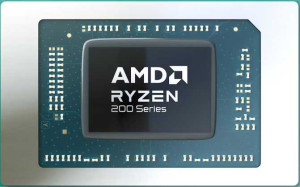
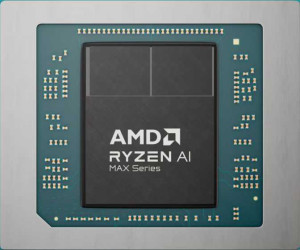
AMD Ryzen 9 270
AMD Ryzen AI Max 385

AMD Ryzen 9 270 AMD Ryzen AI Max 385

Overview

Welcome to our in-depth comparison of the AMD Ryzen 9 270 and the AMD Ryzen AI Max 385, two capable 8-core, 16-thread processors built on the same 4 nm process and aimed at both laptop and desktop platforms. While they share a common foundation, these chips diverge in meaningful ways across clock speeds and raw benchmark performance, integrated graphics capability, and memory configuration — making the choice between them far from straightforward.

Common Features

  • Both processors are designed for Laptop and Desktop form factors.
  • Integrated graphics are available on both the AMD Ryzen 9 270 and AMD Ryzen AI Max 385.
  • Both processors are manufactured using a 4 nm semiconductor process.
  • The maximum CPU temperature is 100 °C on both the AMD Ryzen 9 270 and AMD Ryzen AI Max 385.
  • Both processors use PCI Express version 4.
  • 64-bit support is available on both the AMD Ryzen 9 270 and AMD Ryzen AI Max 385.
  • Both processors have 16 CPU threads.
  • Neither the AMD Ryzen 9 270 nor the AMD Ryzen AI Max 385 has an unlocked multiplier.
  • Both processors have 8 MB of L2 cache.
  • Both processors provide 1 MB of L2 cache per core.
  • Neither the AMD Ryzen 9 270 nor the AMD Ryzen AI Max 385 uses big.LITTLE technology.
  • The integrated GPU turbo speed is 2800 MHz on both the AMD Ryzen 9 270 and AMD Ryzen AI Max 385.
  • Both processors support up to 4 displays via integrated graphics.
  • Both processors support OpenGL version 4.6.
  • Both processors use DDR5 memory.
  • Both processors support the same instruction sets: MMX, F16C, FMA3, AES, AVX, AVX2, SSE 4.1, and SSE 4.2.
  • Multithreading is supported on both the AMD Ryzen 9 270 and AMD Ryzen AI Max 385.
  • The NX bit security feature is present on both the AMD Ryzen 9 270 and AMD Ryzen AI Max 385.

Main Differences

  • Thermal Design Power (TDP) is 45W on the AMD Ryzen 9 270 and 55W on the AMD Ryzen AI Max 385.
  • CPU base speed is 8 x 4 GHz on the AMD Ryzen 9 270 and 8 x 3.6 GHz on the AMD Ryzen AI Max 385.
  • Turbo clock speed is 5.2 GHz on the AMD Ryzen 9 270 and 5 GHz on the AMD Ryzen AI Max 385.
  • L3 cache is 16 MB on the AMD Ryzen 9 270 and 32 MB on the AMD Ryzen AI Max 385.
  • L1 cache is 512 KB on the AMD Ryzen 9 270 and 640 KB on the AMD Ryzen AI Max 385.
  • L3 cache per core is 2 MB/core on the AMD Ryzen 9 270 and 4 MB/core on the AMD Ryzen AI Max 385.
  • The clock multiplier is 40 on the AMD Ryzen 9 270 and 36 on the AMD Ryzen AI Max 385.
  • The PassMark multi-core result is 31104 on the AMD Ryzen 9 270 and 18441 on the AMD Ryzen AI Max 385.
  • The PassMark single-core result is 3970 on the AMD Ryzen 9 270 and 2056 on the AMD Ryzen AI Max 385.
  • Integrated GPU base clock speed is 800 MHz on the AMD Ryzen 9 270 and 2800 MHz on the AMD Ryzen AI Max 385.
  • The integrated GPU is the Radeon 780M on the AMD Ryzen 9 270 and the Radeon 8050S on the AMD Ryzen AI Max 385.
  • The DirectX version supported is DirectX 12 on the AMD Ryzen 9 270 and DirectX 12 Ultimate on the AMD Ryzen AI Max 385.
  • OpenCL version supported is 2.1 on the AMD Ryzen 9 270 and 3 on the AMD Ryzen AI Max 385.
  • Maximum RAM speed is 7500 MHz on the AMD Ryzen 9 270 and 8000 MHz on the AMD Ryzen AI Max 385.
  • Memory channels number 2 on the AMD Ryzen 9 270 and 4 on the AMD Ryzen AI Max 385.
  • Maximum memory capacity is 256 GB on the AMD Ryzen 9 270 and 128 GB on the AMD Ryzen AI Max 385.
  • ECC memory support is present on the AMD Ryzen AI Max 385 but not available on the AMD Ryzen 9 270.
Specs Comparison
AMD Ryzen 9 270

AMD Ryzen 9 270

AMD Ryzen AI Max 385

AMD Ryzen AI Max 385

General info:
Type Laptop, Desktop Laptop, Desktop
Has integrated graphics
release date January 2025 January 2025
Thermal Design Power (TDP) 45W 55W
semiconductor size 4 nm 4 nm
CPU temperature 100 °C 100 °C
PCI Express (PCIe) version 4 4
Supports 64-bit

At a high level, the AMD Ryzen 9 270 and AMD Ryzen AI Max 385 share a remarkably similar foundation: both are designed for laptop and desktop form factors, both integrate graphics on-chip, both are built on a 4 nm process node, and both support PCIe 4.0 and 64-bit computing. This common ground means neither chip holds a structural or generational architecture advantage based on these specs alone.

The one meaningful differentiator in this group is Thermal Design Power (TDP). The Ryzen 9 270 is rated at 45W, while the Ryzen AI Max 385 comes in at 55W. In practice, a higher TDP signals that the chip is configured to draw more power — and in return, sustain higher performance levels under sustained workloads. However, it also means more heat output and greater demand on the system's cooling solution and battery. For laptop deployments especially, this 10W gap can influence fan noise, thermal throttling behavior, and battery longevity under load.

Based solely on this spec group, the Ryzen AI Max 385 holds a narrow thermal headroom advantage, suggesting it is positioned for more performance-intensive use cases where the platform can accommodate the additional power draw. The Ryzen 9 270's lower TDP makes it the more efficiency-oriented option. All other general specs are identical, so the choice here hinges entirely on whether the user prioritizes sustained performance or power efficiency.

Performance:
CPU speed 8 x 4 GHz 8 x 3.6 GHz
CPU threads 16 threads 16 threads
turbo clock speed 5.2GHz 5GHz
Has an unlocked multiplier
L2 cache 8 MB 8 MB
L3 cache 16 MB 32 MB
L1 cache 512 KB 640 KB
L2 core 1 MB/core 1 MB/core
L3 core 2 MB/core 4 MB/core
Uses big.LITTLE technology
clock multiplier 40 36

The AMD Ryzen 9 270 and AMD Ryzen AI Max 385 both feature 8 cores and 16 threads, but there are some differences in their clock speeds and cache specifications. The Ryzen 9 270 has a CPU speed of 8 x 4 GHz, while the Ryzen AI Max 385 runs at 8 x 3.6 GHz, meaning the Ryzen 9 270 has a higher base clock speed. Both processors feature turbo clock speeds, with the Ryzen 9 270 reaching 5.2 GHz and the Ryzen AI Max 385 reaching 5 GHz. Both chips also have an unlocked multiplier, though the multiplier is set at 40 for the Ryzen 9 270 and 36 for the Ryzen AI Max 385, which could suggest slightly different overclocking behavior.

In terms of cache, the Ryzen 9 270 has 8 MB of L2 cache, 16 MB of L3 cache, and 512 KB of L1 cache, while the Ryzen AI Max 385 has the same 8 MB L2 cache but a larger 32 MB L3 cache and 640 KB of L1 cache. The Ryzen AI Max 385 also features a larger L3 cache core size at 4 MB/core, compared to the Ryzen 9 270’s 2 MB/core. Both products have 1 MB/core for their L2 cache.

Neither processor uses big.LITTLE technology, and both have a clock multiplier, with the Ryzen 9 270 at 40 and the Ryzen AI Max 385 at 36. These differences suggest that while both processors offer strong performance with 16 threads, the Ryzen 9 270 has a slight advantage in clock speed, while the Ryzen AI Max 385 provides more L3 cache and a larger L3 cache core size.

Benchmarks:
PassMark result 31104 18441
PassMark result (single) 3970 2056

When it comes to benchmark performance, the AMD Ryzen 9 270 significantly outperforms the AMD Ryzen AI Max 385. The Ryzen 9 270 has a PassMark result of 31104, which is notably higher than the Ryzen AI Max 385’s result of 18441. This difference indicates a clear performance gap between the two processors in multi-threaded workloads.

For single-threaded performance, the Ryzen 9 270 also leads with a score of 3970, while the Ryzen AI Max 385 scores 2056. This further reflects the Ryzen 9 270’s superior performance in tasks that rely on single-core power.

Overall, the Ryzen 9 270 shows stronger results across both multi-threaded and single-threaded benchmark tests, making it the more powerful processor in these specific benchmark comparisons.

Integrated graphics:
GPU clock speed 800 MHz 2800 MHz
GPU name Radeon 780M Radeon 8050S
GPU turbo 2800 MHz 2800 MHz
DirectX version DirectX 12 DirectX 12 Ultimate
supported displays 4 4
OpenGL version 4.6 4.6
OpenCL version 2.1 3

The integrated graphics of the AMD Ryzen 9 270 and AMD Ryzen AI Max 385 differ significantly in terms of clock speeds and GPU names. The Ryzen 9 270 features the Radeon 780M GPU with a GPU clock speed of 800 MHz, while the Ryzen AI Max 385 has the more powerful Radeon 8050S GPU with a GPU clock speed of 2800 MHz. Both processors have the same turbo GPU speed of 2800 MHz, though the Ryzen AI Max 385 has a higher base clock, likely providing better performance under typical workloads.

Both products support DirectX 12, but the Ryzen AI Max 385 supports the upgraded DirectX 12 Ultimate, which offers enhanced graphics features compared to the standard DirectX 12 supported by the Ryzen 9 270. Additionally, both processors support the same OpenGL version (4.6) and OpenCL version (the Ryzen 9 270 supports 2.1, while the Ryzen AI Max 385 supports 3), with the Ryzen AI Max 385 offering a newer OpenCL version for better computational performance.

Both processors support up to 4 displays, making them suitable for multi-monitor setups. Overall, the Ryzen AI Max 385 has a significant advantage in terms of GPU clock speed, DirectX version, and OpenCL version, while the Ryzen 9 270's integrated graphics have a lower clock speed and older versions of DirectX and OpenCL.

Memory:
RAM speed (max) 7500 MHz 8000 MHz
DDR memory version 5 5
memory channels 2 4
maximum memory amount 256GB 128GB
Supports ECC memory

The memory specifications for the AMD Ryzen 9 270 and AMD Ryzen AI Max 385 show some key differences. The Ryzen 9 270 supports a maximum RAM speed of 7500 MHz, while the Ryzen AI Max 385 can handle a slightly faster RAM speed of 8000 MHz. Both processors use DDR5 memory, but the Ryzen AI Max 385 offers four memory channels, compared to the Ryzen 9 270's two channels, which may offer better memory bandwidth for the Ryzen AI Max 385.

In terms of maximum memory, the Ryzen 9 270 supports up to 256 GB, while the Ryzen AI Max 385 is limited to 128 GB. The Ryzen AI Max 385 also supports ECC (Error-Correcting Code) memory, which is not supported by the Ryzen 9 270. ECC memory is useful in applications that require higher reliability by detecting and correcting memory errors.

Overall, while the Ryzen 9 270 offers a higher maximum memory capacity, the Ryzen AI Max 385 offers faster RAM support, more memory channels, and the ability to use ECC memory, making it more suitable for certain professional or error-sensitive applications.

Features:
instruction sets MMX, F16C, FMA3, AES, AVX, AVX2, SSE 4.1, SSE 4.2 MMX, F16C, FMA3, AES, AVX, AVX2, SSE 4.1, SSE 4.2
uses multithreading
Has NX bit

The AMD Ryzen 9 270 and AMD Ryzen AI Max 385 share identical features in terms of instruction sets, multithreading, and security capabilities. Both processors support the same set of instruction sets, including MMX, F16C, FMA3, AES, AVX, AVX2, SSE 4.1, and SSE 4.2. This provides a broad range of capabilities for handling various computing tasks, from multimedia to encryption.

Both processors also utilize multithreading, allowing them to execute multiple threads concurrently for improved parallel processing performance. Additionally, both the Ryzen 9 270 and the Ryzen AI Max 385 feature the NX (No eXecute) bit, which helps to enhance security by preventing the execution of malicious code in certain regions of memory.

Since all these features are identical between the two processors, there are no notable differences in the feature set for this group.

Comparison Summary & Verdict

After examining all the evidence, the two processors emerge as compelling choices for very different users. The AMD Ryzen 9 270 leads decisively in raw CPU performance, posting a substantially higher PassMark multi-core score of 31,104 versus 18,441, along with faster base and turbo clock speeds, and support for up to 256 GB of maximum RAM — making it the stronger pick for CPU-heavy workloads and memory-intensive applications. The AMD Ryzen AI Max 385, on the other hand, answers with a richer graphics subsystem featuring the Radeon 8050S with a 2800 MHz base GPU clock, DirectX 12 Ultimate, OpenCL 3, a larger 32 MB L3 cache, four memory channels, ECC memory support, and faster 8000 MHz RAM speeds — advantages that clearly target creative professionals, AI workloads, and users who demand superior integrated graphics and memory bandwidth. Neither chip is universally superior; your ideal choice hinges entirely on your primary use case.

AMD Ryzen 9 270
Buy AMD Ryzen 9 270 if...

Buy the AMD Ryzen 9 270 if you prioritize peak CPU performance, higher benchmark scores, and support for larger memory configurations up to 256 GB.

AMD Ryzen AI Max 385
Buy AMD Ryzen AI Max 385 if...

Buy the AMD Ryzen AI Max 385 if you need superior integrated graphics with DirectX 12 Ultimate, broader memory bandwidth with four channels, ECC memory support, and a larger L3 cache for GPU-accelerated or AI-oriented workloads.