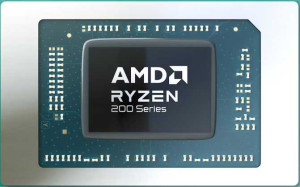
AMD Ryzen 9 270
Intel Core Ultra 9 285H

AMD Ryzen 9 270 Intel Core Ultra 9 285H

Overview

Welcome to our in-depth specification comparison between the AMD Ryzen 9 270 and the Intel Core Ultra 9 285H. These two processors compete closely in the laptop performance segment, each bringing a distinct architecture and feature set to the table. We examine key battlegrounds including CPU performance and cache size, integrated graphics capability, memory support, and platform flexibility to help you make an informed decision.

Common Features

  • Both processors include integrated graphics.
  • Both have a Thermal Design Power (TDP) of 45W.
  • Both support 64-bit computing.
  • Both processors have 16 CPU threads.
  • Neither processor has an unlocked multiplier.
  • Both support up to 4 displays via integrated graphics.
  • Both integrated graphics units support OpenGL version 4.6.
  • Both integrated graphics units have 32 render output units (ROPs).
  • Both use DDR5 memory.
  • Both processors have 2 memory channels.
  • Neither processor supports ECC memory.
  • Both support the same instruction sets: MMX, F16C, FMA3, AES, AVX, AVX2, SSE 4.1, and SSE 4.2.
  • Both processors have the NX bit security feature.

Main Differences

  • The AMD Ryzen 9 270 is available for both laptop and desktop form factors, while the Intel Core Ultra 9 285H is a laptop-only processor.
  • The semiconductor size is 4 nm on the AMD Ryzen 9 270 and 3 nm on the Intel Core Ultra 9 285H.
  • The maximum CPU temperature is 100 °C on the AMD Ryzen 9 270 and 110 °C on the Intel Core Ultra 9 285H.
  • The PCI Express version is 4 on the AMD Ryzen 9 270 and 5 on the Intel Core Ultra 9 285H.
  • The base CPU speed is 8 cores at 4 GHz on the AMD Ryzen 9 270, while the Intel Core Ultra 9 285H has 6 cores at 2.9 GHz and 8 cores at 2.7 GHz.
  • The turbo clock speed is 5.2 GHz on the AMD Ryzen 9 270 and 5.4 GHz on the Intel Core Ultra 9 285H.
  • The L3 cache is 16 MB on the AMD Ryzen 9 270 and 24 MB on the Intel Core Ultra 9 285H.
  • big.LITTLE technology is used on the Intel Core Ultra 9 285H but not on the AMD Ryzen 9 270.
  • The clock multiplier is 40 on the AMD Ryzen 9 270 and 29 on the Intel Core Ultra 9 285H.
  • The PassMark multi-core result is 31104 on the AMD Ryzen 9 270 and 33969 on the Intel Core Ultra 9 285H.
  • The PassMark single-core result is 3970 on the AMD Ryzen 9 270 and 4472 on the Intel Core Ultra 9 285H.
  • The integrated GPU clock speed is 800 MHz on the AMD Ryzen 9 270 and 300 MHz on the Intel Core Ultra 9 285H.
  • The integrated GPU is the Radeon 780M on the AMD Ryzen 9 270 and the Arc 140T on the Intel Core Ultra 9 285H.
  • The integrated GPU turbo speed is 2800 MHz on the AMD Ryzen 9 270 and 2350 MHz on the Intel Core Ultra 9 285H.
  • The integrated GPU supports DirectX 12 on the AMD Ryzen 9 270 and DirectX 12 Ultimate on the Intel Core Ultra 9 285H.
  • The OpenCL version supported is 2.1 on the AMD Ryzen 9 270 and 3 on the Intel Core Ultra 9 285H.
  • The number of texture mapping units (TMUs) is 48 on the AMD Ryzen 9 270 and 64 on the Intel Core Ultra 9 285H.
  • The number of shading units is 768 on the AMD Ryzen 9 270 and 1024 on the Intel Core Ultra 9 285H.
  • The maximum RAM speed is 7500 MHz on the AMD Ryzen 9 270 and 8400 MHz on the Intel Core Ultra 9 285H.
  • The maximum memory capacity is 256 GB on the AMD Ryzen 9 270 and 128 GB on the Intel Core Ultra 9 285H.
  • Multithreading is supported on the AMD Ryzen 9 270 but not on the Intel Core Ultra 9 285H.
Specs Comparison
AMD Ryzen 9 270

AMD Ryzen 9 270

Intel Core Ultra 9 285H

Intel Core Ultra 9 285H

General info:
Type Laptop, Desktop Laptop
Has integrated graphics
release date January 2025 January 2025
Thermal Design Power (TDP) 45W 45W
semiconductor size 4 nm 3 nm
CPU temperature 100 °C 110 °C
PCI Express (PCIe) version 4 5
Supports 64-bit

Both the AMD Ryzen 9 270 and the Intel Core Ultra 9 285H share a 45W TDP and include integrated graphics, placing them in the same thermal envelope and targeting broadly similar performance segments. One notable distinction in deployment flexibility is that the Ryzen 9 270 is rated for both laptop and desktop platforms, while the Core Ultra 9 285H is strictly a laptop-only chip — giving AMD a broader range of use cases out of the box.

At the silicon level, Intel holds a manufacturing edge with a 3 nm process node versus AMD's 4 nm, which in principle allows for greater transistor density, improved power efficiency, or higher performance headroom within the same thermal budget. Complementing this, the Core Ultra 9 285H also steps up to PCIe 5.0 versus the Ryzen 9 270's PCIe 4.0 — a meaningful advantage for users pairing the chip with next-generation NVMe SSDs or discrete GPUs that can leverage the doubled bandwidth. Intel's chip also tolerates a higher junction temperature at 110 °C versus 100 °C, giving it slightly more thermal headroom before throttling kicks in.

In summary, for general-purpose use the two chips are closely matched, but Intel holds a technical edge in this group: a newer process node, a more modern PCIe standard, and higher thermal ceiling give the Core Ultra 9 285H more headroom for demanding workloads and future-facing hardware. The Ryzen 9 270's advantage lies solely in its desktop compatibility, which matters only if platform flexibility is a priority.

Performance:
CPU speed 8 x 4 GHz 6 x 2.9 & 8 x 2.7 GHz
CPU threads 16 threads 16 threads
turbo clock speed 5.2GHz 5.4GHz
Has an unlocked multiplier
L3 cache 16 MB 24 MB
Uses big.LITTLE technology
clock multiplier 40 29

The AMD Ryzen 9 270 and Intel Core Ultra 9 285H differ in several key performance aspects. The Ryzen 9 270 has a CPU speed of 8 x 4 GHz, with a turbo clock speed of 5.2 GHz. It also features 16 threads and a 16 MB L3 cache. The Intel Core Ultra 9 285H, on the other hand, has a more complex configuration with 6 cores running at 2.9 GHz and 8 cores running at 2.7 GHz, along with a turbo clock speed of 5.4 GHz. Both processors support 16 threads, but the Intel model has a larger 24 MB L3 cache.

Both processors have an unlocked multiplier, but neither of them allows for overclocking since both are set to have a fixed multiplier. The Ryzen 9 270 has a clock multiplier of 40, while the Intel Core Ultra 9 285H has a lower multiplier of 29.

Another notable difference is that the Intel processor uses big.LITTLE technology, while the AMD Ryzen 9 270 does not. This technology in the Intel chip helps optimize power efficiency by using high-performance cores and energy-efficient cores for different tasks.

Benchmarks:
PassMark result 31104 33969
PassMark result (single) 3970 4472

The AMD Ryzen 9 270 and Intel Core Ultra 9 285H have distinct PassMark benchmark scores. The Ryzen 9 270 achieves a PassMark result of 31,104, while the Intel Core Ultra 9 285H scores slightly higher with a result of 33,969. This indicates a general performance difference between the two processors, with the Intel model performing better in overall tests.

When considering single-threaded performance, the Ryzen 9 270 scores 3,970, while the Intel Core Ultra 9 285H outperforms it with a single-thread result of 4,472. Again, the Intel processor shows superior performance in tasks that rely on single-core power.

Both processors perform well in their respective categories, but the Intel Core Ultra 9 285H generally demonstrates higher performance in both overall and single-threaded benchmarks.

Integrated graphics:
GPU clock speed 800 MHz 300 MHz
GPU name Radeon 780M Arc 140T
GPU turbo 2800 MHz 2350 MHz
DirectX version DirectX 12 DirectX 12 Ultimate
supported displays 4 4
OpenGL version 4.6 4.6
OpenCL version 2.1 3
texture mapping units (TMUs) 48 64
render output units (ROPs) 32 32
shading units 768 1024

The AMD Ryzen 9 270 and Intel Core Ultra 9 285H both feature integrated graphics, but with some key differences. The Ryzen 9 270 is equipped with the Radeon 780M GPU, which has a GPU clock speed of 800 MHz and can turbo up to 2800 MHz. In contrast, the Intel Core Ultra 9 285H uses the Arc 140T GPU, which has a lower base GPU clock speed of 300 MHz and a turbo clock speed of 2350 MHz.

Both processors support DirectX 12, but the Intel Core Ultra 9 285H supports the newer DirectX 12 Ultimate, while the Ryzen 9 270 supports DirectX 12. In terms of OpenGL, both models support version 4.6, but the Intel processor supports OpenCL 3, while the AMD Ryzen 9 270 supports OpenCL 2.1.

Both processors support up to four displays and have 32 render output units (ROPs), but the Intel Arc 140T has more texture mapping units (TMUs) with 64 compared to the Radeon 780M's 48. Additionally, the Intel GPU has more shading units, 1024 compared to the AMD's 768 shading units, suggesting that the Intel GPU has a higher potential for graphical processing power in certain tasks.

Memory:
RAM speed (max) 7500 MHz 8400 MHz
DDR memory version 5 5
memory channels 2 2
maximum memory amount 256GB 128GB
Supports ECC memory

The AMD Ryzen 9 270 and Intel Core Ultra 9 285H both support DDR5 memory and use two memory channels. However, they differ in maximum RAM speed, memory capacity, and other memory features. The Ryzen 9 270 supports a maximum RAM speed of 7500 MHz, while the Intel Core Ultra 9 285H can handle a faster RAM speed of 8400 MHz.

In terms of memory capacity, the Ryzen 9 270 can support up to 256GB of RAM, while the Intel Core Ultra 9 285H is limited to 128GB of RAM. Both processors do not support ECC memory, meaning error-correcting code is not available for either.

While both processors use DDR5 memory and have the same number of memory channels, the Intel processor offers slightly higher performance potential with a higher maximum RAM speed, but the Ryzen processor supports a much larger memory capacity.

Features:
instruction sets MMX, F16C, FMA3, AES, AVX, AVX2, SSE 4.1, SSE 4.2 MMX, F16C, FMA3, AES, AVX, AVX2, SSE 4.1, SSE 4.2
uses multithreading
Has NX bit

The AMD Ryzen 9 270 and Intel Core Ultra 9 285H both support a similar set of instruction sets, including MMX, F16C, FMA3, AES, AVX, AVX2, SSE 4.1, and SSE 4.2, which are common in modern processors for handling various types of tasks efficiently. Both processors also have the NX bit feature, which helps prevent certain types of malicious attacks by marking areas of memory as non-executable.

One significant difference between the two is that the Ryzen 9 270 supports multithreading, allowing it to handle multiple tasks per core simultaneously. In contrast, the Intel Core Ultra 9 285H does not support multithreading, limiting its ability to process multiple threads concurrently.

Overall, while both processors share similar instruction sets and security features, the AMD Ryzen 9 270 offers the advantage of multithreading support, which can improve performance in certain applications that benefit from parallel processing.

Comparison Summary & Verdict

After a thorough review of the specifications, both processors prove to be compelling — but for different audiences. The AMD Ryzen 9 270 stands out with its broader platform support (laptop and desktop), higher maximum memory capacity of 256 GB, and a faster integrated GPU turbo of 2800 MHz, making it a strong choice for users who need flexibility and generous memory headroom. The Intel Core Ultra 9 285H, on the other hand, edges ahead in raw benchmarks, offers a larger 24 MB L3 cache, faster single-core performance, support for PCIe 5.0, and a more capable integrated GPU with 1024 shading units and OpenCL 3 support. Ultimately, the AMD Ryzen 9 270 suits users who want versatility and high memory ceilings, while the Intel Core Ultra 9 285H is the better fit for those prioritizing peak performance and cutting-edge platform features.

AMD Ryzen 9 270
Buy AMD Ryzen 9 270 if...

Buy the AMD Ryzen 9 270 if you need desktop and laptop flexibility, want to support up to 256 GB of RAM, or prefer a faster integrated GPU turbo clock for everyday graphics tasks.

Intel Core Ultra 9 285H
Buy Intel Core Ultra 9 285H if...

Buy the Intel Core Ultra 9 285H if you prioritize higher benchmark scores, a larger 24 MB L3 cache, PCIe 5.0 support, and a more powerful integrated GPU with greater shading capacity.