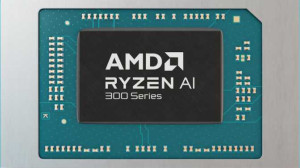
AMD Ryzen 9 8940HX
AMD Ryzen AI 9 H 365

AMD Ryzen 9 8940HX AMD Ryzen AI 9 H 365

Overview

Welcome to our in-depth specification comparison between the AMD Ryzen 9 8940HX and the AMD Ryzen AI 9 H 365. These two AMD laptop processors take notably different approaches, and choosing between them is far from straightforward. Key battlegrounds include raw multi-core performance, integrated graphics capability, memory support, and overall power efficiency — making this a fascinating matchup for anyone building or buying a high-performance mobile system.

Common Features

  • Both the AMD Ryzen 9 8940HX and AMD Ryzen AI 9 H 365 are designed for Laptop and Desktop use.
  • Integrated graphics are available on both processors.
  • Both processors have a maximum CPU temperature of 100 °C.
  • 64-bit support is present on both the AMD Ryzen 9 8940HX and AMD Ryzen AI 9 H 365.
  • Both processors use DDR5 memory.
  • Both support a dual-channel memory configuration.
  • ECC memory is not supported on either processor.
  • Both processors share a base GPU clock speed of 400 MHz.
  • Both integrated GPUs support DirectX 12.
  • Both integrated GPUs support up to 4 displays simultaneously.
  • Both integrated GPUs support OpenGL version 4.6.
  • Both integrated GPUs support OpenCL version 2.1.
  • Multithreading is supported on both processors.
  • The NX bit security feature is present on both processors.
  • Both processors support the same instruction sets: MMX, F16C, FMA3, AES, AVX, AVX2, SSE 4.1, and SSE 4.2.

Main Differences

  • Thermal Design Power (TDP) is 55W on AMD Ryzen 9 8940HX and 28W on AMD Ryzen AI 9 H 365.
  • Semiconductor size is 5 nm on AMD Ryzen 9 8940HX and 4 nm on AMD Ryzen AI 9 H 365.
  • PCI Express version is 5 on AMD Ryzen 9 8940HX and 4 on AMD Ryzen AI 9 H 365.
  • CPU speed is 16 x 2.4 GHz on AMD Ryzen 9 8940HX and 4 x 2 GHz & 6 x 2 GHz on AMD Ryzen AI 9 H 365.
  • CPU threads count is 32 on AMD Ryzen 9 8940HX and 20 on AMD Ryzen AI 9 H 365.
  • Turbo clock speed is 5.3 GHz on AMD Ryzen 9 8940HX and 5 GHz on AMD Ryzen AI 9 H 365.
  • An unlocked multiplier is available on AMD Ryzen 9 8940HX but not on AMD Ryzen AI 9 H 365.
  • L2 cache is 16 MB on AMD Ryzen 9 8940HX and 10 MB on AMD Ryzen AI 9 H 365.
  • L3 cache is 64 MB on AMD Ryzen 9 8940HX and 24 MB on AMD Ryzen AI 9 H 365.
  • big.LITTLE technology is used on AMD Ryzen AI 9 H 365 but not on AMD Ryzen 9 8940HX.
  • Clock multiplier is 24 on AMD Ryzen 9 8940HX and 20 on AMD Ryzen AI 9 H 365.
  • PassMark multi-core result is 51227 on AMD Ryzen 9 8940HX and 29245 on AMD Ryzen AI 9 H 365.
  • PassMark single-core result is 3860 on AMD Ryzen 9 8940HX and 3571 on AMD Ryzen AI 9 H 365.
  • The integrated GPU is the Radeon 610M on AMD Ryzen 9 8940HX and the Radeon 880M on AMD Ryzen AI 9 H 365.
  • GPU turbo clock speed is 2200 MHz on AMD Ryzen 9 8940HX and 2900 MHz on AMD Ryzen AI 9 H 365.
  • Texture mapping units (TMUs) count is 8 on AMD Ryzen 9 8940HX and 48 on AMD Ryzen AI 9 H 365.
  • Render output units (ROPs) count is 4 on AMD Ryzen 9 8940HX and 16 on AMD Ryzen AI 9 H 365.
  • Shading units count is 128 on AMD Ryzen 9 8940HX and 768 on AMD Ryzen AI 9 H 365.
  • Maximum RAM speed is 5200 MHz on AMD Ryzen 9 8940HX and 8000 MHz on AMD Ryzen AI 9 H 365.
  • Maximum memory capacity is 64 GB on AMD Ryzen 9 8940HX and 256 GB on AMD Ryzen AI 9 H 365.
Specs Comparison
AMD Ryzen 9 8940HX

AMD Ryzen 9 8940HX

AMD Ryzen AI 9 H 365

AMD Ryzen AI 9 H 365

General info:
Type Laptop, Desktop Laptop, Desktop
Has integrated graphics
release date April 2025 July 2025
Thermal Design Power (TDP) 55W 28W
semiconductor size 5 nm 4 nm
CPU temperature 100 °C 100 °C
PCI Express (PCIe) version 5 4
Supports 64-bit

Both the AMD Ryzen 9 8940HX and the AMD Ryzen AI 9 H 365 share the same broad platform support (Laptop and Desktop), integrated graphics, 64-bit capability, and a maximum CPU temperature of 100 °C — so on the surface they appear closely matched. The real differentiators emerge when you look at power consumption, manufacturing process, and PCIe generation.

The most significant gap is in Thermal Design Power: the Ryzen 9 8940HX is rated at 55W versus the Ryzen AI 9 H 365's 28W. In practice, a higher TDP means the 8940HX can sustain greater computational loads but demands more robust cooling and draws considerably more power — a real concern for battery life in laptops and thermals in compact systems. The H 365's lower TDP makes it a meaningfully more efficient chip for thin-and-light designs. On the fabrication side, the H 365 is built on a 4 nm process versus the 8940HX's 5 nm, which typically translates to better transistor density, improved power efficiency, and slightly better performance-per-watt at the silicon level.

The 8940HX does hold one advantage: it supports PCIe 5.0, compared to PCIe 4.0 on the H 365. This matters if you plan to pair the processor with a next-generation NVMe SSD or a PCIe 5.0-capable GPU, as it offers double the theoretical bandwidth of PCIe 4.0. Overall, the Ryzen AI 9 H 365 has the edge in efficiency and process technology, making it better suited for power-conscious builds, while the Ryzen 9 8940HX appeals to users who need cutting-edge storage/peripheral bandwidth and are willing to accept a higher power envelope.

Performance:
CPU speed 16 x 2.4 GHz 4 x 2 & 6 x 2 GHz
CPU threads 32 threads 20 threads
turbo clock speed 5.3GHz 5GHz
Has an unlocked multiplier
L2 cache 16 MB 10 MB
L3 cache 64 MB 24 MB
Uses big.LITTLE technology
clock multiplier 24 20

The Ryzen 9 8940HX takes a clear lead in raw threading muscle, deploying 16 homogeneous cores with 32 threads against the Ryzen AI 9 H 365's hybrid 10-core (4+6), 20-thread configuration. That thread count gap is substantial — workloads like video rendering, 3D compilation, and heavily multi-threaded simulations will feel the difference directly. The H 365 employs big.LITTLE technology, splitting its cores into performance and efficiency clusters, which is a deliberate trade-off: the design prioritizes intelligent workload scheduling and power savings over sheer parallel throughput.

On peak single-core speed, the 8940HX also edges ahead with a 5.3 GHz turbo clock versus 5 GHz on the H 365 — a modest but real advantage for latency-sensitive tasks like gaming or single-threaded applications. Cache is another area where the 8940HX pulls away decisively: its 64 MB L3 and 16 MB L2 dwarf the H 365's 24 MB L3 and 10 MB L2. Larger cache reduces how often the CPU must reach out to slower system RAM, which meaningfully improves throughput in data-heavy workloads and reduces latency spikes.

One advantage the H 365 retains is its big.LITTLE architecture, which allows the chip to route background and lightly threaded tasks to its efficiency cores — supporting the lower TDP noted in the General Info group. However, strictly within performance specs, the Ryzen 9 8940HX holds a clear overall edge: more threads, higher turbo speed, a larger cache hierarchy, and an unlocked multiplier that gives overclockers additional headroom. The H 365 is the smarter choice only when efficiency and workload scheduling matter more than peak throughput.

Benchmarks:
PassMark result 51227 29245
PassMark result (single) 3860 3571

The PassMark results paint a stark picture in multi-threaded performance. The Ryzen 9 8940HX scores 51,227 in the multi-core benchmark, compared to 29,245 for the Ryzen AI 9 H 365 — a gap of roughly 75%. This aligns directly with what the core and thread counts predicted: more homogeneous high-performance cores running in parallel translate into a commanding lead for sustained, heavily parallelized workloads like content creation, scientific computing, and large-scale compilation.

The single-core story is considerably closer. The 8940HX posts 3,860 versus the H 365's 3,571 — a difference of about 8%. In practical terms, everyday responsiveness, web browsing, and gaming frame rates (which lean heavily on single-core speed) will feel nearly identical between the two chips. Neither processor holds a meaningful real-world advantage for tasks that can only use one core at a time.

The verdict here is unambiguous: the Ryzen 9 8940HX wins this group decisively on the strength of its multi-threaded score, which is the more consequential metric for professional and power users. The H 365 remains competitive only in single-threaded scenarios, where the gap is narrow enough to be largely imperceptible in daily use.

Integrated graphics:
GPU clock speed 400 MHz 400 MHz
GPU name Radeon 610M Radeon 880M
GPU turbo 2200 MHz 2900 MHz
DirectX version DirectX 12 DirectX 12
supported displays 4 4
OpenGL version 4.6 4.6
OpenCL version 2.1 2.1
texture mapping units (TMUs) 8 48
render output units (ROPs) 4 16
shading units 128 768

Where the Ryzen 9 8940HX dominated in CPU benchmarks, the integrated graphics comparison flips the script entirely. Both chips share the same 400 MHz base GPU clock, DirectX 12 support, and the ability to drive up to 4 displays — but that surface-level parity dissolves the moment you look at the shader hardware underneath. The Ryzen AI 9 H 365 pairs its CPU with the Radeon 880M, which packs 768 shading units, 48 TMUs, and 16 ROPs. The 8940HX's Radeon 610M manages just 128 shading units, 8 TMUs, and 4 ROPs — exactly one-sixth the rendering horsepower.

The turbo clock gap reinforces this advantage: the 880M boosts to 2,900 MHz versus the 610M's 2,200 MHz. Combined with six times the shading units, the H 365's GPU is in a completely different class for graphics workloads. Light gaming, GPU-accelerated creative applications, and even casual 3D rendering become genuinely viable on the 880M, whereas the 610M is realistically limited to basic display output, video playback, and light 2D tasks.

For anyone planning to use integrated graphics without a discrete GPU — whether for a slim laptop, a fanless mini-PC, or on-the-go gaming — the Ryzen AI 9 H 365 holds an overwhelming and unambiguous advantage in this group. The 8940HX's Radeon 610M is simply not in the same league, and users who care about iGPU performance should weight this difference heavily in their decision.

Memory:
RAM speed (max) 5200 MHz 8000 MHz
DDR memory version 5 5
memory channels 2 2
maximum memory amount 64GB 256GB
Supports ECC memory

Both processors share a DDR5 memory controller with dual-channel support and no ECC capability, so the foundation is identical. The differences, however, are meaningful. The Ryzen AI 9 H 365 supports RAM speeds up to 8,000 MHz, compared to 5,200 MHz on the Ryzen 9 8940HX — a 54% higher ceiling. Faster RAM directly feeds the CPU and, critically, the integrated GPU with greater bandwidth, which explains in part why the H 365's Radeon 880M can perform so much more capably; iGPUs are highly sensitive to memory throughput since they share system RAM rather than having dedicated VRAM.

The capacity gap is equally striking. The H 365 supports up to 256 GB of system memory, a fourfold increase over the 8940HX's 64 GB ceiling. For most consumer and gaming use cases, 64 GB is more than sufficient — but for memory-intensive professional workloads such as large dataset analysis, virtual machine hosting, or in-memory databases, the H 365's headroom is a genuine differentiator that the 8940HX simply cannot match.

Across every dimension in this group, the Ryzen AI 9 H 365 holds a clear and practical advantage — faster supported RAM speeds that benefit both CPU and iGPU performance, and a dramatically higher memory capacity ceiling for demanding professional deployments. The 8940HX's memory subsystem is competent but notably more constrained on both fronts.

Features:
instruction sets MMX, F16C, FMA3, AES, AVX, AVX2, SSE 4.1, SSE 4.2 MMX, F16C, FMA3, AES, AVX, AVX2, SSE 4.1, SSE 4.2
uses multithreading
Has NX bit

The Features group is a rare moment of complete parity in this comparison. Both the Ryzen 9 8940HX and the Ryzen AI 9 H 365 carry an identical instruction set lineup — including AVX2, AES hardware acceleration, FMA3, and SSE 4.1/4.2 — and both support multithreading and the NX security bit. There is nothing here to separate them.

In practical terms, this means software compiled to take advantage of any of these extensions will run on either chip without compatibility concerns. AES acceleration is particularly worth noting as it underpins encrypted storage and secure communications performance, while AVX2 benefits scientific, media, and machine learning workloads — but again, both processors are equally equipped on this front.

This group is a straight tie. Neither chip offers a feature advantage over the other, and users should look to the other specification groups — particularly Performance, Benchmarks, and Memory — to inform their decision rather than anything surfaced here.

Comparison Summary & Verdict

After examining all available specifications, a clear picture emerges for each processor. The AMD Ryzen 9 8940HX dominates in raw computational power, delivering significantly higher PassMark multi-core scores, 32 threads, a larger 64 MB L3 cache, an unlocked multiplier, and PCIe 5 support — making it the stronger choice for heavily threaded workloads and enthusiast users who demand peak processing headroom. On the other hand, the AMD Ryzen AI 9 H 365 pulls ahead in graphics-intensive and memory-demanding scenarios, thanks to its vastly superior Radeon 880M integrated GPU with 768 shading units, support for up to 256 GB of RAM at 8000 MHz, and a more efficient 4 nm process node at just 28W TDP. Its use of big.LITTLE technology also suggests smarter power management across mixed workloads. In short, choose the Ryzen 9 8940HX for maximum CPU throughput, and the Ryzen AI 9 H 365 for a more balanced, graphics-capable, and energy-efficient mobile platform.

AMD Ryzen 9 8940HX
Buy AMD Ryzen 9 8940HX if...

Buy the AMD Ryzen 9 8940HX if you need maximum multi-core CPU performance, benefit from an unlocked multiplier, or rely on heavily threaded workloads where its 32 threads and 64 MB L3 cache make a tangible difference.

AMD Ryzen AI 9 H 365
Buy AMD Ryzen AI 9 H 365 if...

Buy the AMD Ryzen AI 9 H 365 if you prioritize strong integrated graphics performance, lower power consumption, higher maximum RAM capacity, or faster memory speeds for a more balanced and efficient mobile experience.