AMD Ryzen 9 9950X3D
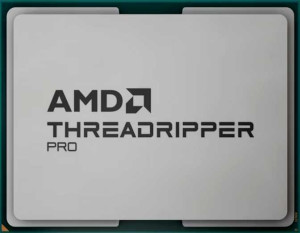
AMD Ryzen Threadripper Pro 9945WX

AMD Ryzen 9 9950X3D AMD Ryzen Threadripper Pro 9945WX

Overview

Welcome to our in-depth spec comparison between the AMD Ryzen 9 9950X3D and the AMD Ryzen Threadripper Pro 9945WX — two powerful processors built for very different audiences. Both chips share a 4 nm manufacturing process and PCIe 5 support, yet they diverge significantly when it comes to core configuration, memory capacity, and power envelope. Whether you are evaluating raw multi-threaded throughput, cache architecture, or platform scalability, this side-by-side breakdown will help you identify which CPU truly fits your needs.

Common Features

  • Both are desktop-type processors.
  • Both are manufactured using a 4 nm semiconductor process.
  • Both have a maximum CPU temperature of 95 °C.
  • Both support PCI Express (PCIe) version 5.
  • Both support 64-bit computing.
  • Both have an unlocked multiplier.
  • Both feature 1 MB of L2 cache per core.
  • Neither uses big.LITTLE technology.
  • Both support DDR5 memory.
  • Both support ECC memory.
  • Both share the same instruction sets: MMX, F16C, FMA3, AES, AVX, AVX2, SSE 4.1, and SSE 4.2.
  • Both support multithreading.
  • Both have the NX bit security feature.

Main Differences

  • Integrated graphics are present on AMD Ryzen 9 9950X3D but not available on AMD Ryzen Threadripper Pro 9945WX.
  • Thermal Design Power (TDP) is 170W on AMD Ryzen 9 9950X3D and 350W on AMD Ryzen Threadripper Pro 9945WX.
  • CPU speed is 16 x 4.3 GHz on AMD Ryzen 9 9950X3D and 12 x 4.7 GHz on AMD Ryzen Threadripper Pro 9945WX.
  • CPU threads are 32 on AMD Ryzen 9 9950X3D and 24 on AMD Ryzen Threadripper Pro 9945WX.
  • Turbo clock speed is 5.7 GHz on AMD Ryzen 9 9950X3D and 5.4 GHz on AMD Ryzen Threadripper Pro 9945WX.
  • L2 cache is 16 MB on AMD Ryzen 9 9950X3D and 12 MB on AMD Ryzen Threadripper Pro 9945WX.
  • L3 cache is 128 MB on AMD Ryzen 9 9950X3D and 64 MB on AMD Ryzen Threadripper Pro 9945WX.
  • L1 cache is 1280 KB on AMD Ryzen 9 9950X3D and 960 KB on AMD Ryzen Threadripper Pro 9945WX.
  • L3 cache per core is 8 MB/core on AMD Ryzen 9 9950X3D and 5.33 MB/core on AMD Ryzen Threadripper Pro 9945WX.
  • Clock multiplier is 43 on AMD Ryzen 9 9950X3D and 47 on AMD Ryzen Threadripper Pro 9945WX.
  • PassMark result (multi-core) is 70250 on AMD Ryzen 9 9950X3D and 56854 on AMD Ryzen Threadripper Pro 9945WX.
  • PassMark result (single-core) is 4737 on AMD Ryzen 9 9950X3D and 4573 on AMD Ryzen Threadripper Pro 9945WX.
  • Maximum RAM speed is 5600 MHz on AMD Ryzen 9 9950X3D and 6400 MHz on AMD Ryzen Threadripper Pro 9945WX.
  • Memory channels are 2 on AMD Ryzen 9 9950X3D and 8 on AMD Ryzen Threadripper Pro 9945WX.
  • Maximum memory amount is 192 GB on AMD Ryzen 9 9950X3D and 2000 GB on AMD Ryzen Threadripper Pro 9945WX.
Specs Comparison
AMD Ryzen 9 9950X3D

AMD Ryzen 9 9950X3D

AMD Ryzen Threadripper Pro 9945WX

AMD Ryzen Threadripper Pro 9945WX

General info:
Type Desktop Desktop
Has integrated graphics
release date January 2025 May 2025
Thermal Design Power (TDP) 170W 350W
semiconductor size 4 nm 4 nm
CPU temperature 95 °C 95 °C
PCI Express (PCIe) version 5 5
Supports 64-bit

Both the AMD Ryzen 9 9950X3D and the AMD Ryzen Threadripper Pro 9945WX are desktop processors built on the same 4 nm manufacturing process, share an identical maximum CPU temperature of 95 °C, and support PCIe 5 and 64-bit computing. This common foundation means neither chip holds an architectural edge on process node, thermal ceiling, or platform connectivity generation.

The most consequential difference in this group is Thermal Design Power: the 9950X3D is rated at 170W, while the Threadripper Pro 9945WX nearly doubles that at 350W. In practical terms, the 9945WX demands a workstation-class power delivery system, a high-end TRX50 platform, and substantially more robust cooling — all of which add cost and system complexity. The 9950X3D, by contrast, fits within a mainstream high-performance desktop build without exotic thermal or power infrastructure.

A secondary but meaningful distinction is that the 9950X3D includes integrated graphics, whereas the 9945WX does not. For the 9945WX, a discrete GPU is always required — even for basic display output — which is standard in professional workstation deployments but worth noting for flexibility. Overall, the 9950X3D holds a clear general-use edge in this group: lower power draw and an integrated GPU make it far more versatile and accessible, while the 9945WX is purpose-built for workstation environments where that 350W envelope is justified by workload demands.

Performance:
CPU speed 16 x 4.3 GHz 12 x 4.7 GHz
CPU threads 32 threads 24 threads
turbo clock speed 5.7GHz 5.4GHz
Has an unlocked multiplier
L2 cache 16 MB 12 MB
L3 cache 128 MB 64 MB
L1 cache 1280 KB 960 KB
L2 core 1 MB/core 1 MB/core
L3 core 8 MB/core 5.33 MB/core
Uses big.LITTLE technology
clock multiplier 43 47

The core count story clearly favors the Ryzen 9 9950X3D, which fields 16 cores and 32 threads against the Threadripper Pro 9945WX's 12 cores and 24 threads. For heavily multi-threaded workloads — video rendering, simulation, compilation — that 33% core advantage translates directly into faster throughput. The 9950X3D also edges ahead on peak single-threaded speed, reaching a turbo of 5.7 GHz versus 5.4 GHz on the 9945WX, which matters for latency-sensitive or lightly-threaded tasks. The 9945WX does carry a higher base clock of 4.7 GHz compared to 4.3 GHz, suggesting more consistent sustained performance under all-core load without boosting, but this narrow gap is unlikely to offset the 9950X3D's broader advantages in most scenarios.

The most dramatic gap in this group is cache. The 9950X3D packs a massive 128 MB of L3 cache — double the 9945WX's 64 MB — and also leads in per-core L3 at 8 MB/core versus 5.33 MB/core. This is the fingerprint of AMD's 3D V-Cache technology, and its real-world impact is substantial: larger L3 keeps more working data closer to the execution units, dramatically reducing cache misses in cache-sensitive workloads like gaming, finite element analysis, and certain scientific computations. The L2 per core is identical at 1 MB/core on both chips, so that tier is a wash.

On performance specs alone, the 9950X3D holds a decisive overall edge: it wins on core count, peak turbo frequency, and overwhelmingly on cache capacity. The 9945WX's higher base clock is a real but narrow advantage that applies mainly to sustained all-core scenarios. Users prioritizing raw compute across threads and cache-sensitive responsiveness will find the 9950X3D the stronger performer by this data.

Benchmarks:
PassMark result 70250 56854
PassMark result (single) 4737 4573

PassMark's multi-threaded score captures how a processor handles the kind of parallel workloads — rendering, compression, encoding — that stress all cores simultaneously. Here, the Ryzen 9 9950X3D scores 70,250 against the Threadripper Pro 9945WX's 56,854, a gap of roughly 24%. That is a meaningful real-world difference: tasks that scale with core count and cache will complete noticeably faster on the 9950X3D, reinforcing what the raw specs already suggested about its multi-threaded advantage.

The single-core result tells a consistent story. The 9950X3D posts 4,737 versus the 9945WX's 4,573 — a narrower but still measurable gap of about 3.6%. Single-core performance governs responsiveness in everyday tasks, gaming frame rates, and any workload that cannot be parallelized. The lead is modest here, but it does mean the 9950X3D is marginally snappier in those scenarios as well.

Across both benchmark dimensions, the 9950X3D holds a clear and consistent advantage. The multi-threaded gap is large enough to matter in production workflows, and the single-core lead, while slim, goes in the same direction. By this data, the 9945WX does not claim the top position in either category.

Memory:
RAM speed (max) 5600 MHz 6400 MHz
DDR memory version 5 5
memory channels 2 8
maximum memory amount 192GB 2000GB
Supports ECC memory

This is the group where the Threadripper Pro 9945WX asserts its workstation identity most forcefully. Its 8-channel memory architecture dwarfs the 9950X3D's dual-channel setup, delivering dramatically higher aggregate memory bandwidth. For workloads that are bandwidth-hungry — large dataset processing, 3D rendering with heavy texture loads, scientific simulation — more memory channels mean data flows to the CPU far faster, reducing bottlenecks that extra cores or cache alone cannot fix.

The capacity gap is equally striking: the 9945WX supports up to 2000 GB of RAM, compared to the 9950X3D's 192 GB. That difference is not relevant for typical desktop or even high-end consumer use, but it is transformative for workstation tasks like in-memory databases, large language model inference, or complex virtualization environments where fitting the entire working set in RAM eliminates costly storage I/O. The 9945WX also edges ahead on supported RAM speed at 6400 MHz versus 5600 MHz, though this gap is secondary to the channel and capacity advantages. Both chips share DDR5 and ECC support, the latter being critical for data integrity in professional environments.

For memory, the 9945WX holds an overwhelming advantage. The combination of eight memory channels, a supported ceiling of 2 TB, and higher peak RAM speeds makes it purpose-built for workloads where memory subsystem performance is a primary constraint — an area where the 9950X3D, despite its strengths elsewhere, simply cannot compete by design.

Features:
instruction sets MMX, F16C, FMA3, AES, AVX, AVX2, SSE 4.1, SSE 4.2 MMX, F16C, FMA3, AES, AVX, AVX2, SSE 4.1, SSE 4.2
uses multithreading
Has NX bit

When it comes to features, this group is a clean sweep tie. The Ryzen 9 9950X3D and the Threadripper Pro 9945WX carry an identical instruction set lineup — including AVX2, FMA3, AES, and SSE 4.1/4.2 — and both support multithreading and the NX bit. There is no differentiator to analyze here; every data point in this group is shared equally.

The practical implication is that software optimized for any of these instruction sets — accelerated encryption via AES-NI, vectorized floating-point workloads using AVX2 and FMA3, or security hardening via the NX bit — will behave identically at the feature-compatibility level on both chips. Neither platform will require recompilation or encounter a capability gap when running modern professional or consumer software stacks.

This group is a complete tie: by the provided data, neither chip holds any feature-level advantage over the other, and the choice between them must rest entirely on the differentiators surfaced in other specification groups.

Comparison Summary & Verdict

After examining all the specifications, both processors prove to be formidable in their respective domains. The AMD Ryzen 9 9950X3D stands out with its 16-core layout, a massive 128 MB L3 cache, higher PassMark multi-core score of 70,250, integrated graphics, and a far more modest 170W TDP — making it an exceptional choice for power-efficient desktop workloads and gaming-adjacent tasks. The AMD Ryzen Threadripper Pro 9945WX, on the other hand, is engineered for professional workstation scalability, offering 8 memory channels, support for up to 2000 GB of RAM, and a higher base clock of 4.7 GHz per core — ideal for memory-bandwidth-intensive professional applications. Choose the 9950X3D for a well-rounded, efficient desktop powerhouse; choose the Threadripper Pro 9945WX when your workload demands extreme memory capacity and professional-grade platform expandability.

AMD Ryzen 9 9950X3D
Buy AMD Ryzen 9 9950X3D if...

Buy the AMD Ryzen 9 9950X3D if you want a high-performance desktop CPU with a massive L3 cache, integrated graphics, superior multi-core benchmark scores, and a lower 170W power draw.

AMD Ryzen Threadripper Pro 9945WX
Buy AMD Ryzen Threadripper Pro 9945WX if...

Buy the AMD Ryzen Threadripper Pro 9945WX if your professional workloads demand extreme memory scalability, with 8 memory channels and support for up to 2000 GB of RAM on a workstation platform.