AMD Ryzen 9 9950X3D
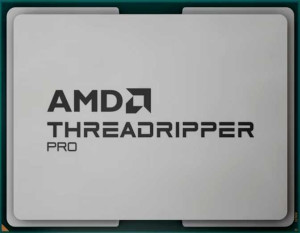
AMD Ryzen Threadripper Pro 9955WX

AMD Ryzen 9 9950X3D AMD Ryzen Threadripper Pro 9955WX

Overview

Welcome to this in-depth specification face-off between the AMD Ryzen 9 9950X3D and the AMD Ryzen Threadripper Pro 9955WX, two powerful 16-core processors sharing the same 4 nm process and 32-thread design, yet targeting very different audiences. In this comparison, we examine the key battlegrounds of cache architecture, thermal envelope, memory capacity, and real-world benchmark performance to help you decide which chip truly fits your needs.

Common Features

  • Both products are Desktop type processors.
  • Both are manufactured using a 4 nm semiconductor process.
  • Both have a maximum CPU temperature of 95 °C.
  • Both support PCI Express version 5.
  • Both support 64-bit computing.
  • Both have 32 CPU threads.
  • Both feature an unlocked multiplier.
  • Both include 16 MB of L2 cache.
  • Both include 1280 KB of L1 cache.
  • Both have an L2 cache of 1 MB per core.
  • Neither product uses big.LITTLE technology.
  • Both support DDR5 memory.
  • ECC memory is supported on both products.
  • Both support the same instruction sets: MMX, F16C, FMA3, AES, AVX, AVX2, SSE 4.1, and SSE 4.2.
  • Multithreading is available on both products.
  • The NX bit security feature is present on both products.

Main Differences

  • Integrated graphics are available on the AMD Ryzen 9 9950X3D but not on the AMD Ryzen Threadripper Pro 9955WX.
  • Thermal Design Power (TDP) is 170W on the AMD Ryzen 9 9950X3D and 350W on the AMD Ryzen Threadripper Pro 9955WX.
  • Base CPU speed is 16 x 4.3 GHz on the AMD Ryzen 9 9950X3D and 16 x 4.5 GHz on the AMD Ryzen Threadripper Pro 9955WX.
  • Turbo clock speed is 5.7 GHz on the AMD Ryzen 9 9950X3D and 5.4 GHz on the AMD Ryzen Threadripper Pro 9955WX.
  • L3 cache is 128 MB on the AMD Ryzen 9 9950X3D and 64 MB on the AMD Ryzen Threadripper Pro 9955WX.
  • L3 cache per core is 8 MB/core on the AMD Ryzen 9 9950X3D and 4 MB/core on the AMD Ryzen Threadripper Pro 9955WX.
  • Clock multiplier is 43 on the AMD Ryzen 9 9950X3D and 45 on the AMD Ryzen Threadripper Pro 9955WX.
  • PassMark multi-core result is 70250 on the AMD Ryzen 9 9950X3D and 69993 on the AMD Ryzen Threadripper Pro 9955WX.
  • PassMark single-core result is 4737 on the AMD Ryzen 9 9950X3D and 4561 on the AMD Ryzen Threadripper Pro 9955WX.
  • Maximum RAM speed is 5600 MHz on the AMD Ryzen 9 9950X3D and 6400 MHz on the AMD Ryzen Threadripper Pro 9955WX.
  • Memory channels number 2 on the AMD Ryzen 9 9950X3D and 8 on the AMD Ryzen Threadripper Pro 9955WX.
  • Maximum memory capacity is 192 GB on the AMD Ryzen 9 9950X3D and 2000 GB on the AMD Ryzen Threadripper Pro 9955WX.
Specs Comparison
AMD Ryzen 9 9950X3D

AMD Ryzen 9 9950X3D

AMD Ryzen Threadripper Pro 9955WX

AMD Ryzen Threadripper Pro 9955WX

General info:
Type Desktop Desktop
Has integrated graphics
release date January 2025 May 2025
Thermal Design Power (TDP) 170W 350W
semiconductor size 4 nm 4 nm
CPU temperature 95 °C 95 °C
PCI Express (PCIe) version 5 5
Supports 64-bit

The AMD Ryzen 9 9950X3D and the AMD Ryzen Threadripper Pro 9955WX are both desktop processors, but they differ in several key areas. The Ryzen 9 9950X3D has integrated graphics, while the Threadripper Pro 9955WX does not, meaning users of the 9950X3D can expect onboard GPU support, which can be an advantage for lighter workloads or troubleshooting without a discrete GPU. Both processors have the same 4 nm semiconductor size, ensuring similar performance in terms of power efficiency and transistor density.

When it comes to thermal design power (TDP), the two processors differ significantly. The Ryzen 9 9950X3D has a TDP of 170W, which is relatively lower, while the Threadripper Pro 9955WX has a much higher TDP of 350W, indicating that it may require more cooling and power resources for optimal performance. Both processors have a maximum CPU temperature of 95 °C, meaning they are designed to operate at the same temperature threshold under load.

Both processors support PCIe version 5, allowing for faster data transfer speeds, and they are fully compatible with 64-bit systems. However, the Threadripper Pro 9955WX lacks the integrated graphics that the Ryzen 9 9950X3D offers, which could be a deciding factor depending on the user's need for GPU capabilities without a dedicated card.

Performance:
CPU speed 16 x 4.3 GHz 16 x 4.5 GHz
CPU threads 32 threads 32 threads
turbo clock speed 5.7GHz 5.4GHz
Has an unlocked multiplier
L2 cache 16 MB 16 MB
L3 cache 128 MB 64 MB
L1 cache 1280 KB 1280 KB
L2 core 1 MB/core 1 MB/core
L3 core 8 MB/core 4 MB/core
Uses big.LITTLE technology
clock multiplier 43 45

The AMD Ryzen 9 9950X3D and the AMD Ryzen Threadripper Pro 9955WX share several similarities in terms of performance specifications, though there are key differences. Both processors feature 32 threads, providing substantial parallel processing capabilities. The Ryzen 9 9950X3D operates at a base CPU speed of 16 x 4.3 GHz, while the Threadripper Pro 9955WX runs slightly faster at 16 x 4.5 GHz, offering a 0.2 GHz higher base clock.

In terms of turbo clock speed, the Ryzen 9 9950X3D reaches up to 5.7 GHz, which is slightly higher than the Threadripper Pro 9955WX’s turbo clock speed of 5.4 GHz. Both processors have an unlocked multiplier, allowing for overclocking potential. The L2 cache is the same for both, at 16 MB, with 1 MB per core, while the L3 cache differs: the Ryzen 9 9950X3D has a significantly larger 128 MB L3 cache (8 MB per core) compared to the Threadripper Pro 9955WX's 64 MB L3 cache (4 MB per core).

Both processors have the same L1 cache size of 1280 KB, and neither uses big.LITTLE technology, ensuring that both are designed for full-core performance. The Ryzen 9 9950X3D has a clock multiplier of 43, while the Threadripper Pro 9955WX has a clock multiplier of 45, reflecting the difference in their base clock speeds. These differences in cache and clock speeds could influence performance in specific tasks, but both processors are powerful contenders in the desktop space.

Benchmarks:
PassMark result 70250 69993
PassMark result (single) 4737 4561

The AMD Ryzen 9 9950X3D and the AMD Ryzen Threadripper Pro 9955WX show very similar performance results in the benchmarks, with only minor differences. The Ryzen 9 9950X3D has a PassMark result of 70250, slightly outperforming the Threadripper Pro 9955WX, which has a PassMark result of 69993. This difference is relatively small, indicating that both processors perform similarly in multi-threaded workloads.

When considering single-threaded performance, the Ryzen 9 9950X3D again comes out ahead with a result of 4737, compared to the Threadripper Pro 9955WX’s single-thread score of 4561. While the difference is still modest, it suggests that the Ryzen 9 9950X3D may handle single-threaded tasks a bit more efficiently.

Overall, both processors provide strong benchmark scores, with the Ryzen 9 9950X3D having a slight edge in both overall and single-threaded performance.

Memory:
RAM speed (max) 5600 MHz 6400 MHz
DDR memory version 5 5
memory channels 2 8
maximum memory amount 192GB 2000GB
Supports ECC memory

The AMD Ryzen 9 9950X3D and the AMD Ryzen Threadripper Pro 9955WX have different memory capabilities, catering to different use cases. The Ryzen 9 9950X3D supports a maximum RAM speed of 5600 MHz, while the Threadripper Pro 9955WX can handle a faster maximum RAM speed of 6400 MHz. Both processors use DDR5 memory, but the Threadripper Pro 9955WX benefits from more memory channels, offering 8 channels compared to the Ryzen 9 9950X3D's 2 channels, which may provide better memory bandwidth and efficiency for memory-intensive tasks.

In terms of memory capacity, the Ryzen 9 9950X3D supports a maximum of 192 GB, while the Threadripper Pro 9955WX can handle up to a massive 2000 GB, allowing for much larger memory configurations suitable for high-performance computing or workstation tasks.

Both processors support ECC memory, ensuring data integrity and error correction, a feature particularly useful in professional or mission-critical applications.

Features:
instruction sets MMX, F16C, FMA3, AES, AVX, AVX2, SSE 4.1, SSE 4.2 MMX, F16C, FMA3, AES, AVX, AVX2, SSE 4.1, SSE 4.2
uses multithreading
Has NX bit

When it comes to the Features group, the AMD Ryzen 9 9950X3D and the AMD Ryzen Threadripper Pro 9955WX are in complete lockstep — every single specification here is identical. Both support the same instruction set extensions (MMX, F16C, FMA3, AES, AVX, AVX2, SSE 4.1, SSE 4.2), both leverage multithreading, and both carry the NX bit security feature. This is not a coincidence — it reflects AMD's consistent architectural foundation across its Zen 5 lineup, ensuring that software compiled for one will run identically on the other from an instruction-level perspective.

The shared instruction set matters in practice: AVX2 enables wide 256-bit floating-point and integer operations critical for scientific computing, video encoding, and machine learning workloads, while AES hardware acceleration keeps encryption and decryption fast without CPU overhead. Multithreading (AMD's SMT) means both CPUs expose two logical threads per physical core, maximizing utilization under heavily parallelized workloads — a key strength for both chips given their high core counts.

With no differentiating data points anywhere in this group, this is a clear and definitive tie. Neither processor holds any feature-level advantage over the other based solely on these specs. The decision between them must rest entirely on other specification groups — such as core count, TDP, memory support, or platform capabilities — rather than anything captured here.
Comparison Summary & Verdict

After examining every specification, it is clear these two processors serve distinct purposes. The AMD Ryzen 9 9950X3D stands out with its massive 128 MB L3 cache, higher turbo clock of 5.7 GHz, integrated graphics, and a much more manageable 170W TDP, making it the ideal choice for mainstream desktop users who want top-tier single-core speed and cache-heavy workloads. The AMD Ryzen Threadripper Pro 9955WX, on the other hand, dominates in professional and enterprise settings thanks to its 8-channel memory support, up to 2000 GB of RAM capacity, and 6400 MHz memory speeds, despite its higher 350W power draw. Both chips trade blows closely in PassMark benchmarks, so your decision should hinge on your platform needs rather than raw compute power alone.

AMD Ryzen 9 9950X3D
Buy AMD Ryzen 9 9950X3D if...

Buy the AMD Ryzen 9 9950X3D if you need a high-performance desktop processor with a larger L3 cache, integrated graphics, and a lower power footprint of 170W.

AMD Ryzen Threadripper Pro 9955WX
Buy AMD Ryzen Threadripper Pro 9955WX if...

Buy the AMD Ryzen Threadripper Pro 9955WX if your workloads demand massive memory capacity up to 2000 GB, 8-channel memory bandwidth, and faster RAM speeds of 6400 MHz for professional or enterprise applications.