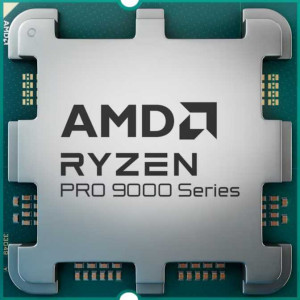
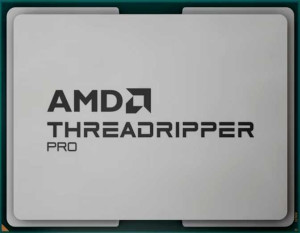
Memory architecture is one of the starkest dividing lines between these two processors. Both support DDR5 and ECC memory — the latter being critical for professional and enterprise environments where data integrity is non-negotiable. But the similarities end there. The Threadripper Pro 9965WX operates across 8 memory channels compared to the Ryzen 9 Pro 9945's 2 channels, which means the Threadripper can feed its cores with up to four times the memory bandwidth simultaneously. For workloads that are memory-bandwidth-bound — large dataset processing, in-memory databases, computational fluid dynamics — this is not a marginal difference; it is a fundamental architectural advantage.
Capacity tells an equally dramatic story. The 9965WX supports up to 2,000 GB of RAM, dwarfing the 9945's already respectable ceiling of 192 GB. This makes the Threadripper platform viable for workloads that simply cannot run on mainstream desktop systems — think massive virtual machine clusters, terabyte-scale in-memory analytics, or professional visualization environments. The 9965WX also edges ahead on raw RAM speed, supporting up to 6,400 MHz versus 5,600 MHz on the 9945, though this is a secondary consideration given the channel-count gap.
In this group, the Threadripper Pro 9965WX wins comprehensively. Greater channel count, a vastly higher memory ceiling, and a faster maximum RAM speed combine to make it the only choice for memory-intensive professional workloads. The Ryzen 9 Pro 9945 offers a solid and modern DDR5 dual-channel configuration, but it is firmly positioned for mainstream desktop use rather than workstation-class memory demands.