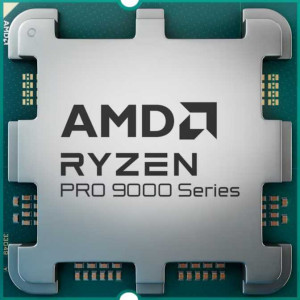
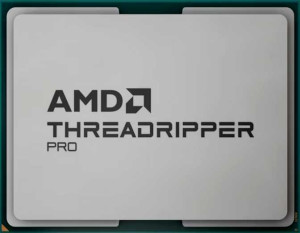
Both processors use DDR5 memory and support ECC — the error-correcting memory standard essential for data-integrity-sensitive workloads like scientific computing, financial modeling, and enterprise servers. That shared foundation means neither chip compromises on reliability at the platform level. The divergence, however, begins with memory bandwidth: the Threadripper Pro 9995WX supports RAM speeds up to 6400 MHz versus the Ryzen 9 Pro 9945's 5600 MHz, a 14% frequency advantage that translates into higher peak memory throughput for bandwidth-hungry workloads.
The channel count difference is where the gap becomes structural. The 9945 operates on a dual-channel memory architecture, while the 9995WX deploys 8 memory channels simultaneously — a quadrupling of memory bus width. In practice, this means the 9995WX can feed its 96 cores with dramatically more data per clock cycle, preventing memory from becoming a bottleneck as thread counts scale. For the 9945's 12-core design, dual-channel is entirely appropriate and rarely a limiting factor.
Maximum capacity tells the same story of scale: the 9945 tops out at 192 GB, which is ample for high-end workstations, while the 9995WX supports up to 2000 GB — a capacity reserved for in-memory databases, massive simulation datasets, or virtualization hosts running dozens of concurrent workloads. The Threadripper Pro 9995WX holds a clear and comprehensive edge across every memory dimension in this group; the Ryzen 9 Pro 9945's memory subsystem is well-matched to its core count but is simply outclassed in bandwidth, parallelism, and capacity.