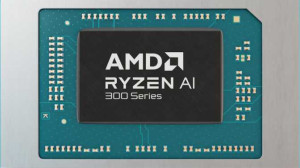
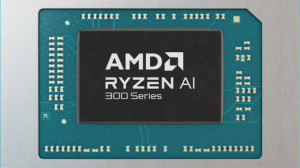
AMD Ryzen AI 5 330
AMD Ryzen AI 5 H 330

AMD Ryzen AI 5 330 AMD Ryzen AI 5 H 330

Overview

Welcome to our detailed spec comparison between the AMD Ryzen AI 5 330 and the AMD Ryzen AI 5 H 330. Both processors sit within AMD's AI-focused Ryzen lineup and share a strikingly similar technical profile, making this a particularly nuanced comparison. In this breakdown, we examine their core performance characteristics, integrated graphics capabilities, memory support, and feature sets to help you understand exactly where these two chips stand relative to each other.

Common Features

  • Both products are designed for Laptop and Desktop use.
  • Integrated graphics are available on both products.
  • Both products have a Thermal Design Power (TDP) of 28W.
  • Both products are manufactured using a 4 nm semiconductor process.
  • The maximum CPU temperature is 100 °C on both products.
  • Both products support PCI Express (PCIe) version 4.
  • 64-bit support is present on both products.
  • Both products have a CPU speed of 1 x 2 & 3 x 2 GHz.
  • Both products have 8 CPU threads.
  • The turbo clock speed is 4.5 GHz on both products.
  • Neither product has an unlocked multiplier.
  • Both products have 4 MB of L2 cache.
  • Both products have 8 MB of L3 cache.
  • Both products use big.LITTLE technology.
  • Both products have a clock multiplier of 20.
  • The integrated GPU on both products is the Radeon 820M.
  • The GPU turbo speed is 2800 MHz on both products.
  • Both products support DirectX 12.
  • Both products support up to 4 displays.
  • Both products support OpenGL version 4.6.
  • Both products support OpenCL version 2.1.
  • The maximum RAM speed supported by both products is 8000 MHz.
  • Both products use DDR5 memory.
  • Both products have 2 memory channels.
  • The maximum supported memory amount is 256 GB on both products.
  • ECC memory support is not available on either product.
  • Both products support the same instruction sets: MMX, F16C, FMA3, AES, AVX, AVX2, SSE 4.1, and SSE 4.2.
  • Multithreading is supported on both products.
  • The NX bit feature is present on both products.
Specs Comparison
AMD Ryzen AI 5 330

AMD Ryzen AI 5 330

AMD Ryzen AI 5 H 330

AMD Ryzen AI 5 H 330

General info:
Type Laptop, Desktop Laptop, Desktop
Has integrated graphics
release date July 2025 July 2025
Thermal Design Power (TDP) 28W 28W
semiconductor size 4 nm 4 nm
CPU temperature 100 °C 100 °C
PCI Express (PCIe) version 4 4
Supports 64-bit

In terms of general specifications, the AMD Ryzen AI 5 330 and the AMD Ryzen AI 5 H 330 are virtually identical across every measured dimension in this group. Both processors share the same 4 nm semiconductor process, a 28W TDP, a maximum CPU temperature of 100 °C, PCIe 4.0 support, integrated graphics, and full 64-bit compatibility. Both are also rated for use in the same form factors — laptop and desktop — giving them equal deployment flexibility.

The practical implication of these shared specs is significant: users can expect the same thermal envelope, the same power draw under sustained load, and the same platform-level compatibility (PCIe 4.0 for NVMe SSDs and GPUs) from either chip. The 4 nm node delivers a strong balance of efficiency and performance density, and the 28W TDP places both squarely in the mainstream mobile/compact desktop segment — not ultra-low-power, but not a high-wattage workstation chip either.

Based strictly on the general info specs provided, these two processors are in a complete tie. There is no differentiator in this group that gives either chip an advantage. Buyers should look to other specification groups — such as CPU performance cores, clock speeds, or AI engine capabilities — to find meaningful distinctions between the two.

Performance:
CPU speed 1 x 2 & 3 x 2 GHz 1 x 2 & 3 x 2 GHz
CPU threads 8 threads 8 threads
turbo clock speed 4.5GHz 4.5GHz
Has an unlocked multiplier
L2 cache 4 MB 4 MB
L3 cache 8 MB 8 MB
Uses big.LITTLE technology
clock multiplier 20 20

Across every performance metric in this group, the Ryzen AI 5 330 and the Ryzen AI 5 H 330 are identical. Both chips offer 8 threads, a peak turbo of 4.5 GHz, and employ big.LITTLE heterogeneous core architecture — meaning workloads are intelligently distributed between higher-performance and efficiency-oriented cores for a better balance of responsiveness and power conservation in everyday use.

Cache configuration is also a mirror image: 4 MB of L2 and 8 MB of L3 on both chips. These are modest but adequate figures for the mainstream mobile segment, supporting snappy single-threaded tasks and reasonable multitasking without the deeper cache reserves found in higher-tier processors. Neither chip has an unlocked multiplier, so overclocking is off the table for both — a typical constraint in this class of processor.

The verdict for this group is a complete tie. Every measurable performance characteristic — thread count, boost frequency, cache hierarchy, and architecture — is shared between the two. Prospective buyers will need to evaluate other specification groups to find any meaningful distinction between these two processors.

Integrated graphics:
GPU name Radeon 820M Radeon 820M
GPU turbo 2800 MHz 2800 MHz
DirectX version DirectX 12 DirectX 12
supported displays 4 4
OpenGL version 4.6 4.6
OpenCL version 2.1 2.1

Both the Ryzen AI 5 330 and the Ryzen AI 5 H 330 integrate the same Radeon 820M GPU, running at a peak clock of 2800 MHz. That boost frequency matters for integrated graphics — it determines how quickly the GPU can handle short bursts of rendering demand, such as video playback acceleration, light image editing, or casual gaming at reduced settings.

API support is equally matched: DirectX 12, OpenGL 4.6, and OpenCL 2.1 on both chips ensure compatibility with modern software, games, and GPU-accelerated compute workloads alike. The ability to drive up to 4 simultaneous displays is a practical advantage for productivity-focused users who want a multi-monitor setup without a discrete GPU — and again, both processors offer this equally.

This group produces no differentiator whatsoever. The integrated graphics capabilities of the Ryzen AI 5 330 and Ryzen AI 5 H 330 are a complete tie across every provided specification, from GPU model and clock speed to API versions and display output count.

Memory:
RAM speed (max) 8000 MHz 8000 MHz
DDR memory version 5 5
memory channels 2 2
maximum memory amount 256GB 256GB
Supports ECC memory

Memory support is a meaningful factor in overall system responsiveness, and here both the Ryzen AI 5 330 and the Ryzen AI 5 H 330 offer the same capable foundation: DDR5 with a maximum rated speed of 8000 MHz. That ceiling is notably high for this class of processor — faster RAM directly benefits integrated graphics performance and reduces bottlenecks in memory-intensive workloads like video editing or large dataset processing.

Both chips operate on a dual-channel memory architecture, which doubles the available memory bandwidth compared to single-channel configurations — an important detail for integrated GPU performance in particular. The maximum supported capacity of 256 GB is generous and well beyond what most consumer use cases require, offering headroom for virtualization or professional workloads. Neither chip supports ECC memory, which is a standard trade-off at this tier and only relevant for users with error-correction requirements.

As with the previous groups, the memory specifications yield a complete tie. Every parameter — DDR version, speed ceiling, channel count, and maximum capacity — is identical between the two processors, giving neither a measurable advantage in this category.

Features:
instruction sets MMX, F16C, FMA3, AES, AVX, AVX2, SSE 4.1, SSE 4.2 MMX, F16C, FMA3, AES, AVX, AVX2, SSE 4.1, SSE 4.2
uses multithreading
Has NX bit

Looking at the feature set, both the Ryzen AI 5 330 and the Ryzen AI 5 H 330 share an identical instruction set portfolio: AVX2, FMA3, AES, SSE 4.1/4.2, and others. The presence of AES hardware acceleration is particularly practical — it offloads encryption and decryption tasks to dedicated silicon, benefiting everything from secure browsing to full-disk encryption with negligible CPU overhead. AVX2 and FMA3 together enable efficient handling of floating-point and vectorized math operations, which matters for scientific computing, media encoding, and certain AI inference workloads.

Multithreading support is present on both chips, consistent with their 8-thread configuration noted in the performance group. The NX bit — a hardware-level security feature — is also active on both, allowing the operating system to mark memory regions as non-executable and helping defend against a class of buffer overflow exploits. This is a baseline expectation for modern processors but worth confirming for security-conscious deployments.

Once again, the data reveals a complete tie. The Ryzen AI 5 330 and Ryzen AI 5 H 330 are feature-for-feature identical in this group, with no instruction set omissions or additions on either side that would favor one over the other.

Comparison Summary & Verdict

After a thorough side-by-side analysis of the AMD Ryzen AI 5 330 and the AMD Ryzen AI 5 H 330, the data reveals that these two processors are, based on available specifications, essentially identical across every measurable category. Both chips share the same 4 nm manufacturing process, a 28W TDP, 8 threads, a 4.5 GHz turbo clock, and the Radeon 820M integrated GPU. Memory support, cache configuration, instruction sets, and feature flags are all equivalent. Given the complete absence of documented differences, neither product holds a measurable technical advantage over the other. Buyers should focus their decision on platform availability and pricing in their specific region, as the underlying hardware performance appears to be on equal footing.

AMD Ryzen AI 5 330
Buy AMD Ryzen AI 5 330 if...

Choose the AMD Ryzen AI 5 330 if it is more readily available or better priced in your region, as its specifications are identical to the AMD Ryzen AI 5 H 330 based on current evidence.

AMD Ryzen AI 5 H 330
Buy AMD Ryzen AI 5 H 330 if...

Choose the AMD Ryzen AI 5 H 330 if it is more accessible or cost-effective where you shop, since no technical differences distinguish it from the AMD Ryzen AI 5 330 based on the available data.