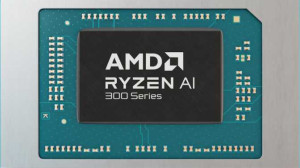
AMD Ryzen AI 5 330
Intel Core Ultra 5 225H

AMD Ryzen AI 5 330 Intel Core Ultra 5 225H

Overview

Welcome to our in-depth specification comparison between the AMD Ryzen AI 5 330 and the Intel Core Ultra 5 225H, two modern laptop-class processors built for demanding everyday and creative workloads. Both chips share a 28W TDP, DDR5 memory support, and big.LITTLE hybrid architecture, yet they diverge sharply when it comes to multi-core performance, thread counts, and integrated graphics capabilities. Whether you care about raw benchmark scores, memory headroom, or graphics API support, this comparison covers every key battleground to help you make an informed decision.

Common Features

  • Both processors have integrated graphics.
  • Both have a Thermal Design Power (TDP) of 28W.
  • Both support 64-bit computing.
  • Neither processor has an unlocked multiplier.
  • Both processors use big.LITTLE technology.
  • Both support up to 4 displays via integrated graphics.
  • Both support OpenGL version 4.6.
  • Both use DDR5 memory.
  • Both have 2 memory channels.
  • ECC memory is not supported by either processor.
  • Both share the same instruction sets: MMX, F16C, FMA3, AES, AVX, AVX2, SSE 4.1, SSE 4.2.
  • The NX bit is supported on both processors.

Main Differences

  • The AMD Ryzen AI 5 330 is available for both Laptop and Desktop, while the Intel Core Ultra 5 225H is for Laptop only.
  • The semiconductor size is 4 nm on the AMD Ryzen AI 5 330 and 3 nm on the Intel Core Ultra 5 225H.
  • The maximum CPU temperature is 100 °C on the AMD Ryzen AI 5 330 and 110 °C on the Intel Core Ultra 5 225H.
  • The PCIe version is 4 on the AMD Ryzen AI 5 330 and 5 on the Intel Core Ultra 5 225H.
  • The CPU speed is 1 x 2 & 3 x 2 GHz on the AMD Ryzen AI 5 330 and 4 x 1.7 & 8 x 1.3 GHz on the Intel Core Ultra 5 225H.
  • The CPU thread count is 8 on the AMD Ryzen AI 5 330 and 14 on the Intel Core Ultra 5 225H.
  • The turbo clock speed is 4.5 GHz on the AMD Ryzen AI 5 330 and 4.9 GHz on the Intel Core Ultra 5 225H.
  • The clock multiplier is 20 on the AMD Ryzen AI 5 330 and 17 on the Intel Core Ultra 5 225H.
  • The PassMark multi-core result is 13809 on the AMD Ryzen AI 5 330 and 29204 on the Intel Core Ultra 5 225H.
  • The PassMark single-core result is 3816 on the AMD Ryzen AI 5 330 and 4365 on the Intel Core Ultra 5 225H.
  • The integrated GPU turbo speed is 2800 MHz on the AMD Ryzen AI 5 330 and 2200 MHz on the Intel Core Ultra 5 225H.
  • The DirectX version is DirectX 12 on the AMD Ryzen AI 5 330 and DirectX 12 Ultimate on the Intel Core Ultra 5 225H.
  • The OpenCL version is 2.1 on the AMD Ryzen AI 5 330 and 3 on the Intel Core Ultra 5 225H.
  • The maximum RAM speed is 8000 MHz on the AMD Ryzen AI 5 330 and 8400 MHz on the Intel Core Ultra 5 225H.
  • The maximum memory capacity is 256 GB on the AMD Ryzen AI 5 330 and 128 GB on the Intel Core Ultra 5 225H.
  • Multithreading is supported on the AMD Ryzen AI 5 330 but not available on the Intel Core Ultra 5 225H.
Specs Comparison
AMD Ryzen AI 5 330

AMD Ryzen AI 5 330

Intel Core Ultra 5 225H

Intel Core Ultra 5 225H

General info:
Type Laptop, Desktop Laptop
Has integrated graphics
release date July 2025 January 2025
Thermal Design Power (TDP) 28W 28W
semiconductor size 4 nm 3 nm
CPU temperature 100 °C 110 °C
PCI Express (PCIe) version 4 5
Supports 64-bit

At a high level, both the AMD Ryzen AI 5 330 and the Intel Core Ultra 5 225H share the same 28W TDP, integrated graphics, and 64-bit support — making them broadly comparable in thermal envelope and baseline feature parity. However, several meaningful differences emerge when looking closer at the underlying architecture and connectivity specs.

On process node, Intel holds a slight edge with a 3 nm fabrication versus AMD's 4 nm. A smaller node generally allows for greater transistor density, which can translate to improved power efficiency or performance-per-watt — though real-world gains depend heavily on architectural design. Intel also pulls ahead on connectivity with PCIe 5.0 support, compared to AMD's PCIe 4.0. This matters for users pairing the chip with next-generation NVMe SSDs or discrete GPUs that saturate PCIe 4.0 bandwidth. The Intel chip's higher maximum CPU junction temperature of 110 °C (vs. AMD's 100 °C) gives it slightly more thermal headroom before throttling, which can be an advantage in sustained workloads.

One area where the Ryzen AI 5 330 stands apart is platform flexibility: it is rated for both laptop and desktop use, while the Core Ultra 5 225H is laptop-exclusive. For system builders or OEMs targeting a wider range of form factors, the AMD chip offers a practical advantage. Overall, Intel holds the edge in process technology and I/O bandwidth, while AMD offers broader deployment flexibility at the same power budget.

Performance:
CPU speed 1 x 2 & 3 x 2 GHz 4 x 1.7 & 8 x 1.3 GHz
CPU threads 8 threads 14 threads
turbo clock speed 4.5GHz 4.9GHz
Has an unlocked multiplier
Uses big.LITTLE technology
clock multiplier 20 17

The AMD Ryzen AI 5 330 and Intel Core Ultra 5 225H differ in their CPU speed configurations. The AMD Ryzen AI 5 330 has a CPU speed of 1 x 2 GHz and 3 x 2 GHz, while the Intel Core Ultra 5 225H features a CPU speed of 4 x 1.7 GHz and 8 x 1.3 GHz. Both processors utilize big.LITTLE technology, which allows them to efficiently manage power and performance by using different types of cores for different tasks.

In terms of CPU threads, the AMD Ryzen AI 5 330 offers 8 threads, while the Intel Core Ultra 5 225H provides 14 threads, offering greater multi-tasking capability. The AMD processor has a turbo clock speed of 4.5 GHz, whereas the Intel processor reaches a slightly higher turbo clock speed of 4.9 GHz, indicating a potential advantage in burst performance.

Both processors feature a locked multiplier, meaning that users cannot overclock them, but the AMD Ryzen AI 5 330 has a clock multiplier of 20, while the Intel Core Ultra 5 225H has a clock multiplier of 17, suggesting differences in how the processors handle clock speeds for specific tasks.

Benchmarks:
PassMark result 13809 29204
PassMark result (single) 3816 4365

The AMD Ryzen AI 5 330 and Intel Core Ultra 5 225H show significant differences in their benchmark scores. The AMD Ryzen AI 5 330 has a PassMark result of 13,809, with a single-threaded score of 3,816. In comparison, the Intel Core Ultra 5 225H achieves a much higher overall PassMark result of 29,204, with a single-threaded score of 4,365.

These differences in PassMark results indicate that the Intel processor generally outperforms the AMD processor in both multi-threaded and single-threaded tasks, with a notably higher performance in both categories.

Overall, the Intel Core Ultra 5 225H demonstrates a clear lead in benchmark performance, particularly in single-threaded operations, as shown by its higher PassMark scores.

Integrated graphics:
GPU turbo 2800 MHz 2200 MHz
DirectX version DirectX 12 DirectX 12 Ultimate
supported displays 4 4
OpenGL version 4.6 4.6
OpenCL version 2.1 3

The integrated graphics of the AMD Ryzen AI 5 330 and Intel Core Ultra 5 225H differ in a few key areas. The AMD processor features a GPU turbo speed of 2800 MHz, while the Intel processor has a slightly lower GPU turbo speed of 2200 MHz.

Both processors support DirectX 12, with the Intel processor supporting the more advanced DirectX 12 Ultimate version. They both also support a maximum of four displays and share the same OpenGL version, 4.6. However, the AMD Ryzen AI 5 330 supports OpenCL version 2.1, while the Intel Core Ultra 5 225H supports OpenCL version 3, indicating a potential difference in their capabilities with OpenCL-based applications.

In summary, while both processors offer solid integrated graphics support, the Intel Core Ultra 5 225H has a slight edge in DirectX and OpenCL support, whereas the AMD Ryzen AI 5 330 offers a higher GPU turbo speed.

Memory:
RAM speed (max) 8000 MHz 8400 MHz
DDR memory version 5 5
memory channels 2 2
maximum memory amount 256GB 128GB
Supports ECC memory

The AMD Ryzen AI 5 330 and Intel Core Ultra 5 225H have similar memory configurations but with some key differences. Both processors support DDR5 memory and have dual memory channels. However, the maximum RAM speed supported by the AMD Ryzen AI 5 330 is 8000 MHz, while the Intel Core Ultra 5 225H supports a slightly faster 8400 MHz RAM speed.

In terms of maximum memory capacity, the AMD Ryzen AI 5 330 supports up to 256GB of RAM, whereas the Intel Core Ultra 5 225H has a lower maximum memory amount of 128GB. Neither processor supports ECC memory.

Overall, the AMD Ryzen AI 5 330 offers a higher maximum memory capacity, while the Intel Core Ultra 5 225H has a slightly faster RAM speed capability.

Features:
instruction sets MMX, F16C, FMA3, AES, AVX, AVX2, SSE 4.1, SSE 4.2 MMX, F16C, FMA3, AES, AVX, AVX2, SSE 4.1, SSE 4.2
uses multithreading
Has NX bit

The AMD Ryzen AI 5 330 and Intel Core Ultra 5 225H share most of the same instruction sets, including MMX, F16C, FMA3, AES, AVX, AVX2, SSE 4.1, and SSE 4.2. These sets enable both processors to perform a wide range of operations efficiently. However, the key difference in their features is in multithreading support. The AMD Ryzen AI 5 330 uses multithreading, which allows it to handle more tasks simultaneously, while the Intel Core Ultra 5 225H does not support multithreading.

Both processors have the NX bit, which provides additional security by preventing the execution of code from certain regions of memory, a feature that both share.

In summary, the AMD Ryzen AI 5 330 stands out with its multithreading support, while the Intel Core Ultra 5 225H lacks this feature, despite sharing many of the same instruction sets and the NX bit security feature.

Comparison Summary & Verdict

After examining all available specifications, these two processors clearly target different priorities. The Intel Core Ultra 5 225H pulls ahead in raw performance, offering 14 threads, a 4.9 GHz turbo clock, a significantly higher PassMark multi-core score of 29204, PCIe 5 support, and a more advanced DirectX 12 Ultimate and OpenCL 3 integrated GPU — making it the stronger choice for performance-intensive tasks. On the other hand, the AMD Ryzen AI 5 330 stands out with a higher maximum memory ceiling of 256 GB, a faster integrated GPU turbo at 2800 MHz, multithreading support, desktop platform availability, and double the maximum RAM capacity — advantages that matter for memory-heavy workloads and broader platform flexibility. Neither chip is universally superior; your ideal pick depends entirely on your workload priorities.

AMD Ryzen AI 5 330
Buy AMD Ryzen AI 5 330 if...

Buy the AMD Ryzen AI 5 330 if you need a processor with a much higher maximum memory capacity of 256 GB, multithreading support, or the flexibility of both laptop and desktop platform availability.

Intel Core Ultra 5 225H
Buy Intel Core Ultra 5 225H if...

Buy the Intel Core Ultra 5 225H if you prioritize significantly higher multi-core performance, a greater thread count of 14, a faster turbo clock speed of 4.9 GHz, and more advanced integrated graphics with DirectX 12 Ultimate and OpenCL 3 support.