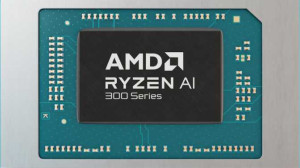
AMD Ryzen AI 5 330
Intel Core Ultra 9 285HX

AMD Ryzen AI 5 330 Intel Core Ultra 9 285HX

Overview

Welcome to our in-depth specification comparison between the AMD Ryzen AI 5 330 and the Intel Core Ultra 9 285HX. These two processors take very different approaches to mobile computing, diverging notably in core count and raw multi-threaded performance, cache architecture, and thermal envelopes. Whether you prioritize efficiency and memory flexibility or demand maximum processing horsepower, this comparison will walk you through every key specification to help you make the right choice.

Common Features

  • Both processors include integrated graphics.
  • Both processors support 64-bit computing.
  • Both processors use big.LITTLE technology for mixed core configurations.
  • Both processors support DDR5 memory.
  • Both processors feature a dual-channel memory architecture.
  • Both integrated graphics units support up to 4 displays simultaneously.
  • Both integrated graphics units support DirectX 12.
  • Both processors share the same instruction sets: MMX, F16C, FMA3, AES, AVX, AVX2, SSE 4.1, and SSE 4.2.
  • Both processors support the NX bit security feature.

Main Differences

  • Supported form factors include both laptop and desktop for AMD Ryzen AI 5 330, while Intel Core Ultra 9 285HX is designed for laptops only.
  • Thermal Design Power (TDP) is 28W on AMD Ryzen AI 5 330 and 55W on Intel Core Ultra 9 285HX.
  • Semiconductor size is 4 nm on AMD Ryzen AI 5 330 and 3 nm on Intel Core Ultra 9 285HX.
  • Maximum CPU temperature is 100°C on AMD Ryzen AI 5 330 and 105°C on Intel Core Ultra 9 285HX.
  • PCI Express version is 4 on AMD Ryzen AI 5 330 and 5 on Intel Core Ultra 9 285HX.
  • CPU thread count is 8 on AMD Ryzen AI 5 330 and 24 on Intel Core Ultra 9 285HX.
  • Turbo clock speed is 4.5 GHz on AMD Ryzen AI 5 330 and 5.5 GHz on Intel Core Ultra 9 285HX.
  • An unlocked multiplier is not available on AMD Ryzen AI 5 330, but is present on Intel Core Ultra 9 285HX.
  • L2 cache is 4 MB on AMD Ryzen AI 5 330 and 40 MB on Intel Core Ultra 9 285HX.
  • L3 cache is 8 MB on AMD Ryzen AI 5 330 and 36 MB on Intel Core Ultra 9 285HX.
  • Clock multiplier is 20 on AMD Ryzen AI 5 330 and 28 on Intel Core Ultra 9 285HX.
  • PassMark multi-core result is 13,809 on AMD Ryzen AI 5 330 and 62,297 on Intel Core Ultra 9 285HX.
  • PassMark single-core result is 3,816 on AMD Ryzen AI 5 330 and 4,784 on Intel Core Ultra 9 285HX.
  • GPU base clock speed is 0 MHz on AMD Ryzen AI 5 330 and 300 MHz on Intel Core Ultra 9 285HX.
  • GPU turbo clock speed is 2800 MHz on AMD Ryzen AI 5 330 and 2000 MHz on Intel Core Ultra 9 285HX.
  • OpenGL version supported is 4.6 on AMD Ryzen AI 5 330 and 4.5 on Intel Core Ultra 9 285HX.
  • OpenCL version supported is 2.1 on AMD Ryzen AI 5 330 and 3 on Intel Core Ultra 9 285HX.
  • Maximum RAM speed is 8000 MHz on AMD Ryzen AI 5 330 and 6400 MHz on Intel Core Ultra 9 285HX.
  • Maximum memory capacity is 256 GB on AMD Ryzen AI 5 330 and 192 GB on Intel Core Ultra 9 285HX.
  • ECC memory support is not available on AMD Ryzen AI 5 330, but is present on Intel Core Ultra 9 285HX.
Specs Comparison
AMD Ryzen AI 5 330

AMD Ryzen AI 5 330

Intel Core Ultra 9 285HX

Intel Core Ultra 9 285HX

General info:
Type Laptop, Desktop Laptop
Has integrated graphics
release date July 2025 January 2025
Thermal Design Power (TDP) 28W 55W
semiconductor size 4 nm 3 nm
CPU temperature 100 °C 105 °C
PCI Express (PCIe) version 4 5
Supports 64-bit

The most consequential difference in this group is Thermal Design Power: the Ryzen AI 5 330 is rated at 28W, while the Core Ultra 9 285HX operates at 55W — nearly double. In practice, this means the Intel chip is designed for systems with robust cooling solutions and sustained high-performance workloads, but it will draw significantly more power and generate considerably more heat. The AMD chip, by contrast, is better suited to thinner, battery-conscious designs where thermal headroom is limited. Neither is inherently superior here — it depends entirely on the use case — but users prioritizing battery life or fanless builds will find the 330 far more practical.

On a process and platform level, the Core Ultra 9 285HX holds a modest edge: it is built on a 3 nm process versus the Ryzen AI 5 330's 4 nm, which can translate to better transistor density and efficiency at the silicon level. It also supports PCIe 5.0 versus PCIe 4.0 on the AMD side, meaning it can take full advantage of the latest NVMe SSDs and discrete GPUs that use the newer interface — a meaningful advantage for bandwidth-intensive workloads. The AMD processor's slightly lower maximum CPU temperature (100 °C vs. 105 °C) is a negligible real-world differentiator.

One unique attribute of the Ryzen AI 5 330 is its support for both laptop and desktop form factors, giving it broader deployment flexibility compared to the Intel chip, which is laptop-only. Overall, for raw platform capability and I/O headroom, the Core Ultra 9 285HX has a clear edge; for efficiency-focused or multi-form-factor use, the Ryzen AI 5 330 is the more versatile choice.

Performance:
CPU speed 1 x 2 & 3 x 2 GHz 8 x 2.8 & 16 x 2.1 GHz
CPU threads 8 threads 24 threads
turbo clock speed 4.5GHz 5.5GHz
Has an unlocked multiplier
L2 cache 4 MB 40 MB
L3 cache 8 MB 36 MB
Uses big.LITTLE technology
clock multiplier 20 28

The AMD Ryzen AI 5 330 and Intel Core Ultra 9 285HX show significant differences in performance specifications. The Ryzen AI 5 330 has a CPU speed configuration of 1 x 2 GHz and 3 x 2 GHz, with 8 threads, while the Intel Core Ultra 9 285HX operates at 8 x 2.8 GHz and 16 x 2.1 GHz with 24 threads. This indicates that the Intel processor has more cores and threads, potentially offering better multitasking and parallel processing capabilities.

In terms of turbo clock speed, the Ryzen AI 5 330 reaches up to 4.5 GHz, while the Intel Core Ultra 9 285HX can turbo boost to 5.5 GHz, offering a higher peak performance under load. Both processors utilize big.LITTLE technology, which helps optimize power consumption and performance, but the Ryzen AI 5 330 has a clock multiplier of 20, while the Intel Core Ultra 9 285HX features a higher clock multiplier of 28.

Cache size also varies significantly between the two: the Ryzen AI 5 330 has an L2 cache of 4 MB and an L3 cache of 8 MB. In comparison, the Intel Core Ultra 9 285HX is equipped with a much larger L2 cache of 40 MB and an L3 cache of 36 MB, which could provide faster data access and better overall performance in certain tasks. Additionally, the Intel processor has an unlocked multiplier, allowing for easier overclocking, while the Ryzen AI 5 330 has a locked multiplier, limiting its overclocking potential.

Benchmarks:
PassMark result 13809 62297
PassMark result (single) 3816 4784

The AMD Ryzen AI 5 330 and Intel Core Ultra 9 285HX differ significantly in their benchmark scores. The Ryzen AI 5 330 has a PassMark result of 13,809, with a single-core score of 3,816. In comparison, the Intel Core Ultra 9 285HX achieves a much higher PassMark result of 62,297, with a single-core score of 4,784. This suggests that the Intel processor performs considerably better overall, as well as in single-core tasks, when compared to the Ryzen AI 5 330.

Both processors show a noticeable gap in their performance scores, with the Intel Core Ultra 9 285HX outperforming the Ryzen AI 5 330 in both total and single-core benchmark results. However, these numbers represent raw performance without accounting for other factors like thermal management, power consumption, or specific use cases.

Integrated graphics:
GPU clock speed 0 MHz 300 MHz
GPU turbo 2800 MHz 2000 MHz
DirectX version DirectX 12 DirectX 12
supported displays 4 4
OpenGL version 4.6 4.5
OpenCL version 2.1 3

The AMD Ryzen AI 5 330 and Intel Core Ultra 9 285HX both feature integrated graphics, but with notable differences in performance and specifications. The Ryzen AI 5 330 has a GPU clock speed of 0 MHz, with a GPU turbo boost of 2,800 MHz. In contrast, the Intel Core Ultra 9 285HX starts with a GPU clock speed of 300 MHz, reaching a turbo boost of 2,000 MHz. This suggests that the Ryzen processor may have a higher potential for GPU performance under load due to the higher turbo speed.

Both processors support DirectX 12, enabling modern gaming and graphical features. The Ryzen AI 5 330 supports OpenGL 4.6, while the Intel Core Ultra 9 285HX supports OpenGL 4.5, indicating that the Ryzen processor supports a slightly more recent version of OpenGL.

In terms of supported displays, both processors can handle up to four displays. The Ryzen AI 5 330 supports OpenCL version 2.1, while the Intel Core Ultra 9 285HX supports a newer OpenCL version 3, which could offer advantages in computational tasks using the integrated GPU.

Memory:
RAM speed (max) 8000 MHz 6400 MHz
DDR memory version 5 5
memory channels 2 2
maximum memory amount 256GB 192GB
Supports ECC memory

The AMD Ryzen AI 5 330 and Intel Core Ultra 9 285HX differ in several memory-related specifications. The Ryzen AI 5 330 supports a maximum RAM speed of 8000 MHz, whereas the Intel Core Ultra 9 285HX supports a lower maximum RAM speed of 6400 MHz. Both processors use DDR5 memory and feature two memory channels, but the Ryzen AI 5 330 supports a larger maximum memory capacity of 256GB, compared to the 192GB supported by the Intel Core Ultra 9 285HX.

Additionally, the Ryzen AI 5 330 does not support ECC (Error-Correcting Code) memory, while the Intel Core Ultra 9 285HX does support it. ECC memory is typically used in systems where data integrity is critical, such as in servers and workstations.

Features:
instruction sets MMX, F16C, FMA3, AES, AVX, AVX2, SSE 4.1, SSE 4.2 MMX, F16C, FMA3, AES, AVX, AVX2, SSE 4.1, SSE 4.2
Has NX bit

Both the AMD Ryzen AI 5 330 and Intel Core Ultra 9 285HX share identical instruction set support, including MMX, F16C, FMA3, AES, AVX, AVX2, SSE 4.1, and SSE 4.2. This means both processors are equipped with the same set of instructions, which are commonly used for a wide range of computing tasks, from multimedia processing to cryptography.

Additionally, both processors feature the NX bit (No Execute bit), which enhances security by preventing certain types of malicious code from executing in specific areas of memory. This feature is supported on both the Ryzen AI 5 330 and the Intel Core Ultra 9 285HX, offering a layer of protection against security vulnerabilities.

Comparison Summary & Verdict

After examining all available specifications, a clear picture emerges for each processor. The Intel Core Ultra 9 285HX dominates in raw performance, delivering a dramatically higher PassMark multi-core score of 62,297, 24 threads, a 5.5 GHz turbo clock, and vastly larger L2 and L3 caches, making it the ideal choice for power users running demanding workloads such as video editing, 3D rendering, or heavy multitasking. The AMD Ryzen AI 5 330, on the other hand, shines in efficiency-focused scenarios: its 28W TDP is nearly half that of its rival, it supports a higher maximum RAM speed of 8000 MHz, a larger maximum memory capacity of 256 GB, and offers broader form-factor flexibility including desktop deployments. Users who value a lower power footprint and greater memory headroom will find the Ryzen AI 5 330 a compelling option for everyday productivity and light creative tasks.

AMD Ryzen AI 5 330
Buy AMD Ryzen AI 5 330 if...

Choose the AMD Ryzen AI 5 330 if you need a power-efficient processor with a lower 28W TDP, support for up to 256 GB of RAM at 8000 MHz, and the flexibility to deploy in both laptop and desktop platforms.

Intel Core Ultra 9 285HX
Buy Intel Core Ultra 9 285HX if...

Choose the Intel Core Ultra 9 285HX if you demand maximum multi-threaded performance, benefiting from 24 threads, a 5.5 GHz turbo speed, significantly larger caches, an unlocked multiplier, and ECC memory support for professional workloads.