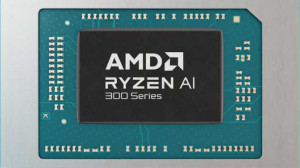
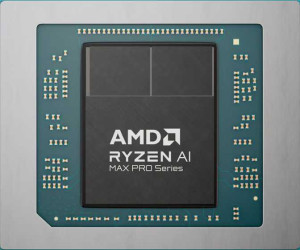
At the foundational level, the AMD Ryzen AI 5 340 and the AMD Ryzen AI Max Plus Pro 395 share a remarkably similar architectural baseline: both are built on a 4 nm process node, support 64-bit computing, include integrated graphics, top out at a 100 °C thermal ceiling, and use PCIe 4.0. This means neither processor has a generational edge in terms of platform compatibility or manufacturing sophistication — they are peers in those respects.
The single and decisive differentiator in this group is Thermal Design Power (TDP). The Ryzen AI 5 340 is rated at 28W, while the Ryzen AI Max Plus Pro 395 is rated at 55W — nearly double. In practice, TDP is a proxy for both sustained performance headroom and heat output. A higher TDP means the chip is designed to draw more power over extended workloads, enabling greater computational throughput, but it also demands more robust cooling and reduces battery efficiency in mobile systems. The 28W envelope of the AI 5 340 is more in line with thin-and-light or efficiency-focused designs, whereas the 55W of the AI Max Plus Pro 395 targets performance-oriented laptops or compact desktops where thermal and power budgets are less constrained.
Based strictly on this group's data, the Ryzen AI Max Plus Pro 395 holds a clear performance-headroom advantage due to its significantly higher TDP, making it the stronger candidate for sustained, demanding workloads. The Ryzen AI 5 340, however, has the edge in power efficiency and thermal manageability — a meaningful benefit for portable or fanless form factors. Both chips are otherwise on equal footing across all other general specifications.