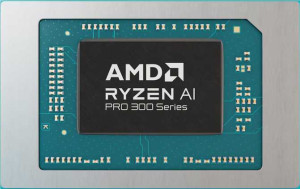
Memory capacity is where the gap between these two chips becomes most dramatic for professional users. The AMD Ryzen AI 5 Pro 340 supports up to 256 GB of RAM — four times the 64 GB ceiling of the Apple M5. For workloads that are genuinely memory-hungry, such as large-scale virtual machines, in-memory databases, or complex simulation environments, this difference can be the deciding factor. The M5's 64 GB cap, while sufficient for the vast majority of users, becomes a hard wall for certain enterprise and scientific computing scenarios.
On memory speed, the Ryzen AI 5 Pro 340 again leads, supporting RAM up to 8000 MHz versus the M5's 6400 MHz. Higher memory bandwidth feeds data to the CPU and GPU faster, which benefits latency-sensitive workloads like real-time audio processing, large dataset analytics, and high-resolution video pipelines. Both chips are on DDR5, so the generational foundation is identical — the Ryzen simply pushes that foundation further.
Perhaps the most enterprise-significant differentiator is ECC memory support. The Ryzen AI 5 Pro 340 supports it; the M5 does not. ECC memory automatically detects and corrects single-bit errors, making it essential in mission-critical environments where data integrity is non-negotiable — servers, financial systems, and scientific computing among them. Taken together, the Ryzen AI 5 Pro 340 holds a commanding advantage in this group, outpacing the M5 on capacity, speed, and reliability features.