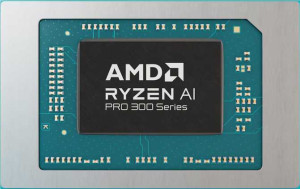
AMD Ryzen AI 5 Pro 340
Intel Core Ultra 7 255H

AMD Ryzen AI 5 Pro 340 Intel Core Ultra 7 255H

Overview

Welcome to our in-depth specification comparison between the AMD Ryzen AI 5 Pro 340 and the Intel Core Ultra 7 255H — two capable laptop processors with notably different approaches to performance and versatility. In this head-to-head, we examine key battlegrounds including multi-core and single-core performance, integrated graphics capabilities, memory support, and platform features to help you determine which chip is the better fit for your needs.

Common Features

  • Integrated graphics are available on both AMD Ryzen AI 5 Pro 340 and Intel Core Ultra 7 255H.
  • Both processors share a Thermal Design Power (TDP) of 28W.
  • Both AMD Ryzen AI 5 Pro 340 and Intel Core Ultra 7 255H support 64-bit computing.
  • Neither AMD Ryzen AI 5 Pro 340 nor Intel Core Ultra 7 255H has an unlocked multiplier.
  • Both processors use big.LITTLE technology.
  • Both AMD Ryzen AI 5 Pro 340 and Intel Core Ultra 7 255H have a clock multiplier of 20.
  • Both processors support up to 4 displays via their integrated graphics.
  • Both integrated graphics solutions support OpenGL version 4.6.
  • Both AMD Ryzen AI 5 Pro 340 and Intel Core Ultra 7 255H use DDR5 memory.
  • Both processors feature a dual-channel memory configuration.
  • Both processors share the same instruction sets: MMX, F16C, FMA3, AES, AVX, AVX2, SSE 4.1, and SSE 4.2.
  • The NX bit security feature is present on both AMD Ryzen AI 5 Pro 340 and Intel Core Ultra 7 255H.

Main Differences

  • The AMD Ryzen AI 5 Pro 340 is designed for both Laptop and Desktop form factors, while the Intel Core Ultra 7 255H is designed for Laptop only.
  • The semiconductor size is 4 nm on AMD Ryzen AI 5 Pro 340 and 3 nm on Intel Core Ultra 7 255H.
  • The maximum CPU temperature is 100 °C on AMD Ryzen AI 5 Pro 340 and 110 °C on Intel Core Ultra 7 255H.
  • The PCI Express version is 4 on AMD Ryzen AI 5 Pro 340 and 5 on Intel Core Ultra 7 255H.
  • The CPU core configuration is 3 x 2 GHz & 3 x 2 GHz on AMD Ryzen AI 5 Pro 340 and 6 x 2 GHz & 8 x 1.5 GHz on Intel Core Ultra 7 255H.
  • The thread count is 12 on AMD Ryzen AI 5 Pro 340 and 16 on Intel Core Ultra 7 255H.
  • The turbo clock speed is 4.8 GHz on AMD Ryzen AI 5 Pro 340 and 5.1 GHz on Intel Core Ultra 7 255H.
  • The L3 cache is 16 MB on AMD Ryzen AI 5 Pro 340 and 24 MB on Intel Core Ultra 7 255H.
  • The PassMark multi-core result is 19,500 on AMD Ryzen AI 5 Pro 340 and 30,756 on Intel Core Ultra 7 255H.
  • The PassMark single-core result is 3,830 on AMD Ryzen AI 5 Pro 340 and 4,373 on Intel Core Ultra 7 255H.
  • The integrated GPU is the Radeon 840M on AMD Ryzen AI 5 Pro 340 and the Arc 140T on Intel Core Ultra 7 255H.
  • The GPU turbo clock is 2,900 MHz on AMD Ryzen AI 5 Pro 340 and 2,250 MHz on Intel Core Ultra 7 255H.
  • The DirectX version supported is DirectX 12 on AMD Ryzen AI 5 Pro 340 and DirectX 12 Ultimate on Intel Core Ultra 7 255H.
  • The OpenCL version supported is 2.1 on AMD Ryzen AI 5 Pro 340 and 3 on Intel Core Ultra 7 255H.
  • The maximum RAM speed is 8,000 MHz on AMD Ryzen AI 5 Pro 340 and 8,400 MHz on Intel Core Ultra 7 255H.
  • The maximum memory capacity is 256 GB on AMD Ryzen AI 5 Pro 340 and 128 GB on Intel Core Ultra 7 255H.
  • ECC memory support is present on AMD Ryzen AI 5 Pro 340 but not available on Intel Core Ultra 7 255H.
  • Multithreading support is present on AMD Ryzen AI 5 Pro 340 but not available on Intel Core Ultra 7 255H.
Specs Comparison
AMD Ryzen AI 5 Pro 340

AMD Ryzen AI 5 Pro 340

Intel Core Ultra 7 255H

Intel Core Ultra 7 255H

General info:
Type Laptop, Desktop Laptop
Has integrated graphics
release date March 2025 January 2025
Thermal Design Power (TDP) 28W 28W
semiconductor size 4 nm 3 nm
CPU temperature 100 °C 110 °C
PCI Express (PCIe) version 4 5
Supports 64-bit

At a foundational level, both the AMD Ryzen AI 5 Pro 340 and the Intel Core Ultra 7 255H share a 28W TDP, integrated graphics, and full 64-bit support — making them comparable in terms of base power envelope and general capability. However, the similarities largely end there when you dig into the silicon and platform architecture.

The Core Ultra 7 255H is built on a 3 nm process node versus the Ryzen AI 5 Pro 340's 4 nm, which generally translates to better transistor density and improved power efficiency at the same thermal budget. Intel also steps ahead with PCIe 5.0 support compared to PCIe 4.0 on the AMD chip — a meaningful advantage for users pairing the processor with next-generation NVMe SSDs or discrete GPUs, as PCIe 5.0 doubles the theoretical bandwidth. The Intel chip also has a higher maximum CPU temperature ceiling of 110 °C versus 100 °C, meaning it can sustain boosted performance slightly longer under thermal load before throttling — though this also implies it runs closer to the edge thermally.

One area where the Ryzen AI 5 Pro 340 holds an exclusive advantage is platform flexibility: it is rated for both laptop and desktop use, while the Core Ultra 7 255H is strictly a laptop processor. For system integrators or users seeking a compact desktop build, the AMD chip opens options the Intel chip simply does not. Overall, the Intel Core Ultra 7 255H has the edge in raw platform modernity — newer process node and PCIe generation — but the AMD Ryzen AI 5 Pro 340 offers broader deployment flexibility that may matter depending on the use case.

Performance:
CPU speed 3 x 2 & 3 x 2 GHz 6 x 2 & 8 x 1.5 GHz
CPU threads 12 threads 16 threads
turbo clock speed 4.8GHz 5.1GHz
Has an unlocked multiplier
L3 cache 16 MB 24 MB
Uses big.LITTLE technology
clock multiplier 20 20

The AMD Ryzen AI 5 Pro 340 and Intel Core Ultra 7 255H both feature big.LITTLE technology, which allows them to efficiently balance performance and power consumption by using a mix of high-performance and energy-efficient cores. The AMD model has 12 threads, while the Intel processor supports 16 threads, indicating that the Intel processor can handle more simultaneous tasks.

In terms of CPU speed, the AMD Ryzen AI 5 Pro 340 runs at 3 x 2 GHz and 3 x 2 GHz for its cores, while the Intel Core Ultra 7 255H has a combination of 6 x 2 GHz and 8 x 1.5 GHz. The AMD model has a higher base clock on the faster cores, but the Intel processor features a greater number of cores, which may contribute to more overall processing power.

Both processors offer turbo clock speeds, with the AMD Ryzen AI 5 Pro 340 reaching up to 4.8 GHz and the Intel Core Ultra 7 255H slightly surpassing it with a turbo clock speed of 5.1 GHz. Both processors have 20x clock multipliers and feature 16 MB and 24 MB of L3 cache, respectively. The Intel processor offers a larger L3 cache, which may improve its performance in tasks requiring more memory bandwidth.

Benchmarks:
PassMark result 19500 30756
PassMark result (single) 3830 4373

The AMD Ryzen AI 5 Pro 340 and Intel Core Ultra 7 255H have notable differences in their benchmark scores. The AMD Ryzen AI 5 Pro 340 has a total PassMark result of 19500, compared to the Intel Core Ultra 7 255H's much higher score of 30756. This indicates that the Intel processor performs significantly better overall in benchmark testing.

When looking at single-core performance, the AMD Ryzen AI 5 Pro 340 scores 3830, while the Intel Core Ultra 7 255H achieves a higher score of 4373. This suggests that the Intel processor also has an edge in single-threaded tasks, offering better performance in applications that rely heavily on single-core speed.

In summary, both processors show strong performance but the Intel Core Ultra 7 255H outperforms the AMD Ryzen AI 5 Pro 340 in both total and single-core benchmark results.

Integrated graphics:
GPU name Radeon 840M Arc 140T
GPU turbo 2900 MHz 2250 MHz
DirectX version DirectX 12 DirectX 12 Ultimate
supported displays 4 4
OpenGL version 4.6 4.6
OpenCL version 2.1 3

The AMD Ryzen AI 5 Pro 340 and Intel Core Ultra 7 255H both feature integrated graphics, but there are notable differences in their GPU specifications. The AMD model is equipped with the Radeon 840M GPU, which has a turbo frequency of 2900 MHz, while the Intel processor uses the Arc 140T GPU with a turbo frequency of 2250 MHz. This gives the AMD model a higher GPU clock speed, potentially offering more graphical performance in certain scenarios.

Both processors support DirectX 12, but the Intel Core Ultra 7 255H goes a step further by supporting DirectX 12 Ultimate, which includes additional features for more advanced graphics rendering. Both products also support OpenGL 4.6, meaning they can handle a wide range of graphics applications, and both can drive up to 4 displays simultaneously.

In terms of OpenCL support, the AMD Ryzen AI 5 Pro 340 supports OpenCL version 2.1, while the Intel Core Ultra 7 255H supports OpenCL version 3, offering potential benefits for applications that leverage OpenCL for parallel computing tasks.

Memory:
RAM speed (max) 8000 MHz 8400 MHz
DDR memory version 5 5
memory channels 2 2
maximum memory amount 256GB 128GB
Supports ECC memory

The AMD Ryzen AI 5 Pro 340 and Intel Core Ultra 7 255H both support DDR5 memory, with the AMD processor capable of reaching a maximum RAM speed of 8000 MHz, while the Intel processor supports a slightly faster 8400 MHz. Both processors have two memory channels, which can help improve memory bandwidth and overall performance.

In terms of maximum memory capacity, the AMD Ryzen AI 5 Pro 340 supports up to 256GB of RAM, while the Intel Core Ultra 7 255H is limited to a maximum of 128GB. This gives the AMD processor a clear advantage in terms of memory scalability.

The AMD Ryzen AI 5 Pro 340 also supports ECC (Error-Correcting Code) memory, which can detect and correct memory errors, providing added reliability for critical applications. In contrast, the Intel Core Ultra 7 255H does not support ECC memory, which may make it less suitable for environments where data integrity is paramount.

Features:
instruction sets MMX, F16C, FMA3, AES, AVX, AVX2, SSE 4.1, SSE 4.2 MMX, F16C, FMA3, AES, AVX, AVX2, SSE 4.1, SSE 4.2
uses multithreading
Has NX bit

Both the AMD Ryzen AI 5 Pro 340 and Intel Core Ultra 7 255H support a similar set of instruction sets, including MMX, F16C, FMA3, AES, AVX, AVX2, SSE 4.1, and SSE 4.2. This means they can handle a wide range of software optimizations for tasks like multimedia processing and cryptography.

One key difference is that the AMD Ryzen AI 5 Pro 340 supports multithreading, allowing it to run multiple threads on each core for better parallel processing. In contrast, the Intel Core Ultra 7 255H does not support multithreading, meaning it can only handle one thread per core.

Both processors include the NX (No Execute) bit, a security feature that helps protect against certain types of malicious software by preventing code from executing in certain areas of memory.

Comparison Summary & Verdict

After reviewing all available specifications, these two processors serve distinct audiences. The Intel Core Ultra 7 255H holds a clear lead in raw performance, delivering a significantly higher PassMark multi-core score of 30,756 versus 19,500, a faster turbo clock of 5.1 GHz, more threads, a larger 24 MB L3 cache, and a newer PCIe 5 interface — making it the stronger choice for demanding workloads. However, the AMD Ryzen AI 5 Pro 340 counters with meaningful advantages of its own: support for up to 256 GB of RAM (double the Intel's 128 GB cap), ECC memory support for reliability-critical tasks, multithreading, desktop platform compatibility, and a higher GPU turbo clock of 2,900 MHz. Choose the AMD Ryzen AI 5 Pro 340 if you need a versatile, memory-rich platform for professional or workstation use; opt for the Intel Core Ultra 7 255H if peak computing performance is your top priority.

AMD Ryzen AI 5 Pro 340
Buy AMD Ryzen AI 5 Pro 340 if...

Buy the AMD Ryzen AI 5 Pro 340 if you need ECC memory support, a maximum RAM capacity of 256 GB, or desktop platform compatibility for professional and workstation-oriented use cases.

Intel Core Ultra 7 255H
Buy Intel Core Ultra 7 255H if...

Buy the Intel Core Ultra 7 255H if you prioritize higher multi-core and single-core performance, a faster turbo clock speed, and a larger L3 cache for demanding laptop workloads.