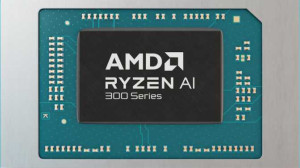
AMD Ryzen AI 7 350
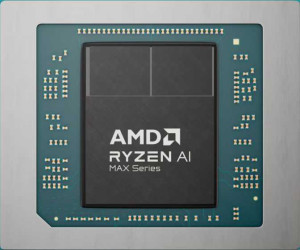
AMD Ryzen AI Max 385

AMD Ryzen AI 7 350 AMD Ryzen AI Max 385

Overview

Welcome to our in-depth specification face-off between the AMD Ryzen AI 7 350 and the AMD Ryzen AI Max 385. These two processors share a common 4 nm foundation and DDR5 memory support, yet they take remarkably different approaches to performance, thermal headroom, and integrated graphics. Whether you care about benchmark scores, GPU capability, or memory configuration, this comparison covers every key battleground to help you make the most informed decision.

Common Features

  • Both products are designed for Laptop and Desktop use.
  • Integrated graphics are available on both products.
  • Both products are built on a 4 nm semiconductor process.
  • Both products have a maximum CPU temperature of 100 °C.
  • Both products use PCI Express version 4.
  • 64-bit support is available on both products.
  • Both products have 16 CPU threads.
  • Both products reach a turbo clock speed of 5 GHz.
  • Neither product has an unlocked multiplier.
  • Both products have 8 MB of L2 cache.
  • Both products support up to 4 displays via integrated graphics.
  • Both products support OpenGL version 4.6.
  • Both products support a maximum RAM speed of 8000 MHz.
  • Both products use DDR5 memory.
  • Both products support the same instruction sets: MMX, F16C, FMA3, AES, AVX, AVX2, SSE 4.1, and SSE 4.2.
  • Multithreading is supported on both products.
  • The NX bit security feature is present on both products.

Main Differences

  • Thermal Design Power (TDP) is 28W on AMD Ryzen AI 7 350 and 55W on AMD Ryzen AI Max 385.
  • CPU base speed is 4 x 2 & 4 x 2 GHz on AMD Ryzen AI 7 350 and 8 x 3.6 GHz on AMD Ryzen AI Max 385.
  • L3 cache is 16 MB on AMD Ryzen AI 7 350 and 32 MB on AMD Ryzen AI Max 385.
  • Big.LITTLE technology is used on AMD Ryzen AI 7 350 but not on AMD Ryzen AI Max 385.
  • The clock multiplier is 20 on AMD Ryzen AI 7 350 and 36 on AMD Ryzen AI Max 385.
  • PassMark result (multi-core) is 34459 on AMD Ryzen AI 7 350 and 18441 on AMD Ryzen AI Max 385.
  • PassMark result (single-core) is 3878 on AMD Ryzen AI 7 350 and 2056 on AMD Ryzen AI Max 385.
  • GPU base clock speed is 400 MHz on AMD Ryzen AI 7 350 and 2800 MHz on AMD Ryzen AI Max 385.
  • The integrated GPU is the Radeon 860M on AMD Ryzen AI 7 350 and the Radeon 8050S on AMD Ryzen AI Max 385.
  • GPU turbo clock speed is 3000 MHz on AMD Ryzen AI 7 350 and 2800 MHz on AMD Ryzen AI Max 385.
  • GPU execution units number 8 on AMD Ryzen AI 7 350 and 32 on AMD Ryzen AI Max 385.
  • DirectX version is DirectX 12 on AMD Ryzen AI 7 350 and DirectX 12 Ultimate on AMD Ryzen AI Max 385.
  • OpenCL version is 2.1 on AMD Ryzen AI 7 350 and 3 on AMD Ryzen AI Max 385.
  • Memory channels number 2 on AMD Ryzen AI 7 350 and 4 on AMD Ryzen AI Max 385.
  • Maximum memory support is 256 GB on AMD Ryzen AI 7 350 and 128 GB on AMD Ryzen AI Max 385.
  • ECC memory support is present on AMD Ryzen AI Max 385 but not available on AMD Ryzen AI 7 350.
Specs Comparison
AMD Ryzen AI 7 350

AMD Ryzen AI 7 350

AMD Ryzen AI Max 385

AMD Ryzen AI Max 385

General info:
Type Laptop, Desktop Laptop, Desktop
Has integrated graphics
release date January 2025 January 2025
Thermal Design Power (TDP) 28W 55W
semiconductor size 4 nm 4 nm
CPU temperature 100 °C 100 °C
PCI Express (PCIe) version 4 4
Supports 64-bit

At a foundational level, the AMD Ryzen AI 7 350 and the AMD Ryzen AI Max 385 share the same manufacturing generation, both built on a 4nm process node, and both support the same platform features: integrated graphics, 64-bit computing, and PCIe 4.0. They are also rated for the same maximum CPU temperature of 100°C and target the same form factors — laptop and desktop. This common ground means software compatibility and platform behavior are essentially identical between the two.

The single most telling differentiator in this group is Thermal Design Power (TDP). The Ryzen AI 7 350 is rated at 28W, while the Ryzen AI Max 385 is rated at 55W — nearly double. TDP is a direct indicator of both sustained power consumption and the thermal envelope a system must manage. A 28W chip is designed for thin-and-light laptops prioritizing battery efficiency and passive or low-noise cooling, whereas a 55W chip demands more robust thermal solutions — larger heatsinks, active fans, or higher-wattage power adapters. In a mobile context, the AI Max 385 will consume battery significantly faster under sustained load.

The Ryzen AI Max 385 holds a clear edge in this group if raw sustained performance headroom is the priority, as the higher TDP envelope allows the processor to run at greater power levels for longer periods. However, the Ryzen AI 7 350 has the advantage for users who value efficiency, quiet operation, or long battery life. The ″right″ choice here depends entirely on the use case: portability and endurance favor the 350, while performance ceiling favors the Max 385.

Performance:
CPU speed 4 x 2 & 4 x 2 GHz 8 x 3.6 GHz
CPU threads 16 threads 16 threads
turbo clock speed 5GHz 5GHz
Has an unlocked multiplier
L2 cache 8 MB 8 MB
L3 cache 16 MB 32 MB
Uses big.LITTLE technology
clock multiplier 20 36

The AMD Ryzen AI 7 350 and AMD Ryzen AI Max 385 both feature 16 CPU threads, ensuring strong multitasking and parallel processing performance. However, their CPU speeds differ significantly. The Ryzen AI 7 350 operates with a CPU speed of 4 x 2 GHz and 4 x 2 GHz, which indicates it has a combination of performance and efficiency cores. In contrast, the Ryzen AI Max 385 has a more uniform CPU speed of 8 x 3.6 GHz, which might suggest more consistent performance across all cores.

Both processors feature a turbo clock speed of 5 GHz, meaning they can temporarily boost performance under heavy loads, though the base speeds differ. Additionally, the Ryzen AI 7 350 utilizes big.LITTLE technology, which aims to optimize performance and efficiency, while the Ryzen AI Max 385 does not use this technology.

Regarding cache, both models have the same L2 cache size of 8 MB. However, the Ryzen AI Max 385 offers a larger L3 cache of 32 MB, compared to the Ryzen AI 7 350's 16 MB, which could improve data access and overall performance in data-intensive tasks. Both processors have a locked multiplier, with the Ryzen AI 7 350 having a clock multiplier of 20, while the Ryzen AI Max 385 has a higher multiplier of 36.

Benchmarks:
PassMark result 34459 18441
PassMark result (single) 3878 2056

The AMD Ryzen AI 7 350 and AMD Ryzen AI Max 385 differ significantly in their PassMark benchmark results. The Ryzen AI 7 350 achieves a total PassMark score of 34459, which is notably higher than the Ryzen AI Max 385's score of 18441. This suggests that the Ryzen AI 7 350 may offer superior overall performance across various tasks and workloads.

When it comes to single-core performance, the Ryzen AI 7 350 also outperforms the Ryzen AI Max 385. The Ryzen AI 7 350 scores 3878 in the single-core test, compared to 2056 for the Ryzen AI Max 385. This indicates a clear advantage for the Ryzen AI 7 350 in tasks that rely heavily on single-core processing power.

Overall, based on the PassMark benchmark scores, the Ryzen AI 7 350 shows higher performance in both multi-core and single-core tests compared to the Ryzen AI Max 385.

Integrated graphics:
GPU clock speed 400 MHz 2800 MHz
GPU name Radeon 860M Radeon 8050S
GPU turbo 3000 MHz 2800 MHz
GPU execution units 8 32
DirectX version DirectX 12 DirectX 12 Ultimate
supported displays 4 4
OpenGL version 4.6 4.6
OpenCL version 2.1 3

The integrated graphics of the AMD Ryzen AI 7 350 and AMD Ryzen AI Max 385 show some distinct differences. The Ryzen AI 7 350 features a GPU clock speed of 400 MHz with a turbo boost of 3000 MHz, while the Ryzen AI Max 385 has a much higher base GPU clock speed of 2800 MHz, with no turbo speed indicated beyond the base clock.

The GPU name also differs, with the Ryzen AI 7 350 using the Radeon 860M and the Ryzen AI Max 385 using the Radeon 8050S. Additionally, the Ryzen AI Max 385 has 32 GPU execution units, compared to the Ryzen AI 7 350's 8 execution units. This could imply a more capable GPU for the Ryzen AI Max 385 in handling graphical workloads.

Both processors support DirectX 12, but the Ryzen AI Max 385 supports the more advanced DirectX 12 Ultimate. Both models also support OpenGL version 4.6 and OpenCL version 2.1 (for the Ryzen AI 7 350) or 3 (for the Ryzen AI Max 385), indicating minor differences in OpenCL support.

Memory:
RAM speed (max) 8000 MHz 8000 MHz
DDR memory version 5 5
memory channels 2 4
maximum memory amount 256GB 128GB
Supports ECC memory

Both the AMD Ryzen AI 7 350 and AMD Ryzen AI Max 385 support DDR5 memory with a maximum RAM speed of 8000 MHz, ensuring fast memory performance. However, there are differences in memory channels and capacity. The Ryzen AI 7 350 supports 2 memory channels, while the Ryzen AI Max 385 supports 4 memory channels, which may offer more bandwidth and better performance in memory-intensive tasks.

In terms of maximum memory capacity, the Ryzen AI 7 350 can handle up to 256GB, while the Ryzen AI Max 385 is limited to 128GB of memory. This gives the Ryzen AI 7 350 an advantage if higher memory capacity is required.

Additionally, the Ryzen AI Max 385 supports ECC (Error-Correcting Code) memory, which provides extra reliability for applications that require fault tolerance, while the Ryzen AI 7 350 does not support ECC memory.

Features:
instruction sets MMX, F16C, FMA3, AES, AVX, AVX2, SSE 4.1, SSE 4.2 MMX, F16C, FMA3, AES, AVX, AVX2, SSE 4.1, SSE 4.2
uses multithreading
Has NX bit

Both the AMD Ryzen AI 7 350 and the AMD Ryzen AI Max 385 feature the same set of instruction sets, including MMX, F16C, FMA3, AES, AVX, AVX2, SSE 4.1, and SSE 4.2. This ensures that both processors are capable of handling a wide range of modern workloads and applications with advanced multimedia and computational capabilities.

Both processors also support multithreading, which enables them to handle multiple threads simultaneously, improving performance in tasks that require concurrent processing.

Additionally, both models have the NX bit feature, which provides enhanced security by preventing the execution of code from non-executable memory regions.

Comparison Summary & Verdict

After reviewing all the evidence, both processors serve distinct audiences. The AMD Ryzen AI 7 350 stands out with its significantly higher PassMark multi-core score of 34,459 and its support for up to 256 GB of maximum memory, making it a compelling choice for memory-intensive workloads. Its big.LITTLE architecture also reflects a focus on efficiency within a lower 28W TDP envelope. The AMD Ryzen AI Max 385, on the other hand, dominates in integrated graphics with 32 GPU execution units, a Radeon 8050S with DirectX 12 Ultimate and OpenCL 3 support, plus 4 memory channels and ECC memory compatibility, making it the stronger pick for graphics-heavy or professional workloads. Choose based on your priority: raw CPU throughput and memory capacity, or superior GPU performance and professional-grade memory features.

AMD Ryzen AI 7 350
Buy AMD Ryzen AI 7 350 if...

Buy the AMD Ryzen AI 7 350 if you need higher multi-core benchmark performance, a lower 28W thermal footprint, or support for up to 256 GB of system memory.

AMD Ryzen AI Max 385
Buy AMD Ryzen AI Max 385 if...

Buy the AMD Ryzen AI Max 385 if you prioritize powerful integrated graphics with 32 GPU execution units, DirectX 12 Ultimate, 4 memory channels, or ECC memory support for professional use.