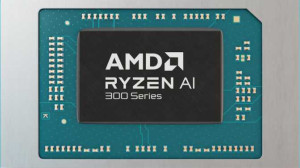
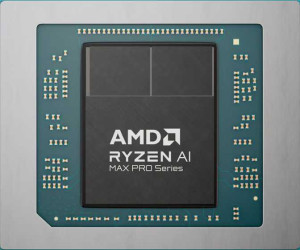
At a foundational level, the AMD Ryzen AI 7 350 and AMD Ryzen AI Max Plus Pro 395 share a strong common platform: both are built on a 4 nm process node, support 64-bit computing, include integrated graphics, and use PCIe 4.0 — meaning neither offers an architectural edge in connectivity or manufacturing refinement. Both also share an identical 100 °C maximum CPU temperature ceiling, so thermal throttling behavior is governed by the same junction limit.
The single and most consequential differentiator in this group is Thermal Design Power (TDP). The Ryzen AI 7 350 is rated at 28W, while the Ryzen AI Max Plus Pro 395 runs at 55W — nearly double. In practice, TDP directly reflects how much sustained performance a chip can deliver before hitting its power budget. A higher TDP generally means more headroom for compute-intensive workloads, but it also demands better cooling, draws more battery, and generates more heat in a chassis. The 395 is clearly positioned for high-performance systems where thermal and power delivery infrastructure can support it, while the 350 is tuned for efficiency-first designs — thinner laptops, fanless form factors, or longer battery life scenarios.
Overall, the Ryzen AI Max Plus Pro 395 holds a clear advantage in this group for users who prioritize peak sustained performance, given its significantly higher TDP envelope. The Ryzen AI 7 350, however, has the edge for power-constrained or thermally limited use cases. The choice between them in this context is fundamentally a trade-off between performance ceiling and efficiency.