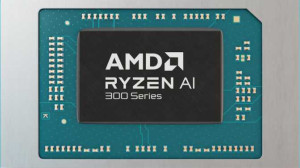
AMD Ryzen AI 7 350
Intel 300

AMD Ryzen AI 7 350 Intel 300

Overview

Welcome to our in-depth specification comparison between the AMD Ryzen AI 7 350 and the Intel 300. These two processors take notably different approaches to everyday and workstation computing, diverging across key areas such as core and thread counts, integrated graphics capability, memory support, and overall benchmark performance. Whether you are building a new desktop system or exploring a versatile laptop-compatible chip, this side-by-side breakdown will help you understand exactly where each processor stands.

Common Features

  • Both CPUs include integrated graphics.
  • The maximum CPU temperature is 100°C on both products.
  • Both processors support 64-bit computing.
  • Neither processor has an unlocked multiplier.
  • Both use DDR5 memory.
  • Both support dual-channel memory (2 memory channels).
  • Neither processor supports ECC memory.
  • Both support up to 4 displays via integrated graphics.
  • Both integrated graphics solutions include 8 render output units (ROPs).
  • Both support DirectX 12.
  • Both use multithreading.
  • Both share the same instruction sets: MMX, F16C, FMA3, AES, AVX, AVX2, SSE 4.1, and SSE 4.2.
  • Both processors have the NX bit security feature.

Main Differences

  • The AMD Ryzen AI 7 350 is designed for both laptop and desktop use, while the Intel 300 is a desktop-only processor.
  • Thermal Design Power (TDP) is 28W on the AMD Ryzen AI 7 350 and 46W on the Intel 300.
  • The semiconductor size is 4 nm on the AMD Ryzen AI 7 350 and 10 nm on the Intel 300.
  • PCI Express version is PCIe 4 on the AMD Ryzen AI 7 350 and PCIe 5 on the Intel 300.
  • CPU speed is 4 x 2 & 4 x 2 GHz on the AMD Ryzen AI 7 350 and 2 x 1 GHz on the Intel 300.
  • The AMD Ryzen AI 7 350 has 16 threads while the Intel 300 has 4 threads.
  • Turbo clock speed is 5 GHz on the AMD Ryzen AI 7 350 and 3.9 GHz on the Intel 300.
  • L2 cache is 8 MB on the AMD Ryzen AI 7 350 and 2.5 MB on the Intel 300.
  • L3 cache is 16 MB on the AMD Ryzen AI 7 350 and 6 MB on the Intel 300.
  • big.LITTLE technology is used on the AMD Ryzen AI 7 350 but not on the Intel 300.
  • The clock multiplier is 20 on the AMD Ryzen AI 7 350 and 39 on the Intel 300.
  • PassMark multi-core result is 34459 on the AMD Ryzen AI 7 350 and 7276 on the Intel 300.
  • PassMark single-core result is 3878 on the AMD Ryzen AI 7 350 and 3217 on the Intel 300.
  • GPU clock speed is 400 MHz on the AMD Ryzen AI 7 350 (Radeon 860M) and 300 MHz on the Intel 300 (UHD Graphics 710).
  • GPU turbo speed is 3000 MHz on the AMD Ryzen AI 7 350 and 1450 MHz on the Intel 300.
  • The integrated GPU has 8 execution units on the AMD Ryzen AI 7 350 and 16 on the Intel 300.
  • OpenGL version is 4.6 on the AMD Ryzen AI 7 350 and 4.5 on the Intel 300.
  • OpenCL version is 2.1 on the AMD Ryzen AI 7 350 and 3.0 on the Intel 300.
  • Texture mapping units (TMUs) number 32 on the AMD Ryzen AI 7 350 and 8 on the Intel 300.
  • Shading units number 512 on the AMD Ryzen AI 7 350 and 128 on the Intel 300.
  • Maximum supported RAM speed is 8000 MHz on the AMD Ryzen AI 7 350 and 4800 MHz on the Intel 300.
  • Maximum memory capacity is 256 GB on the AMD Ryzen AI 7 350 and 192 GB on the Intel 300.
Specs Comparison
AMD Ryzen AI 7 350

AMD Ryzen AI 7 350

Intel 300

Intel 300

General info:
Type Laptop, Desktop Desktop
Has integrated graphics
release date January 2025 January 2025
Thermal Design Power (TDP) 28W 46W
semiconductor size 4 nm 10 nm
CPU temperature 100 °C 100 °C
PCI Express (PCIe) version 4 5
Supports 64-bit

The most striking structural difference between these two processors is their manufacturing process. The AMD Ryzen AI 7 350 is built on a modern 4 nm node, while the Intel 300 uses a comparatively older 10 nm process. In practical terms, a smaller node typically enables better transistor density, improved power efficiency, and more performance per watt — giving the Ryzen AI 7 350 a meaningful architectural edge on that front.

Thermal Design Power tells a similarly decisive story: the Ryzen AI 7 350 operates at just 28W TDP, versus the Intel 300's 46W TDP. That 18W gap means the AMD chip demands significantly less cooling and draws less power under sustained load — a critical advantage in thermally constrained environments. This also explains why the Ryzen AI 7 350 is rated for both laptop and desktop use cases, while the Intel 300 is a desktop-only part; the AMD chip's efficiency profile makes it viable in slim, battery-powered form factors where the Intel 300 simply isn't designed to operate.

The Intel 300 does hold one concrete advantage: support for PCIe 5 versus the Ryzen AI 7 350's PCIe 4. For desktop users pairing the chip with a cutting-edge NVMe SSD or a next-gen GPU, that newer bus can offer higher theoretical bandwidth. Both processors share integrated graphics, 64-bit support, and an identical 100 °C maximum temperature ceiling. Overall, the Ryzen AI 7 350 holds the broader advantage in this group — its superior node technology and lower TDP make it more efficient and more versatile, while the Intel 300's PCIe 5 support is a niche benefit limited to desktop configurations.

Performance:
CPU speed 4 x 2 & 4 x 2 GHz 2 x 1 GHz
CPU threads 16 threads 4 threads
turbo clock speed 5GHz 3.9GHz
Has an unlocked multiplier
L2 cache 8 MB 2.5 MB
L3 cache 16 MB 6 MB
Uses big.LITTLE technology
clock multiplier 20 39

The AMD Ryzen AI 7 350 and Intel 300 differ significantly in their performance specifications. The Ryzen AI 7 350 offers a much higher CPU speed, with 4 cores running at 2 GHz and 4 additional cores at 2 GHz, compared to the Intel 300's 2 cores running at just 1 GHz. The Ryzen AI 7 350 also supports a higher turbo clock speed of 5 GHz, while the Intel 300's turbo clock speed is limited to 3.9 GHz.

When it comes to CPU threads, the AMD Ryzen AI 7 350 supports 16 threads, providing better multi-tasking and parallel processing performance compared to the Intel 300's 4 threads. The L2 and L3 cache sizes are also more generous in the Ryzen AI 7 350, with 8 MB of L2 cache and 16 MB of L3 cache, while the Intel 300 has only 2.5 MB of L2 cache and 6 MB of L3 cache.

Additionally, the Ryzen AI 7 350 employs big.LITTLE technology, which optimizes power efficiency by using a mix of performance and efficiency cores, while the Intel 300 does not feature this technology. Both processors have a locked multiplier, meaning they cannot be overclocked, and the Ryzen AI 7 350 uses a clock multiplier of 20, whereas the Intel 300 has a higher clock multiplier of 39.

Benchmarks:
PassMark result 34459 7276
PassMark result (single) 3878 3217

The AMD Ryzen AI 7 350 and Intel 300 show a notable difference in benchmark performance. The Ryzen AI 7 350 achieves a PassMark result of 34,459, which is significantly higher than the Intel 300's PassMark result of 7,276. This indicates that the Ryzen AI 7 350 provides substantially greater overall processing power in multi-threaded tasks.

In terms of single-threaded performance, the Ryzen AI 7 350 also outperforms the Intel 300, with a single-thread PassMark result of 3,878 compared to the Intel 300's 3,217. While both processors are capable, the Ryzen AI 7 350 demonstrates a clear advantage in both overall and single-threaded processing capabilities.

Overall, the AMD Ryzen AI 7 350 shows a substantial lead in benchmark scores, highlighting its higher processing capacity compared to the Intel 300.

Integrated graphics:
GPU clock speed 400 MHz 300 MHz
GPU name Radeon 860M UHD Graphics 710
GPU turbo 3000 MHz 1450 MHz
GPU execution units 8 16
DirectX version DirectX 12 DirectX 12
supported displays 4 4
OpenGL version 4.6 4.5
OpenCL version 2.1 3
texture mapping units (TMUs) 32 8
render output units (ROPs) 8 8
shading units 512 128

The integrated graphics of the AMD Ryzen AI 7 350 and Intel 300 differ in several key areas. The AMD Ryzen AI 7 350 is equipped with a Radeon 860M GPU, which operates at a base clock speed of 400 MHz and can boost up to 3000 MHz. In comparison, the Intel 300 uses UHD Graphics 710, with a base clock speed of 300 MHz and a turbo clock speed of 1450 MHz, indicating a lower performance ceiling for the Intel GPU.

When it comes to GPU execution units, the AMD Ryzen AI 7 350 has 8, whereas the Intel 300 has 16, which suggests the Intel GPU has more processing cores available for handling graphics tasks. However, the AMD Ryzen AI 7 350 makes up for this with a significantly higher number of texture mapping units (TMUs), offering 32 compared to the Intel 300’s 8. This gives the Ryzen GPU a potential advantage in texture handling and detailed graphics rendering.

Both GPUs support DirectX 12, and they are capable of supporting up to 4 displays. The AMD processor supports OpenGL version 4.6, while the Intel 300 supports OpenGL version 4.5. The AMD GPU also supports OpenCL 2.1, while the Intel GPU supports OpenCL 3. These differences in versions may affect compatibility with certain applications and workloads, with the Intel GPU offering more recent OpenCL support.

Memory:
RAM speed (max) 8000 MHz 4800 MHz
DDR memory version 5 5
memory channels 2 2
maximum memory amount 256GB 192GB
Supports ECC memory

The AMD Ryzen AI 7 350 and Intel 300 show differences in memory specifications, particularly in terms of maximum RAM speed and capacity. The Ryzen AI 7 350 supports a higher RAM speed, with a maximum of 8000 MHz, compared to the Intel 300’s maximum of 4800 MHz. Both processors use DDR5 memory and feature 2 memory channels, ensuring good memory bandwidth in each case.

When it comes to maximum memory capacity, the AMD Ryzen AI 7 350 can handle up to 256 GB of RAM, while the Intel 300 is limited to 192 GB. Both processors do not support ECC (Error-Correcting Code) memory, which is important for high-reliability applications but is not a feature in either product.

In summary, the AMD Ryzen AI 7 350 offers higher RAM speed and larger memory capacity compared to the Intel 300, though both processors share the same DDR5 memory standard and lack ECC memory support.

Features:
instruction sets MMX, F16C, FMA3, AES, AVX, AVX2, SSE 4.1, SSE 4.2 MMX, F16C, FMA3, AES, AVX, AVX2, SSE 4.1, SSE 4.2
uses multithreading
Has NX bit

The AMD Ryzen AI 7 350 and Intel 300 share a similar set of features when it comes to instruction sets and functionality. Both processors support the same set of instruction sets, including MMX, F16C, FMA3, AES, AVX, AVX2, SSE 4.1, and SSE 4.2, which are essential for modern computing tasks like encryption and multimedia processing.

Both processors also utilize multithreading, allowing for better handling of multiple tasks simultaneously. Additionally, both have the NX bit feature, which enhances security by preventing the execution of certain types of malicious code in memory.

In summary, the features of the AMD Ryzen AI 7 350 and Intel 300 are identical in this group, with both processors offering a comprehensive set of instruction sets and support for multithreading and the NX bit for security.

Comparison Summary & Verdict

After examining all available specifications, the two processors serve quite different audiences. The AMD Ryzen AI 7 350 is the stronger all-round performer, delivering a significantly higher PassMark multi-core score of 34,459, 16 threads, a 5 GHz turbo clock, and a much more capable Radeon 860M integrated GPU with 512 shading units and a 3000 MHz GPU turbo. Its 4 nm process node and 28W TDP also make it exceptionally power-efficient, and its laptop-plus-desktop compatibility adds flexibility. The Intel 300, on the other hand, offers PCIe 5 support and a higher clock multiplier, which may appeal to users in specific desktop configurations. Overall, the AMD Ryzen AI 7 350 is best suited for users who need multi-threaded workloads and strong integrated graphics, while the Intel 300 is a more modest option for basic desktop tasks on a tighter budget.

AMD Ryzen AI 7 350
Buy AMD Ryzen AI 7 350 if...

Buy the AMD Ryzen AI 7 350 if you need strong multi-threaded performance, superior integrated graphics, and power efficiency in either a laptop or desktop build.

Intel 300
Buy Intel 300 if...

Buy the Intel 300 if you are assembling a basic desktop system and specifically require PCIe 5 compatibility at a simpler performance tier.