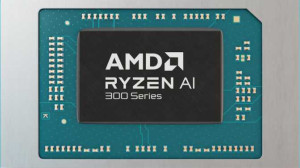
AMD Ryzen AI 7 350
Intel Core Ultra 7 255H

AMD Ryzen AI 7 350 Intel Core Ultra 7 255H

Overview

When choosing between the AMD Ryzen AI 7 350 and the Intel Core Ultra 7 255H, buyers face a genuinely competitive matchup across performance, integrated graphics, and memory capabilities. Both processors share a 28W TDP and 16 threads, yet they diverge in meaningful ways — from multi-core throughput and cache size to the power of their respective integrated GPUs. This comparison examines the key battlegrounds to help you identify which chip best suits your needs.

Common Features

  • Both processors feature integrated graphics.
  • Both have a Thermal Design Power (TDP) of 28W.
  • Both support 64-bit computing.
  • Both processors are designed for laptop use.
  • Both have 16 CPU threads.
  • Neither processor has an unlocked multiplier.
  • Both use big.LITTLE technology.
  • Both share a clock multiplier of 20.
  • Both support DDR5 memory.
  • Both have 2 memory channels.
  • Neither processor supports ECC memory.
  • Both integrated graphics solutions support 4 displays simultaneously.
  • Both GPUs have 8 execution units.
  • Both support OpenGL version 4.6.
  • Both processors support the same instruction sets: MMX, F16C, FMA3, AES, AVX, AVX2, SSE 4.1, and SSE 4.2.
  • Both processors have the NX bit security feature.

Main Differences

  • The AMD Ryzen AI 7 350 is available for both laptop and desktop platforms, while the Intel Core Ultra 7 255H is a laptop-only processor.
  • The semiconductor size is 4 nm on the AMD Ryzen AI 7 350 and 3 nm on the Intel Core Ultra 7 255H.
  • The maximum CPU temperature is 100 °C on the AMD Ryzen AI 7 350 and 110 °C on the Intel Core Ultra 7 255H.
  • The PCI Express version is PCIe 4 on the AMD Ryzen AI 7 350 and PCIe 5 on the Intel Core Ultra 7 255H.
  • The CPU base speed configuration is 4 x 2 & 4 x 2 GHz on the AMD Ryzen AI 7 350 and 6 x 2 & 8 x 1.5 GHz on the Intel Core Ultra 7 255H.
  • The turbo clock speed is 5 GHz on the AMD Ryzen AI 7 350 and 5.1 GHz on the Intel Core Ultra 7 255H.
  • The L3 cache is 16 MB on the AMD Ryzen AI 7 350 and 24 MB on the Intel Core Ultra 7 255H.
  • The PassMark multi-core result is 34459 on the AMD Ryzen AI 7 350 and 30756 on the Intel Core Ultra 7 255H.
  • The PassMark single-core result is 3878 on the AMD Ryzen AI 7 350 and 4373 on the Intel Core Ultra 7 255H.
  • The PassMark overclocked result is 24477 on the AMD Ryzen AI 7 350 and 30494 on the Intel Core Ultra 7 255H.
  • The integrated GPU clock speed is 400 MHz on the AMD Ryzen AI 7 350 and 300 MHz on the Intel Core Ultra 7 255H.
  • The integrated GPU is the Radeon 860M on the AMD Ryzen AI 7 350 and the Arc 140T on the Intel Core Ultra 7 255H.
  • The GPU turbo speed is 3000 MHz on the AMD Ryzen AI 7 350 and 2250 MHz on the Intel Core Ultra 7 255H.
  • The DirectX version is DirectX 12 on the AMD Ryzen AI 7 350 and DirectX 12 Ultimate on the Intel Core Ultra 7 255H.
  • The OpenCL version is 2.1 on the AMD Ryzen AI 7 350 and 3 on the Intel Core Ultra 7 255H.
  • The number of texture mapping units (TMUs) is 32 on the AMD Ryzen AI 7 350 and 64 on the Intel Core Ultra 7 255H.
  • The number of render output units (ROPs) is 8 on the AMD Ryzen AI 7 350 and 32 on the Intel Core Ultra 7 255H.
  • The number of shading units is 512 on the AMD Ryzen AI 7 350 and 1024 on the Intel Core Ultra 7 255H.
  • The maximum RAM speed is 8000 MHz on the AMD Ryzen AI 7 350 and 8400 MHz on the Intel Core Ultra 7 255H.
  • The maximum memory capacity is 256 GB on the AMD Ryzen AI 7 350 and 128 GB on the Intel Core Ultra 7 255H.
  • Multithreading is supported on the AMD Ryzen AI 7 350 but not available on the Intel Core Ultra 7 255H.
Specs Comparison
AMD Ryzen AI 7 350

AMD Ryzen AI 7 350

Intel Core Ultra 7 255H

Intel Core Ultra 7 255H

General info:
Type Laptop, Desktop Laptop
Has integrated graphics
release date January 2025 January 2025
Thermal Design Power (TDP) 28W 28W
semiconductor size 4 nm 3 nm
CPU temperature 100 °C 110 °C
PCI Express (PCIe) version 4 5
Supports 64-bit

At a high level, the AMD Ryzen AI 7 350 and Intel Core Ultra 7 255H share a surprising amount of common ground: both carry a 28W TDP, both include integrated graphics, and both support 64-bit computing. This means neither has an inherent thermal budget advantage, and both are equally capable of running modern operating systems and software.

The most meaningful differentiators lie in manufacturing process and platform connectivity. Intel's chip is built on a 3 nm process versus AMD's 4 nm, which in theory can translate to better transistor density and power efficiency — though real-world gains depend heavily on each manufacturer's specific implementation. On the connectivity side, the Core Ultra 7 255H supports PCIe 5.0 versus the Ryzen AI 7 350's PCIe 4.0, which matters if you plan to pair the chip with next-generation NVMe SSDs or discrete GPUs that can saturate higher bandwidth — giving Intel a tangible future-proofing edge here. The Intel chip also has a higher maximum CPU temperature ceiling of 110 °C versus 100 °C, meaning it can sustain boost clocks slightly longer under thermal pressure before throttling.

One notable distinction is platform flexibility: the Ryzen AI 7 350 is listed for both Laptop and Desktop use cases, whereas the Core Ultra 7 255H is Laptop-only. If versatility across form factors matters to you, AMD has the edge there. Overall, Intel holds a modest technical advantage in process node and PCIe generation, but AMD counters with broader deployment flexibility — making the better choice largely dependent on your target use case and platform ecosystem.

Performance:
CPU speed 4 x 2 & 4 x 2 GHz 6 x 2 & 8 x 1.5 GHz
CPU threads 16 threads 16 threads
turbo clock speed 5GHz 5.1GHz
Has an unlocked multiplier
L3 cache 16 MB 24 MB
Uses big.LITTLE technology
clock multiplier 20 20

The AMD Ryzen AI 7 350 and Intel Core Ultra 7 255H both offer impressive performance features, though they differ in several key areas. Both processors have 16 threads, allowing for multitasking and efficient handling of simultaneous processes. However, their CPU speed configurations are distinct. The AMD Ryzen AI 7 350 has a combination of 4 cores running at 2 GHz and 4 cores at 2 GHz, while the Intel Core Ultra 7 255H has a mix of 6 cores at 2 GHz and 8 cores at 1.5 GHz.

When it comes to turbo clock speed, the AMD Ryzen AI 7 350 can boost up to 5 GHz, while the Intel Core Ultra 7 255H can reach a slightly higher 5.1 GHz. Both processors feature a locked multiplier, meaning they cannot be overclocked, but they do utilize big.LITTLE technology to optimize power and performance based on the workload.

In terms of cache, the Intel Core Ultra 7 255H comes with a larger 24 MB L3 cache compared to the 16 MB L3 cache of the AMD Ryzen AI 7 350. Both processors use a 20x clock multiplier, indicating similar scalability for clock speed adjustments based on workloads.

Benchmarks:
PassMark result 34459 30756
PassMark result (single) 3878 4373
PassMark result (overclocked) 24477 30494

The benchmark results for the AMD Ryzen AI 7 350 and Intel Core Ultra 7 255H show distinct performance characteristics. The AMD Ryzen AI 7 350 achieves a PassMark result of 34459, while the Intel Core Ultra 7 255H has a lower result of 30756. However, when looking at single-thread performance, the Intel Core Ultra 7 255H outperforms the AMD Ryzen AI 7 350 with a single-thread score of 4373, compared to 3878 for the AMD processor.

For overclocked performance, the AMD Ryzen AI 7 350 reaches a PassMark result of 24477, while the Intel Core Ultra 7 255H performs significantly better with a result of 30494 when overclocked. This indicates that, under overclocked conditions, the Intel processor can offer a more substantial performance boost than the AMD model.

Overall, while the AMD Ryzen AI 7 350 leads in overall multi-threaded performance, the Intel Core Ultra 7 255H demonstrates stronger single-threaded and overclocked results, offering a potentially better performance in specific tasks requiring high single-core efficiency or pushing the processor beyond its base clock speeds.

Integrated graphics:
GPU clock speed 400 MHz 300 MHz
GPU name Radeon 860M Arc 140T
GPU turbo 3000 MHz 2250 MHz
GPU execution units 8 8
DirectX version DirectX 12 DirectX 12 Ultimate
supported displays 4 4
OpenGL version 4.6 4.6
OpenCL version 2.1 3
texture mapping units (TMUs) 32 64
render output units (ROPs) 8 32
shading units 512 1024

The integrated graphics in the AMD Ryzen AI 7 350 and Intel Core Ultra 7 255H differ in several key areas. The AMD Ryzen AI 7 350 features a Radeon 860M GPU, with a base GPU clock speed of 400 MHz and a turbo boost up to 3000 MHz. It also has 8 GPU execution units, 32 texture mapping units (TMUs), 8 render output units (ROPs), and 512 shading units. This GPU supports DirectX 12, OpenGL 4.6, and OpenCL 2.1, and it is capable of driving up to 4 displays.

In contrast, the Intel Core Ultra 7 255H uses an Arc 140T GPU with a lower base GPU clock speed of 300 MHz, but a turbo boost of 2250 MHz. Like the AMD GPU, it has 8 GPU execution units. However, the Intel GPU has 64 TMUs, 32 ROPs, and 1024 shading units, which is a considerable increase compared to the AMD model. The Intel GPU supports the more advanced DirectX 12 Ultimate, OpenGL 4.6, and OpenCL 3.0, and also drives up to 4 displays.

Both processors support a similar number of displays and share compatibility with DirectX 12 and OpenGL 4.6, but the Intel Core Ultra 7 255H has a slightly more advanced GPU with higher performance potential due to its larger number of TMUs, ROPs, and shading units, along with the newer OpenCL version 3.0. The AMD Ryzen AI 7 350’s Radeon 860M GPU, while capable, may fall short in comparison on some of these metrics.

Memory:
RAM speed (max) 8000 MHz 8400 MHz
DDR memory version 5 5
memory channels 2 2
maximum memory amount 256GB 128GB
Supports ECC memory

The memory specifications for the AMD Ryzen AI 7 350 and Intel Core Ultra 7 255H show both similarities and differences. Both processors support DDR5 memory, with a maximum RAM speed of 8000 MHz for the AMD Ryzen AI 7 350 and 8400 MHz for the Intel Core Ultra 7 255H. Both processors also have 2 memory channels, which helps with memory bandwidth and overall performance.

In terms of maximum memory capacity, the AMD Ryzen AI 7 350 supports up to 256GB, while the Intel Core Ultra 7 255H is limited to 128GB. Neither processor supports Error-Correcting Code (ECC) memory, meaning they are not designed for error-checking in memory operations.

Overall, the Intel Core Ultra 7 255H has a slightly faster maximum RAM speed, but the AMD Ryzen AI 7 350 offers double the maximum memory capacity, which could be an important consideration depending on the user's needs.

Features:
instruction sets MMX, F16C, FMA3, AES, AVX, AVX2, SSE 4.1, SSE 4.2 MMX, F16C, FMA3, AES, AVX, AVX2, SSE 4.1, SSE 4.2
uses multithreading
Has NX bit

Both the AMD Ryzen AI 7 350 and Intel Core Ultra 7 255H support the same instruction sets, including MMX, F16C, FMA3, AES, AVX, AVX2, SSE 4.1, and SSE 4.2. This ensures compatibility with a wide range of software and hardware that rely on these technologies for improved performance and efficiency in various tasks.

One key difference between the two processors is in multithreading support. The AMD Ryzen AI 7 350 supports multithreading, which allows it to handle multiple tasks simultaneously, improving its performance in multitasking and parallel computing scenarios. In contrast, the Intel Core Ultra 7 255H does not support multithreading, which may limit its ability to handle parallel workloads as efficiently as the AMD processor.

Both processors have the NX bit feature, which enhances security by preventing certain types of attacks, such as buffer overflow exploits, by marking certain areas of memory as non-executable. This feature is present in both products, ensuring a similar level of protection against security vulnerabilities.

Comparison Summary & Verdict

After examining all available specifications, both processors emerge as strong contenders with distinct strengths. The AMD Ryzen AI 7 350 leads in multi-core PassMark performance, supports up to 256 GB of RAM, and offers a higher GPU turbo clock of 3000 MHz — making it an excellent choice for users who demand raw multi-threaded throughput and greater memory headroom. The Intel Core Ultra 7 255H, on the other hand, pulls ahead in single-core performance, delivers a more powerful integrated GPU with double the shading units, 64 TMUs, and 32 ROPs, and benefits from a newer PCIe 5 interface. Buyers prioritizing graphics-intensive workloads or cutting-edge platform features will find the Intel chip more compelling, while those focused on sustained multi-core workloads and maximum memory capacity will lean toward the AMD option.

AMD Ryzen AI 7 350
Buy AMD Ryzen AI 7 350 if...

Buy the AMD Ryzen AI 7 350 if you prioritize higher multi-core performance, support for up to 256 GB of RAM, or need a chip available in both laptop and desktop platforms.

Intel Core Ultra 7 255H
Buy Intel Core Ultra 7 255H if...

Buy the Intel Core Ultra 7 255H if you need stronger integrated graphics with more shading units and TMUs, better single-core performance, or the latest PCIe 5 platform support.