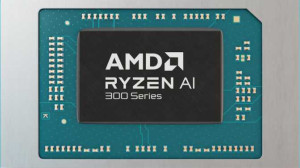
AMD Ryzen AI 7 350
Intel Core Ultra 7 255U

AMD Ryzen AI 7 350 Intel Core Ultra 7 255U

Overview

Welcome to our in-depth specification comparison between the AMD Ryzen AI 7 350 and the Intel Core Ultra 7 255U, two capable processors targeting the modern laptop market. While both chips share a foundation of DDR5 memory support, integrated graphics, and big.LITTLE architecture, they diverge in meaningful ways across multi-core performance, power consumption, and graphics capabilities. Read on as we break down every key specification to help you decide which processor best suits your needs.

Common Features

  • Both processors include integrated graphics.
  • Both support PCIe version 4.
  • Both support 64-bit computing.
  • Neither processor has an unlocked multiplier.
  • Both use big.LITTLE technology for CPU architecture.
  • Both have a base clock multiplier of 20.
  • Both support 4 simultaneous displays on the integrated GPU.
  • Both support OpenGL version 4.6.
  • Both use DDR5 memory.
  • Both have 2 memory channels.
  • ECC memory is not supported on either processor.
  • Multithreading is supported on both processors.
  • The NX bit security feature is present on both processors.

Main Differences

  • AMD Ryzen AI 7 350 is available for both laptop and desktop platforms, while Intel Core Ultra 7 255U is designed for laptops only.
  • Thermal Design Power (TDP) is 28W on AMD Ryzen AI 7 350 and 15W on Intel Core Ultra 7 255U.
  • Semiconductor size is 4nm on AMD Ryzen AI 7 350 and 3nm on Intel Core Ultra 7 255U.
  • Maximum CPU temperature is 100°C on AMD Ryzen AI 7 350 and 110°C on Intel Core Ultra 7 255U.
  • CPU core configuration is 4×2 GHz and 4×2 GHz on AMD Ryzen AI 7 350, while Intel Core Ultra 7 255U features 2×2 GHz and 8×1.7 GHz.
  • CPU threads are 16 on AMD Ryzen AI 7 350 and 14 on Intel Core Ultra 7 255U.
  • Turbo clock speed is 5 GHz on AMD Ryzen AI 7 350 and 5.2 GHz on Intel Core Ultra 7 255U.
  • PassMark multi-core result is 34459 on AMD Ryzen AI 7 350 and 18555 on Intel Core Ultra 7 255U.
  • PassMark single-core result is 3878 on AMD Ryzen AI 7 350 and 3732 on Intel Core Ultra 7 255U.
  • PassMark overclocked result is 24477 on AMD Ryzen AI 7 350 and 20473 on Intel Core Ultra 7 255U.
  • GPU turbo speed is 3000 MHz on AMD Ryzen AI 7 350 and 2100 MHz on Intel Core Ultra 7 255U.
  • DirectX version is DirectX 12 on AMD Ryzen AI 7 350 and DirectX 12 Ultimate on Intel Core Ultra 7 255U.
  • OpenCL version is 2.1 on AMD Ryzen AI 7 350 and 3 on Intel Core Ultra 7 255U.
  • Maximum RAM speed is 8000 MHz on AMD Ryzen AI 7 350 and 8400 MHz on Intel Core Ultra 7 255U.
  • Maximum memory capacity is 256 GB on AMD Ryzen AI 7 350 and 128 GB on Intel Core Ultra 7 255U.
Specs Comparison
AMD Ryzen AI 7 350

AMD Ryzen AI 7 350

Intel Core Ultra 7 255U

Intel Core Ultra 7 255U

General info:
Type Laptop, Desktop Laptop
Has integrated graphics
release date January 2025 January 2025
Thermal Design Power (TDP) 28W 15W
semiconductor size 4 nm 3 nm
CPU temperature 100 °C 110 °C
PCI Express (PCIe) version 4 4
Supports 64-bit

Both the AMD Ryzen AI 7 350 and the Intel Core Ultra 7 255U share a solid common foundation: integrated graphics, PCIe 4.0 support, and full 64-bit compatibility. These shared traits mean neither processor will bottleneck modern storage or connectivity options, and both can handle everyday graphics workloads without a discrete GPU.

The most consequential difference in this group is Thermal Design Power: the Ryzen AI 7 350 is rated at 28W while the Core Ultra 7 255U runs at just 15W. In practical terms, the Intel chip is designed for thinner, fanless, or highly power-constrained ultrabooks where battery life and thermal headroom are paramount, whereas AMD's higher TDP signals a willingness to sustain heavier workloads at the cost of more heat and power draw. Complementing this, the Core Ultra 7 255U is built on a 3 nm process versus AMD's 4 nm, giving Intel a slight manufacturing edge that contributes to its efficiency-first profile. The AMD chip also tolerates a slightly lower maximum junction temperature (100 °C vs. 110 °C for Intel), meaning Intel's silicon has a marginally wider thermal safety margin before throttling kicks in.

A notable platform distinction is that the Ryzen AI 7 350 is listed for both laptop and desktop use, while the Core Ultra 7 255U is laptop-only — giving AMD broader deployment flexibility. Overall, if the priority is efficiency and slim-device integration, the Core Ultra 7 255U holds a clear edge in this group; if versatility and sustained performance across form factors matter more, the Ryzen AI 7 350 has the advantage.

Performance:
CPU speed 4 x 2 & 4 x 2 GHz 2 x 2 & 8 x 1.7 GHz
CPU threads 16 threads 14 threads
turbo clock speed 5GHz 5.2GHz
Has an unlocked multiplier
Uses big.LITTLE technology
clock multiplier 20 20

The AMD Ryzen AI 7 350 and Intel Core Ultra 7 255U offer different configurations when it comes to performance. The Ryzen AI 7 350 features a CPU speed of 4 x 2 GHz and 4 x 2 GHz, giving it a total of 16 threads, while the Intel Core Ultra 7 255U has a CPU speed of 2 x 2 GHz and 8 x 1.7 GHz, which results in 14 threads. Both processors feature a turbo clock speed of 5 GHz, with the Ryzen AI 7 350 reaching this speed across all cores, and the Intel Core Ultra 7 255U achieving a slightly higher turbo clock speed of 5.2 GHz, which may allow it to temporarily boost performance under certain conditions.

Both processors also have an unlocked multiplier and use big.LITTLE technology, which helps in balancing power and performance by dynamically adjusting the active cores. The clock multiplier for both processors is set at 20, ensuring similar scalability for clock speeds across both models. This makes both processors relatively similar in terms of architecture and flexibility for multi-core performance.

In summary, while both processors feature a turbo clock speed of around 5 GHz, the Ryzen AI 7 350 has more threads (16 versus 14) with a different core configuration (4 x 2 GHz), whereas the Intel Core Ultra 7 255U has a slightly higher turbo clock speed (5.2 GHz) and a different distribution of its cores (2 x 2 GHz + 8 x 1.7 GHz). Both products feature similar technology, like big.LITTLE and an unlocked multiplier, making them competitive in terms of overall performance adjustments.

Benchmarks:
PassMark result 34459 18555
PassMark result (single) 3878 3732
PassMark result (overclocked) 24477 20473

When comparing the benchmark results of the AMD Ryzen AI 7 350 and the Intel Core Ultra 7 255U, there are clear differences in performance. The AMD Ryzen AI 7 350 achieves a PassMark result of 34,459, significantly higher than the Intel Core Ultra 7 255U, which scores 18,555. In terms of single-thread performance, the Ryzen AI 7 350 has a score of 3,878, while the Intel Core Ultra 7 255U is slightly lower with a score of 3,732. This indicates that the Ryzen processor provides a noticeable advantage in both overall and single-core performance.

Both processors also offer overclocked PassMark results, with the Ryzen AI 7 350 reaching a result of 24,477 and the Intel Core Ultra 7 255U achieving 20,473. While both processors show considerable improvements when overclocked, the Ryzen AI 7 350 still outperforms the Intel processor in this regard by a significant margin.

In summary, the AMD Ryzen AI 7 350 delivers superior benchmark results across the board, with higher scores in both overall performance and single-thread tasks. Even when overclocked, the Ryzen chip maintains a strong lead over the Intel Core Ultra 7 255U.

Integrated graphics:
GPU turbo 3000 MHz 2100 MHz
DirectX version DirectX 12 DirectX 12 Ultimate
supported displays 4 4
OpenGL version 4.6 4.6
OpenCL version 2.1 3

The integrated graphics of the AMD Ryzen AI 7 350 and Intel Core Ultra 7 255U show some distinct differences. The Ryzen AI 7 350 features a GPU turbo speed of 3,000 MHz, while the Intel Core Ultra 7 255U's GPU turbo speed is slightly lower at 2,100 MHz. Both processors support up to 4 displays, which is the same for both models. In terms of graphics API support, the Ryzen AI 7 350 supports DirectX 12, whereas the Intel Core Ultra 7 255U supports the newer DirectX 12 Ultimate, providing a more advanced feature set.

Both processors are equipped with the same OpenGL version, 4.6, ensuring similar compatibility with modern 3D graphics applications. However, the Intel Core Ultra 7 255U has a slight advantage in OpenCL support, with version 3, compared to the Ryzen AI 7 350, which supports OpenCL version 2.1. This may offer the Intel processor more flexibility for certain GPU-accelerated tasks.

In summary, the two processors offer similar display support and OpenGL capabilities, but the Intel Core Ultra 7 255U has a newer DirectX version and more advanced OpenCL support, while the Ryzen AI 7 350 has a higher GPU turbo speed.

Memory:
RAM speed (max) 8000 MHz 8400 MHz
DDR memory version 5 5
memory channels 2 2
maximum memory amount 256GB 128GB
Supports ECC memory

The memory specifications for the AMD Ryzen AI 7 350 and Intel Core Ultra 7 255U show some key differences. The Ryzen AI 7 350 supports a maximum RAM speed of 8,000 MHz, while the Intel Core Ultra 7 255U can handle a slightly higher maximum RAM speed of 8,400 MHz. Both processors are compatible with DDR5 memory and feature 2 memory channels, ensuring good performance and bandwidth for memory tasks.

When it comes to maximum memory capacity, the Ryzen AI 7 350 supports up to 256GB, which is double the 128GB maximum supported by the Intel Core Ultra 7 255U. This could allow the Ryzen processor to be used in systems requiring larger amounts of memory, particularly in more demanding applications.

Neither processor supports ECC memory, meaning neither is designed to automatically detect and correct memory errors, which may be important for certain enterprise or high-availability use cases.

Features:
instruction sets MMX, F16C, FMA3, AES, AVX, AVX2, SSE 4.1, SSE 4.2 F16C, MMX, FMA3, AES, AVX, AVX2, SSE 4.1, SSE 4.2
uses multithreading
Has NX bit

Both the AMD Ryzen AI 7 350 and Intel Core Ultra 7 255U support similar instruction sets, including MMX, F16C, FMA3, AES, AVX, AVX2, SSE 4.1, and SSE 4.2, which allows them to handle a wide range of computational tasks efficiently. There is no notable difference in the basic instruction sets supported by either processor.

Both processors also use multithreading, which enables them to handle multiple threads per core, improving performance in multi-threaded applications. Additionally, both processors feature the NX bit, providing protection against certain types of malicious software by preventing the execution of code in certain areas of memory.

In summary, the AMD Ryzen AI 7 350 and Intel Core Ultra 7 255U offer identical features in terms of instruction sets, multithreading support, and the NX bit, making their feature sets nearly identical in this category.

Comparison Summary & Verdict

After examining all the evidence, both processors offer compelling but distinct value propositions. The AMD Ryzen AI 7 350 stands out with a dramatically higher PassMark multi-core score of 34,459, more threads, a larger maximum memory ceiling of 256 GB, and a faster GPU turbo at 3000 MHz, making it the stronger choice for demanding workloads. The Intel Core Ultra 7 255U, on the other hand, benefits from a more efficient 15W TDP, a slightly higher turbo clock of 5.2 GHz, a newer 3nm process node, DirectX 12 Ultimate and OpenCL 3 support, and a higher maximum RAM speed of 8400 MHz, positioning it as a refined option for ultraportable, battery-conscious users who also value modern graphics API support.

AMD Ryzen AI 7 350
Buy AMD Ryzen AI 7 350 if...

Choose the AMD Ryzen AI 7 350 if you need superior multi-core performance, a higher maximum memory capacity of 256 GB, or plan to use the chip in both laptop and desktop platforms.

Intel Core Ultra 7 255U
Buy Intel Core Ultra 7 255U if...

Choose the Intel Core Ultra 7 255U if you prioritize a lower 15W power envelope for longer battery life, a more advanced 3nm process, and better graphics API support with DirectX 12 Ultimate and OpenCL 3.