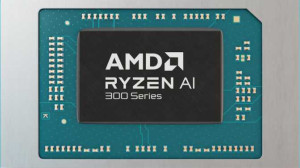
AMD Ryzen AI 7 350
Intel Core Ultra 7 265U

AMD Ryzen AI 7 350 Intel Core Ultra 7 265U

Overview

Welcome to our in-depth comparison of the AMD Ryzen AI 7 350 and the Intel Core Ultra 7 265U — two modern laptop-class processors that take distinctly different approaches to performance and efficiency. In this head-to-head, we examine key battlegrounds including multi-core and single-core benchmark scores, integrated graphics capability, memory support, and thermal design, helping you understand which chip best suits your specific computing needs.

Common Features

  • Both AMD Ryzen AI 7 350 and Intel Core Ultra 7 265U have integrated graphics.
  • Both processors support PCI Express version 4.
  • Both AMD Ryzen AI 7 350 and Intel Core Ultra 7 265U support 64-bit computing.
  • Neither AMD Ryzen AI 7 350 nor Intel Core Ultra 7 265U has an unlocked multiplier.
  • Both processors use big.LITTLE technology.
  • Both AMD Ryzen AI 7 350 and Intel Core Ultra 7 265U support up to 4 displays via integrated graphics.
  • Both processors support OpenGL version 4.6.
  • Both AMD Ryzen AI 7 350 and Intel Core Ultra 7 265U use DDR5 memory.
  • Both processors feature 2 memory channels.
  • ECC memory is not supported on either AMD Ryzen AI 7 350 or Intel Core Ultra 7 265U.
  • Both processors support the same instruction sets: MMX, F16C, FMA3, AES, AVX, AVX2, SSE 4.1, and SSE 4.2.
  • Multithreading is supported on both AMD Ryzen AI 7 350 and Intel Core Ultra 7 265U.
  • The NX bit security feature is present on both AMD Ryzen AI 7 350 and Intel Core Ultra 7 265U.

Main Differences

  • The AMD Ryzen AI 7 350 is available for both laptop and desktop form factors, while the Intel Core Ultra 7 265U is designed for laptops only.
  • Thermal Design Power (TDP) is 28W on AMD Ryzen AI 7 350 and 15W on Intel Core Ultra 7 265U.
  • The semiconductor size is 4 nm on AMD Ryzen AI 7 350 and 3 nm on Intel Core Ultra 7 265U.
  • Maximum CPU temperature is 100°C on AMD Ryzen AI 7 350 and 110°C on Intel Core Ultra 7 265U.
  • CPU base speed configuration is 4 x 2 GHz and 4 x 2 GHz on AMD Ryzen AI 7 350, versus 2 x 2.1 GHz and 8 x 1.7 GHz on Intel Core Ultra 7 265U.
  • CPU thread count is 16 on AMD Ryzen AI 7 350 and 14 on Intel Core Ultra 7 265U.
  • Turbo clock speed is 5 GHz on AMD Ryzen AI 7 350 and 5.3 GHz on Intel Core Ultra 7 265U.
  • The clock multiplier is 20 on AMD Ryzen AI 7 350 and 21 on Intel Core Ultra 7 265U.
  • PassMark multi-core result is 34,459 on AMD Ryzen AI 7 350 and 18,442 on Intel Core Ultra 7 265U.
  • PassMark single-core result is 3,878 on AMD Ryzen AI 7 350 and 3,767 on Intel Core Ultra 7 265U.
  • Integrated GPU turbo frequency is 3,000 MHz on AMD Ryzen AI 7 350 and 2,100 MHz on Intel Core Ultra 7 265U.
  • The integrated graphics supports DirectX 12 on AMD Ryzen AI 7 350 and DirectX 12 Ultimate on Intel Core Ultra 7 265U.
  • OpenCL version for the integrated graphics is 2.1 on AMD Ryzen AI 7 350 and 3.0 on Intel Core Ultra 7 265U.
  • Maximum RAM speed is 8,000 MHz on AMD Ryzen AI 7 350 and 8,400 MHz on Intel Core Ultra 7 265U.
  • Maximum memory capacity is 256 GB on AMD Ryzen AI 7 350 and 128 GB on Intel Core Ultra 7 265U.
Specs Comparison
AMD Ryzen AI 7 350

AMD Ryzen AI 7 350

Intel Core Ultra 7 265U

Intel Core Ultra 7 265U

General info:
Type Laptop, Desktop Laptop
Has integrated graphics
release date January 2025 January 2025
Thermal Design Power (TDP) 28W 15W
semiconductor size 4 nm 3 nm
CPU temperature 100 °C 110 °C
PCI Express (PCIe) version 4 4
Supports 64-bit

Both the AMD Ryzen AI 7 350 and the Intel Core Ultra 7 265U share a strong common foundation: integrated graphics, PCIe 4.0 support, and full 64-bit capability. These shared traits ensure neither chip is at a disadvantage in terms of connectivity bandwidth or software compatibility. Where things diverge, however, is in their design philosophy and target use cases.

The most consequential difference in this group is thermal design power. The Ryzen AI 7 350 operates at a 28W TDP versus the Core Ultra 7 265U's notably lower 15W TDP. In practice, a higher TDP generally means more sustained performance headroom, but it also demands more robust cooling and draws more battery power. The 265U's 15W envelope makes it a stronger candidate for thin-and-light ultrabooks where battery life and passive or near-passive cooling matter most, while the 350 is better suited to systems that can accommodate more thermal dissipation. On manufacturing process, Intel holds a slight edge with a 3 nm node versus AMD's 4 nm, which can translate to better transistor density and potential efficiency gains at equivalent workloads — though the higher TDP of the AMD chip suggests it prioritizes raw performance over efficiency in this configuration. The AMD also has a broader deployment scope, being rated for both laptop and desktop platforms, whereas the Intel chip is laptop-only.

Overall, the Intel Core Ultra 7 265U has a clear edge for ultra-portable, battery-sensitive deployments thanks to its lower TDP and finer process node. The AMD Ryzen AI 7 350 counters with greater platform versatility and a higher power budget that can support stronger sustained performance — making it the better fit where thermals and power delivery are less constrained.

Performance:
CPU speed 4 x 2 & 4 x 2 GHz 2 x 2.1 & 8 x 1.7 GHz
CPU threads 16 threads 14 threads
turbo clock speed 5GHz 5.3GHz
Has an unlocked multiplier
Uses big.LITTLE technology
clock multiplier 20 21

The AMD Ryzen AI 7 350 and Intel Core Ultra 7 265U differ in their CPU speed and threading configurations. The AMD Ryzen AI 7 350 has a more complex CPU speed structure with 4 cores running at 2 GHz and another 4 cores running at 2 GHz, totaling a CPU speed of 4 x 2 & 4 x 2 GHz. In comparison, the Intel Core Ultra 7 265U features a different configuration with 2 cores running at 2.1 GHz and 8 cores running at 1.7 GHz, totaling a CPU speed of 2 x 2.1 & 8 x 1.7 GHz.

In terms of threads, the AMD Ryzen AI 7 350 supports 16 threads, while the Intel Core Ultra 7 265U supports 14 threads, indicating a slight advantage in threading for the AMD processor. Both processors have a turbo clock speed of 5 GHz or higher, with the AMD Ryzen AI 7 350 boosting up to 5 GHz, while the Intel Core Ultra 7 265U reaches 5.3 GHz, offering a marginally higher peak performance during turbo operation.

Both processors have an unlocked multiplier set to false, meaning neither processor offers overclocking potential out of the box. They also both utilize big.LITTLE technology, which optimizes power efficiency by using different core types for varying workloads. The AMD Ryzen AI 7 350 has a clock multiplier of 20, whereas the Intel Core Ultra 7 265U has a slightly higher clock multiplier of 21.

Benchmarks:
PassMark result 34459 18442
PassMark result (single) 3878 3767

The AMD Ryzen AI 7 350 and Intel Core Ultra 7 265U show significant differences in their benchmark performance results. The AMD Ryzen AI 7 350 achieves a total PassMark result of 34459, which is notably higher than the Intel Core Ultra 7 265U’s PassMark result of 18442. This indicates that the AMD processor delivers substantially more overall performance according to this benchmark.

When looking at single-thread performance, the AMD Ryzen AI 7 350 scores 3878, which is also higher than the Intel Core Ultra 7 265U’s score of 3767. While the gap in single-thread performance is smaller, the AMD chip still leads in this area as well.

In summary, both processors show strong benchmark results, but the AMD Ryzen AI 7 350 outperforms the Intel Core Ultra 7 265U in both overall and single-thread performance based on the provided PassMark scores.

Integrated graphics:
GPU turbo 3000 MHz 2100 MHz
DirectX version DirectX 12 DirectX 12 Ultimate
supported displays 4 4
OpenGL version 4.6 4.6
OpenCL version 2.1 3

The integrated graphics of the AMD Ryzen AI 7 350 and Intel Core Ultra 7 265U are comparable in several key areas but differ in a few aspects. Both processors support up to 4 displays, so there’s no difference in terms of display capabilities. Additionally, both support OpenGL version 4.6, meaning they are on par in terms of graphics API compatibility.

When it comes to GPU turbo speed, the AMD Ryzen AI 7 350 has a turbo speed of 3000 MHz, which is higher than the Intel Core Ultra 7 265U’s GPU turbo speed of 2100 MHz. This difference suggests that the AMD processor may offer slightly better graphics performance during high-demand tasks that require turbo speeds.

In terms of DirectX support, the AMD Ryzen AI 7 350 supports DirectX 12, while the Intel Core Ultra 7 265U supports the more advanced DirectX 12 Ultimate. DirectX 12 Ultimate includes additional features such as support for ray tracing and variable rate shading, which may offer enhanced graphical fidelity in compatible applications and games.

Memory:
RAM speed (max) 8000 MHz 8400 MHz
DDR memory version 5 5
memory channels 2 2
maximum memory amount 256GB 128GB
Supports ECC memory

The AMD Ryzen AI 7 350 and Intel Core Ultra 7 265U have similar memory configurations, with both supporting DDR5 memory and dual memory channels. The maximum RAM speed supported by the AMD Ryzen AI 7 350 is 8000 MHz, while the Intel Core Ultra 7 265U supports a slightly higher RAM speed of 8400 MHz.

In terms of maximum memory capacity, the AMD Ryzen AI 7 350 can handle up to 256GB of RAM, which is double the 128GB maximum supported by the Intel Core Ultra 7 265U. Both processors do not support ECC (Error-Correcting Code) memory, which means they are not designed to detect and correct internal memory errors.

Overall, the AMD Ryzen AI 7 350 offers a higher maximum RAM capacity, while the Intel Core Ultra 7 265U supports a faster RAM speed, but both processors are on par in terms of DDR5 memory and dual-channel support.

Features:
instruction sets MMX, F16C, FMA3, AES, AVX, AVX2, SSE 4.1, SSE 4.2 MMX, F16C, FMA3, AES, AVX, AVX2, SSE 4.1, SSE 4.2
uses multithreading
Has NX bit

The AMD Ryzen AI 7 350 and Intel Core Ultra 7 265U both support the same set of instruction sets, including MMX, F16C, FMA3, AES, AVX, AVX2, SSE 4.1, and SSE 4.2. This means that in terms of supported instructions for optimizing computational tasks, both processors are on equal footing.

Both processors also support multithreading, allowing them to handle multiple tasks simultaneously for improved performance in threaded applications. Additionally, both processors feature the NX (No Execute) bit, a security feature designed to prevent the execution of certain types of malicious code.

In summary, the AMD Ryzen AI 7 350 and Intel Core Ultra 7 265U are identical in terms of instruction set support, multithreading, and NX bit availability.

Comparison Summary & Verdict

After reviewing all available specifications, these two processors serve different priorities. The AMD Ryzen AI 7 350 stands out with a dramatically higher PassMark multi-core score of 34,459, a higher maximum memory capacity of 256 GB, a faster integrated GPU turbo at 3,000 MHz, and the flexibility of being available in both laptop and desktop form factors — making it the stronger choice for raw, sustained workloads. The Intel Core Ultra 7 265U, on the other hand, offers a lower 15W TDP for superior power efficiency, a slightly higher turbo clock of 5.3 GHz, a more advanced DirectX 12 Ultimate and OpenCL 3.0 integrated graphics stack, and a newer 3 nm semiconductor process. Choose the AMD Ryzen AI 7 350 if outright performance and memory headroom are your priorities; opt for the Intel Core Ultra 7 265U if energy efficiency and graphics API modernity matter most.

AMD Ryzen AI 7 350
Buy AMD Ryzen AI 7 350 if...

Buy the AMD Ryzen AI 7 350 if you need maximum multi-core performance, larger memory capacity up to 256 GB, or the option to use the processor in a desktop platform as well as a laptop.

Intel Core Ultra 7 265U
Buy Intel Core Ultra 7 265U if...

Buy the Intel Core Ultra 7 265U if you prioritize power efficiency with its 15W TDP, a more advanced integrated graphics stack with DirectX 12 Ultimate and OpenCL 3.0, and a cutting-edge 3 nm manufacturing process.